
Decarbonization requires global actions, and the transport sector is the main battlefield since it contributes more than 20% of CO 2 emissions. Vehicle electrification is an effective routine to reduce vehicle carbon emissions, but it increases the complexity of the vehicle systems, especially the powertrain systems. The rapid development of artificial intelligence (AI) is promoting the development of new automation technologies that can benefit the automotive industry. This paper reviews the key milestones of AI technology development for vehicle research and development (R&D) and highlights the advantage of AI-based methods in powertrain design and control. An outlook of future research directions will be discussed, and conclusions will be summarized.
- Open Access
- Review
Artificial Intelligence and Its Roles in the R&D of Vehicle Powertrain Products
- Quan Zhou *,
- Ji Li,
- Hongming Xu *
Author Information
Received: 05 Oct 2022 | Accepted: 20 Nov 2022 | Published: 25 Dec 2022
Abstract
References
- 1.IEA, Global EV Outlook C. 2020. Available online: https://www.iea.org/reports/global-ev-outlook-2020 (Accessed on 5 October 2022). doi: 10.1787/d394399e-en.
- 2.Atabani A.E. ; Badruddin I.A. ; Mekhilef S. ; et al . A review on global fuel economy standards, labels and technologies in the transportation sector. Renewable Sustainable Energy Rev. 2011, 15, 4586– 4610. doi: 10.1016/j.rser.2011.07.092 .
- 3.Chan, C.C. The state of the art of electric, hybrid, and fuel cell vehicles. Proc. IEEE 2007, 95, 704– 718. doi: 10.1109/JPROC.2007.892489.
- 4.Jackson, N. Virtual Product Engineering Roadmap. Available online: https://www.automotivecouncil.co.uk (Accessed on 5 October 2022).
- 5.Farrall S.D. ; Jones R . P. Energy management in an automotive electric/heat engine hybrid powertrain using fuzzy decision making. In Proceedings of 8th IEEE International Symposium on Intelligent Control, Chicago, IL, USA, 25– 27 August 1993; IEEE: Piscataway, NJ, USA, 1993. doi: 10.1109/isic.1993.397669 .
- 6.Lee H.D. ; Sul S . K. Fuzzy-logic-based torque control strategy for parallel-type hybrid electric vehicle. IEEE Trans. Ind. Electron. 1998, 45, 625– 632. doi: 10.1109/41.704891 .
- 7.Lin C.C. ; Peng H. ; Grizzle J.W. ; et al . Power management strategy for a parallel hybrid electric truck. IEEE Trans. Control Syst. Technol. 2003, 11, 839– 849. doi: 10.1109/TCST.2003.815606 .
- 8.Piccolo A. ; Ippolito L. ; Zo Galdi V. ; et al . Optimisation of energy flow management in hybrid electric vehicles via genetic algorithms. In 2001 IEEE/ASME International Conference on Advanced Intelligent Mechatronics. Proceedings (Cat. No.01TH8556), Como, Italy, 08– 12 July 2001; IEEE: Piscataway, NJ, USA, 2001. doi: 10.1109/aim.2001.936493 .
- 9.Borhan H. ; Vahidi A. ; Phillips A.M. ; et al . MPC-based energy management of a power-split hybrid electric vehicle. IEEE Trans. Control Syst. Technol. 2012, 20, 593– 603. doi: 10.1109/TCST.2011.2134852 .
- 10.Xie S. ; Hu X. ; Qi S. ; et al . An artificial neural network-enhanced energy management strategy for plug-in hybrid electric vehicles. Energy 2018, 163, 837– 848. doi: 10.1016/j.energy.2018.08.139 .
- 11.Xu F. ; Chen H. ; Gong X. ; et al . Fast nonlinear model predictive control on FPGA using particle swarm optimization. IEEE Trans. Ind. Electron. 2016, 63, 310– 321. doi: 10.1109/TIE.2015.2464171 .
- 12.Leng B. ; Jin D. ; Xiong L. ; et al . Estimation of tire-road peak adhesion coefficient for intelligent electric vehicles based on camera and tire dynamics information fusion. Mech. Syst. Signal Process. 2021, 150, 107275. doi: 10.1016/j.ymssp.2020.107275 .
- 13.Li Y. ; He H. ; Peng J. ; et al . Deep Reinforcement Learning-Based Energy Management for a Series Hybrid Electric Vehicle Enabled by History Cumulative Trip Information. IEEE Trans. Veh. Technol. 2019, 68, 7416– 7430. doi: 10.1109/tvt.2019.2926472 .
- 14.Han W. ; Xiong L. ; Yu Z . Analysis and optimization of minimum hydraulic brake-by-wire system for wheeled vehicles based on queueing theory. IEEE Trans. Veh. Technol. 2021, 70, 12491– 12505. doi: 10.1109/TVT.2021.3116760 .
- 15.Li J. ; Zhou Q. ; Williams H. ; et al . Fuzzy-tree-constructed data-efficient modelling methodology for volumetric efficiency of dedicated hybrid engines. Appl. Energy 2022, 310, 118534. doi: 10.1016/j.apenergy.2022.118534 .
- 16.Zhou Q. ; Zhang W. ; Cash S. ; et al . Intelligent sizing of a series hybrid electric power-train system based on Chaos-enhanced accelerated particle swarm optimization. Appl. Energy 2017, 189, 588– 601. doi: 10.1016/j.apenergy.2016.12.074 .
- 17.Li Z. ; Zhou Q. ; Zhang Y. ; et al . Enhanced intelligent proportional-integral-like fuzzy knowledge–based controller using chaos-enhanced accelerated particle swarm optimization algorithm for transient calibration of air–fuel ratio control system. Proc. Inst. Mech. Eng.; Part D 2019, 234, 39– 55. doi: 10.1177/0954407019862079 .
- 18.Zhou Q. ; Zhang Y. ; Li Z. ; et al . Cyber-Physical Energy-Saving Control for Hybrid Aircraft-Towing Tractor based on Online Swarm Intelligent Programming. IEEE Trans. Ind. Inf. 2018, 14, 4149– 4158. doi: 10.1109/TII.2017.2781230 .
- 19.Li J. ; Zhou Q. ; He Y. ; et al . Dual-loop Online Intelligent Programming for Driver-oriented Predict Energy Management of Plug-in Hybrid Electric Vehicles. Appl. Energy 2019, 253, 113617.
- 20.Liu T. ; Hu X. ; Hu W. ; et al . A Heuristic Planning Reinforcement Learning-Based Energy Management for Power-Split Plug-in Hybrid Electric Vehicles. IEEE Trans. Ind. Inf. 2019, 15, 6436– 6445. doi: 10.1109/TII.2019.2903098 .
- 21.Zhou Q. ; Li Y. ; Zhao D. ; et al . Transferable representation modelling for real-time energy management of the plug-in hybrid vehicle based on k-fold fuzzy learning and Gaussian process regression. Appl. Energy 2022, 305, 117853. doi: 10.1016/j.apenergy.2021.117853 .
- 22.Biswas A. ; Emadi A . Energy Management Systems for Electrified Powertrains: State-of-The-Art Review and Future Trends. IEEE Trans. Veh. Technol. 2019, 68, 6453– 6467. doi: 10.1109/tvt.2019.2914457 .
- 23.Volkswagen AG , Modular electric drive matrix (MEB) . Available online: https://www.volkswagen-newsroom.com/en/images/detail/volkswagen-showcar-id-crozz-3165 (Accessed on 5 October 2022).
- 24.Changan UK R&D Centre Ltd . Changan Open a New Test Centre and Unveil Blue Core 1.5T Engine. Available online: http://www.changanuk.com/News/changan-open-new-test-centre-and-unveil-blue-core-15t-engine (Accessed on 5 October 2022).
- 25.Pourabdollah M. ; Egardt B. ; Murgovski N. ; et al . Convex Optimization Methods for Powertrain Sizing of Electrified Vehicles by Using Different Levels of Modeling Details. IEEE Trans. Veh. Technol. 2018, 67, 1881– 1893. doi: 10.1109/TVT.2017.2767201 .
- 26.Zhang L. ; Hu X. ; Wang Z. ; et al . Multiobjective Optimal Sizing of Hybrid Energy Storage System for Electric Vehicles. IEEE Trans. Veh. Technol. 2018, 67, 1027– 1035. doi: 10.1109/TVT.2017.2762368 .
- 27.Wang X. ; Liang Q . Energy management strategy for plug-in hybrid electric vehicles via bidirectional vehicle-to-grid. IEEE Syst. J. 2015, 11, 1789– 1798. doi: 10.1109/JSYST.2015.2391284 .
- 28.Lv C. ; Hu X. ; Sangiovanni-Vincentelli A. ; et al . Driving-Style-Based Codesign Optimization of an Automated Electric Vehicle: A Cyber-Physical System Approach. IEEE Trans. Ind. Electron. 2018, 66, 2965– 2975. doi: 10.1109/TIE.2018.2850031 .
- 29.Zhou Q. ; He Y. ; Zhao D. ; et al . Modified Particle Swarm Optimization with Chaotic Attraction Strategy for Modular Design of Hybrid Powertrains. IEEE Trans. Transp. Electrif. 2020, 7, 616– 625. doi: 10.1109/TTE.2020.3014688 .
- 30.Liu M. ; Fang S. ; Dong H. ; et al . Review of digital twin about concepts, technologies, and industrial applications. J. Manuf. Syst. 2021, 58, 346– 361. doi: 10.1016/j.jmsy.2020.06.017 .
- 31.Zhou Q. ; Zhang C. ; Li Y. ; et al . Robust optimization of energy management strategy in hybrid vehicles based on digital twin and PSO algorithm (in Chinese). J. Automot. Saf. Energy 2022, 13, 517– 525. doi: 10.3969/j.issn.1674-8484.2022.03.013 .
- 32.Bolton R.N. ; McColl-Kennedy J.R. ; Cheung L. ; et al . Customer experience challenges: bringing together digital, physical and social realms. J. Serv. Manag. 2018, 29, 776– 808. doi: 10.1108/JOSM-04-2018-0113 .
- 33.Li W. ; Rentemeister M. ; Badeda J. ; et al . Digital twin for battery systems: Cloud battery management system with online state-of-charge and state-of-health estimation. J. Energy Storage 2020, 30, 101557. doi: 10.1016/j.est.2020.101557 .
- 34.Bhatti G. ; Mohan H. ; Singh R . R. Towards the future of ssmart electric vehicles: Digital twin technology. Renewable Sustainable Energy Rev. 2021, 141, 110801. doi: 10.1016/j.rser.2021.110801 .
- 35.Venkatesan S. ; Manickavasagam K. ; Tengenkai N. ; et al . Health monitoring and prognosis of electric vehicle motor using intelligent-digital twin. IET Electr. Power Appl. 2019, 13, 1328– 1335. doi: 10.1049/iet-epa.2018.5732 .
- 36.Liu Y. ; Wang Z. ; Han K. ; et al . Sensor Fusion of Camera and Cloud Digital Twin Information for Intelligent Vehicles. In 2020 IEEE Intelligent Vehicles Symposium (IV), Las Vegas, NV, USA, 19 October–13 November 2020; IEEE: Piscataway, NJ, USA, 2020. doi: 10.1109/IV47402.2020.9304643 .
- 37.Zhou Q. ; Guo S. ; Xu L. ; et al . Global Optimization of the Hydraulic-electromagnetic Energy-harvesting Shock Absorber for Road Vehicles with Human-knowledge-integrated Particle Swarm Optimization Scheme. IEEE/ASME Trans. Mechatron. 2021, 26, 1225– 1235. doi: 10.1109/tmech.2021.3055815 .
- 38.Zhou Q. ; Wang C. ; Sun Z. ; et al . Human-knowledge-augmented Gaussian Process Regression for State-of-Health Prediction of Lithium-ion Batteries with Charging Curves. J. Electrochem. Energy Convers. Storage 2021, 18, 030907. doi: 10.1115/1.4050798 .
- 39.Wang H. ; Huang Y. ; Soltani A. ; et al . Cyber-Physical Predictive Energy Management for Through-The-Road Hybrid Vehicles. IEEE Trans. Veh. Technol. 2019, 68, 3246– 3256. doi: 10.1109/TVT.2019.2902485 .
- 40.Martínez, C.M.; Cao, D. Integrated energy management for electrified vehicles. In Ihorizon-Enabled Energy Management for Electrified Vehicles; Butterworth-Heinemann: Oxford, UK, 2019; pp. 15– 75. doi: 10.1016/B978-0-12-815010-8.00002-8.
- 41.Silver D. ; Huang A. ; Maddison C.J. ; et al . Mastering the game of Go with deep neural networks and tree search. Nature 2016, 529, 484– 489. doi: 10.1038/nature16961 .
- 42.Bellman, R. Dynamic Programming and a New Formalism in the Calculus of Variations. Proc. Natl. Acad. Sci. 1954, 40, 231– 235. doi: 10.1073/pnas.40.4.231.
- 43.Hu Y. ; Wang W. ; Liu H. ; et al . Reinforcement Learning Tracking Control for Robotic Manipulator with Kernel-Based Dynamic Model. IEEE Trans. Neural Networks Learn. Syst. 2019, 31, 3570– 3578. doi: 10.1109/tnnls.2019.2945019 .
- 44.Radac M.B. ; Precup R . E. Data-driven model-free slip control of anti-lock braking systems using reinforcement Q-learning. Neurocomputing 2018, 275, 317– 329. doi: 10.1016/j.neucom.2017.08.036 .
- 45.Liu T. ; Zou Y. ; Liu D. ; et al . Reinforcement Learning of Adaptive Energy Management with Transition Probability for a Hybrid Electric Tracked Vehicle. IEEE Trans. Ind. Electron. 2015, 62, 7837– 7846.
- 46.Shuai B. ; Zhou Q. ; Li J. ; et al . Heuristic action execution for energy efficient charge-sustaining control of connected hybrid vehicles with model-free double Q-learning. Appl. Energy 2020, 267, 114900.
- 47.Zhou Q. ; Li J. ; Shuai B. ; et al . Multi-step Reinforcement Learning for Model-Free Predictive Energy Management of an Electrified Off-highway Vehicle. Appl. Energy 2019, 255, 113755. doi: 10.1016/j.apenergy.2019.113755 .
- 48.Pei H. ; Hu X. ; Yang Y. ; et al . Designing Multi-Mode Power Split Hybrid Electric Vehicles Using the Hierarchical Topological Graph Theory. IEEE Trans. Veh. Technol. 2020, 69, 7159– 7171. doi: 10.1109/TVT.2020.2993019 .
- 49.Xu R. ; Li J. ; Dong X. ; et al . Bridging the Domain Gap for Multi-Agent Perception. arXiv preprint Unpublished work, 2022. doi: arXiv: 2210.08451.
- 50.Chen W. ; Xu R. ; Xiang H. ; et al . Model-Agnostic Multi-Agent Perception Framework. arXiv preprint Unpublished work, 2022. doi: arXiv: 2203.13168.
- 51.Schmidt L.M. ; Brosig J. ; Plinge A. ; et al . An Introduction to Multi-Agent Reinforcement Learning and Review of its Application to Autonomous Mobility. arXiv preprint Unpublished work, 2022. doi: arXiv: 2203.07676.
- 52.Lowe R. ; Wu Y.I. ; Tamar A. ; et al . Multi-agent actor-critic for mixed cooperative-competitive environments. In Advances in Neural Information Processing Systems 30 (NIPS 2017), Proceedings of the Annual Conference on Neural Information Processing Systems 2017, Long Beach, CA, USA, 4– 9 December 2017; pp. 6380– 6391.
- 53.Zhao Z.Q. ; Zheng P. ; Xu S.T. ; et al . Object Detection with Deep Learning: A Review. IEEE Trans. Neural Networks Learn. Syst. 2019, 30, 3212– 3232. doi: 10.1109/TNNLS.2018.2876865 .
- 54.Ashok Kumar P.M. ; Vaidehi V . A transfer learning framework for traffic video using neuro-fuzzy approach. Sādhanā 2017, 42, 1431– 1442. doi: 10.1007/s12046-017-0705-x .
- 55.Zhou Q. ; Zhao D. ; Shuai B. ; et al . Knowledge Implementation and Transfer With an Adaptive Learning Network for Real-Time Power Management of the Plug-in Hybrid Vehicle. IEEE Trans. Neural Networks Learn. Syst. 2021, 32, 5298– 5308.
- 56.Williams C.K. ; Rasmussen C . E. Gaussian Processes for Machine Learning. MIT Press: Cambridge, MA, USA, 2006.
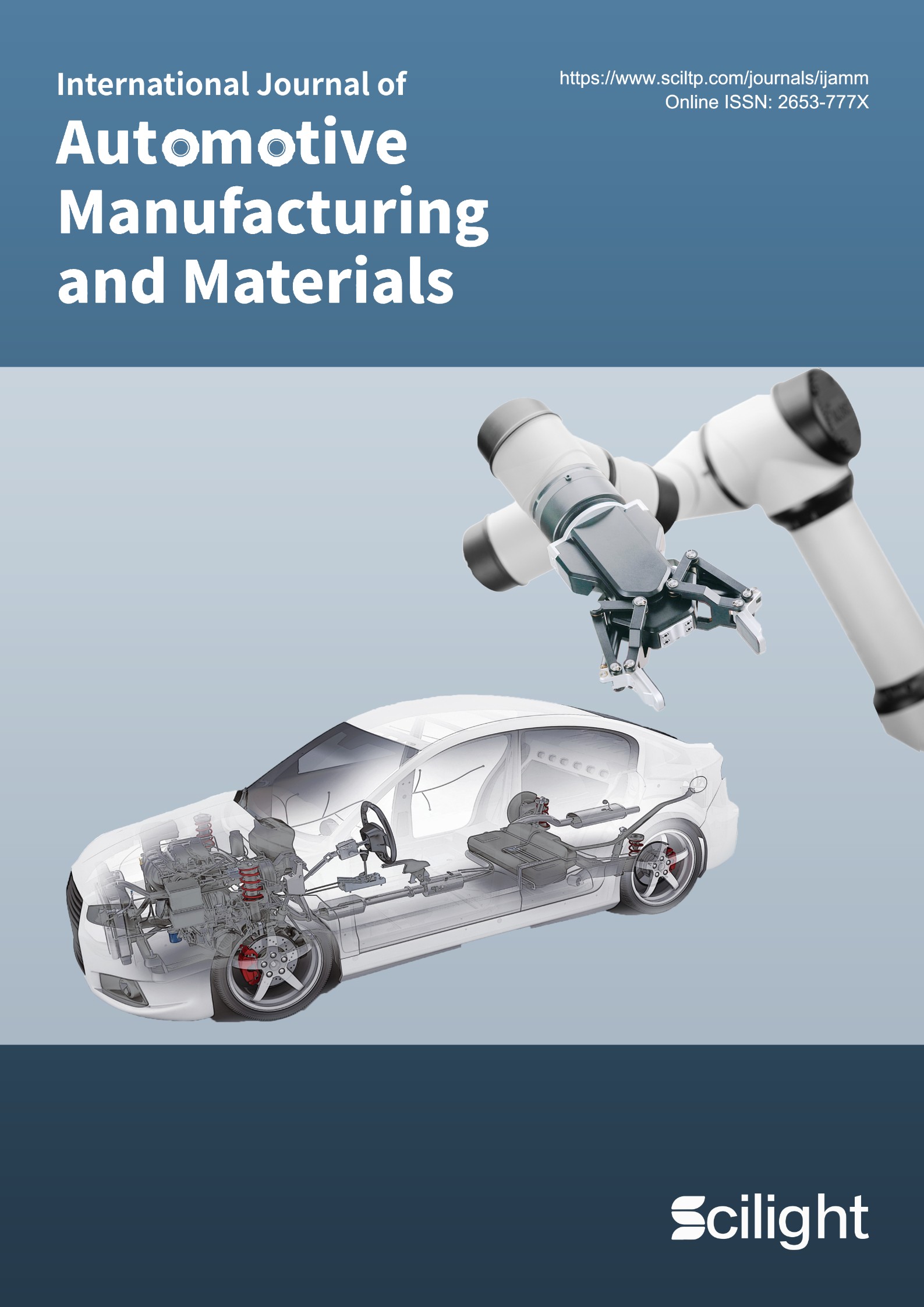
How to Cite
Zhou, Q.; Li, J.; Xu, H. Artificial Intelligence and Its Roles in the R&D of Vehicle Powertrain Products. International Journal of Automotive Manufacturing and Materials 2022, 1 (1), 6. https://doi.org/10.53941/ijamm0101006.
RIS
BibTex
Copyright & License

Copyright (c) 2022 by the authors.
This work is licensed under a Creative Commons Attribution 4.0 International License.
Article Metrics
207
Article Views
7
Citations
Contents
References

 Suite 4002 Level 4, 447 Collins Street, Melbourne, Victoria 3000, Australia
 General Inquiries: info@sciltp.com