
This article conducted innovative research on heat balance, cooling and structural strength by using Computer Aided Engineering (CAE), design, and experiment. These multifaceted approaches rely on the meticulous application of dynamic analysis, combustion analysis, fluid dynamics, and finite element analysis. This research has devised a fatigue-oxidation-creep multi-fatigue life prediction technique for thermal engines, coupled with an innovative water jacket optimization method. By addressing the design challenges arising from the demanding requirements of high explosion pressure, formidable power, and significant torque in power systems, this study has made significant strides in advancing the field. And this method was used to establish the development capability of powertrain electric drive components. To enhance reliability and prediction accuracy, a simulation and test calibration method was devised for Crucial Powertrain Components. This article establishes a robust foundation by providing comprehensive data support for reliability target decomposition, facilitating the efficient derivation of component reliability metrics. Additionally, it explores potential customer scenario failures and investigates the underlying mechanisms of powertrain malfunctions. By establishing a correlation matrix between failure modes, mechanisms, and reliability experiments, the coverage of powertrain failure mode verification experiments was significantly increased by over 95%. Ultimately, this article contributes to the formation of a comprehensive technical system for evaluating the reliability of crucial powertrain components, integrating design, simulation, and experiment.
- Open Access
- Article
Enhancing the Reliability Assessment System for Crucial Powertrain Components through Design, Simulation, and Experiment
- Xiaochun Zeng 1, 2, 3,
- Gongcheng Wang 1, *,
- Ying Liu 2, 3,
- Jing Liu 1, 2, 3,
- Yinglian Feng 2, 3, 4,
- Xiuyong Shi 5, 6,
- Diming Lou 5, 6,
- Lei Zhang 4,
- Tao Wei 1,
- Zhong Li 1
Author Information
Received: 05 Sep 2023 | Accepted: 19 Sep 2023 | Published: 20 Sep 2023
Abstract
References
- 1.Miao, R.; Zeng, X.; Cao, L.; et al. Experimental Study on the Mechanism of Super Detonation and Detonation Suppression in Supercharged Direct Injection Gasoline Engines. Vehicle Engine 2021, (6), 1-8. (in Chinese) DOI: 10.3969/j.issn.1001-2222.2021.06.001.
- 2.Zeng, X.; Luo, X.; Wei, T.; et al. Development and Application of an Engine Analysis Platform Based on Thermal Balance and Structural Strength. Computer Aided Engineering 2017, 26(05), 29–35,40. (in Chinese) DOI: 10.13340/j.cae.2017.05.006.
- 3.Zeng, X.; Luo, X.; Wei, T.; et al. Innovative research and its applications based on engine thermal equilibrium and structural strength. SAE Technical Paper 2019, No. 2019-01-0770.
- 4.Zou, P.; Jing, G.; Zeng, X.; et al. Prediction of Engine Cylinder Head Thermal Engine Fatigue Life Based on Sehitoglu Model. Mechanical Strength 2021, 44(5), 1184–1190. (in Chinese) DOI: 10.16579/j.issn.1001.9669.2021.05.023.
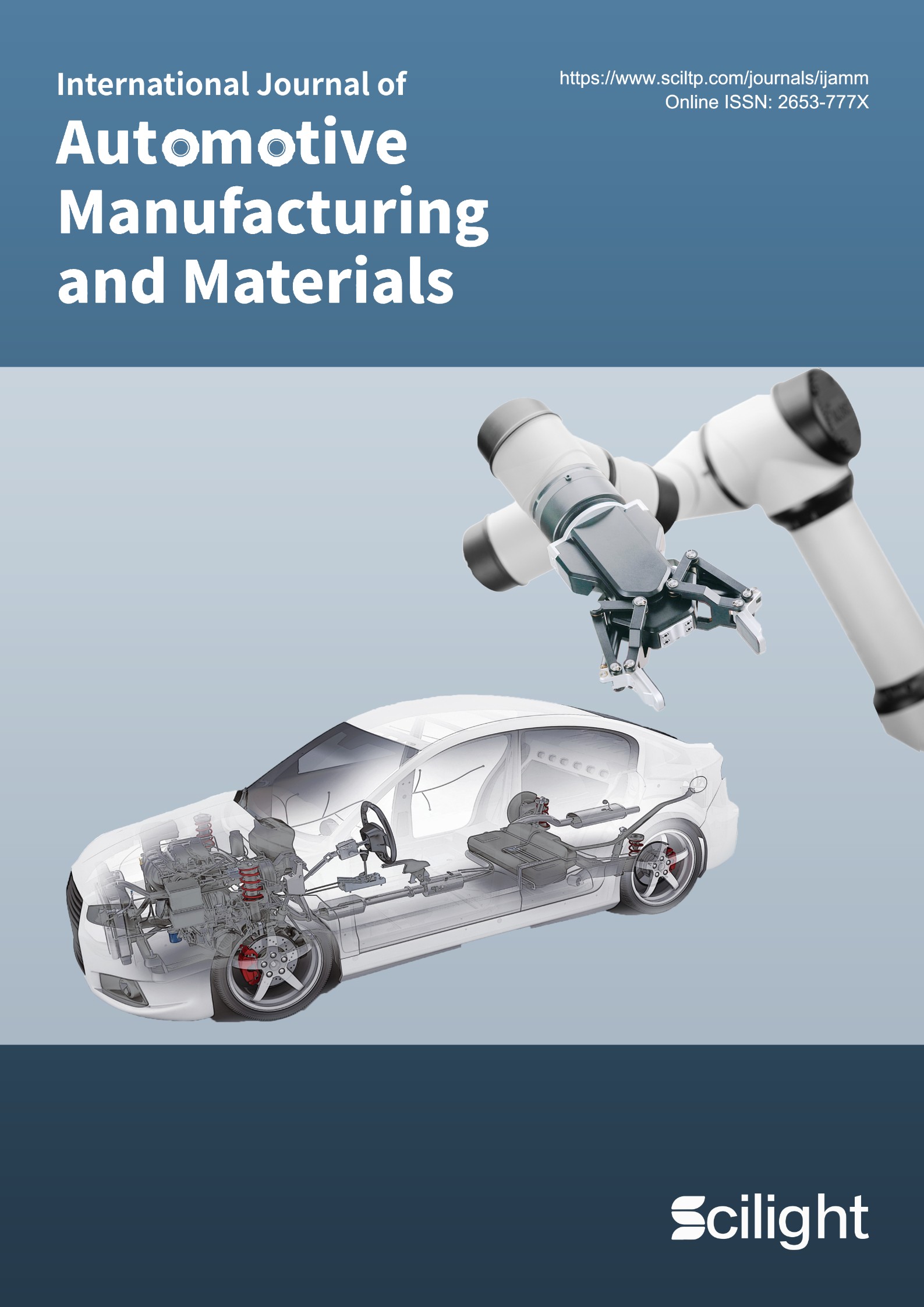
How to Cite
Zeng, X.; Wang, G.; Liu, Y.; Liu, J.; Feng, Y.; Shi, X.; Lou, D.; Zhang, L.; Wei, T.; Li, Z. Enhancing the Reliability Assessment System for Crucial Powertrain Components through Design, Simulation, and Experiment. International Journal of Automotive Manufacturing and Materials 2023, 2 (3), 4. https://doi.org/10.53941/ijamm.2023.100010.
RIS
BibTex
Copyright & License

Copyright (c) 2023 by the authors.
This work is licensed under a Creative Commons Attribution 4.0 International License.
Article Metrics
132
Article Views
0
Citations
Contents
References

 Suite 4002 Level 4, 447 Collins Street, Melbourne, Victoria 3000, Australia
 General Inquiries: info@sciltp.com