
Selenium catalysis has emerged as a powerful and sustainable approach for diverse organic transformations, including oxidations, halogenations, and C–H functionalizations. This review highlights its advantages—mild reaction conditions, high selectivity, and compatibility with green oxidants—while emphasizing industrial application potential through heterogeneous and recyclable catalytic systems. Beyond direct catalytic roles, selenium also enhances catalyst performances in energy and environmental applications. By reducing reliance on toxic metals and enabling atom-efficient processes, selenium catalysis aligns with sustainable engineering principles, offering eco-friendly solutions for chemical synthesis. Finally, prospects for scalable industrial implementation are discussed.
- Open Access
- Review
Organoselenium Catalyzed Reaction: Sustainable Chemistry from Laboratory to Industry
- Kuanhong Cao 1, 2, †,
- Guangshu Yuan 3, †,
- Mingxuan Liu 4, †,
- Shanming Lu 1, *,
- Byoung-Chul Shin 2, *,
- Lei Yu 3, *
Author Information
Received: 09 May 2025 | Revised: 30 May 2025 | Accepted: 17 Jun 2025 | Published: 26 Jun 2025
Abstract
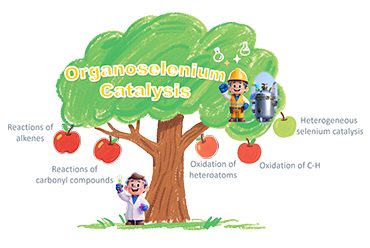
Graphical Abstract
Keywords
selenium | catalysis | fine chemical | green chemistry | oxidation
References
- 1.Rayman, M.P. Selenium and human health. Lancet 2012, 379, 1256−1268.
- 2.Ding, W.; Wang, S.; Gu, J.; et al. Selenium and human nervous system. Chin. Chem. Lett. 2023, 34, 108043.
- 3.
Gu, J.; Gu, J.; Yu, L. Selenium and Alzheimer’s disease. Chin. Chem. Lett. 2025, 36, 110727. https://doi.org/10.1016/j.cclet.2024.110727.
- 4.Marcocci, C.; Kahaly, G.J.; Krassas, G.E.; et al. Selenium and the course of mild graves’ orbitopathy. N. Engl. J. Med. 2011, 364, 1920−1931.
- 5.Perin, G.; Lenardão, E.J.; Jacob, R.G.; et al. Synthesis of vinyl selenides. Chem. Rev. 2009, 109, 1277–1301.
- 6.Godoi, B.; Schumacher, R.F.; Zeni, G. Synthesis of heterocycles via electrophilic cyclization of alkynes containing heteroatom. Chem. Rev. 2011, 111, 2937–2980.
- 7.Beletskaya, I.P.; Ananikov, V.P. Transition-metal-catalyzed C−S, C−Se, and C−Te bond formation via cross-coupling and atom-economic addition reactions. Chem. Rev. 2011, 111, 1596–1636.
- 8.Gleiter, R.; Haberhauer, G.; Werz, D.B.; et al. From noncovalent chalcogen–chalcogen interactions to supramolecular aggregates: Experiments and calculations. Chem. Rev. 2018, 118, 2010–2041.
- 9.Cankařová, N.; Schütznerová, E.; Krchňák, V. Traceless solid-phase organic synthesis. Chem. Rev. 2019, 119, 12089–12207.
- 10.Beletskaya, I.P.; Ananikov, V.P. Transition-metal-catalyzed C–S, C–Se, and C–Te bond formations via cross-coupling and atom-economic addition reactions. Achievements and challenges. Chem. Rev. 2022, 122, 16110–16293.
- 11.Hao, H.; Hutter, T.; Boyce, B.L.; et al. Review of multifunctional separators: Stabilizing the cathode and the anode for alkali (Li, Na, and K) metal–sulfur and selenium batteries. Chem. Rev. 2022, 122, 8053–8125.
- 12.Tan, C.K.Y.; Fu, W.; Loh, K.P. Polymorphism and ferroelectricity in indium(III) selenide. Chem. Rev. 2023, 123, 8701–8717.
- 13.Zhou, J.; Xu, X.; Wu, H.; et al. Control of the phase evolution of kesterite by tuning of the selenium partial pressure for solar cells with 13.8% certified efficiency. Nat. Energy 2023, 8, 526–535.
- 14.Zhao, Z.; Laps, S.; Gichtin, J.S.; et al. Selenium chemistry for spatio-selective peptide and protein functionalization. Nat. Rev. Chem. 2024, 8, 211–229.
- 15.Rao, X.-Y.; Xiang, S.-F.; Zhou, J.; et al. Recent progress and strategies of cathodes toward polysulfides shuttle restriction for lithium-sulfur batteries. Rare Met. 2024, 43, 4132–4161.
- 16.Zeng, Z.; Wang, D.-B.; Fang, X.; et al. Review of 2D Bi2X3 (X = S, Se, Te): From preparation to photodetector. Rare Met. 2024, 43, 2349–2370.
- 17.Xu, X.; Wang, J.; Chen, X.; et al. Iron(III)-mediated nucleophilic cascade cyclization of tertiary enamides with diselenides for the construction of 3-seleno-2-pyridones. Org. Lett. 2025, 27, 802–807.
- 18.Shi, T.; Tian, M.; Sun, Z.; et al. Photochemical aerobic sulfonylation–cyclization–selenylation to indole-fused medium-sized N-heterocycles in 2-Me-THF. Chem. Commun. 2025, 61, 4066–4069.
- 19.Wang, Z.; Wang, X.; Li, Q.; et al. Chemoselective electrochemical seleno-cyclization of dienes to medium-sized benzo[b]azocines. Chin. Chem. Lett. 2024, 35, 109058.
- 20.Ji, H.-T.; Jiang, J.; He, W.-B.; et al. Electrochemical multicomponent cascade reaction for the synthesis of selenazol-2-amines with elemental selenium. J. Org. Chem. 2024, 89, 4113–4119.
- 21.Zhang, Z.; Tan, P.; Wang, S.; et al. Visible-light-promoted selective sulfonylation and selenylation of dienes to access sulfonyl-/seleno-benzazepine derivatives. Org. Lett. 2023, 25, 4208–4213.
- 22.Wang, X.; Meng, J.; Zhao, D.; et al. Synthesis and applications of thiosulfonates and selenosulfonates as free-radical reagents. Chin. Chem. Lett. 2023, 34, 107736.
- 23.Ji, H.-T.; Wang, K.-L.; Ouyang, W.-T.; et al. Photoinduced, additive- and photosensitizer-free multi-component synthesis of naphthoselenazol-2-amines with air in water. Green Chem. 2023, 25, 7983–7987.
- 24.Wang, X.; Wang, Z.; Li, Z.; et al. Trifluoromethoxylation/trifluoromethylthiolation/trifluoro- methylselenolation strategy for the construction of heterocycles. Chin. Chem. Lett. 2023, 34, 108045.
- 25.Zhang, Z.; Wang, S.; Tan, P.; et al. K2S2O8/I2-promoted electrophilic selenylative cyclization to access seleno-benzo[b]azepines. Org. Lett. 2022, 24, 2288–2293.
- 26.Wang, X.; Lei, J.; Guo, S.; et al. Radical selenation of C(sp3)–H bonds to asymmetric selenides and mechanistic study. Chem. Commun. 2022, 58, 1526–1529.
- 27.Wu, Y.; Chen, J.-Y.; Ning, J.; et al. Electrochemical multicomponent synthesis of 4-selanylpyrazoles under catalyst- and chemical-oxidant-free conditions. Green Chem. 2021, 23, 3950–3954.
- 28.Sun, K.; Wang, X.; Li, C.; et al. Recent advances in tandem selenocyclization and tellurocyclization with alkenes and alkynes. Org. Chem. Front. 2020, 7, 3100–3119.
- 29.Ge, Y.; Kong, J.; Yang, C.; et al. Design and synthesis of 1,2-bis(4-(benzyloxy)phenyl)diselane: A scavenger for residual copper. Chin. J. Org. Chem. 2020, 40, 1760–1765.
- 30.Cao, H.; Liu, M.; Qian, R.; et al. A cost-effective shortcut to prepare organoselenium catalysts via decarboxylative coupling of phenylacetic acid with elemental selenium. Appl. Organomet. Chem. 2019, 33, e4599.
- 31.Liu, M.; Li, Y.; Yu, L.; et al. Visible light-promoted, iodine-catalyzed selenoalkoxylation of olefins with diselenides and alcohols in the presence of hydrogen peroxide/air oxidant: An efficient access to α-alkoxyl selenides. Sci. China Chem. 2018, 61, 294–299.
- 32.Yong, D.; Yuan, G.; Liu, Y.; et al. Progress in selenium catalyzed oxidation of cyclohexene to produce 1,2-cyclohexanediol. Chin. J. Org. Chem. 2025, in press. https://doi.org/10.6023/cjoc202501008.
- 33.Yuan, G.; Zhang, X.; Yu, L. Polymer-supported selenium affording opportunities in catalyst design. J. Org. Chem. 2025, 90, 3117−3122.
- 34.Xiao, X.; Guan, C.; Xu, J.; et al. Selenium-catalyzed selective reactions of carbonyl derivatives: State-of-the-art and future challenges. Green Chem. 2021, 23, 4647−4655.
- 35.Cao, H.; Qian, R.; Yu, L.Selenium-catalyzed oxidation of alkenes: Insight into the mechanisms and developing trend. Catal. Sci. Technol. 2020, 10, 3113−3121.
- 36.Singh, F.V.; Wirth, T. Selenium reagents as catalysts. Catal. Sci. Technol. 2019, 9, 1073−1091.
- 37.Shao, L.; Li, Y.; Lu, J.; et al. Recent progress in selenium-catalyzed organic reactions. Org. Chem. Front. 2019, 6, 2999−3041.
- 38.Guo, R.; Liao, L.; Zhao, X. Electrophilic selenium catalysis with electrophilic N-F reagents as the oxidants. Molecules 2017, 22, 835.
- 39.Freudendahl, D.M.; Santoro, S.; Shahzad, S.A.; et al. Angew.Green chemistry with selenium reagents: Development of efficient catalytic reactions. Angew. Chem. Int. Ed. 2009, 48, 8409−8411.
- 40.Sharpless, K.B.; Young, M.W. Olefin synthesis. Rate enhancement of the elimination of alkyl aryl selenoxides by electron-withdrawing substituents. J. Org. Chem. 1975, 40, 947−949.
- 41.Grieco, P.A.; Yokoyama, Y.; Gilman, S.; et al. Organoselenium chemistry. Epoxidation of olefins with benzeneseleninic acid and hydrogen peroxide (“benzeneperoxyseleninic acid”). J. Org. Chem. 1977, 42, 2034−2036.
- 42.Hori, T.; Sharpless, K.B. Synthetic applications of arylselenenic and arylseleninic acids. Conversion of olefins to allylic alcohols and epoxides. J. Org. Chem. 1978, 43, 1689−1697.
- 43.Tiecco, M.; Testaferri, L.; Tingoli, M.; Bartoli, D. Selenium-catalyzed conversion of methyl ketones into α-keto acetals. The J. Org. Chem. 1990, 55 (15), 4523-4528.
- 44.Taylor, R.T.; Flood, L.A. Polystyrene-bound phenylseleninic acid: Catalytic oxidations of olefins, ketones, and aromatic systems. J. Org. Chem. 1983, 48, 5160−5164.
- 45.Betzemeier, B.; Lhermitte, F.; Knochel, P. A selenium catalyzed epoxidation in perfluorinated solvents with hydrogen Peroxide. Synlett 1999, 4, 489−491.
- 46.ten Brink, G.-J.; Fernandes, B.C.M.; van Vliet, M.C.A.; et al. Selenium catalysed oxidations with aqueous hydrogen peroxide. Part I: Epoxidation reactions in homogeneous solution. J. Chem. Soc. Perkin Trans. 2001, 1, 224–228.
- 47.Yu, L.; Bai, Z.; Zhang, X.; et al. Organoselenium-catalyzed selectivity-switchable oxidation of β-ionone. Catal. Sci. Technol. 2016, 6, 1804−1809.
- 48.Yu, L.; Chen, F.; Ding, Y. Organoselenium-catalyzed oxidative ring expansion of methylenecyclopropanes with hydrogen peroxide. ChemCatChem 2016, 8, 1033–1037.
- 49.Santoro, S.; Santi, C.; Sabatini, M.; et al. Eco-friendly olefin dihydroxylation catalyzed by diphenyl diselenide. Adv. Synth. Catal. 2008, 350, 2881−2884.
- 50.Santi, C.; Tiecco, M.; Testaferri, L.; et al. Diastereo and enantioselective synthesis of 1,2-diols promoted by electrophilic selenium reagents. Phosphorus Sulfur Silicon 2008, 183, 956−960.
- 51.Santi, C.; Lorenzo, R.D.; Tidei, C.; et al. Stereoselective selenium catalyzed dihydroxylation and hydroxymethoxylation of alkenes. Tetrahedron 2012, 68, 10530−10535.
- 52.Drake, M.D.; Bright, F.V.; Detty, M.R. Dendrimeric organochalcogen catalysts for the activation of hydrogen peroxide: Origins of the “dendrimer effect” with catalysts terminating in phenylseleno groups. J. Am. Chem. Soc. 2003, 125, 12558−12566.
- 53.Wu, T.; Zhang, P.; Jiang, T.; et al. Enhancing the selective hydrogenation of benzene to cyclohexene over Ru/TiO2 catalyst in the presence of a very small amount of ZnO. Sci. China Chem. 2015, 58, 93–100.
- 54.Chen, Y.; Zhou, H.; Yu, L. Progress on non-petroleum-based synthesis of adiponitrile. Chin. Sci. Bull. 2024, 69, 370–380.
- 55.Yu, L.; Wang, J.; Chen, T.; et al. Access to cyclohexane-1,2-diol through the diphenyldiselenide catalyzed oxidation of cyclohexene by hydrogen peroxide. Chin. J. Org. Chem. 2013, 33, 1096−1099.
- 56.Yu, L.; Wang, J.; Chen, T.; et al. Recyclable 1,2-bis[3,5-bis(trifluoromethyl)phenyl]diselane-catalyzed oxidation of cyclohexene with H2O2: A practical access to trans-1,2-cyclohexanediol. Appl. Organomet. Chem. 2014, 28, 652–656.
- 57.Carrera, I.; Brovetto, M.C.; Seoane, G. A selenium-catalyzed iodohydrin formation from alkenes. Tetrahedron Lett. 2006, 47, 7849−7852.
- 58.Mellegaard, S.R.; Tunge, J. A selenium-catalyzed halolactonization: Nucleophilic activation of electrophilic halogenating reagents. J. Org. Chem. 2004, 69, 8979−8981.
- 59.Francavilla, C.; Drake, M.D.; Bright, F.V.; et al. Dendrimeric organochalcogen catalysts for the activation of hydrogen peroxide: Improved catalytic activity through statistical effects and cooperativity in successive generations. J. Am. Chem. Soc. 2001, 123, 57−67.
- 60.Drake, M.D.; Bateman, M.A.; Detty, M.R. Substituent effects in arylseleninic acid-catalyzed bromination of organic substrates with sodium bromide and hydrogen peroxide. Organmetallics 2003, 22, 4158−4162.
- 61.Goodman, M.A.; Detty, M.R. Selenoxides as catalysts for the activation of hydrogen peroxide. Bromination of organic substrates with sodium bromide and hydrogen peroxide. Organometallics 2004, 23, 3016−3020.
- 62.Bennett, S.M.; Tang, Y.; McMaster, D.; et al. A xerogel-Sequestered selenoxide catalyst for brominations with hydrogen peroxide and sodium bromide in an aqueous environment. J. Org. Chem. 2008, 73, 6849–6852.
- 63.Tay, D.W.; Tsoi, I.T.; Er, J.C.; et al. Lewis basic selenium catalyzed chloroamidation of olefins using nitriles as the nucleophiles. Org. Lett. 2013, 15, 1310−1313.
- 64.Jiang, Q.; Liang, Y.; Zhang, Y.; et al. Chalcogenide-catalyzed intermolecular electrophilic thio- and halofunctionalization of gem-difluoroalkenes: Construction of diverse difluoroalkyl sulfides and halides. Org. Lett. 2020, 22, 7581–7587.
- 65.Luo, J.; Zhu, Z.; Liu, Y.; et al. Diaryl selenide catalyzed vicinal trifluoromethylthioamination of alkenes. Org. Lett. 2015, 17, 3620–3623.
- 66.Zhu, Z.; Luo, J.; Zhao, X. Combination of lewis basic Selenium catalysis and redox selenium chemistry: Synthesis of trifluoromethylthiolated tertiary alcohols with alkenes. Org. Lett. 2017, 19, 4940–4943.
- 67.Xu, J.; Zhang, Y.; Qin, T.; et al. Catalytic regio and enantioselective oxytrifluoromethylthiolation of aliphatic internal alkenes by neighboring group assistance. Org. Lett. 2018, 20, 6384–6388.
- 68.Jiang, Q.; Li, H.; Zhao, X. Catalytic electrophilic thiocarbocyclization of allenes. Org. Lett. 2021, 23, 8777–8782.
- 69.Guo, R.; Huang, J.; Huang, H.; et al. Organoselenium-catalyzed synthesis of oxygen and nitrogen-containing heterocycles. Org. Lett. 2016, 18, 504–507.
- 70.Luo, J.; Liu, Y.; Zhao, X. Chiral selenide-catalyzed enantioselective construction of saturated trifluoromethylthiolated azaheterocycles. Org. Lett. 2017, 19, 3434–3437.
- 71.Wei, W.; Liao, L.; Qin, T.; et al. Access to saturated thiocyano-containing azaheterocycles via selenide-catalyzed regio- and stereoselective thiocyanoaminocyclization of alkenes. Org. Lett. 2019, 21, 7846–7850.
- 72.Chen, F.; Tan, C.K.; Yeung, Y.-Y. C2-symmetric cyclic selenium-catalyzed enantioselective bromoaminocyclization. J. Am. Chem. Soc. 2013, 135, 1232−1235.
- 73.Cresswell, A.J.; Eey, S.T.-C.; Denmark, S. Catalytic, stereospecific syn-dichlorination of alkenes. Nat. Chem. 2015, 7, 146−152.
- 74.Yu, L.; Cao, K.; Deng, X.; et al. Method for Synthesizing Adiponitrile. Chinese Patent No. CN108530318, 2018.
- 75.Urgoitia, G.; SanMartin, R.; Herrero, M.T.; et al. Aerobic cleavage of alkenes and alkynes into carbonyl and carboxyl compounds. ACS Catal. 2017, 7, 3050−3060.
- 76.Lin, R.; Chen, F.; Jiao, N. Metal-free, NHPI catalyzed oxidative cleavage of C–C double bond using molecular oxygen as oxidant. Org. Lett. 2012, 14, 4158−4161.
- 77.Gonzalez-de-Castro, A.; Xiao, J. Green and efficient: Iron-catalyzed selective oxidation of olefins to carbonyls with O2. J. Am. Chem. Soc. 2015, 137, 8206−8218.
- 78.Yu, L.; Huang, Y.; Bai, Z.; et al. The aerobic oxidation and C=C bond cleavage of styrenes catalyzed by cerium(IV) ammonium nitrate (CAN). J. Chin. Chem. Soc. 2015, 62, 479−482.
- 79.Wise, D.E.; Gogarnoiu, E.S.; Duke, A.D.; et al. Photoinduced Oxygen transfer using nitroarenes for the anaerobic cleavage of alkenes. J. Am. Chem. Soc. 2022, 144, 15437−15442.
- 80.Ruffoni, A.; Hampton, C.; Simonetti, M.; et al. Photoexcited nitroarenes for the oxidative cleavage of alkenes. Nature 2022, 610, 81−86.
- 81.Chen, Y.; Chen, C.; Liu, Y.; et al. Probing the effect of nitrate anion in CAN: An additional opportunity to reduce the catalyst loading for aerobic oxidations. Chin. Chem. Lett. 2023, 34, 108489.
- 82.Xiao, X.; Chen, Y.; Chen, F.-L.; et al. Selective oxidation of tertiary alcohols to ketones via synergistic catalysis of (NH4)2Ce(NO3)6 and trifluoroacetic acid with oxygen. cMat 2025, 2, e35.
- 83.Wang, T.; Jing, X.; Chen, C.; et al. Organoselenium-catalyzed oxidative C═C bond cleavage: A relatively green oxidation of alkenes into carbonyl compounds with hydrogen peroxide. J. Org. Chem. 2017, 82, 9342−9349.
- 84.Li, X.; Hua, H.; Liu, Y.; et al. Iron-promoted catalytic activity of selenium endowing the aerobic oxidative cracking reaction of alkenes. Org. Lett. 2023, 25, 6720−6724.
- 85.Tiecco, M.; Testaferri, L.; Tingoli, M.; et al. Selenium-catalyzed conversion of methyl ketones into alpha-keto acetals. J. Org. Chem. 1990, 55, 4523−4528.
- 86.Chen, C.; Cao, Z.; Zhang, X.; et al. Synergistic catalysis of Se and Cu for the activation of α-H of methyl ketones with molecular oxygen/alcohol to produce α-keto acetals. Chin. J. Chem. 2020, 38, 1045−1051.
- 87.Cao, Z.; Deng, X.; Chen, C.; et al. Synergetic catalysis of Se and Cu allowing diethoxylation of halomethylene ketones using O2 as the mild oxidant. React. Chem. Eng. 2021, 6, 454–458.
- 88.Wang, C.; Tunge, J. Selenocatalytic α-halogenation. Chem. Commun. 2004, 24, 2694–2695.
- 89.Syper, L.; Mlochowski, J. Benzeneperoxyseleninic acids-synthesis and properties. Tetrahedron 1987, 43, 207–213.
- 90.Syper, L. Reaction of α,β-unsaturated aldehydes with hydrogen peroxide catalysed by benzeneseleninic acids and their precursors. Tetrahedron 1987, 43, 2853–2871.
- 91.Syper, L. Reactions of 2,5-furandicarbaldehyde with stabilized phosphonium ylides. Applications to the synthesis of 5-vinyl-2-furaldehyde and 2,5-divinylfuran derivatives. Synthesis 1989, 1989, 167–172.
- 92.ten Brink, G.-J.; Vis, J.-M.; Arends, I.W.C.E.; et al. Selenium-catalyzed oxidations with aqueous hydrogen peroxide. Baeyer−Villiger reactions in homogeneous solution1. J. Org. Chem. 2001, 66, 2429–2433.
- 93.ten Brink, G.-J.; Vis, J.M.; Arends, I.W.C.E.; et al. Selenium catalysed oxidations with aqueous hydrogen peroxide. Part 3: Oxidation of carbonyl compounds under mono/bi/triphasic conditions. Tetrahedron 2002, 58, 3977–3983.
- 94.Ichikawa, H.; Usami, Y.; Arimoto, M. Synthesis of novel organoselenium as catalyst for Baeyer–Villiger oxidation with 30% H2O2. Tetrahedron Lett. 2005, 46, 8665–8668.
- 95.Miyake, Y.; Nishibayashi, Y.; Uemura, S. Asymmetric Baeyer–Villiger oxidation of cyclic ketones using chiral organoselenium catalysts. Bull. Chem. Soc. Jpn. 2002, 75, 2233–2237.
- 96.Goodman, M.A.; Detty, M.R. Selenoxides as catalysts for epoxidation and Baeyer-Villiger oxidation with hydrogen peroxide. Synlett 2006, 7, 1100–1104.
- 97.Zhang, X.; Ye, J.; Yu, L.; et al. Organoselenium-catalyzed Baeyer–Villiger Oxidation of α,β-Unsaturated Ketones by Hydrogen Peroxide to Access Vinyl Esters. Adv. Synth. Catal. 2015, 357, 955–960.
- 98.Yu, L.; Ye, J.; Zhang, X.; et al. Recyclable (PhSe)2-catalyzed selective oxidation of isatin by H2O2: A practical and waste-free access to isatoic anhydride under mild and neutral conditions. Catal. Sci. Technol. 2015, 5, 4830–4838.
- 99.Giurg, M.; Mlochowski, J. Oxidative Ring Contraction of Cycloalkanones: A facile method for synthesis of medium ring cycloalkanecarboxylic acids. Synth. Commun. 1999, 29, 2281–2291.
- 100.Cao, H.; Chen, T.; Yang, C.; et al. Diphenyl diselenide catalyzed oxidative degradation of benzoin to benzoic acid. Synlett 2019, 30, 1683–1687.
- 101.Yu, L.; Li, H.; Zhang, X.; et al. Organoselenium-catalyzed mild dehydration of aldoximes: An unexpected practical method for organonitrile synthesis. Org. Lett. 2014, 16, 1346−1349.
- 102.Zhang, D.; Huang, Y.; Zhang, E.; et al. Pd/Mn bimetallic relay catalysis for aerobic aldoxime dehydration to nitriles. Adv. Synth. Catal. 2018, 360, 784–790.
- 103.Zhang, X.; Sun, J.; Ding, Y.; et al. Dehydration of aldoximes using PhSe(O)OH as the pre-catalyst in air. Org. Lett. 2015, 17, 5840−5842.
- 104.Jing, X.; Wang, T.; Ding, Y.; et al. A scalable production of anisonitrile through organoselenium-catalyzed dehydration of anisaldoxime under solventless conditions. Appl. Catal. A-Gen. 2017, 541, 107−111.
- 105.Corey, E.J.; Hopkins, P.B.; Kim, S.; et al. Total synthesis of erythromycins. 5. Total synthesis of erythronolide A. J. Am. Chem. Soc. 1979, 101, 7131−7134.
- 106.Royals, E.E.; Horne, S.E., Jr. Conversion of d-Limonene to l-Carvone1. J. Am. Chem. Soc. 1951, 73, 5856–5857.
- 107.Asutay, O.; Hamarat, N.; Uludag, N.; et al. Selective oxidative deoximation with anhydrous Ce(IV) sulfate. Tetrahedron Lett. 2015, 56, 3902–3904.
- 108.Lee, S.K.; Choi, M.G.; Chang, S.-K. Signaling of chloramine: A fluorescent probe for trichloroisocyanuric acid based on deoximation of a coumarin oxime. Tetrahedron Lett. 2014, 55, 7047–7050.
- 109.Bhosale, S.; Sonune, D.P.; Prasad, U.V.; et al. Inverse kinetic isotope effect in Magtrieve™ mediated oxidation or deoximation of benzaldoxime: Mechanistic implication. Tetrahedron Lett. 2012, 53, 1794–1797.
- 110.Lin, M.-H.; Lin, L.-Z.; Chuang, T.-H.; et al. One-pot sequential deoximation and allylation reactions of aldoximes in aqueous solution. Tetrahedron 2012, 68, 2630–2635.
- 111.Lin, M.-H.; Liu, H.-J.; Chang, C.-Y.; et al. SnCl2/TiCl3-mediated deoximation of oximes in an aqueous solvent. Molecules 2012, 17, 2464–2473.
- 112.Zheng, Y.; Wu, A.; Ke, Y.; et al. Recent advances on deoximation: From stoichiometric reaction to catalytic reaction. Chin. Chem. Lett. 2019, 30, 937–941.
- 113.Deng, X.; Qian, R.; Zhou, H.; et al. Organotellurium-catalyzed oxidative deoximation reactions using visible-light as the precise driving energy. Chin. Chem. Lett. 2021, 32, 1029–1032.
- 114.Li, H.; Jing, X.; Shi, Y.; et al. Autocatalytic deoximation reactions driven by visible light. React. Chem. Eng. 2021, 6, 119–124.
- 115.Wang, F.; Chen, T.; Shi, Y.; et al. AIBN-Initiated oxidative deoximation reaction: A metal-free and environmentally-friendly protocol. Asian J. Org. Chem. 2021, 10, 614–618.
- 116.Wang, F.; Yang, C.; Shi, Y.; et al. PhSe(O)OH/NHPI-catalyzed oxidative deoximation reaction using air as oxidant. Mol. Catal. 2021, 514, 111849.
- 117.Li, W.; Wang, F.; Shi, Y.; et al. Polyaniline-supported tungsten-catalyzed oxidative deoximation reaction with high catalyst turnover number. Chin. Chem. Lett. 2023, 34, 107505.
- 118.Wang, F.; Qian, R.; Yu, L. Photocatalytic aerobic oxidative deoximation reaction with degradable rhodamine B. React. Chem. Eng. 2023, 8, 849–854.
- 119.Zhang, Y.; Li, W.; Hu, Z.; et al. Mo@PANI-catalyzed oxidative deoximation reaction. Chin. Chem. Lett. 2024, 35, 108938.
- 120.Jing, X.; Yuan, D.; Yu, L. Green and practical oxidative deoximation of oximes to ketones or aldehydes with hydrogen peroxide/air by organoselenium catalysis. Adv. Synth. Catal. 2017, 359, 1194–1201.
- 121.Pradhan, P.K.; Dey, S.; Jaisankar, P.; et al. Fe-HCl: An efficient reagent for deprotection of oximes as well as selective oxidative hydrolysis of nitroalkenes and nitroalkanes to ketones. Synth. Commun. 2005, 35, 913–922.
- 122.Chen, C.; Cao, Y.; Wu, X.; et al. Energy saving and environment-friendly element-transfer reactions with industrial application potential. Chin. Chem. Lett. 2020, 31, 1078–1082.
- 123.Yu, L. Element Transfer Reactions; Guangming Daily Press: Beijing, China, 2021.
- 124.Cao, H.; Xiao, X.; Zhang, X.; et al. Element transfer reaction theory: Scientific connotation and its applications in chemical industry. Chin. Chem. Lett. 2025, in press. https://doi.org/10.1016/j.cclet.2025.110924.
- 125.Chen, C.; Zhang, X.; Cao, H.; et al. Iron-enabled utilization of air as the terminal oxidant leading to aerobic oxidative deoximation by organoselenium catalysis. Adv. Synth. Catal. 2019, 361, 603–610.
- 126.Crich, D.; Zou, Y. Catalytic allylic oxidation with a recyclable, fluorous seleninic acid. Org. Lett. 2004, 6, 775–777.
- 127.Crich, D.; Zou, Y. Catalytic oxidation adjacent to carbonyl groups and at benzylic positions with a fluorous seleninic acid in the presence of iodoxybenzene. J. Org. Chem. 2005, 70, 3309–3311.
- 128.Niyomura, O.; Cox, M.; Wirth, T. Electrochemical generation and catalytic use of selenium electrophiles. Synlett 2006, 2, 251–254.
- 129.Browne, D.M.; Niyomura, O.; Wirth, T. Catalytic use of selenium electrophiles in cyclizations. Org. Lett. 2007, 9, 3169–3171.
- 130.Singh, F.V.; Wirth, T. Selenium-catalyzed regioselective cyclization of unsaturated carboxylic acids using hypervalent Iodine oxidants. Org. Lett. 2011, 13, 6504–6507.
- 131.Tunge, J.A.; Mellegaard, S.R. Selective selenocatalytic allylic chlorination. Org. Lett. 2004, 6, 1205–1207.
- 132.Mellegaard-Waetzig, S.R.; Wang, C.; Tunge, J.A. Selenium-catalyzed oxidative halogenation. Tetrahedron 2006, 62, 7191–7198.
- 133.Barrero, A.F.; del Moral, J.F.Q.; Herrador, M.M.; et al. Solid-phase selenium-catalyzed selective allylic chlorination of polyprenoids: Facile syntheses of biologically active terpenoids. Org. Chem. 2006, 71, 5811–5814.
- 134.Guo, R.; Huang, J.; Zhao, X. Organoselenium-catalyzed oxidative allylic fluorination with electrophilic N–F reagent. ACS Catal. 2018, 8, 926–930.
- 135.Trenner, J.; Depken, C.; Weber, T.; et al. Cover picture: Champagne and fireworks: Angewandte chemie celebrates Its birthday. Chem. Int. Ed. 2013, 52, 1–6.
- 136.Deng, Z.; Wei, J.; Liao, L.; et al. Organoselenium-catalyzed, hydroxy-controlled regio- and stereoselective amination of terminal alkenes: Efficient synthesis of 3-amino allylic alcohols. Org. Lett. 2015, 17, 1834−1837.
- 137.Wei, W.; Zhao, X. Organoselenium-catalyzed cross-dehydrogenative coupling of alkenes and azlactones. Org. Lett. 2022, 24, 1780−1785.
- 138.Liao, L.; Zhang, H.; Zhao, X. Selenium-π-acid catalyzed oxidative functionalization of alkynes: Facile access to ynones and multisubstituted oxazoles. ACS Catal. 2018, 8, 6745–6750.
- 139.Zhang, Y.; Liang, Y.; Zhao, X. Chiral selenide-catalyzed, highly regio- and enantioselective intermolecular thioarylation of alkenes with phenols. ACS Catal. 2021, 11, 3755–3761.
- 140.Kuwajima, I.; Shimizu, M.; Urabe, H. Oxidation of alcohols with tert-butyl hydroperoxide and diaryl diselenide. J. Org. Chem. 1982, 47, 837–842.
- 141.Ehara, H.; Noguchi, M.; Sayama, S.; et al. Bis[2-(2-pyridyl)phenyl] diselenide, a more effective catalyst for oxidation of alcohols to carbonyl compounds. J. Chem. Soc. Perkin Trans. 2000, 1, 1429–1431.
- 142.van der Toorn, J.C.; Kemperman, G.; Sheldon, R.A.; et al. Diphenyldiselenide-catalyzed selective oxidation of activated alcohols with tert-butyl hydroperoxide: New mechanistic insights. J. Org. Chem. 2009, 74, 3085–3089.
- 143.Wang, F.; Xu, L.; Sun, C.; et al. Investigation on preparation of p-benzoquinone through the organoselenium-catalyzed selective oxidation of phenol. Chin. J. Org. Chem. 2017, 37, 2115–2118.
- 144.Murahashi, S.-I.; Shiota, T. Selenium dioxide catalyzed oxidation of secondary amines with hydrogen peroxide. Simple synthesis of nitrones from secondary amines. Tetrahedron Lett. 1987, 28, 2383–2386.
- 145.Zhao, D.; Johansson, M.; Bäckvall, J.-E. Enantioselective synthesis of 3,3-disubstituted piperidine derivatives by enolate dialkylation of phenylglycinol-derived oxazolopiperidone lactams. J. Org. Chem. 2007, 72, 4431–4436.
- 146.Said, S.B.; Skarżewski, J.; Mĭochowski, J. Efficient conversion of nitriles to amides with basic hydrogen peroxide in dimethyl sulfoxide. Synthesis 1989, 1989, 223–224.
- 147.Gao, G.; Han, J.; Yu, L.; et al. Organoselenium-catalyzed polymerization of aniline with hydrogen peroxide as oxidant. Synlett 2019, 30, 1703–1707.
- 148.Zhou, Y.; Liu, X.; Wang, Z.; et al. A novel PANI/SEBS film/fiber large deformation conductive elastomer with rapid recovery of resistance. Mater. Lett. 2022, 308, 131205.
- 149.Zeng, Z.; Chen, Y.; Zhu, X.; et al. Polyaniline-supported nano metal-catalyzed coupling reactions: Opportunities and challenges. Chin. Chem. Lett. 2023, 34, 107728.
- 150.Zhang, Y.; Sun, H.; Chen, Y.; et al. Polyaniline-supported tungsten-catalyzed α-H alkylation reaction of ketone with alcohol. Org. Lett. 2023, 25, 7928−7932.
- 151.Sun, H.; Shi, Y.; Fu, W.; et al. Polyaniline-supported tungsten-catalyzed green and selective oxidation of alcohols. ChemistrySelect 2021, 6, 7599−7603.
- 152.Chen, Y.; Jing, X.; Yu, L. Polyaniline-supported copper-catalyzed buchwald-hartwig couplings of pyrimidin-2-amines. Chin. J. Org. Chem. 2020, 40, 2570−2574.
- 153.Yu, L.; Han, Z.; Ding, Y. Gram-scale preparation of Pd@PANI: A practical catalyst reagent for copper-free and ligand-free sonogashira couplings. Org. Process Res. Dev. 2016, 20, 2124−2129.
- 154.Li, H.-F.; Yu, K.-W.; Jing, X.-B.; et al. Design and preparation of highly crystalline K-intercalated W@PCN: An efficient material for aniline elimination. Rare Met. 2024, 43, 1337–1342.
- 155.Zhu, Z.-D.; Han, Y.-Z.; Jing, X.-B. An unexpected approach to enhance specific surface area and mesopore amount of polyaniline by Zn doping. Rare Met. 2024, 43, 4585–4594.
- 156.Zhang, Y.; Sun, H.; Yang, Y.; et al. Tungsten-doping promoted catalytic activity of polyaniline-supported palladium for the Suzuki–Miyaura coupling reaction. Catal. Sci. Technol. 2023, 13, 3791–3795.
- 157.Chen, Y.; Yu, L.; Zhou, H. Fluorine-enhanced catalytic activity of polyaniline-supported copper nanoparticles in buchwald–hartwig couplings of pyrimidin-2-amines. J. Phys. Chem. C 2022, 126, 17084–17092.
- 158.Liu, Y.; Tang, D.; Cao, K.; et al. Probing the support effect at the molecular level in the polyaniline-supported palladium nanoparticle-catalyzed Ullmann reaction of aryl iodides. J. Catal. 2018, 360, 250−260.
- 159.Meng, X.; Zhang, Y.; Zhou, H.; et al. Polyaniline-supported zinc oxide nanocomposite-catalyzed condensation of lactic acid to lactide with high yield and optical purity. ACS Sustain. Chem. Eng. 2022, 10, 7658−7663.
- 160.Mlochowski, J.; Giurg, M.; Kubicz, E.; et al. Benzisoselenazol-3(2H)-ones and bis(2-carbamoyl)phenyl diselenides as new catalysts for hydrogen peroxide oxidation of organic compounds. Synth. Commun. 1996, 26, 291−300.
- 161.Wójtowicz, H.; Soroko, G.; Młochowski, J. New recoverable organoselenium catalyst for hydroperoxide oxidation of organic substrates. Synth. Commun. 2008, 38, 2000−2010.
- 162.Zhang, X.; Zhou, R.; Qi, Z.; et al. PhSe(O)OH/Al(NO3)3-catalyzed selectivity controllable oxidation of sulphide owing to the synergistic effect of Se, Al3+and nitrate. React. Chem. Eng. 2022, 7, 1990–1996.
- 163.Wang, Y.; Yu, L.; Zhu, B.; et al. Design and preparation of a polymer resin-supported organoselenium catalyst with industrial potentia. J. Mater. Chem. A 2016, 4, 10828–10833.
- 164.Jing, X.; Chen, C.; Deng, X.; et al. Design and preparation of poly-selenides: Easily fabricated and efficient organoselenium materials for heavy metal removing and recycling. Appl. Organomet. Chem. 2018, 32, e4332.
- 165.Yu, L.; Cao, H.; Zhang, X.; et al. Concise synthesis of polyselenides: Efficient catalysts for the oxidative cracking reaction of alkenes allowing the utilization of O2 as a partial oxidant under mild conditions. Sustain. Energ. Fuels 2020, 4, 730–736.
- 166.Huang, J.; Qian, R.; Wang, S.; et al. Polyselenide-catalyzed cyclohexene oxidation to produce 1,2-cyclohexanediol. Chin. J. Org. Chem. 2021, 41, 1639–1645.
- 167.Xu, Q.; Xiao, X.; Zhou, R.; et al. Concise selenization of polystyrene via the FeCl3-catalyzed reaction with (PhSe)2. Mater. Lett. 2022, 319, 132247.
- 168.Yang, Y.; Fan, X.; Cao, H.; et al. Fabrication of Se/C using carbohydrates as biomass starting materials: An efficient catalyst for regiospecific epoxidation of β-ionone with ultrahigh turnover numbers. Catal. Sci. Technol. 2018, 8, 5017–5023.
- 169.Li, P.; Qi, Z.; Yu, L.; et al. Highly crystalline K-intercalated Se/C: An easily accessible mesoporous material catalyzing the epoxidation of β-ionone. Catal. Sci. Technol. 2022, 12, 2241–2247.
- 170.Cao, H.; Li, P.; Jing, X.; et al. Selective epoxidation of β-Ionone catalyzed by iron-doped Se/C. Chin. J. Org. Chem. 2022, 42, 3890–3895.
- 171.Chu, S.; Cao, H.; Chen, T.; et al. Selenium-doped carbon: An unexpected efficient solid acid catalyst for Beckmann rearrangement of ethyl 2-(2-aminothiazole-4-yl)-2-hydroxyiminoacetate. Catal. Commun. 2019, 129, 105730.
- 172.Zhou, W.; Li, P.; Liu, J.; et al. Kilogram-scale production of selenized glucose. Ind. Eng. Chem. Res. 2020, 59, 10763−10767.
- 173.Cao, H.; Yang, Y.; Chen, X.; et al. Synthesis of selenium-doped carbon from glucose: An efficient antibacterial material against Xcc. Chin. Chem. Lett. 2020, 31, 1887−1889.
- 174.Mao, X.; Li, P.; Li, T.; et al. Inhibition of mycotoxin deoxynivalenol generation by using selenized glucose. Chin. Chem. Lett. 2020, 31, 3276−3278.
- 175.Xiao, X.; Shao, Z.; Yu, L. A perspective of the engineering applications of carbon-based selenium-containing materials. Chin. Chem. Lett. 2021, 32, 2933−2938.
- 176.Wang, Q.; Li, P.; Li, T.; et al. Methylselenized glucose: Improvement of the stability of glucose-supported selenium via the end-capping strategy. Ind. Eng. Chem. Res. 2021, 60, 8659−8663.
- 177.Cao, H.; Ma, R.; Chu, S.; et al. Synergistic effect of T80/B30 vesicles and T80/PN320 mixed micelles with Se/C on nasal mucosal immunity. Chin. Chem. Lett. 2021, 32, 2761−2764.
- 178.Liu, M.; Zhang, X.; Chu, S.; et al. Selenization of cotton products with NaHSe endowing the antibacterial activities. Chin. Chem. Lett. 2022, 33, 205−208.
- 179.Xian, L.; Li, Q.; Li, T.; et al. Methylselenized glucose: An efficient organoselenium fertilizer enhancing the selenium content in wheat grains. Chin. Chem. Lett. 2023, 34, 107878.
- 180.Li, J.; Shi, Q.; Xue, Y.; et al. The effects of in ovo feeding of selenized glucose on liver selenium concentration and antioxidant capacity in neonatal broilers. Chin. Chem. Lett. 2024, 35, 109239.
- 181.Chen, X.; Zhuang, S.; Yan, W.; et al. Synthesis, antibacterial evaluation, and safety assessment of Se@PLA as a potent bactericide against Xanthomonas oryzae pv. Oryzae. Chin. Chem. Lett. 2024, 35, 109635.
- 182.Liu, M.; Liu, Y.; Cai, Y.-T.; et al. Self-Produced O2 CNs-based nanocarriers of DNA hydrophobization strategy triggers photodynamic and mitochondrial-derived ferroptosis for hepatocellular carcinoma combined treatment. Adv. Healthcare Mater. 2024, 13, 2402110.
- 183.Zhu, Z.; Sun, S.; Jing, X. Carbon-based selenium: An easily fabricated environmental material for removing lead from the electrolytic wastewater. Chem. Paper 2022, 76, 401–408.
- 184.Li, P.; Cao, K.; Jing, X.; et al. Catalytic epoxidation of β-ionone with molecular oxygen using selenium-doped silica materials. New J. Chem. 2021, 45, 17241–17246.
- 185.Zeng, Y.; Chen, T.; Zhang, X.; et al. Mesoporous Mn-Se/Al2O3: A recyclable and reusable catalyst for selective oxidation of alcohols. Appl. Organomet. Chem. 2022, 36, e6658.
- 186.Li, X.; Zhou, H.; Qian, R.; et al. A concise synthesis of Se/Fe materials for catalytic oxidation reactions of anthracene and polyene. Chin. Chem. Lett. 2025, 36, 110036.
- 187.Zhou, W.; Xiao, X.; Liu, Y.; et al. Magnetic Se/Fe/PCN-catalyzed oxidative cracking alkenes in O2. Chin. J. Org. Chem. 2022, 42, 1849–1855.
- 188.Liu, C.; Mao, J.; Zhang, X.; et al. Selenium-doped Fe2O3-catalyzed oxidative scission of c double bond c bond. Catal. Commun. 2020, 133, 105828.
- 189.Yong, D.; Zuo, T.; Qian, R.; et al. A facile selenization of ZrO2 endowing it with catalytic activity for oxidative alkene degradation. New J. Chem. 2024, 48, 19530–19535.
- 190.Yong, D.; Tian, J.; Yang, R.; et al. Se/ZrO2-catalyzed oxidation of phenol. Chin. J. Org. Chem. 2024, 44, 1343–1347.
- 191.Yong, D.; Zuo, T.; Wu, Q.; et al. CSe/ZrO2-catalyzed oxidative polymerization of anilinehin. J. Org. Chem. 2024, 44, 3392–3398.
- 192.Liu, F.; Zhan, J.; Sun, Y.; et al. Silver selenide as the novel catalytic material for alcohol oxidation. Chin. J. Org. Chem. 2021, 41, 2099–2104.
- 193.Zhang, X.; Zuo, T.; Yu, L. Ag/Se-catalyzed selective epoxidation of β-ionone with molecular oxygen. ChemistrySelect 2022, 7, e202203514.
- 194.Zhu, Z.; Sun, S.; Tang, S.; et al. Easily fabricated Fe/Se soft magnetic material for catalytic phenol oxidation. Mol. Catal. 2021, 515, 111923.
- 195.Hou, W.; Xu, H. Incorporating selenium into heterocycles and natural products─from chemical properties to pharmacological activities. J. Med. Chem. 2022, 65, 4436−4456.
- 196.Cao, K.; Deng, X.; Chen, T.; et al. A facile approach to constructing Pd@PCN–Se nano-composite catalysts for selective alcohol oxidation reactions. J. Mater. Chem. A, 2019, 7, 10918–10923.
- 197.Zhu, Z.; Wang, W.; Zeng, L.; et al. Selenium-directed synthesis of Pd nanoparticles on mesoporous silica-coated Fe3O4: An efficient magnetic catalyst for oxidative alkene cracking. Catal. Commun. 2020, 142, 106031.
- 198.Liu, J.; Cai, Y.; Xiao, C.; et al. Synthesis of LiPF6 using CaF2 as the fluorinating agent directly: An advanced industrial production process fully harmonious to the environments. Ind. Eng. Chem. Res. 2019, 58, 20491−20494.
- 199.Liu, J.; Cai, Y.; Pang, H.; et al. Chloro-free synthesis of LiPF6 using the fluorine-oxygen exchange technique. Chin. Chem. Lett. 2022, 33, 4061–4063.
How to Cite
Cao, K.; Yuan, G.; Liu, M.; Lu, S.; Shin, B.-C.; Yu, L. Organoselenium Catalyzed Reaction: Sustainable Chemistry from Laboratory to Industry. Sustainable Engineering Novit 2025, 1 (1), 1. https://doi.org/10.53941/sen.2025.100001.
RIS
BibTex
Copyright & License

Copyright (c) 2025 by the authors.
This work is licensed under a Creative Commons Attribution 4.0 International License.
Article Metrics
566
Article Views
4
Citations
Contents
References

 Suite 4002 Level 4, 447 Collins Street, Melbourne, Victoria 3000, Australia
 General Inquiries: info@sciltp.com