
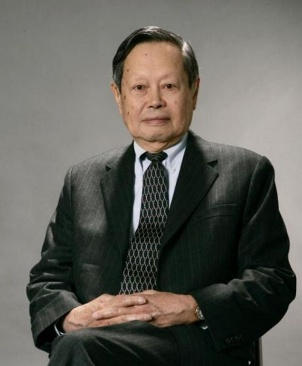
Chen-Ning Yang (1922–2025), a Nobel laureate in physics and one of the most influential scientists of the 20th century, left an indelible mark not only on theoretical physics but also on the sustainable development of science, education, and cross-cultural collaboration. His contributions to “sustainable engineering” extend beyond conventional environmental definitions, encompassing the longterm strengthening of scientific infrastructure, the nurturing of talent, and the fostering of global partnerships that endure across generations. This article honors his legacy by exploring four key dimensions of his work: scientific foundations for sustainability, institutional building, talent cultivation, and science-driven economic strategies.
- Open Access
- Opinion
Chen-Ning Yang: A Legacy of Sustainable Scientific Development and Global Cooperation †
- Zhan Zhang
Author Information
Received: 12 Nov 2025 | Revised: 04 Dec 2025 | Accepted: 26 Dec 2025 | Published: 31 Dec 2025
Abstract
Graphical Abstract
Keywords
sustainable scientific foundation | institutional building | talent cultivation | science-driven economic strategy
References
- 1.
Accumulation of Character Materials: What Has Dr. Chen-Ning Yang Left Us? Available online: https://it.sohu.com/a/945805483_273163 (accessed on 20 October 2025).
- 2.
A Profile of Dr. Chen-Ning Yang. Available online: https://www.xinhuanet.com/politics/20251018/5d7064c773a547 909d0ae84cc1e48491/c.html (accessed on 18 October 2025).
- 3.
Yang, C.-N. Beauty and physics. Knowl. Is Power 2001, 8, 18–19.
- 4.
Cao, K.; Yuan, G.; Liu, M.; et al. Organoselenium catalyzed reaction: Sustainable chemistry from laboratory to industry. Sustain. Eng. Novit 2025, 1, 1.
- 5.
The Contributions of Chen-Ning Yang: From Nobel-Winning Theory to Daily Life-His Work Powers MRI and Quantum Computers, Benefiting Us. Available online: https://baijiahao.baidu.com/s?id=1846751505243815792&wfr=spider&for=pc (accessed on 23 October 2025).
- 6.
Yang, C.-N. Beauty in Science and Art: Similarities and Differences. Keynote Speech at Academic forum, National Art Museum of China, Beijing, China, 18 April 2015.
- 7.
Full Transcript of Chen-Ning Yang’s Lecture at the University of Chinese Academy of Sciences. Available online: https://blog.csdn.net/qingwufeiyang12346/article/details/97924604 (accessed on 31 July 2019).
- 8.
Zou, W. Chen-Ning Yang’s thought of science-economy and China’s science and technology innovation. J. Dialectics Nat. 2021, 43, 108–113.
- 9.
Mourning the Loss and Remembering Dr. Chen-Ning Yang. Available online: https://www.tsinghua.edu.cn/info/1173/121840.htm (accessed on 18 October 2025).
- 10.
Qu, J. Chen-Ning Yang on “tenacity”: The cause of China’s rise. Tech. Dig. 2004, 7, 2.
- 11.
Sutton, C. Chen-Ning Yang obituary: Intuitive physicist whose work was inspired by the beauty of symmetry. Nature 2025, 647, 32.
- 12.
The Life of Professor Chen-Ning Yang. Available online: https://www.phys.tsinghua.edu.cn/info/1269/6566.htm (accessed on 18 October 2025).
- 13.
Yang, Z.N. 1995 Interview with Radio Television Hong Kong; Shuguang Ji (Dawn collection) (Rev. ed., 2018); SDX Joint Publishing Company: Beijing, China, 2018.
- 14.
Beyond Money: The Path of Philanthropy of Scientist Chen-Ning Yang. Available online: https://baijiahao.baidu.com/s?id=1846461129824423523&wfr=spider&for=pc (accessed on 20 October 2025).
- 15.
Huang, Q. The Debate between Tsung-Dao Lee and Chen-Ning Yang Regarding the Relationship between Basic and Applied Science Retains Its Enduring Relevance and Remains as Timely as Ever. Available online: https://news.ifeng.com/c/8bsL15mx5yx (accessed on 8 August 2024).
- 16.
Why Was Chen-Ning Yang So Great? A Scientific Legacy That Lights the Path Forward. Available online: https://news.china.com/socialgd/10000169/20251024/48932433_all.html (accessed on 24 October 2025).
How to Cite
Zhang, Z. Chen-Ning Yang: A Legacy of Sustainable Scientific Development and Global Cooperation †. Sustainable Engineering Novit 2025, 1 (1), 8. https://doi.org/10.53941/sen.2025.100008.
RIS
BibTex
Copyright & License

Copyright (c) 2025 by the authors.
This work is licensed under a Creative Commons Attribution 4.0 International License.
Article Metrics
176
Article Views
1
Citations
Contents
References

 Suite 4002 Level 4, 447 Collins Street, Melbourne, Victoria 3000, Australia
 General Inquiries: info@sciltp.com