
The use of illicit drugs is one of the most serious problems today, both from a social and environmental point of view. After cannabis, one of the most widely used drugs is cocaine. Global cocaine abuse has led the scientific community to include it among emerging contaminants, as it has been detected in increasing quantities in various environmental matrices. In particular, numerous studies have detected the presence of cocaine in aquatic environments, with concentrations ranging from 0.13 ng L−1 to 537 ng L−1, highlighting the potential implications for the organisms inhabiting these ecosystems. The consequences of exposure on the main inhabitants of the seawater and freshwater ecosystems, such as shellfish, crustaceans, and fish, are primarily attributable to physiological, biochemical, and behavioural alterations. These changes manifest as oxidative stress and neurotoxicity, which can lead to impaired growth, reproduction, and even survival of organisms. Furthermore, the ability of the substance and its metabolites to accumulate in the tissues of exposed organisms is of particular concern, with potential effects on ecosystems and human health. This review aims to provide an updated summary of the available knowledge on the ecotoxicological effects of cocaine in aquatic ecosystems, highlighting existing knowledge gaps and the need for further research.
- Open Access
- Review
Beyond Humans: Effects and Consequences of Illicit Drugs in the Aquatic Environment
- Cristiana Roberta Multisanti 1,
- Serafina Ferrara 2,
- Giuseppe Stracuzzi 2,
- Damià Barceló 3,
- Giuseppe Piccione 1,
- Nima Shiry 4,
- Federica Impellitteri 1 and
- Caterina Faggio 2,5,*
Author Information
Received: 08 January 2026 | Revised: 14 April 2026 | Accepted: 17 April 2026 | Published: 09 June 2026
Abstract
Graphical Abstract
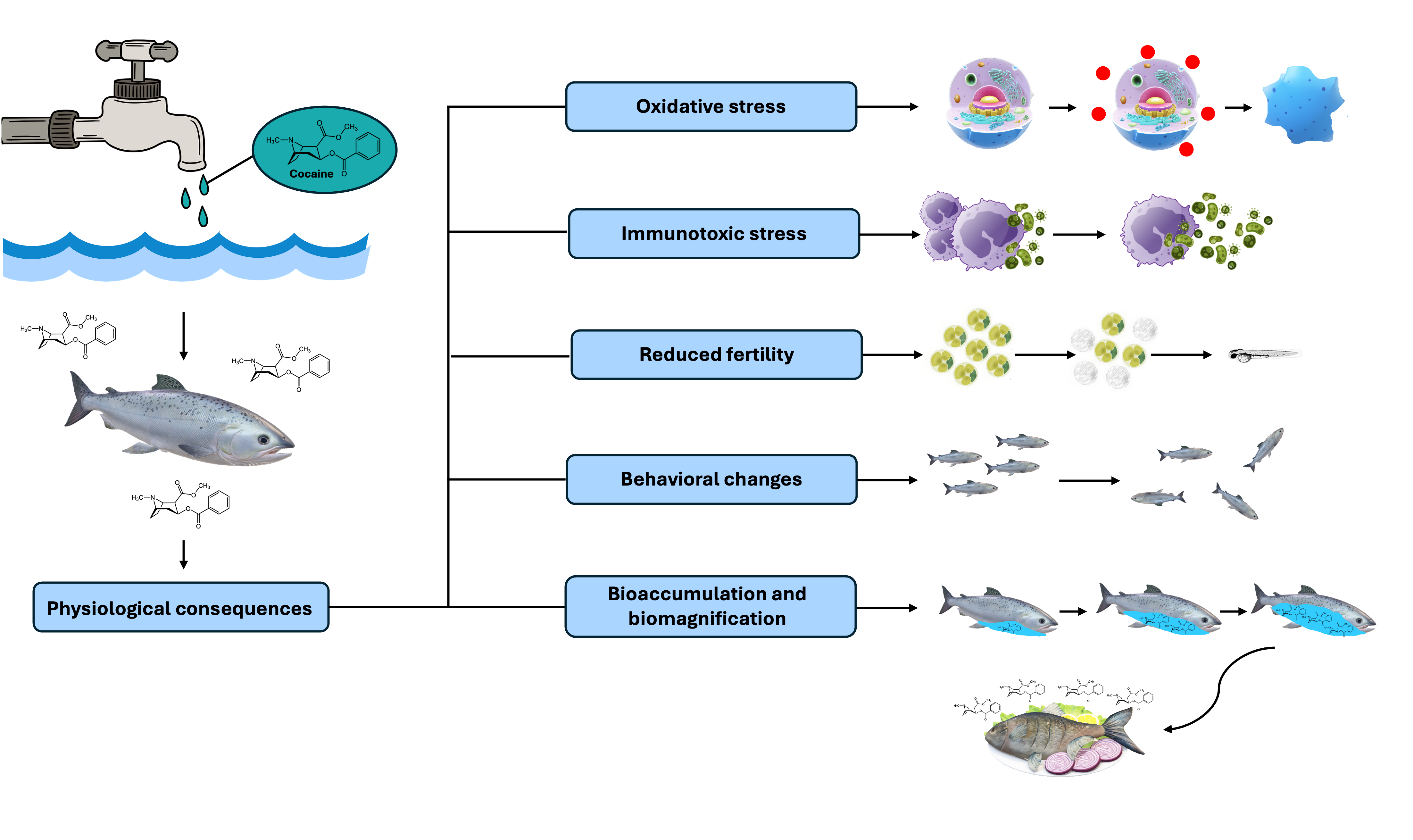
Keywords
cocaine | emerging contaminants | aquatic pollution | physiological damage | oxidative stress
References
- 1.
Sharma, D.; Sinha, R.; Multisanti, C.R.; et al. From personal hygiene products to health threats: Triclosan and its impact on endocrine health. Sci. Total Environ. 2025, 1006, 180856.
- 2.
Zicarelli, G.; Pastorino, P.; Mossotto, C.; et al. Hidden Hazard: The detrimental effect of personal care products on amphibian species. Aquat. Toxicol. 2025, 289, 107603.
- 3.
Bayrak, M.; Yüce, P.A.; Günal, A.Ç.; et al. Physiological and histopathological response of non-target organisms to emamectin benzoate: An effective innovative insecticide or a new ecosystem health hazard? Comp. Biochem. Physiol. C Toxicol. Pharmacol. 2025, 296, 110241.
- 4.
Meena, V.; Swami, D.; Chandel, A.; et al. Selected emerging contaminants in water: Global occurrence, existing treatment technologies, regulations and associated risk. J. Hazard. Mater. 2025, 483, 136541.
- 5.
Morin-Crini, N.; Lichtfouse, E.; Liu, G.; et al. Emerging contaminants: Analysis, aquatic compartments and water pollution. In Emerging Contaminants Vol. 1. Environmental Chemistry for a Sustainable World; Springer: Cham, Switzerland, 2021.
- 6.
Morin-Crini, N.; Lichtfouse, E.; Liu, G.; et al. Worldwide cases of water pollution by emerging contaminants: A review. Environ. Chem. Lett. 2022, 20, 2311–2338.
- 7.
Noguera-Oviedo, K.; Aga, D.S. Lessons learned from more than two decades of research on emerging contaminants in the environment. J. Hazard. Mater. 2016, 316, 242–251.
- 8.
Fontes, M.K.; Maranho, L.A.; Pereira, C.D.S. Review on the occurrence and biological effects of illicit drugs in aquatic ecosystems. Environ. Sci. Pollut. Res. 2020, 27, 30998–31034.
- 9.
Impellitteri, F.; Multisanti, C.R.; Rusanova, P.; et al. Exploring the impact of contaminants of emerging concern on fish and invertebrates physiology in the Mediterranean Sea. Biology 2023, 12, 767.
- 10.
Barathinivas, A.; Ramya, S.; Neethirajan, K.; et al. Ecotoxicological effects of pesticides on hematological parameters and oxidative enzymes in freshwater Catfish, Mystus keletius. Sustainability 2022, 14, 9529.
- 11.
Caferro, A.; Iovine, M.A.; Impellitteri, F.; et al. Morphological and functional response of Mytilus galloprovincialis exposed to the Enalapril metabolite, Enalaprilat. Environ. Toxicol. Pharmacol. 2025, 117, 104746.
- 12.
Sehonova, P.; Plhalova, L.; Blahova, J.; et al. Effects of selected tricyclic antidepressants on early-life stages of common carp (Cyprinus carpio). Chemosphere 2017, 185, 1072–1080.
- 13.
Multisanti, C.R.; Zicarelli, G.; Caferro, A.; et al. Personal care products as a potential source of aquatic pollution: Effect of polyvinyl alcohol on physiological and antioxidant responses in Mytilus galloprovincialis. Ecotoxicol. Environ. Saf. 2025, 298, 118336.
- 14.
Zicarelli, G.; Multisanti, C.R.; Falco, F.; et al. Evaluation of toxicity of Personal Care Products (PCPs) in freshwaters: Zebrafish as a model. Environ. Toxicol. Pharmacol. 2022, 94, 103923.
- 15.
Carrizo, J.C.; Duy, S.V.; Munoz, G.; et al. Suspect screening of pharmaceuticals, illicit drugs, pesticides, and other emerging contaminants in Argentinean Piaractus mesopotamicus, a fish species used for local consumption and export. Chemosphere 2022, 309, 136769.
- 16.
Impellitteri, F.; Yunko, K.; Martyniuk, V.; et al. Physiological and biochemical responses to caffeine and microplastics in Mytilus galloprovincialis. Sci. Total Environ. 2023, 890, 164075.
- 17.
Akhilghosh, K.A.; Ramesh, A.; Aiswriya, V.P.; et al. Prevalence of emerging contaminants in the outlet of sewage treatment plants: An evidential report from Kerala, India with future concerns. Environ. Sustain. 2026, 1–16. https://doi.org/10.1007/s42398-026-00421-y.
- 18.
Kannan, M.; Bojan, N.; Swaminathan, J.; et al. Nanopesticides in agricultural pest management and their environmental risks: A review. Int. J. Environ. Sci. Technol. 2023, 20, 10507–10532.
- 19.
Bodus, B.; O’Malley, K.; Dieter, G.; et al. Review of emerging contaminants in green stormwater infrastructure: Antibiotic resistance genes, microplastics, tire wear particles, PFAS, and temperature. Sci. Total Environ. 2024, 906, 167195.
- 20.
Baker, D.R.; Očenášková, V.; Kvicalova, M.; et al. Drugs of abuse in wastewater and suspended particulate matter—Further developments in sewage epidemiology. Environ. Int. 2012, 48, 28–38.
- 21.
Daughton, C.G. Illicit drugs and the environment. In Illicit Drugs in the Environment: Occurrence, Analysis, and Fate Using Mass Spectrometry; John Wiley & Sons, Inc.: Hoboken, NJ, USA, 2011; pp. 1–27.
- 22.
Campestrini, I.; Jardim, W.F. Occurrence of cocaine and benzoylecgonine in drinking and source water in the São Paulo State region, Brazil. Sci. Total Environ. 2017, 576, 374–380.
- 23.
Bijekar, S.; Padariya, H.D.; Yadav, V.K.; et al. The state of the art and emerging trends in the wastewater treatment in developing nations. Water 2022, 14, 2537.
- 24.
Pereira, C.D.S.; Maranho, L.A.; Cortez, F.S.; et al. Occurrence of pharmaceuticals and cocaine in a Brazilian coastal zone. Sci. Total Environ. 2016, 548, 148–154.
- 25.
Fijalkowski, K. Emerging contaminants in sludge (endocrine disruptors, pesticides, and pharmaceutical residues, including illicit drugs/controlled substances, etc.). In Industrial and Municipal Sludge; Elsevier: Amsterdam, The Netherlands, 2019; pp. 455–473.
- 26.
Rosi-Marshall, E.J.; Snow, D.; Bartelt-Hunt, S.L.; et al. A review of ecological effects and environmental fate of illicit drugs in aquatic ecosystems. J. Hazard. Mater. 2015, 282, 18–25.
- 27.
Sodré, F.F.; Freire, D.D.J.S.; Alcântara, D.B.; et al. Understanding illicit drug use trends during the Carnival holiday in the Brazilian capital through wastewater analysis. Front. Anal. Sci. 2022, 2, 930480.
- 28.
Roveri, V.; Guimarães, L.L.; Kiyotani, R.B.; et al. Temporal variability and ecological risks of pharmaceuticals and cocaine during the Christmas and New Year holidays in a beach area of North Coast of São Paulo, Brazil. Mar. Environ. Res. 2024, 202, 106759.
- 29.
Rousis, N.; Bade, R.; Romero-Sánchez, I.; et al. Festivals following the easing of COVID-19 restrictions: Prevalence of new psychoactive substances and illicit drugs. Environ. Int. 2023, 178, 108075.
- 30.
González-Alonso, S.; Merino, L.M.; Esteban, S.; et al. Occurrence of pharmaceutical, recreational and psychotropic drug residues in surface water on the northern Antarctic Peninsula region. Environ. Pollut. 2017, 229, 241–254.
- 31.
Castiglioni, S.; Zuccato, E. Illicit drugs as emerging contaminants. In Contaminants of Emerging Concern in the Environment: Ecological and Human Health Considerations; American Chemical Society: Washington, DC, USA, 2010; Chapter 5, pp. 119–136.
- 32.
Zhao, J.; Lu, J.; Zhao, H.; et al. Illicit drugs and their metabolites in urban wastewater: Analysis, occurrence and consumption in Xinjiang, China. Sci. Total Environ. 2022, 852, 158457.
- 33.
Melones-Peña, N.; Maroto-Melle, E.C.; Torrado-Del Rey, S.; et al. Ecotoxicological risk and seasonal removal of licit and illicit drugs in wastewater treatment plants: A comparison of secondary and tertiary processes. J. Hazard. Mater. 2025, 499, 140290.
- 34.
Pisetta, A.M.; Roveri, V.; Guimarães, L.L.; et al. First report on the occurrence of pharmaceuticals and cocaine in the coastal waters of Santa Catarina, Brazil, and its related ecological risk assessment. Environ. Sci. Pollut. Res. 2022, 29, 63099–63111.
- 35.
Jones-Lepp, T.L.; Alvarez, D.A.; Petty, J.D.; et al. Polar organic chemical integrative sampling and liquid chromatography–electrospray/ion-trap mass spectrometry for assessing selected prescription and illicit drugs in treated sewage effluents. Arch. Environ. Contam. Toxicol. 2004, 47, 427–439.
- 36.
Zuccato, E.; Chiabrando, C.; Castiglioni, S.; et al. Cocaine in surface waters: A new evidence-based tool to monitor community drug abuse. Environ. Health 2005, 4, 14.
- 37.
Pal, R.; Megharaj, M.; Kirkbride, K.P.; et al. Illicit drugs and the environment—A review. Sci. Total Environ. 2013, 463, 1079–1092.
- 38.
Evgenidou, E.N.; Konstantinou, I.K.; Lambropoulou, D.A. Occurrence and removal of transformation products of PPCPs and illicit drugs in wastewaters: A review. Sci. Total Environ. 2015, 505, 905–926.
- 39.
Devault, D.A.; Lévi, Y.; Karolak, S. Applying sewage epidemiology approach to estimate illicit drug consumption in a tropical context: Bias related to sewage temperature and pH. Sci. Total Environ. 2017, 584, 252–258.
- 40.
Mastroianni, N.; Bleda, M.J.; de Alda, M.L.; et al. Occurrence of drugs of abuse in surface water from four Spanish river basins: Spatial and temporal variations and environmental risk assessment. J. Hazard. Mater. 2016, 316, 134–142.
- 41.
Vazquez-Roig, P.; Blasco, C.; Picó, Y. Advances in the analysis of legal and illegal drugs in the aquatic environment. TrAC Trends Anal. Chem. 2013, 50, 65–77.
- 42.
Binelli, A.; Marisa, I.; Fedorova, M.; et al. First evidence of protein profile alteration due to the main cocaine metabolite (benzoylecgonine) in a freshwater biological model. Aquat. Toxicol. 2013, 140, 268–278.
- 43.
Drake, L.R.; Scott, P.J. DARK classics in chemical neuroscience: Cocaine. ACS Chem. Neurosci. 2018, 9, 2358–2372.
- 44.
Torchetti, T. Coca chewing and high altitude adaptation. UWOJA 1994, 1, 95–98.
- 45.
Biondich, A.S.; Joslin, J.D. Coca: The history and medical significance of an ancient Andean tradition. Emerg. Med. Int. 2016, 1, 4048764.
- 46.
Karch, S.B. A Brief History of Cocaine, 2nd ed.; Routledge: New York, NY, USA, 2017.
- 47.
Cisneros, O.; de de Jesus, K.G.; Then, E.O.; et al. Bilateral basal ganglia infarction after intranasal use of cocaine: A case report. Cureus 2019, 11, e4405.
- 48.
Cosenza, M.; Panza, L.; Califano, A.P.; et al. Carotid thrombosis in a crack cocaine smoker woman. Case Rep. Vasc. Med. 2020, 1, 4894825.
- 49.
Vermeulen, L.; Dirix, M.; Dendooven, A. Cocaine Consumption and Antineutrophil Cytoplasmic Antibody–associated Glomerulonephritis: A Case Report. Am. J. Forensic Med. Pathol. 2021, 42, 198–200.
- 50.
Redman, M. Cocaine: What is the crack? A brief history of the use of cocaine as an anesthetic. Anesthesiol. Pain Med. 2011, 1, 95–97.
- 51.
Heard, K.; Palmer, R.; Zahniser, N.R. Mechanisms of acute cocaine toxicity. Open Pharmacol. J. 2008, 2, 70.
- 52.
Grilly, D.M.; Salamone, J. Drugs, Brain, and Behavior, 6th ed.; Pearson: Boston, MA, USA, 2011.
- 53.
United Nation. World Drug Report 2025. Available online: https://www.unodc.org/unodc/en/data-and-analysis/world-drug-report-2025.html (accessed on 10 December 2025).
- 54.
Bravo, R.R.; Faria, A.C.; Brito-da-Costa, A.M.; et al. Cocaine: An updated overview on chemistry, detection, biokinetics, and pharmacotoxicological aspects including abuse pattern. Toxins 2022, 14, 278.
- 55.
Volkow, N.D.; Wang, G.J.; Fischman, M.W.; et al. Effects of route of administration on cocaine induced dopamine transporter blockade in the human brain. Life Sci. 2000, 67, 1507–1515.
- 56.
Huang, Y.; Xie, X.; Zhou, L.J.; et al. Multi-phase distribution and risk assessment of endocrine disrupting chemicals in the surface water of the Shaying River-Huai River Basin, China. Ecotoxicol. Environ. Saf. 2019, 173, 45–53.
- 57.
Hedgespeth, M.L.; Gibson, N.; McCord, J.; et al. Suspect screening and prioritization of chemicals of concern (COCs) in a forest-water reuse system watershed. Sci. Total Environ. 2019, 694, 133378.
- 58.
van Nuijs, A.L.; Pecceu, B.; Theunis, L.; et al. Spatial and temporal variations in the occurrence of cocaine and benzoylecgonine in waste- and surface water from Belgium and removal during wastewater treatment. Water Res. 2009, 43, 1341–1349.
- 59.
Zhang, Y.; Zhang, T.; Guo, C.; et al. Drugs of abuse and their metabolites in the urban rivers of Beijing, China: Occurrence, distribution, and potential environmental risk. Sci. Total Environ. 2017, 579, 305–313.
- 60.
Thomas, K.V.; Da Silva, F.M.A.; Langford, K.H.; et al. Screening for selected human pharmaceuticals and cocaine in the urban streams of Manaus, Amazonas, Brazil. JAWRA 2014, 50, 302–308.
- 61.
Roveri, V.; Guimarães, L.L.; Toma, W.; et al. Occurrence of pharmaceuticals and cocaine in the urban drainage channels located on the outskirts of the São Vicente Island (São Paulo, Brazil) and related ecological risk assessment. Environ. Sci. Pollut. Res. 2022, 29, 57931–57945.
- 62.
Klosterhaus, S.L.; Grace, R.; Hamilton, M.C.; et al. Method validation and reconnaissance of pharmaceuticals, personal care products, and alkylphenols in surface waters, sediments, and mussels in an urban estuary. Environ. Int. 2013, 54, 92–99.
- 63.
Castiglioni, S.; Davoli, E.; Riva, F.; et al. Data on occurrence and fate of emerging contaminants in a urbanised area. Data Brief 2018, 17, 533–543.
- 64.
Fontes, M.K.; de Campos, B.G.; Cortez, F.S.; et al. Seasonal monitoring of cocaine and benzoylecgonine in a subtropical coastal zone (Santos Bay, Brazil). Mar. Pollut. Bull. 2019, 149, 110545.
- 65.
López, H.M. Footprints of cocaine: a bibliometric analysis and systematic review of the environmental impacts of the cocaine value chain in Latin America. Environ. Res. Lett. 2025, 20, 033002.
- 66.
Acosta Garcia, N. Catching the White Fish: Gossip and cocaine on Colombia’s Northern Pacific coast. JRAI 2021, 27, 128–145.
- 67.
Binelli, A.; Pedriali, A.; Riva, C.; et al. Illicit drugs as new environmental pollutants: Cyto-genotoxic effects of cocaine on the biological model Dreissena polymorpha. Chemosphere 2012, 86, 906–911.
- 68.
Capaldo, A.; Gay, F.; Lepretti, M.; et al. Effects of environmental cocaine concentrations on the skeletal muscle of the European eel (Anguilla anguilla). Sci. Total Environ. 2018, 640, 862–873.
- 69.
Bijlsma, L.; Boix, C.; Niessen, W.M.; et al. Investigation of degradation products of cocaine and benzoylecgonine in the aquatic environment. Sci. Total Environ. 2013, 443, 200–208.
- 70.
dos Santos Barbosa Ortega, A.; Maranho, L.A.; Nobre, C.R.; et al. Detoxification, oxidative stress, and cytogenotoxicity of crack cocaine in the brown mussel Perna perna. Environ. Sci. Pollut. Res. 2019, 26, 27569–27578.
- 71.
De Felice, B.; Salgueiro-González, N.; Castiglioni, S.; et al. Biochemical and behavioral effects induced by cocaine exposure to Daphnia magna. Sci. Total Environ. 2019, 689, 141–148.
- 72.
Nowicki, R.J.; Thomson, J.A.; Fourqurean, J.W.; et al. Loss of predation risk from apex predators can exacerbate marine tropicalization caused by extreme climatic events. J. Anim. Ecol. 2021, 90, 2041–2052.
- 73.
de Farias Araujo, G.; Medeiros, R.J.; Maciel-Magalhães, M.; et al. Zebrafish (Danio rerio) as a model to assess the effects of cocaine as a drug of abuse and its environmental implications. Environ. Sci. Pollut. Res. 2023, 30, 28459–28479.
- 74.
da Silva Souza, L.; Pusceddu, F.H.; Cortez, F.S.; et al. Harmful effects of cocaine byproduct in the reproduction of sea urchin in different ocean acidification scenarios. Chemosphere 2019, 236, 124284.
- 75.
de Farias Araujo, G.; de Oliveira, L.V.A.; Hoff, R.B.; et al. “Cocaine Shark”: First report on cocaine and benzoylecgonine detection in sharks. Sci. Total Environ. 2024, 948, 174798.
- 76.
Parolini, M.; Ghilardi, A.; Della Torre, C.; et al. Environmental concentrations of cocaine and its main metabolites modulated antioxidant response and caused cyto-genotoxic effects in zebrafish embryo cells. Environ. Pollut. 2017, 226, 504–514.
- 77.
Kovacic, P.; Ames, J.R.; Jawdosiuk, M.; Ryan, M.D. Electron transfer mechanism for cocaine action. In Redox Chemistry and Interfacial Behavior of Biological Molecules; Dryhurst, G., Niki, K., Eds.; Springer: Boston, MA, USA, 1988; pp. 323–331.
- 78.
Kovacic, P. Role of oxidative metabolites of cocaine in toxicity and addiction: Oxidative stress and electron transfer. Med. Hypotheses 2005, 64, 350–356.
- 79.
Kloss, M.W.; Rosen, G.M.; Rauckman, E.J. Biotransformation of norcocaine to norcocaine nitroxide by rat brain microsomes. Psychopharmacology 1984, 84, 221–224.
- 80.
Lloyd, R.V.; Shuster, L.; Mason, R.P. Reexamination of the microsomal transformation of N-hydroxynorcocaine to norcocaine nitroxide. Mol. Pharmacol. 1993, 43, 645–648.
- 81.
Kloss, M.W.; Rosen, G.M.; Rauckman, E.J. Evidence of enhanced in vivo lipid peroxidation after acute cocaine administration. Toxicol. Lett. 1983, 15, 65–70.
- 82.
Gutteridge, J. Lipid peroxidation and antioxidants as biomarkers of tissue damage. Clin. Chem. 1995, 41, 1819–1828.
- 83.
Multisanti, C.R.; Ferrara, S.; Piccione, G.; et al. Plastics and their derivatives are impacting animal ecophysiology: A review. Comp. Biochem. Physiol. C Toxicol. Pharmacol. 2025, 291, 110149.
- 84.
Multisanti, C.R.; Rizzo, M.G.; Impellitteri, F.; et al. Evaluation of physiological changes in Mytilus galloprovincialis exposed to an isothiazolinone-based compound: A multi-marker approach. Ecotoxicol. Environ. Saf. 2025, 308, 119508.
- 85.
Impellitteri, F.; Multisanti, C.R.; Di Paola, D.; et al. A Comparative Analysis of Physiological and Morphological Alteration in Mytilus galloprovincialis After Exposure to Polyethylene Glycol (PEG). Microsc. Res. Tech. 2025, 88, 2222–2231.
- 86.
Martyniuk, V.; Matskiv, T.; Yunko, K.; et al. Reductive stress and cytotoxicity in the swollen river mussel (Unio tumidus) exposed to microplastics and salinomycin. Environ. Pollut. 2024, 350, 123724.
- 87.
Freitas, R.; Silvestro, S.; Pagano, M.; et al. Impacts of salicylic acid in Mytilus galloprovincialis exposed to warming conditions. Environ. Toxicol. Pharmacol. 2020, 80, 103448.
- 88.
Tresnakova, N.; Famulari, S.; Zicarelli, G.; et al. Multi-characteristic toxicity of enantioselective chiral fungicide tebuconazole to a model organism Mediterranean mussel Mytilus galloprovincialis Lamarck, 1819 (Bivalve: Mytilidae). Sci. Total Environ. 2023, 862, 160874.
- 89.
Fontes, M.K.; Dourado, P.L.R.; de Campos, B.G.; et al. Environmentally realistic concentrations of cocaine in seawater disturbed neuroendocrine parameters and energy status in the marine mussel Perna perna. Comp. Biochem. Physiol. C Toxicol. Pharmacol. 2022, 251, 109198.
- 90.
Ricciardi, F.; Binelli, A.; Provini, A. Use of two biomarkers (CYP450 and acetylcholinesterase) in zebra mussel for the biomonitoring of Lake Maggiore (northern Italy). Ecotoxicol. Environ. Saf. 2006, 63, 406–412.
- 91.
Ferreira-Vieira, T.; Guimaraes, I.M.; Silva, F.R.; et al. Alzheimer’s disease: Targeting the cholinergic system. Curr. Neuropharmacol. 2016, 14, 101–115.
- 92.
Rickwood, C.J.; Galloway, T.S. Acetylcholinesterase inhibition as a biomarker of adverse effect: A study of Mytilus edulis exposed to the priority pollutant chlorfenvinphos. Aquat. Toxicol. 2004, 67, 45–56.
- 93.
Gagné, F.; André, C.; Gélinas, M. Neurochemical effects of benzodiazepine and morphine on freshwater mussels. Comp. Biochem. Physiol. C Toxicol. Pharmacol. 2010, 152, 207–214.
- 94.
Fontes, M.K.; de Campos, B.G.; Cortez, F.S.; et al. Mussels get higher: A study on the occurrence of cocaine and benzoylecgonine in seawater, sediment and mussels from a subtropical ecosystem (Santos Bay, Brazil). Sci. Total Environ. 2021, 757, 143808.
- 95.
Bacqué-Cazenave, J.; Bharatiya, R.; Barrière, G.; et al. Serotonin in animal cognition and behavior. Int. J. Mol. Sci. 2020, 21, 1649.
- 96.
Cubero-Leon, E.; Ciocan, C.M.; Hill, E.M.; et al. Estrogens disrupt serotonin receptor and cyclooxygenase mRNA expression in the gonads of mussels (Mytilus edulis). Aquat. Toxicol. 2010, 98, 178–187.
- 97.
Beiras, R.; Widdows, J. Effect of the neurotransmitters dopamine, serotonin and norepinephrine on the ciliary activity of mussel (Mytilus edulis) larvae. Mar. Biol. 1995, 122, 597–603.
- 98.
De Felice, B.; Parolini, M. Effects of single and combined exposure to cocaine and benzoylecgonine on the oxidative status of Mytilus galloprovincialis. Environ. Toxicol. Pharmacol. 2020, 80, 103475.
- 99.
de Oliveira David, J.A.; Salaroli, R.B.; Fontanetti, C.S. The significance of changes in Mytella falcata (Orbigny, 1842) gill filaments chronically exposed to polluted environments. Micron 2008, 39, 1293–1299.
- 100.
Livingston, D.R.; Förlin, L.; George, S.G. Molecular biomarkers and toxic consequences of impact by organic pollution in aquatic organisms. In Water Quality and Stress Indicators in Marine and Freshwater Systems: Linking Levels of Organization; Freshwater Biological Association: Ambleside, UK, 1994.
- 101.
Martyniuk, V.; Khoma, V.; Matskiv, T.; et al. Combined effect of microplastic, salinomycin and heating on Unio tumidus. Environ. Toxicol. Pharmacol. 2023, 98, 104068.
- 102.
Lushchak, V.I. Environmentally induced oxidative stress in aquatic animals. Aquat. Toxicol. 2011, 101, 13–30.
- 103.
Wang, X.; Yang, H.; Liu, G.; et al. Enzyme responses and lipid peroxidation in gills and hepatopancreas of clam Mactra vereformis following cadmium exposure. J. Oceanol. Limnol. 2011, 29, 981–989.
- 104.
Pereira, L.; Fernandes, M.N.; Martinez, C.B. Hematological and biochemical alterations in the fish Prochilodus lineatus caused by the herbicide clomazone. Environ. Toxicol. Pharmacol. 2013, 36, 1–8.
- 105.
Gonzalez-Rey, M.; Bebianno, M.J. Effects of non-steroidal anti-inflammatory drug (NSAID) diclofenac exposure in mussel Mytilus galloprovincialis. Aquat. Toxicol. 2014, 148, 221–230.
- 106.
Verlecar, X.N.; Jena, K.B.; Chainy, G.B.N. Modulation of antioxidant defences in digestive gland of Perna viridis (L.) on mercury exposures. Chemosphere 2008, 71, 1977–1985.
- 107.
Vlahogianni, T.H.; Valavanidis, A. Heavy-metal effects on lipid peroxidation and antioxidant defence enzymes in mussels Mytilus galloprovincialis. Chem. Ecol. 2007, 23, 361–371.
- 108.
Gwoździński, K.; Gonciarz, M.; Kilańczyk, E.; et al. Antioxidant enzyme activities and lipid peroxidation in Mytilus galloprovincialis from the French Mediterranean coast. Oceanol. Hydrobiol. Stud. 2010, 39, 33–43.
- 109.
Khessiba, A.; Roméo, M.; Aïssa, P. Effects of some environmental parameters on catalase activity measured in the mussel (Mytilus galloprovincialis) exposed to lindane. Environ. Pollut. 2005, 133, 275–281.
- 110.
Kappus, H. Lipid peroxidation: Mechanisms, analysis, enzymology and biological relevance. In Oxidative Stress; Elsevier: Amsterdam, The Netherlands, 1985; pp. 273–310.
- 111.
Mistri, M.; Munari, C.; Pagnoni, A.; et al. Accumulation of trace metals in crayfish tissues: Is Procambarus clarkii a vector of pollutants in Po Delta inland waters? Eur. Zool. J. 2020, 87, 46–57.
- 112.
De Felice, B.; De Pascalis, F.; Manenti, R.; et al. Differential biochemical and behavioral responses induced by cocaine and benzoylecgonine exposure to the red swamp crayfish Procambarus clarkii. Sci. Total Environ. 2022, 844, 157025.
- 113.
Pereira, R.B.; Andrade, P.B.; Valentão, P. A comprehensive view of the neurotoxicity mechanisms of cocaine and ethanol. Neurotox. Res. 2015, 28, 253–267.
- 114.
Parolini, M.; Bini, L.; Magni, S.; et al. Exposure to cocaine and its main metabolites altered the protein profile of zebrafish embryos. Environ. Pollut. 2018, 232, 603–614.
- 115.
García-Cambero, J.P.; García-Cortés, H.; Valcárcel, Y.; et al. Environmental concentrations of the cocaine metabolite benzoylecgonine induced sublethal toxicity in the development of plants but not in a zebrafish embryo–larval model. J. Hazard. Mater. 2015, 300, 866–872.
- 116.
Zahm, D.S.; Becker, M.L.; Freiman, A.J.; et al. Fos after single and repeated self-administration of cocaine and saline in the rat: Emphasis on the Basal forebrain and recalibration of expression. Neuropsychopharmacology 2010, 35, 445–463.
- 117.
Singh, S.; Tiwari, R.K.; Pandey, R.S. Evaluation of acute toxicity of triazophos and deltamethrin and their inhibitory effect on AChE activity in Channa punctatus. Toxicol. Rep. 2018, 5, 85–89.
- 118.
Vicentic, A.; Lakatos, A.; Kuhar, M.J. CART (cocaine- and amphetamine-regulated transcript) peptide receptors: Specific binding in AtT20 cells. Eur. J. Pharmacol. 2005, 528, 188–189.
- 119.
Rasmussen, S.G.; Carroll, F.I.; Maresch, M.J.; et al. Biophysical characterization of the cocaine binding pocket in the serotonin transporter using a fluorescent cocaine analogue as a molecular reporter. J. Biol. Chem. 2001, 276, 4717–4723.
- 120.
Parolini, M.; Binelli, A. Sub-lethal effects induced by a mixture of three non-steroidal anti-inflammatory drugs (NSAIDs) on the freshwater bivalve Dreissena polymorpha. Ecotoxicology 2012, 21, 379–392.
- 121.
Diez-Fernandez, C.; Zaragoza, A.; Alvarez, A.M.; et al. Cocaine cytotoxicity in hepatocyte cultures from phenobarbital-induced rats: Involvement of reactive oxygen species and expression of antioxidant defense systems. Biochem. Pharmacol. 1999, 58, 797–806.
- 122.
Neri, M.; Bello, S.; Pascale, N.; et al. The long way to objectify organ damage related to cocaine abuse: Oxidative stress is the main culprit. Mini-Rev. Org. Chem. 2013, 10, 373–383.
- 123.
Capaldo, A.; Gay, F.; Caputo, I.; et al. Effects of environmental cocaine concentrations on COX and caspase-3 activity, GRP-78, ALT, CRP and blood glucose levels in the liver and kidney of the European eel (Anguilla anguilla). Ecotoxicol. Environ. Saf. 2021, 208, 111475.
- 124.
Keltz, E.; Khan, F.Y.; Mann, G. Rhabdomyolysis. The role of diagnostic and prognostic factors. Muscles Ligaments Tendons J. 2014, 3, 303–312.
- 125.
Brazeau, G.A.; McArdle, A.; Jackson, M.J. Effects of cocaine on leakage of creatine kinase from skeletal muscle: In vitro and in vivo studies in mice. Life Sci. 1995, 57, 1569–1578.
- 126.
Ordway, G.A.; Garry, D.J. Myoglobin: An essential hemoprotein in striated muscle. J. Exp. Biol. 2004, 207, 3441–3446.
- 127.
Khan, F.Y. Rhabdomyolysis: A review of the literature. Neth. J. Med. 2009, 67, 272–283.
- 128.
Bernet, D.; Schmidt, H.; Meier, W.; et al. Histopathology in fish: Proposal for a protocol to assess aquatic pollution. J. Fish Dis. 1999, 22, 25–34.
- 129.
Valente, M.J.; Henrique, R.; Vilas-Boas, V.; et al. Cocaine-induced kidney toxicity: An in vitro study using primary cultured human proximal tubular epithelial cells. Arch. Toxicol. 2012, 86, 249–261.
- 130.
Hotamisligil, G.S. Endoplasmic reticulum stress and the inflammatory basis of metabolic disease. Cell 2010, 140, 900–917.
- 131.
Banaee, M. Physiological dysfunction in fish after insecticides exposure. In Insecticides: Development of Safer and More Effective Technologies; IntechOpen: London, UK, 2013.
- 132.
Villaplana, C.R.A.; Andrés, M.C.; Collado, J.T.R.; et al. Hyperglycemia secondary to consumption of cocaine and atypical antipsychotic drugs. Endocrinol. Nutr. 2008, 55, 372–375. https://doi.org/10.1016/S1575-0922(08)72799-2.
- 133.
Gay, F.; Maddaloni, M.; Valiante, S.; et al. Endocrine disruption in the European eel, Anguilla anguilla, exposed to an environmental cocaine concentration. Water Air Soil Pollut. 2013, 224, 1579.
- 134.
Kirla, K.T.; Groh, K.J.; Steuer, A.E.; et al. From the Cover: Zebrafish larvae are insensitive to stimulation by cocaine: Importance of exposure route and toxicokinetics. Toxicol. Sci. 2016, 154, 183–193. https://doi.org/10.1093/toxsci/kfw156.
- 135.
Gholamhosseini, A.; Banaee, M.; Sureda, A.; et al. Physiological response of freshwater crayfish, Astacus leptodactylus exposed to polyethylene microplastics at different temperature. Comp. Biochem. Physiol. C Toxicol. Pharmacol. 2023, 267, 109581.
- 136.
Subedi, B.; Anderson, S.; Croft, T.L.; et al. Gene alteration in zebrafish exposed to a mixture of substances of abuse. Environ. Pollut. 2021, 278, 116777.
- 137.
Mech, A.M.; Merteroglu, M.; Sealy, I.M.; et al. Behavioral and gene regulatory responses to developmental drug exposures in zebrafish. Front. Psychiatry 2022, 12, 795175.
- 138.
Mello, F.V.; Cunha, S.C.; Fogaça, F.H.; et al. Occurrence of pharmaceuticals in seafood from two Brazilian coastal areas: Implication for human risk assessment. Sci. Total Environ. 2022, 803, 149744.
- 139.
Fontes, M.K.; Rosati, L.; Di Lorenzo, M.; et al. Aquatic pollution and risks to biodiversity: The example of cocaine effects on the ovaries of Anguilla anguilla. Animals 2022, 12, 1766.
- 140.
Almeida, E.A.; Bainy, A.C.; Medeiros, M.H.; et al. Effects of trace metal and exposure to air on serotonin and dopamine levels in tissues of the mussel Perna perna. Mar. Pollut. Bull. 2003, 46, 1485–1490.
- 141.
El-Bizri, H.; Guest, I.; Varma, D.R. Effects of cocaine on rat embryo development in vivo and in cultures. Pediatr. Res. 1991, 29, 187–190.
- 142.
Mersereau, E.J.; Poitra, S.L.; Espinoza, A.; et al. The effects of cocaine on heart rate and electrocardiogram in zebrafish (Danio rerio). Comp. Biochem. Physiol. C Toxicol. Pharmacol. 2015, 172, 1–6.
- 143.
Barreto-Valer, K.; Lopez-Bellido, R.; Macho Sanchez-Simon, F.; et al. Modulation by cocaine of dopamine receptors through miRNA-133b in zebrafish embryos. PLoS ONE 2012, 7, e52701.
- 144.
Falfushynska, H.; Rychter, P.; Boshtova, A.; et al. Illicit Drugs in Surface Waters: How to Get Fish off the Addictive Hook. Pharmaceuticals 2024, 17, 537.
- 145.
del Carmen Gómez-Regalado, M.; Martín, J.; Santos, J.L.; et al. Bioaccumulation/bioconcentration of pharmaceutical active compounds in aquatic organisms: Assessment and factors database. Sci. Total Environ. 2023, 861, 160638.
- 146.
Serra-Compte, A.; Maulvault, A.L.; Camacho, C.; et al. Effects of water warming and acidification on bioconcentration, metabolization and depuration of pharmaceuticals and endocrine disrupting compounds in marine mussels (Mytilus galloprovincialis). Environ. Pollut. 2018, 236, 824–834.
- 147.
European Commission. Commission Regulation (EU) No 253/2011 of 15 March 2011 Amending Regulation (EC) No 1907/2006 of the European Parliament and of the Council on the Registration, Evaluation, Authorisation and Restriction of Chemicals (REACH) as regards Annex XIII; European Commission: Brussels, Belgium, 2011.
- 148.
Roveri, V.; Souza, U.P.; da Costa, J.H.A.; et al. Pharmaceuticals and cocaine in Brazilian seafood: an integrated weight-of-evidence assessment of bioaccumulation. Reg. Stud. Mar. Sci. 2026, 96, 104953.
- 149.
Burgos-Aceves, M.A.; Faggio, C. An approach to the study of the immunity functions of bivalve haemocytes: physiology and molecular aspects. Fish shellfish Immunol. 2017, 67, 513–517.
- 150.
Beyer, J.; Green, N.W.; Brooks, S.; et al. Blue mussels (Mytilus edulis spp.) as sentinel organisms in coastal pollution monitoring: A review. Mar. Environ. Res. 2017, 130, 338–365.
- 151.
Miller, T.H.; Ng, K.T.; Bury, S.T.; et al. Biomonitoring of pesticides, pharmaceuticals and illicit drugs in a freshwater invertebrate to estimate toxic or effect pressure. Environ. Int. 2019, 129, 595–606.
- 152.
Dodder, N.G.; Maruya, K.A.; Ferguson, P.L.; et al. Occurrence of contaminants of emerging concern in mussels (Mytilus spp.) along the California coast and the influence of land use, storm water discharge, and treated wastewater effluent. Mar. Pollut. Bull. 2014, 81, 340–346.
- 153.
Roveri, V.; Souza, U.P.; da Costa, J.H.A.; et al. Occurrence of pharmaceuticals and cocaine in liver and muscle of different fish species from a Brazilian coastal zone. Reg. Stud. Mar. Sci. 2025, 88, 104266.
- 154.
Maciel, T.R.; Vaz-dos-Santos, A.M.; Vianna, M. Can otoliths of Genidens genidens (Cuvier 1829) (Siluriformes: Ariidae) reveal differences in life strategies of males and females? Environ. Biol. Fishes 2018, 101, 1589–1598.
- 155.
Capaldo, A.; Gay, F.; Maddaloni, M.; et al. Presence of cocaine in the tissues of the European eel, Anguilla anguilla, exposed to environmental cocaine concentrations. Water Air Soil Pollut. 2012, 223, 2137–2143.
- 156.
Levisky, J.A.; Bowerman, D.L.; Jenkins, W.W.; et al. Drug deposition in adipose tissue and skin: Evidence for an alternative source of positive sweat patch tests. Forensic Sci. Int. 2000, 110, 35–46.
- 157.
Nestler, E.J.; Malenka, R.C. The addicted brain. Sci. Am. 2004, 290, 78–85.
- 158.
Hauser-Davis, R.A.; Rocha, R.C.C.; Saint’Pierre, T.D.; et al. Metal concentrations and metallothionein metal detoxification in blue sharks, Prionace glauca L. from the Western North Atlantic Ocean. J. Trace Elem. Med. Biol. 2021, 68, 126813.
- 159.
Tiktak, G.P.; Butcher, D.; Lawrence, P.J.; et al. Are concentrations of pollutants in sharks, rays and skates (Elasmobranchii) a cause for concern? A systematic review. Mar. Pollut. Bull. 2020, 160, 111701.
- 160.
Dulvy, N.K.; Pacoureau, N.; Rigby, C.L.; et al. Overfishing drives over one-third of all sharks and rays toward a global extinction crisis. Curr. Biol. 2021, 31, 4773–4787.
- 161.
Festa, E.D.; Russo, S.J.; Gazi, F.M.; et al. Sex differences in cocaine-induced behavioral responses, pharmacokinetics, and monoamine levels. Neuropharmacology 2004, 46, 672–687.
- 162.
Willmer, I.Q.; Wosnick, N.; Rocha, R.C.C.; et al. First report on metal and metalloid contamination of Ampullae of Lorenzini in sharks: A case study employing the Brazilian sharpnose shark Rhizoprionodon lalandii from Southeastern Brazil as an ecotoxicological model. Mar. Pollut. Bull. 2022, 179, 113671.
- 163.
Hauser-Davis, R.A.; Wosnick, N.; Hoff, R.B.; et al. Cocaine and other illicit drugs in the marine environment: Potential effects and future directions. Mar. Pollut. Bull. 2024, 208, 117064.


This work is licensed under a Creative Commons Attribution 4.0 International License.
