
- Rock cultural heritages are highly vulnerable to multifaceted deterioration processes.
- Traditional conservation are constrained by issues of compatibility, durability, and long-term stability.
- Establishment of international standards and collaborative networks needed to ensure sustainable preservation.
- Open Access
- Article
Protective Materials for Rock Cultural Heritage: Current Status and Future Perspectives
- Wengang Zhang 1,2,
- Zeyi Hao 1 and
- Huan Liu 1,2,3,*
Author Information
Received: 24 November 2025 | Revised: 09 January 2026 | Accepted: 07 February 2026 | Published: 04 March 2026
Highlights
Abstract
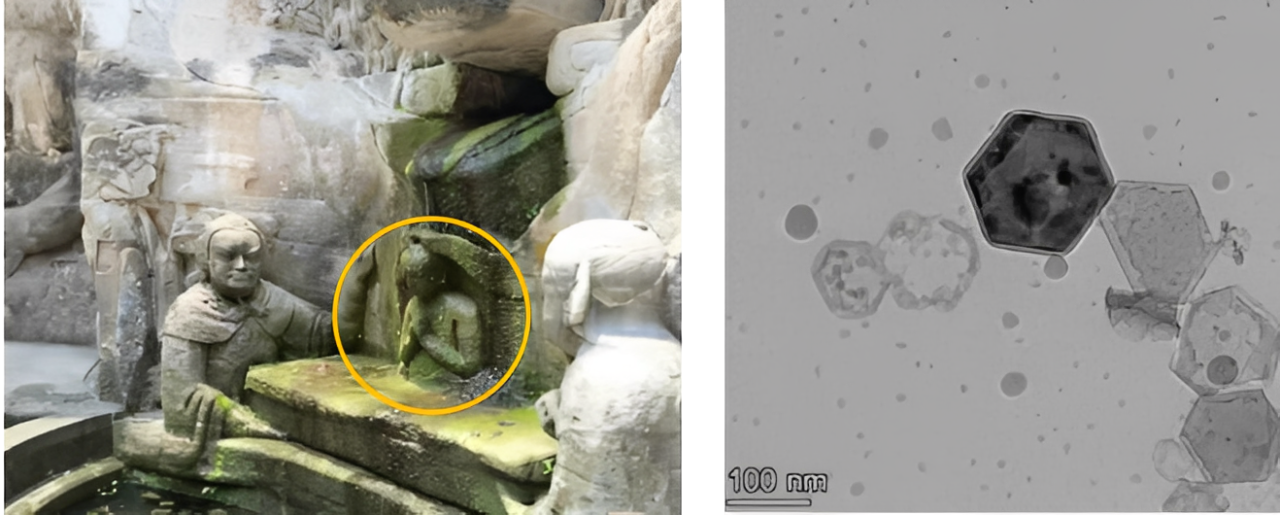
Rock cultural heritage, as a vital constituent of human civilization, is highly vulnerable to multifaceted deterioration processes-including weathering, cracking, and salt efflorescence—when subjected to prolonged exposure to complex natural and anthropogenic environments. Addressing the conservation and restoration of these materials has therefore emerged as an urgent priority. Traditional conservation agents, such as limewash, silicate-based consolidation, and natural organic substances, have provided valuable practical experience; nonetheless, they are constrained by issues of compatibility, durability, and long-term stability. In recent decades, advances in nanomaterials, polymers, and functional composites have offered new possibilities, exhibiting favorable characteristics such as superior penetration, enhanced long-term durability, weather resistance, and environmental sustainability. Concurrently, the exploration of biomimetic materials has further expanded the conceptual framework of heritage conservation. Case studies suggest that these novel materials confer notable advantages in practice; however, uncertainties remain regarding their long-term performance, substrate compatibility, and structural stability. The field continues to be challenged by the absence of standardized evaluation protocols, limited longitudinal monitoring data, and insufficient interdisciplinary integration. Looking ahead, research should prioritize the development of environmentally friendly and intelligent materials, promote the transition from single-material innovation toward systematic conservation strategies, and reinforce the establishment of international standards and collaborative networks to ensure the sustainable preservation and transmission of rock cultural heritage.
Graphical Abstract
Keywords
rock cultural heritage | deterioration mechanisms | conservation materials | nanomaterials | biomimetic materials
References
- 1.
Yang, Z.G. An analyses of sculpture patterns of Mount Xumi Grottoes in China. Pak. Soc. Sci. Rev. 2023, 7, 921–934.
- 2.
Chen, Y.Y.; Wu, H.C.; Wei, W.B. Different patterns of religious settlements based on the historic landscape approach: Cases of buddhist
grottoes in Hexi Corridor. Religions 2024, 15, 1531. - 3.
Zhang, X.H. Analysis on the social culture in the art theme of China Gongyi Grotto Temple. In Proceedings of the 2015 2nd International Conference on Education, Language, Art and Intercultural Communication (ICELAIC-15); Atlantis Press: Kaifeng, China, 2015.
- 4.
Ling, J.Y.; Gao, F.Y. Cultural analysis of Yungang Grottoes under multicultural background. In Proceedings of the Asia International
Symposium on Language, Literature and Translation, 2017. - 5.
Miscevic, P.; Vlastelica, G. Impact of weathering on slope stability in soft rock mass. J. Rock Mech. Geotech. Eng. 2014, 6, 240–250.
- 6.
Wong, L.N.Y.; Maruvanchery, V.; Liu, G. Water effects on rock strength and stiffness degradation. Acta Geotech. 2016, 11, 713–
737. - 7.
Gunzburger, Y.; Merrien-Soukatchoff, V.; Guglielmi, Y. Influence of daily surface temperature fluctuations on rock slope stability: Case
study of the Rochers de Valabres slope (France). Int. J. Rock Mech. Min. Sci. 2005, 42, 331–349. - 8.
Xu, K.J.; Wu, W.H. Geoparks and geotourism in China: A sustainable approach to geoheritage conservation and local
development—A review. Land 2022, 11, 1493. - 9.
Rossi, A.M.; Webb, R.E. The consequences of allowing unrestricted tourist access at an Aboriginal site in a fragile environment:
The erosive effect of trampling. Conserv. Manage. Archaeol. Sites 2007, 9, 219–236. - 10.
Cazalla, O.; Rodriguez-Navarro, C.; Sebastian, E.; et al. Aging of lime putty: Effects on traditional lime mortar carbonation. J. Am.
Ceram. Soc. 2000, 83, 1070–1076. - 11.
Menningen, J.; Sassoni, E.; Sobott, R.; et al. Constraints of the durability of inorganic and organic consolidants for marble. Environ.
Earth Sci. 2021, 80, 1–18. - 12.
Zarraga, R.; Cervantes, J.; Salazar-Hernandez, C.; et al. Effect of the addition of hydroxyl-terminated polydimethylsiloxane to TEOSbased stone consolidants. J. Cult. Herit. 2010, 11, 138–144.
- 13.
Lazzari, M.; Chiantore, O. Thermal-ageing of paraloid acrylic protective polymers. Polymers 2000, 41, 6447–6455.
- 14.
Scherer, G.W.; Wheeler, G.S. Silicate consolidants for stone. Key Eng. Mater. 2009, 391, 1–25.
- 15.
Hansen, E.; Doehne, E.; Fidler, J.; et al. A review of selected inorganic consolidants and protective treatments for porous calcareous materials. Stud. Conserv. 2003, 48, 13–25.
- 16.
Gherardi, F.; Maravelaki, P.N. Advances in the application of nanomaterials for natural stone conservation. RILEM Tech. Lett. 2022, 7, 20–29.
- 17.
Girginova, P.I.; Galacho, C.; Veiga, R.; et al. Inorganic nanomaterials for restoration of cultural heritage: Synthesis approaches towards nanoconsolidants for stone and wall paintings. Chem-SusChem 2018, 11, 4168–4182.
- 18.
Burgos-Ruiz, M.; Elert, K.; Ruiz-Agudo, E.; et al. Silicafunctionalized nanolimes for the conservation of stone heritage. Small 2023, 19, 2300596.
- 19.
He, J.; Otero, J.; Crespo-L´opez, L.; et al. Ethyl silicate–nanolime treatment for the consolidation of calcareous building materials. Constr. Build. Mater. 2024, 418, 135437.
- 20.
Campostrini, A.; Sala-Luis, A.; Bosch-Roig, P.; et al. Mesoporous silica and vegetal extracts combined as sustainable stone heritage protection against biodeterioration. Appl. Microbiol. Biotechnol. 2025, 109, 1–15.
- 21.
He, X.; Xu, M.; Zhang, H.; et al. An exploratory study of the deterioration mechanism of ancient wall-paintings based on thermal and moisture expansion property analysis. J. Archaeol. Sci. 2014, 42, 194–200.
- 22.
Smith, B.J.; Srinivasan, S.; Gomez-Heras, M.; et al. Near-surface temperature cycling of stone and its implications for scales of surface deterioration. Geomorphology 2011, 130, 76–82.
- 23.
Hori, M.; Morihiro, H. Micromechanical analysis on deterioration due to freezing and thawing in porous brittle materials. Int. J. Eng. Sci. 1998, 36, 511–522.
- 24.
Huang, S.; Ye, Y.; Cui, X.; et al. Theoretical and experimental study of the frost heaving characteristics of the saturated sandstone under low temperature. Cold Reg. Sci. Technol. 2020, 174, 103036.
- 25.
Peng, N.B.; Hong, J.; Zhu, Y.; et al. Experimental investigation of the influence of freeze-thaw mode on damage characteristics of sandstone. Appl. Sci. 2022, 12, 12395.
- 26.
Powers, T.C.; Helmuth, R. Theory of volume changes in hardened portland-cement paste during freezing. In Proceedings of the Highway Research Board Proceedings, 1953.
- 27.
Prick, A. Critical degree of saturation as a threshold moisture level in frost weathering of limestones. Permafr. Periglac. Process. 1997, 8, 91–99.
- 28.
Everett, D. The thermodynamics of frost damage to porous solids. Trans. Faraday Soc. 1961, 57, 1541–1551.
- 29.
Vlahou, I.;Worster, M.G. Ice growth in a spherical cavity of a porous medium. J. Glaciol. 2010, 56, 271–277.
- 30.
Dehestani, A.; Hosseini, M.; Beydokhti, A.T. Effect of wetting–drying cycles on mode I and mode II fracture toughness of sandstone in natural (pH = 7) and acidic (pH = 3) environments. Theor. Appl. Fract. Mech. 2020, 107, 102512.
- 31.
Khanlari, G.; Abdilor, Y. Influence of wet–dry, freeze–thaw, and heat–cool cycles on the physical and mechanical properties of Upper Red sandstones in central Iran. Bull. Eng. Geol. Environ. 2015, 74, 1287–1300.
- 32.
Zhao, Z.; Yang, J.; Zhang, D.; et al. Effects of wetting and cyclic wetting–drying on tensile strength of sandstone with a low clay mineral content. Rock Mech. Rock Eng. 2017, 50, 485–491.
- 33.
Reviron, N.; Reuschl´ e, T.; Bernard, J.-D. The brittle deformation regime of water-saturated siliceous sandstones. Geophys. J. Int. 2009, 178, 1766–1778.
- 34.
Wasantha, P.L.; Ranjith, P.G. Water-weakening behavior of Hawkesbury sandstone in brittle regime. Eng. Geol. 2014, 178, 91–101.
- 35.
Goudie, A.; Viles, H. Salt Weathering Hazards; John Wiley & Sons: Chichester, UK, 1997.
- 36.
Sun, B.; Li, X.Y.; Peng, N.B.; et al. Experimental study on saltbearing sandstone samples under the change of temperature and humidity cycle. Int. J. Archit. Heritage 2025, 19, 1385–1396.
- 37.
Kong, X.C.; He, F.G.; Lv, R.; et al. Experimental study on the degradation of sandstone-petroglyph carriers in Helankou: Effects of freeze-thaw and wet-dry cycles. iScience 2024, 27, 110576.
- 38.
Oguchi, C.T.; Yu, S. A review of theoretical salt weathering studies for stone heritage. Prog. Earth Planet. Sci. 2021, 8, 32.
- 39.
Mudronja, D.; Vanmeert, F.; Fazinic, S.; et al. Protection of stone monuments using a brushing treatment with ammonium oxalate. Coatings 2021, 11, 379.
- 40.
Aslan, F.; Arslan, M.; Eflatun, A. The solubility of calcium at stone monuments by acid rain. Fresenius Environ. Bull. 2001, 10, 314–318.
- 41.
Schuster, P.F.; Reddy, M.M.; Sherwood, S.I. Effects of acid-rain and sulfur-dioxide on marble dissolution. Mater. Perform. 1994, 33, 76–80.
- 42.
Jiang, Z.; Liu, Q.; Roberts, A.P.; et al. The magnetic and color reflectance properties of hematite: From Earth to Mars. Rev. Geophys. 2022, 60, e2020RG000698.
- 43.
Zhang, Q.; Appel, E.; Basavaiah, N.; et al. Is alteration of magnetite during rock weathering climate-dependent? J. Geophys. Res. Solid Earth 2021, 126, e2021JB022693.
- 44.
Maxbauer, D.P.; Feinberg, J.M.; Fox, D.L.; et al. Magnetic minerals as recorders of weathering, diagenesis, and paleoclimate: A coreoutcrop comparison of Paleocene-Eocene paleosols in the Bighorn Basin, WY, USA. Earth Planet. Sci. Lett. 2016, 452, 15–26.
- 45.
Sanchez-Maranon, M.; Molinero-Garcıa A.; Delgado R.; et al. Spectral analysis of Fe oxidation in the early stages of weathering and soil formation. Catena 2023, 222, 106850.
- 46.
Germinario, L.; Oguchi C.T.; Tamura Y.; et al. Taya Caves, a Buddhist marvel hidden in underground Japan: Stone properties, deterioration, and environmental setting. Heritage Sci. 2020, 8, 87.
- 47.
Onofri, S.; Zucconi, L.; Isola D.; et al. Rock-inhabiting fungi and their role in deterioration of stone monuments in the Mediterranean area. Plant Biosyst. 2014, 148, 384–391.
- 48.
Parvin, N.; Mandal, S.; Rath, J. Microbiome of seventh-century old Parsurameswara stone monument of India and role of desiccationtolerant cyanobacterium Lyngbya corticicola on its biodeterioration. Biofouling 2024, 40, 40–53.
- 49.
Pitty, A.F. Introduction to Geomorphology; Routledge: London, UK, 2020.
- 50.
Malik, I.; Pawlik, Ł.; Sle¸zak A.; et al. A study of the wood anatomy of Picea abies roots and their role in biomechanical weathering of rock cracks. Catena 2019, 173, 264–275.
- 51.
Hayes, J.L.; Riebe, C.S.; Holbrook, W.S.; et al. Porosity production in weathered rock: Where volumetric strain dominates over chemical mass loss. Sci. Adv. 2019, 5, eaao0834.
- 52.
Goulden, M.L.; Anderson, R.G.; Bales, R.C.; et al. Evapotranspiration along an elevation gradient in California’s Sierra Nevada. J. Geophys. Res.: Biogeosciences 2012, 117.
- 53.
Lisci, M.; Monte, M.; Pacini, E. Lichens and higher plants on stone: A review. Int. Biodeterior. Biodegradation 2003, 51, 1–17.
- 54.
Duane, M.J. Coeval biochemical and biophysical weathering processes on Quaternary sandstone terraces south of Rabat (Temara), northwest Morocco. Earth Surf. Process. Landf. 2006, 31, 1115–1128.
- 55.
Gadd, G.M. The geomycology of elemental cycling and transformations in the environment. Microbiol. Spectr. 2017, 5, 1–16.
- 56.
Favero-Longo, S.E.; Laurenzi Tabasso, M.; Brigadeci F.; et al. A first assessment of the biocidal efficacy of plant essential oils against lichens on stone cultural heritage, and the importance of evaluating suitable application protocols. J. Cult. Heritage 2022, 55, 68–77.
- 57.
Ashurst, J.; Malnic, N. The Cleaning and Treatment of Limestone by the “Lime”; English Heritage: London, UK, 1985.
- 58.
Brajer, I.; Kalsbeek, N. Limewater absorption and calcite crystal formation on a limewater-impregnated secco wall painting. Stud. Conserv. 1999, 44, 145–156.
- 59.
Rodriguez-Navarro, C.; Ruiz-Agudo, E.; Ortega-Huertas, M.; et al. Nanostructure and irreversible colloidal behavior of Ca(OH)2: Implications in cultural heritage conservation. Langmuir 2005, 21, 10948–10957.
- 60.
Despotou, E.; Shtiza, A.; Schlegel, T.; et al. Literature study on the rate and mechanism of carbonation of lime in mortars/Literaturstudie ¨uber Mechanismus und Grad der Karbonatisierung von Kalkhydrat im M¨ ortel. Mauerwerk 2016, 20, 124–137.
- 61.
Lawrence, R.M.H. A Study of Carbonation in Non-Hydraulic Lime Mortars. Ph.D. Thesis, University of Bath, Bath, UK, 2006.
- 62.
Han, P.; Zhang, H.; Zhang, R.; et al. Evaluation of the effectiveness and compatibility of nanolime for the consolidation of earthenbased murals at Mogao Grottoes. J. Cult. Heritage 2022, 58, 266–273.
- 63.
Borsoi, G.; Lubelli, B.; Van Hees, R.; et al. Understanding the transport of nanolime consolidants within Maastricht limestone. J. Cult. Heritage 2016, 18, 242–249.
- 64.
Zendri, E.; Biscontin, G.; Nardini, I.; et al. Characterization and reactivity of silicatic consolidants. Constr. Build. Mater. 2007, 21, 1098–1106.
- 65.
Zornoza-Indart, A.; L´opez-Arce, P.; L´opez-Pol´ın, L. Durability of traditional and new nanoparticle based consolidating products for the treatment of archaeological stone tools: Chert artifacts from Atapuerca sites (Burgos, Spain). J. Cult. Heritage 2017, 24, 9–21.
- 66.
Wang, Z.; Sun, Y.; Zhang, S.; et al. Effect of sodium silicate on Portland cement/calcium aluminate cement/gypsum rich-water system: Strength and microstructure. RSC Adv. 2019, 9, 9993–10003.
- 67.
Navarro-Moreno, D.; Martınez-Arredondo, A.; Garcıa-Vera, V.E.; et al. Nanolime, ethyl silicate and sodium silicate: Advantages and inconveniences in consolidating ancient bricks (XII-XIII century). Constr. Build. Mater. 2021, 277, 122240.
- 68.
Pratico, Y.; Caruso, F.; Delgado Rodrigues, J.; et al. Stone consolidation: A critical discussion of theoretical insights and field practice. RILEM Tech. Lett. 2020, 4, 145–153.
- 69.
Xu, F.; Zeng, W.; Li, D. Recent advance in alkoxysilane-based consolidants for stone. Prog. Org. Coat. 2019, 127, 45–54.
- 70.
Schellmann, N.C. Animal glues: A review of their key properties relevant to conservation. Stud. Conserv. 2007, 52, 55–66.
- 71.
York, D.W.; Collins, S.; Rantape, M. Measuring the permeability of thin solid layers of natural waxes. J. Colloid Interface Sci. 2019, 551, 270–282.
- 72.
Scalarone, D.; Lazzari, M.; Chiantore, O. Ageing behaviour and analytical pyrolysis characterisation of diterpenic resins used as art materials: Manila copal and sandarac. J. Anal. Appl. Pyrolysis 2003, 68–69, 115–136.
- 73.
Bridarolli, A.; Freeman, A.A.; Fujisawa, N.; et al. Mechanical properties of mammalian and fish glues over range of temperature and humidity. J. Cult. Heritage 2022, 53, 226–235.
- 74.
Poli, T.; Piccirillo, A.; Zoccali, A.; et al. The role of zinc white pigment on the degradation of shellac resin in artworks. Polym. Degrad. Stab. 2014, 102, 138–144.
- 75.
Pia, G.; Esposito Corcione, C.; Striani, R.; et al. Coating’s influence on water vapour permeability of porous stones typically used in cultural heritage of Mediterranean area: Experimental tests and model controlling procedure. Prog. Org. Coat. 2017, 102, 239–246.
- 76.
Dubey, R.S.; Rajesh, Y.B.R.D.; More, M.A. Synthesis and characterization of SiO2 nanoparticles via sol-gel method for industrial applications. Mater. Today: Proc. 2015, 2, 3575–3579.
- 77.
Malekshahi Byranvand, M.; Nemati Kharat, A.; Fatholahi, L.; et al. A review on synthesis of nano-TiO2 via different methods. J. Nanostruct. 2013, 3, 1–9.
- 78.
Tzavellos, S.; Pesce, G.L.; Wu, Y.; et al. Effectiveness of nanolime as a stone consolidant: A 4-year study of six common UK limestones. Materials 2019, 12, 2673.
- 79.
Ruffolo, S.A.; La Russa, M.F.; Aloise, P.; et al. Efficacy of nanolime in restoration procedures of salt weathered limestone rock. Appl. Phys. A 2014, 114, 753–758.
- 80.
Pozo-Antonio, J.S.; Otero, J.; Alonso, P.; et al. Nanolime- and nanosilica-based consolidants applied on heated granite and limestone: Effectiveness and durability. Constr. Build. Mater. 2019, 201, 852–870.
- 81.
Taglieri, G.; Daniele, V.; Del Re, G.; et al. A new and original method to produce Ca(OH)2 nanoparticles by using an anion exchange resin. Adv. Nanopart. 2015, 4, 17–24.
- 82.
Busschots, E.; De Kock, T.; Berto, T.; et al. Consolidating lime mortar with nanolime: The effect of the ethanol: Water ratio. Stud. Conserv. 2025, 70, 358–366.
- 83.
Wu, Q.; Yao, R.; Guo, D.; et al. Dual hydrophilic/hydrophobic SiO2 transparent super-hydrophobic coating with good interfacial adhesion and high mechanical robustness. J. Mater. Sci. 2024, 59, 21294–21309.
- 84.
Majdi, M.R.; Danaee, I.; Zaarei, D.; et al. Improvement of microstructure and barrier properties of silicate coatings on low carbon steel by incorporating colloidal Nano-SiO2. Arch. Metall. Mater. 2020, 65, 627–638.
- 85.
Brinker, C.J.; Scherer, G.W. Sol-Gel Science: The Physics and Chemistry of Sol-Gel Processing; Gulf Professional Publishing: Boston, MA, USA, 1990.
- 86.
Peng, M.; Wang, L.; Guo, L.; et al. A durable Nano-SiO2-TiO2/dodecyltrimethoxysilane superhydrophobic coating for stone protection. Coatings 2022, 12, 1397. https://doi.org/10.3390/coatings12101397
- 87.
Facio, D.S.; Mosquera, M.J. Simple strategy for producing superhydrophobic nanocomposite coatings in situ on a building substrate. ACS Appl. Mater. Interfaces 2013, 5, 7517–7526.
- 88.
Noman, M.; Ashraf, M.; Ali, A. Synthesis and applications of nano-TiO2: A review. Environ. Sci. Pollut. Res. 2019, 26, 3262–3291.
- 89.
Graziani, L.; Quagliarini, E.; Osimani, A.; et al. The influence of clay brick substratum on the inhibitory efficiency of TiO2 nanocoating against biofouling. Build. Environ. 2014, 82, 128–134.
- 90.
Shu, H.; Song, Y.J.; Liu, Q.; et al. The study of rod-shaped TiO2 composite material in the protection of stone cultural relics. Green Process. Synth. 2020, 9, 359–365.
- 91.
Bandelli, D.; Mastrangelo, R.; Poggi, G.; et al. New sustainable polymers and oligomers for Cultural Heritage conservation. Chem. Sci. 2024, 15, 2443–2455.
- 92.
Ulaeto, S.B.; Ravi, R.P.; Udoh, I.I.; et al. Polymer-based coating for steel protection, highlighting metal–organic framework as functional actives: A review. Corros. Mater. Degrad. 2023, 4, 284–316. https://doi.org/10.3390/cmd4020015
- 93.
Santos, T.P.; Vaz, M.F.; Pinto, M.L.; et al. Porosity characterization of old Portuguese ceramic tiles. Constr. Build. Mater. 2012, 28, 104–110.
- 94.
Favaro, M.; Mendichi, R.; Ossola, F.; et al. Evaluation of polymers for conservation treatments of outdoor exposed stone monuments. Part I: Photo-oxidative weathering. Polym. Degrad. Stab. 2006, 91, 3083–3096.
- 95.
Constˆancio, C.; Franco, L.; Russo, A.; et al. Studies on polymeric conservation treatments of ceramic tiles with paraloid B-72 and two alkoxysilanes. J. Appl. Polym. Sci. 2010, 116, 2833–2839.
- 96.
Liang, L.; Wen, T.; Xin, J.; et al. Fluoropolymer: A review on its emulsion preparation and wettability to solid-liquid interface. Molecules 2023, 28, 905.
- 97.
Tan, Y.; Tang, J.; Zhao, N.; et al. Effect of fluorocarbon polymers on hydrophobicity, wear resistance and corrosion resistance of epoxy resins. Coatings 2023, 13, 685. https://doi.org/10.3390/coatings13040685
- 98.
Glosz, K.; Stolarczyk, A.; Jarosz, T. Siloxanes-versatile materials for surface functionalisation and graft copolymers. Int. J. Mol. Sci. 2020, 21, 6387.
- 99.
Samir, A.; Ashour, F.H.; Hakim, A.A.A.; et al. Recent advances in biodegradable polymers for sustainable applications. npj Mater. Degrad. 2022, 6, 68.
- 100.
Beena Unni, A.; Muringayil Joseph, T. Enhancing polymer sustainability: Eco-conscious strategies. Polymers 2024, 16, 1769. https://doi.org/10.3390/polym16131769
- 101.
Hua, X.; Jianfang, L.; Hui, Z.; et al. Study on preparation of fluorinated acrylate copolymer latice through mini-emulsion polymerization. Paint Coat. Ind. 2019, 49, 12–17.
- 102.
Gherardi, F.; Roveri, M.; Goidanich, S.; et al. Photocatalytic nanocomposites for the protection of European architectural heritage. Materials 2018, 11, 65. https://doi.org/10.3390/ma11010065
- 103.
Doni, M.; Fierascu, I.; Fierascu, R.C. Recent developments in materials science for the conservation and restoration of historic artifacts. Appl. Sci. 2024, 14, 11363. https://doi.org/10.3390/app142311363
- 104.
Arkhireeva, A.; Hay J.N. Ormosil nanocomposite materials as modifiers for acrylic coating systems. J. Nanosci. Nanotechnol. 2006, 6, 360–371.
- 105.
D’amato, R.; Caneve, L.; Giancristofaro, C.; et al. Development of nanocomposites for conservation of artistic stones. Proc. Inst. Mech. Eng. N. 2014, 228, 19–26.
- 106.
Ga¸ siorek, J.; Mazur-Nowacka, A.; Szczurek, A.; et al. Influence of zirconia and organic additives on mechanical and electrochemical properties of silica sol-gel coatings. Materials 2021, 14, 2389.
- 107.
Hoffman, A.S. “Intelligent” polymers in medicine and biotechnology. Artif. Organs. 1995, 19, 458–467.
- 108.
Aguilar, M.R.; San Rom´an, J. Smart Polymers and Their Applications; Woodhead Publishing: Cambridge, UK, 2019.
- 109.
Gibson, M.I.; O’reilly, R.K. To aggregate, or not to aggregate? considerations in the design and application of polymeric thermallyresponsive nanoparticles. Chem. Soc. Rev. 2013, 42, 7204–7213.
- 110.
Aldosari, M.A.; Darwish, S.S.; Adam, M.A.; et al. Using ZnO nanoparticles in fungal inhibition and self-protection of exposed marble columns in historic sites. Archaeol. Anthropol. Sci. 2019, 11, 3407–3422.
- 111.
Espitia, P.J.P.; Soares, N.D.F.F.; Coimbra, J.S.D.R.; et al. Zinc oxide nanoparticles: Synthesis, antimicrobial activity and food packaging applications. Food Bioprocess Technol. 2012, 5, 1447–1464.
- 112.
Mountassir, G.E.; Lunn, R.J.; Moir, H.; et al. Hydrodynamic coupling in microbially mediated fracture mineralization: Formation of selforganized groundwater flow channels. Water Resour. Res. 2014, 50, 1–16.
- 113.
Cuthbert, M.O.; Mcmillan, L.A.; Handley-Sidhu, S.; et al. A field and modeling study of fractured rock permeability reduction using microbially induced calcite precipitation. Environ. Sci. Technol. 2013, 47, 13637–13643.
- 114.
Zhang, S.X.; Wu, C.Z.; Naghizadeh, A.; et al. Laboratory investigation on mechanical behavior of stone cultural relic fractures using rapid microbially induced calcite precipitation. Case Stud. Constr. Mater. 2025, 23, e05214.
- 115.
Zhu, J.M.; Jia, C.; Li, Y.K.; et al. Polydopamine-modified nanolime with high kinetic stability in water for the consolidation of stone relics. ACS Appl. Mater. Interfaces 2022, 14, 13622–13630.
- 116.
Gu, Z.R.; Li, X.J.; Wu, J.; et al. A novel strategy for reinforcing cementation process coupling microbially induced carbonate precipitation (MICP) with cross-linked silk fibroin. J. Environ. Chem. Eng. 2023, 11, 109871.
- 117.
Li, J.Y.; Achal, V. Self-assembled silk fibroin cross-linked with genipin supplements microbial carbonate precipitation in building material. Environ. Microbiol. Rep. 2023, 15, 797–808.
- 118.
Ruffolo, S.; Rovella, N.; Arcudi, A.; et al. New insights to assess the consolidation of stone materials used in built heritage: The case study of ancient graffiti (Tituli Picti) in the archaeological site of Pompeii. Herit. Sci. 2020, 8, 49.
- 119.
Lazzeri, A.; Coltelli, M.; Bevilacqua, R.; et al. European project nano-cathedral: Nanomaterials for conservation of European architectural heritage: Pisa, the experience of a Mediterranean Cathedral: Natural and anthropogenic hazards and sustainable preservation. In 10th International Symposium on the Conservation of Monuments in the Mediterranean Basin: Natural and Anthropogenic Hazards and Sustainable Preservation; Springer: Cham, Switzerland, 2018; pp. 143–152.
- 120.
Papakonstantinou, E.; Panou, A.; Franzikinaki, K.; et al. The surface conservation project of the acropolis monuments: Studies and interventions. In Anticipating the Future of the Cultural Past, Proceedings of the XXI International CIPA Symposium, Athens, Greece, 1–6 October 2007; ISPRS International Archives of the Photogrammetry, Remote Sensing and Spatial Information Sciences, XXXVI-5/C53; CIPA – The ICOMOS/ISPRS Committee for Documentation of Cultural Heritage: Athens, Greece, pp. 557–561.
- 121.
Ilies¸, D.C.; Apopei, A.-I.; Ilies¸, A.; et al. Preserving cultural heritage: Enhancing limestone durability with Nano-TiO2 coating. Heritage 2024, 7, 4914–4932. https://doi.org/10.3390/heritage7090232
- 122.
Manci, A. Assessing conservation treatments of the main facade of Medinet Habu temple, Luxor – Egypt. J. Gen. Union Arab Archeol. 2023, 8, 1–25.

How to Cite
Zhang, W.; Hao, Z.; Liu, H. Protective Materials for Rock Cultural Heritage: Current Status and Future Perspectives. Earth Systems, Resources, and Sustainability 2026, 1 (2), 166–182. https://doi.org/10.53941/esrs.2026.100011.
RIS
BibTex
Copyright & License

Copyright (c) 2026 by the authors.
This work is licensed under a Creative Commons Attribution 4.0 International License.
Contents
References
