
Against the backdrop of global sustainable development and energy transition, energy justice has gained increasing prominence. Drawing upon data from 188 cities spanning 2010–2023, this study employs fixed effects regression and double machine learning approaches to examine the impact of green new quality productive forces on just energy transitions. The study constructs a more scientifically rigorous integrated evaluation framework. Fixed effects control for individual variations, while double machine learning addresses endogeneity and high-dimensionality issues in causal inference. This dual approach enhances the robustness of findings. Results indicate that green new quality productive forces significantly advance just energy transitions by increasing renewable energy proportions and narrowing urban-rural energy consumption disparities. Both methodologies reveal stable positive effects, with coefficients of 0.6058 and 0.5569 respectively, significant at the 1% level. Heterogeneity analysis further reveals pronounced regional disparities: coefficients reach 0.6039 and 0.6789 in eastern and developed regions, whereas western and less developed areas register only 0.2139 and 0.1334. Moreover, results remained highly consistent following a series of endogeneity and robustness tests. Based on these findings, this paper proposes accelerating the development of green new quality productive forces, optimizing energy structures, advancing urban-rural energy equity, and implementing differentiated regional policies to provide scientific support for sustainable urban development.
- Open Access
- Article
The Impact Mechanism of Urban Green New Quality Productive Forces on the Equity of Energy Transition
Author Information
Received: 13 Oct 2025 | Revised: 21 Oct 2025 | Accepted: 26 Oct 2025 | Published: 31 Oct 2025
Abstract
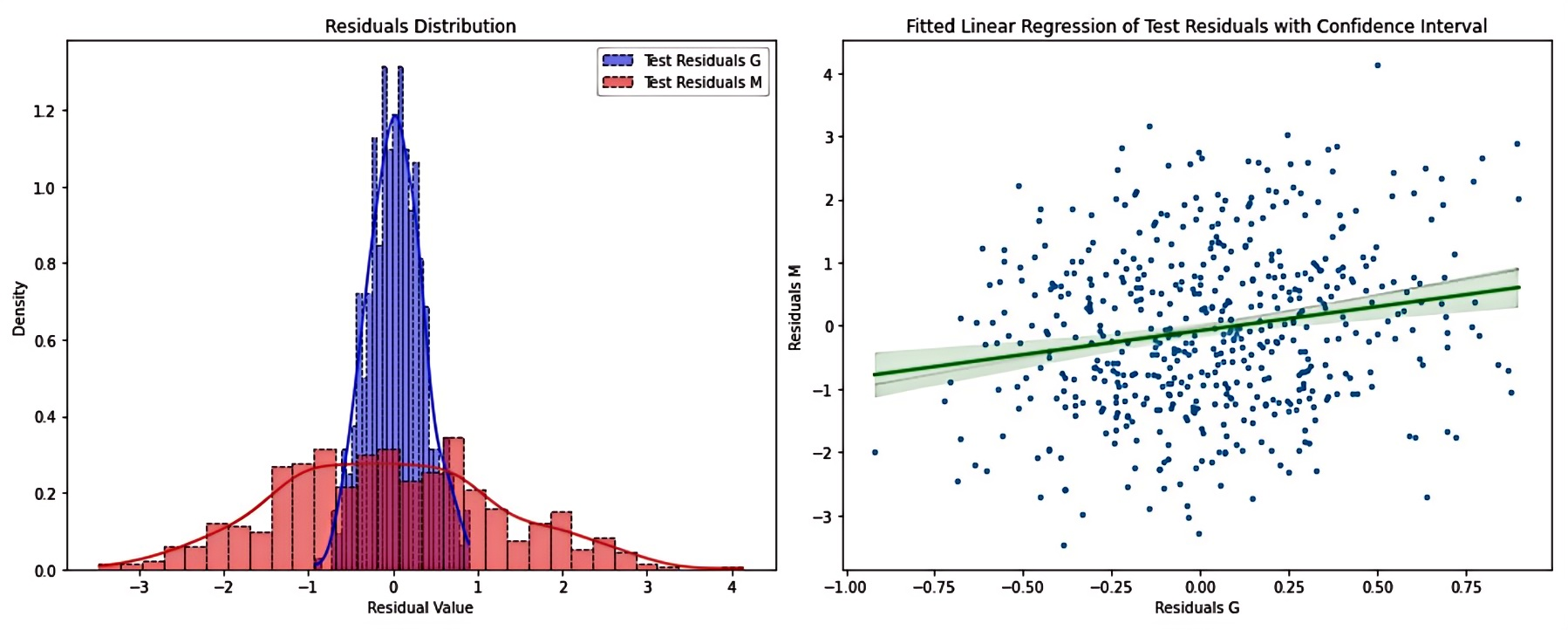
Graphical Abstract
Keywords
Green new quality productive forces | Just energy transition | Fixed effects regression | Double machine learning | Regional heterogeneity
References
- 1.Bogdanov, D.; Ram, M.; Aghahosseini, A.; et al. Low-cost renewable electricity as the key driver of the global energy transition towards sustainability. Energy 2021, 227, 120467.
- 2.Abbas, A. Decoupling economic growth from energy consumption: Review of global trends and policy implications. Habitable Planet 2025, 1, 157–170.
- 3.Wang, X.; Zhang, R.; Jiang, T. Energy justice and decarbonization: A critical assessment for just energy transition in China. Environ. Impact Assess. Rev. 2024, 105, 107420.
- 4.Ge, T. Rising energy inequity and its driving factors to approach a just energy transition in China. Environ. Impact Assess. Rev. 2023, 103, 107231.
- 5.Delafield, G.; Donnison, C.; Roddis, P.; et al. Conceptual framework for balancing society and nature in net-zero energy transitions. Environ. Sci. Policy 2021, 125, 189–201.
- 6.Sharma, V.; Loginova, J.; Zhang, R.; et al. How do past global experiences of coal phase-out inform China’s domestic approach to a just transition? Sustain. Sci. 2023, 18, 2059–2076.
- 7.Harrahill, K.; Douglas, O. Framework development for ‘just transition’in coal producing jurisdictions. Energy Policy 2019, 134, 110990.
- 8.Hosan, S.; Sen, K.K.; Rahman, M.M.; et al. Energy innovation funding and social equity: Mediating role of just energy transition. Renew. Sustain. Energy Rev. 2024, 197, 114405.
- 9.Zhang, J.; Shan, Y.; Jiang, S.; et al. Study on the coordinated development degree of new quality productivity and manufacturing carbon emission efficiency in provincial regions of China. Environ. Dev. Sustain. 2024, 1–35. https://doi.org/10.1007/s10668-024-05321-x.
- 10.Yue, S.; Bajuri, N.H.; Khatib, S.F.; et al. New quality productivity and environmental innovation: The hostile moderating roles of managerial empowerment and board centralization. J. Environ. Manag. 2024, 370, 122423.
- 11.Khan, I. The Energy Trilemma: An overview of balancing security, sustainability, and affordability. Habitable Planet 2025, 1, 56–68.
- 12.Braunger, I.; Walk, P. Power in transitions: Gendered power asymmetries in the United Kingdom and the United States coal transitions. Energy Res. Soc. Sci. 2022, 87, 102474.
- 13.Wang, Y.; Qian, Y. Driving factors to agriculture total factor productivity and its contribution to just energy transition. Environ. Impact Assess. Rev. 2024, 105, 107369.
- 14.Balaram, V.; Santosh, M. Critical metal deposits in terrestrial and oceanic environments and the Global Energy Transition. Habitable Planet 2025, 1, 86–107.
- 15.Streimikiene, D.; Kyriakopoulos, G.L.; Lekavicius, V.; et al. Energy poverty and low carbon just energy transition: Comparative study in Lithuania and Greece. Soc. Indic. Res. 2021, 158, 319–371.
- 16.Wang, X.; Lo, K. Just transition: A conceptual review. Energy Res. Soc. Sci. 2021, 82, 102291.
- 17.Wang, J.; Wang, K.; Dong, K.; et al. How does the digital economy accelerate global energy justice? Mechanism discussion and empirical test. Energy Econ. 2022, 114, 106315.
- 18.Cheng, H.; Dong, M.; Zhou, C. Satisfaction evaluation of a just energy transition policy: Evidence from China. Front. Environ. Sci. 2023, 11, 1244416.
- 19.Lo, K. Can authoritarian regimes achieve just energy transition? Evidence from China’s solar photovoltaic poverty alleviation initiative. Energy Res. Soc. Sci. 2021, 82, 102315.
- 20.Dong, J.; Zhang, W.; Chen, Y.; et al. Does technological progress mode affect just energy transition? A seemingly unrelated regression analysis based on Chinese provincial panel data. Energy 2024, 313, 133753.
- 21.Abraham, J. Just transitions in a dual labor market: Right wing populism and austerity in the German energiewende. J. Labor Soc. 2019, 22, 679–693.
- 22.Cheng, K.; Yin, J.; Wang, F.; et al. The impact pathway of new quality productive forces on regional green technology innovation: A spatial mediation effect based on intellectual property protection. PLoS ONE 2025, 20, e0319838.
- 23.Yuan, B.; Gu, R.; Wang, P.; et al. How Does New Quality Productive Forces Affect Green Total Factor Energy Efficiency in China? Consider the Threshold Effect of Artificial Intelligence. Sustainability 2025, 17, 7012.
- 24.Gao, X.; Li, S. A Dynamic Evolution and Spatiotemporal Convergence Analysis of the Coordinated Development Between New Quality Productive Forces and China’s Carbon Total Factor Productivity. Sustainability 2025, 17, 3137.
- 25.Zhou, J.; Guo, J.; Xu, W. Construction of big data comprehensive pilot zones, new quality productive forces and transformation of watershed resource–based cities: Double machine learning approach. Sustain. Cities Soc. 2025, 120, 106144.

How to Cite
Wu, Y., Shang, Y., & Zhao, X. (2026). The Impact Mechanism of Urban Green New Quality Productive Forces on the Equity of Energy Transition. Habitable Planet, 2(1), 29–45. https://doi.org/10.63335/j.hp.2025.0024
RIS
BibTex
Copyright & License

Copyright (c) 2025 by the authors.
This work is licensed under a Creative Commons Attribution 4.0 International License.
Article Metrics
323
Article Views
0
Citations
Contents
References

 Suite 4002 Level 4, 447 Collins Street, Melbourne, Victoria 3000, Australia
 General Inquiries: info@sciltp.com