
- Multidisciplinary evidence linking environmental degradation and human health
- Amplified vector-borne diseases, foodinsecurity, and heat-related morbidity
- Community-levelengagement, real-time data, and AI-enabled decision support can enhance climate preparedness and health system responsiveness.
- Open Access
- Review
Climate Change, Environmental Degradation, and Human Health: A Converging Crisis
- Ajith Kumar S. Nair 1, *,
- Yau Adamu 2,
- Hugh Montgomery 3, 4,
- Gurleen Kaur 5,
- Manmeet Singh 6,
- Naveen Sudharsan 7,
- Yun Hang 8
Author Information
Received: 04 Nov 2025 | Revised: 22 Nov 2025 | Accepted: 17 Dec 2025 | Published: 05 Jan 2026
Highlights
Abstract
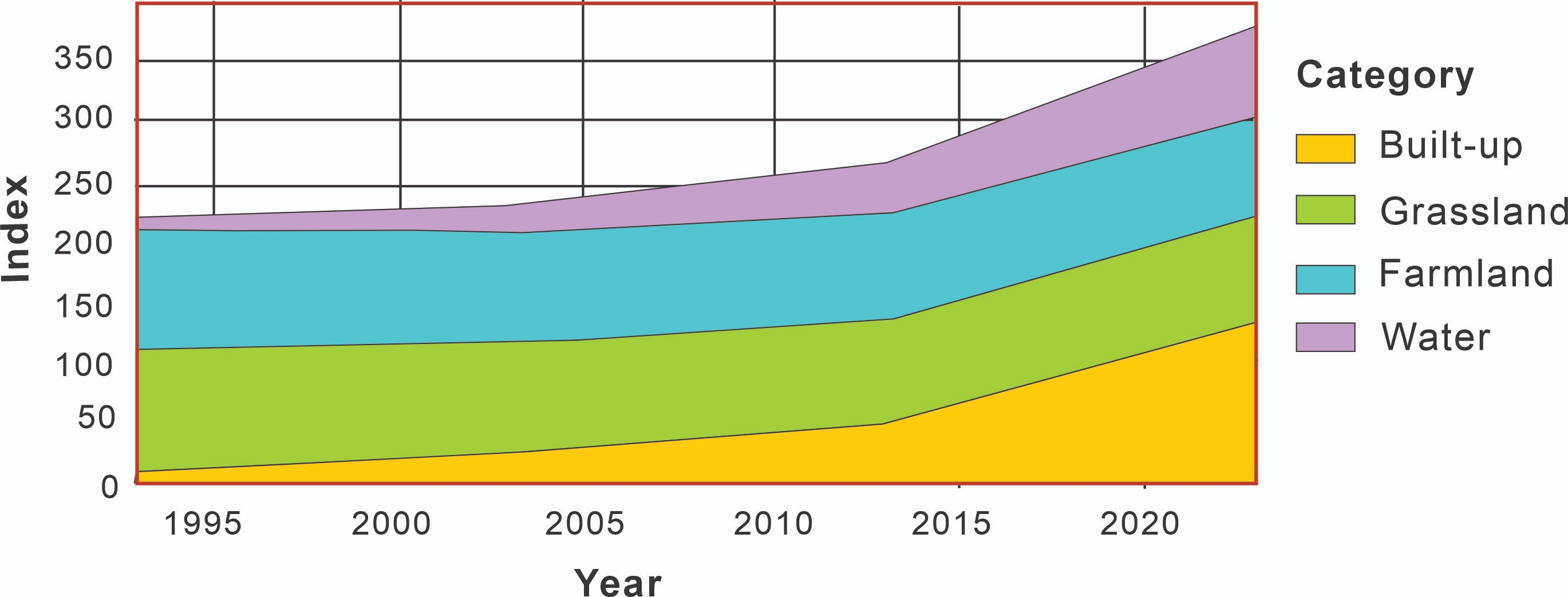
Climate change and environmental degradation represent the defining public health challenges of the twenty-first century, exerting profound direct and indirect impacts on global well-being. Their effects are far-reaching from increased incidence of vector-borne diseases and heat-related illnesses to disruptions in food and water systems, mental health burdens, widening health inequities, socioeconomic collapse, and conflict. This review integrates multidisciplinary evidence across climatology, ecology, medicine, and digital health to illuminate the complex linkages between environmental degradation and human health outcomes. Rising temperatures, altered precipitation patterns, oceanic disruption, and biodiversity loss are amplifying vector-borne diseases, food insecurity, and heat-related morbidity. These systemic stresses disproportionately affect vulnerable populations, accelerating inequities and threatening societal stability. Building on recent frameworks, this paper advances a holistic Climate–Health Nexus model that emphasizes adaptive resilience through surveillance, early warning systems, and decision intelligence. Professor Hugh Montgomery’s analogy of climate change as a critically ill patient underscores the urgency for coordinated, evidence-based intervention. Integrating insights from digital health platforms such as MyJEEVA, we outline how community-level engagement, real-time data, and AI-enabled decision support can enhance climate preparedness and health system responsiveness. The synthesis concludes with actionable pathways linking mitigation, adaptation, and governance to safeguard planetary and human health.
Graphical Abstract
References
- 1.
World Health Organization. Climate Change and Health; WHO: Geneva, Switzerland, 2018.
- 2.
Intergovernmental Panel on Climate Change (IPCC). Climate Change 2023: Synthesis Report. Contribution of Working Groups I, II, and III to the Sixth Assessment Report of the IPCC ; Core Writing Team, Lee, H., Romero, J., Eds.; IPCC: Geneva, Switzerland, 2023.
- 3.
Myers, S.S.; Gaffikin, L.; Golden, C.D.; et al. Human health impacts of ecosystem alteration. Proc. Natl. Acad. Sci. USA 2013, 110, 18753–18760. https://doi.org/10.1073/pnas.121865611
- 4.
Whitmee, S.; Haines, A.; Beyrer, C.; et al. Safeguarding human health in the Anthropocene epoch: Report of the Rockefeller Foundation–Lancet Commission on planetary health. Lancet 2015, 386, 1973–2028. https://doi.org/10.1016/S0140-6736(15)60901-1
- 5.
Romanello, M.; Di Napoli, C.; Green, C.; et al. The 2023 report of the Lancet Countdown on health and climate change: Protecting health in a warming world. Lancet 2023, 402, 2346–2404. https://doi.org/10.1016/S0140-6736(23)01859-7
- 6.
United Nations Environment Programme (UNEP). Making Peace With Nature: A Scientific Blueprint to Tackle the Climate, Biodiversity and Pollution Emergencies; UNEP: Nairobi, Kenya, 2021.
- 7.
Montgomery, H. Final call Climate change and us. J. R. Coll. Physicians Edinb. 2024, 54, 101–104. https://doi.org/10.1177/14782715241239085
- 8.
Le Qur, C.; Jackson, R.B.; Jones, M.W.; et al. Temporary reduction in daily global CO2 emissions during the COVID-19 forced confinement. Nat. Clim. Change 2020, 10, 647–653. https://doi.org/10.1038/s41558-020-0797-x
- 9.
Forster, P.M.; Forster, H.I.; Evans, M.J.; et al. Current and future global climate impacts resulting from COVID-19. Nat. Clim. Change 2020, 10, 913–919. https://doi.org/10.1038/s41558-020-0883-0
- 10.
Mazdiyasni, O.; AghaKouchak, A.; Davis S.J.; et al. Increasing probability of mortality during Indian heat waves Sci. Adv. 2017, 3, e1700066. https://doi.org/10.1126/sciadv.1700066
- 11.
Sarath Chandran, M.A.; Subba Rao, A.V.M.; Sandeep, V.M.; et al. Indian summer heat wave of 2015: A biometeorological analysis using half hourly automatic weather station data with special reference to Andhra Pradesh. Int. J. Biometeorol. 2017, 61, 1063–1072. https://doi.org/10.1007/s00484-016-1286-9
- 12.
Mourougan, M.; Tiwari, A.; Limaye, V.; et al. Heat stress in India: A review. Prev. Med. Res. Rev. 2024, 1, 140–147. https://doi.org/10.4103/PMRR.PMRR_100_23
- 13.
Ghatak, D.; Zaitchik, B.; Hain, C.; et al. The role of local heating in the 2015 Indian heat wave. Sci. Rep. 2017, 7, 7707. https://doi.org/10.1038/s41598-017-07956-5
- 14.
Neethu, C; Ramesh, K.V. Projected changes in heat wave characteristics over India. Clim. Change 2023, 176, 144. https://doi.org/10.1007/s10584-023-03618-w
- 15.
Satyanarayana, G.C.; Velivelli, S.; Rao, K.K.; et al. Increasing heat wave frequencies over India during post-El Niño spring and ˜early summer seasons. Glob. Planet. Change 2024, 241, 104561. https://doi.org/10.1016/j.gloplacha.2024.104561
- 16.
Ratnam, J.V.; Behera, S.K.; Ratna, S.B.; et al. Anatomy of Indian heat waves. Sci. Rep. 2016, 6, 24395. https://doi.org/10.1038/srep24395
- 17.
Rohini, P.; Rajeevan, M.; Srivastava, A.K.; et al. Variability & trends of India heat waves. Sci. Rep. 2016, 6, 26153. https://doi.org/10.1038/srep26153
- 18.
India Meteorological Department (IMD). Heat Wave Watch Bulletin; India Meteorological Department: New Delhi, India, 2013.
- 19.
Dietz, L.R.; Chatterjee, S. Investigation of Precipitation Thresholds in the Indian Monsoon; Springer: Cham, Switzerland, 2015; pp. 239– 246.
- 20.
Zhu, K.; Yang, Y.; Xue, M.; et al. Neighborhood precipitation verification. Adv. Atmos. Sci. 2015, 32, 1449–1459. https://doi.org/10.1007/s00376-015-5023-9
- 21.
Perkins, S.E.; Alexander, L.V. Measurement of heat waves. J. Climate 2013, 26, 4500–4517. https://doi.org/10.1175/JCLI-D-12-00383.1
- 22.
Loridan, T.; Coates, L.; Argeso, D.; et al. The excess heat factor for fatalities. Aust. J. Emerg. Manage. 2016, 31, 31–37.
- 23.
World Bank. Poverty & Vulnerability Indicators – India. World Bank: Washington, DC, USA, 2024.
- 24.
Sharma, A.; Dutta, P.; Shah, P.; et al. Extreme heat mortality Ahmedabad. Urban Clim. 2024, 54, 101832. https://doi.org/10.1016/j.uclim.2024.101832
- 25.
Vieira, R.F.C.; Muoz-Leal, S.; Faulkner, G.; et al. Global climate change impacts on vector ecology and vectorborne diseases. In Modernizing Global Health Security to Prevent, Detect, and Respond; McNabb, S.J.N.; Shaikh, A.T. and Haley, C.J., Eds.; Elsevier: Amsterdam, The Netherlands, 2024; pp. 155–173
- 26.
de Souza, W.M.; Weaver, S.C. Effects of climate change and human activities on vector-borne diseases. Nat. Rev. Microbiol. 2024, 22, 476–491. https://doi.org/10.1038/s41579-024-01026-0
- 27.
Siraj, A.S.; Santos-Vega, M.; Bouma, M.J.; et al. Altitudinal changes in malaria incidence in highlands of Ethiopia and Colombia. Science 2014, 343, 1154–1158. https://doi.org/10.1126/science.1244325
- 28.
Heidecke, J.; Wallin, J.; Fransson, P.; et al. Uncovering temperature sensitivity of West Nile virus transmission: Novel computational approaches to mosquito-pathogen trait responses. PLOS Comput. Biol. 2025, 21, e1012866. https://doi.org/10.1371/journal.pcbi.1012866
- 29.
Kaur, G.; Ghoshal, S.; Singh, M.; et al. EpiClim: Weekly DistrictWise all-India multi-epidemics Climate-Health Dataset for accelerated Geo Health research. arXiv 2025, arXiv:2501.18602v1
- 30.
Food and Agriculture Organization of the United Nations (FAO); International Fund for Agricultural Development (IFAD); United Nations Children’s Fund (UNICEF); World Food Programme (WFP); World Health Organization (WHO). The State of Food Security and Nutrition in the World 2024 – Financing to End Hunger, Food Insecurity and Malnutrition in All Its Forms; FAO: Rome, Italy, 2024.
- 31.
Health Effects Institute (HEI); Institute for Health Metrics and Evaluation (IHME). State of Global Air 2024: A Special Report on Global Exposure to Air Pollution and Associated Health Impacts ; HEI: Boston, MA, USA, 2024.
- 32.
Holloway, T.; Bratburd, J.R.; Fiore A.; et al. Satellite data to support air quality assessment and management J. Air Waste Manag. Assoc. 2025, 75, 429–463. https://doi.org/10.1080/10962247.2025.2484153
- 33.
Sorek-Hamer, M.; Just, A.C.; Kloog, I.; et al. Satellite remote sensing in epidemiological studies. Curr. Opin. Pediatr. 2016, 28, 228–234. https://doi.org/10.1097/MOP.0000000000000326
- 34.
Lee, H.J. Advancing exposure assessment of PM2.5 using satellite remote sensing: A review. Asian J. Atmos. Environ. 2020, 14, 319–334. https://doi.org/10.5572/ajae.2020.14.4.319
- 35.
Stratoulias, D.; Nuthammachot, N,; Dejchanchaiwong, R.; et al. Recent developments in satellite remote sensing for air pollution surveillance in support of sustainable development goals. Remote Sens. 2024, 16, 2932. https://doi.org/10.3390/rs16162932
- 36.
Holloway, T.; Bratburd, K.; Fiore, A.; et al. Observing the Diurnal Variations of Ozone-NOx-VOC Chemistry Using the First Geostationary Satellite. Geophys. Res. Lett. 2025, 52, e2025GL116394. https://doi.org/10.1029/2025GL116394
- 37.
Clark, L.P.; Zilber, D.; Schmitt, C.; et al. A review of geospatial exposure models and approaches for health data integration. J. Exposure Sci. Environ. Epidemiol. 2025, 35, 131–148. https://doi.org/10.1038/s41370-024-00712-8
- 38.
Shan, X.; Casey, J.A.; Shearston, J.A.; et al. Methods for quantifying source-specific air pollution exposure to serve epidemiology, risk assessment, and environmental justice. Geo Health 2024, 8, e2024GH001188. https://doi.org/10.1029/2024GH001188
- 39.
Romanello, M.; Walawender, M.; Hsu, S.-C.; et al. The 2024 report of the Lancet Countdown on health and climate change: facing recordbreaking threats from delayed action. Lancet 2024, 404, 1847–1896. https://doi.org/10.1016/S0140-6736(24)01822-1
- 40.
Cunsolo, A.; Ellis, N.R. Ecological grief as a mental health response to climate change–related loss. Nat. Clim. Change 2018, 8, 275–281. https://doi.org/10.1038/s41558-018-0092-2
- 41.
Berrang-Ford, L.; Sietsma, A.J.; Callaghan, M.W.; et al. Systematic mapping of global research on climate and health: A machine learning review. Lancet Planet. Health 2021, 5, e514–e525. https://doi.org/10.1016/S2542-5196(21)00179-0
- 42.
World Bank Group. Groundswell - Preparing for Internal Climate Migration, 2024 Update; World Bank: Washington, DC, USA, 2024.
- 43.
International Organization for Migration (IOM): World Migration Report 2024; International Organization for Migration (IOM): Geneva, Switzerland, 2024.
- 44.
Acheampong, E.; Opoku, A. Climate change and migration in SubSaharan Africa: Pathways and policy responses. J. Environ. Migr. Stud. 2023, 18, 145–162.
- 45.
Intergovernmental Panel on Climate Change (IPCC). Climate Change 2022: Impacts, Adaptation, and Vulnerability ; Working Group II Contribution to the Sixth Assessment Report of the Intergovernmental Panel on Climate Change; Cambridge University Press: Cambridge, UK, 2022.
- 46.
Montgomery, H. Parliamentary Science Paper ; Parliamentary and Scientific Committee: London, UK, 2024.
- 47.
Sharma, A.K.; Baliyan, P.; Kumar, P.; et al. Air pollution and public health in Delhi. Rev. Environ. Health 2018, 33, 77–86. https://doi.org/10.1515/reveh-2017-0032
- 48.
Xing, Y.-F.; Xu Y.-H.; Shi, M.-H.; et al. The impact of PM2.5 on the human respiratory system. J. Thorac. Dis. 2016, 8, E69–E74. https://doi.org/10.3978/j.issn.2072-1439.2016.01.19
- 49.
Kumar, S., Kumar, A.; Singh, M. Building climate-resilient health systems in India: A comprehensive health systems approach. Cureus 2024, 16, e68951. https://doi.org/10.7759/cureus.68951
- 50.
Salvi, S.; Kumar, G.A.; Dhaliwal, R.S.; et al. Burden of chronic respiratory diseases in India. Lancet Respir. Med. 2021, 9, 47–61.
- 51.
Dutta, A.; Jinsart, W. Air pollution in Delhi, India: It’s status and association with respiratory diseases. PLOS ONE 2022, 17, e0274444. https://doi.org/10.1371/journal.pone.0274444
- 52.
Singh, A.K.; Pathak, A.K.; Saubu, G. Premature mortality risk and associated economic loss assessment due to PM2.5 exposure in Delhi, India during 2015–2019. Air Qual. Atmos. Health 2024, 17, 1867–1883. https://doi.org/10.1007/s11869-024-01550-1
- 53.
Indian Council of Medical Research (ICMR). Climate and Health Database India: Technical Report ; ICMR: New Delhi, India, 2024.
- 54.
Delhi Pollution Control Committee (DPCC). Annual Air Quality Trends and Health Indicators; Delhi Report. DPCC: New Delhi, India, 2024.
- 55.
Tewari, P.; Ma, P.; Gan, G.; et al. Non-linear associations between meteorological factors, ambient air pollutants and major mosquitoborne diseases in Thailand. PLoS Negl. Trop. Dis. 2023, 17, e0011763. https://doi.org/10.1371/journal.pntd.0011763
- 56.
Air Quality Index (AQI). National Air Quality Bulletin. Ministry of Environment, Forest and Climate Change: New Delhi, India, 2025.
- 57.
Masih, I.; Maskey, S.; Muss, F.E.; et al. A review of droughts on the African continent: A geospatial and long-term perspective. Hydrol. Earth Syst. Sci., 2014, 18, 3635–3649. https://doi.org/10.5194/hess-18-3635-2014
- 58.
dos Santos, S.; Adams, E.A.; Neville, G.; et al. Urban growth & water access in Sub-Saharan Africa: Progress, challenges, and emerging research directions. Sci. Total Environ. 2017, 607–608, 497–508. https://doi.org/10.1016/j.scitotenv.2017.06.157
- 59.
Henderson, J.V.; Storeygard, A.; Deichmann, U. Has climate change driven urbanization in Africa? J. Dev. Econ. 2017, 124, 60–82. https://doi.org/10.1016/j.jdeveco.2016.09.001
- 60.
Dajuma, D.; Sylla, M.B.; Tall, M.; et al. Projected intensification and expansion of heat stress and related population exposure over Africa under future climates. Earths Futur. 2024, 12, e2024EF004646. https://doi.org/10.1029/2024EF004646
- 61.
Adeyeri, O.E.; Ajadi, S.A.; Ishola, K.A.; et al. The societal impact of heatwave intensification and heat stress on African urban populations. Soc. Imp. 2025, 6, 100148. https://doi.org/10.1016/j.socimp.2025.100148
- 62.
Yeboah, E.; Sarfo, I.; Zhu, Q.; et al. Traceability and projected patterns of Africa’s land use systems and climate vari-ability (1993–2053). Land Use Policy 2025, 157, 107680. https://doi.org/10.1016/j.landusepol.2025.107680
- 63.
Yahaya, I.; Xu, R.; Zhou, J.; et al. Projected patterns of land uses in Africa under a warming climate. Sci. Rep. 2024, 14, 12315. https://doi.org/10.1038/s41598-024-61035
- 64.
United Nations Children’s Fund (UNICEF). Children Displaced by Climate Impacts: WASH & Health Vulnerability Assessment ; UNICEF: New York, NY, USA, 2024.
- 65.
Africa CDC. Regional One Health Surveillance & Climate-sensitive Disease Systems; African Union/Africa CDC: Addis Ababa, Ethiopia, 2024.
- 66.
Network for Greening the Financial System. Climate Scenarios for Central Banks & Supervisors; NGFS: Paris, France, 2022.
- 67.
Steffen, W.; Richardson, K.; Rockstrm, J.; et al. Planetary boundaries: Guiding human development on a changing planet. Science 2015, 347, 1259855. https://doi.org/10.1126/science.1259855
- 68.
Burke, M.; Hsiang, S.M.; Miguel, E. Global non-linear effect of temperature on economic production. Nature 2015, 527, 235–239. https://doi.org/10.1038/nature15725
- 69.
Swiss Re Institute. The Economics of Climate Change: No Action Not an Option; Swiss Re Institute: Zurich, Switzerland, 2021.
- 70.
Kotz, M.; Levermann, A.; Wenz, L. The economic commitment of climate change. Nature 2024, 628, 551–557. https://doi.org/10.1038/s41586-024-07219-0
- 71.
Montgomery, H. Climate change impacts: Survival on, and of, intensive care. Crit. Care Rev. 2025, 29, 335. https://doi.org/10.1186/s13054-025-05565-7
- 72.
Piotrowski, M.; Nair, A.K.; Alpard, S.; et al. Application-based Digital Health Navigator ; SSRN: Rochester, NY, USA, 2025.
- 73.
Nair, A.S.; Suszanski, N.; Subramaniam, S.; et al. Leveraging Decision Intelligence and AI-driven Digital Health to Improve Patient Access and Reduce Readmissions in Oncology Care. 2025 (manuscript in preparation).
- 74.
Adamu, S.; Ibrahim, M.; Hassan, K.; et al. A One-Health early warning system for climate-driven harmful algal blooms. Sci Total Environ. 2025, 945, 173821. https://doi.org/10.1016/j.scitotenv.2025.173821
- 75.
Adamu, Y.; et al. ClimateDriven Harmful Algal Blooms: One Health System To Early Warning System (Draft 01) ; University of Texas Health Science Center: San Antonio, TX, USA, 2025.
- 76.
Townhill, B.L.; Tinker, J.; Jones, M.; et al. Harmful algal blooms and climate change: Exploring future distribution changes. ICES J. Mar. Sci. 2018, 75, 1882–1893. https://doi.org/10.1093/icesjms/fsy113
- 77.
Anderson, D.; Fensin, E.; Gobler, C.J.; et al. Marine harmful algal blooms in the United States: History, current status and future trends. Harmful Algae 2021, 102, 101975. https://doi.org/10.1016/j.hal.2021.101975
- 78.
Woods Hole Oceanographic Institution (WHOI). Harmful Algal Blooms & Climate Change: State of Knowledge ; WHOI Technical Report; Woods Hole Oceanographic Institution (WHOI): Woods Hole, MA, USA, 2024.
- 79.
Wang, Y.; Zhao, D.; Woolway, R.I.; et al. Global elevation of algal bloom frequency in large lakes over the past two decades. Nat. Sci. Rev. 2025, 12, nwaf011. https://doi.org/10.1093/nsr/nwaf011
- 80.
U.S. Army Corps of Engineers (USACE). ArcGIS HAB Explorer Data Summary; USACE Environmental Technical Report; U.S. Army Corps of Engineers (USACE): Washington, DC, USA, 2024.
- 81.
U.S. Environmental Protection Agency (EPA). HAB Monitoring and BloomWatch Public Reporting Framework ; EPA Public Health Report; U.S. Environmental Protection Agency (EPA): Washington, DC, USA, 2025.
- 82.
Rathore, A.; Singh, P.; Kumar, R. BloomSense: AI-driven early warning for HABs. J. Water Res. Technol. 2025, 41, 145–158.
- 83.
Limnotek/BloomOptix Inc. BloomOptix AI: AI-Assisted HAB Classification for Water Bodies ; Product Technical Whitepaper Limnotek/BloomOptix Inc.: Cleveland, OH, USA, 2025.
- 84.
HABTRAIL Consortium. HABTRAIL UAV–Microscopy Monitoring Platform for Freshwater HABs; Program Technical Overview; HABTRAIL Consortium: Lisbon, Portugal, 2025.
- 85.
Stolk, P.; Nyon, R. Integrated surveillance in One Health. EcoHealth 2017, 14, 523–531. https://doi.org/10.1007/s10393-017-1285-2
- 86.
Adenyi, T.; Musa, I.; Ojo, S. One Digital Health frameworks for integrated biosurveillance. Lancet Digital Health 2024, 6, e487–e499.
- 87.
Ho, C. Leveraging AI and big data for One Health surveillance. Comput. Health Sci. 2022, 8, 101–115.
- 88.
Benis, A.; Tamburis, O.; Chronaki, C.; et al. One digital health: A unified framework for health data integration. J. M. Internet Res. 2021, 23, e25715. https://doi.org/10.2196/22189
- 89.
Ahmed, S.; LePage, K.; Benc, R.; et al. Digital health platforms for participatory disease surveillance: Opportunities and challenges. Front. Public Health 2025, 13, 112345.
- 90.
Kim, J.; et al. IoT-enabled biosurveillance for zoonotic disease prevention. Int. J. Environ. Res. Public Health 2025, 22, 5678. https://doi.org/10.3390/ijerph22045678
- 91.
World Health Organization. Air Quality and Health; World Health Organization: Geneva, Switzerland, 2021. Available online: https://www.who.int/docs/default-source/documents/publications/air- quality-and-health.pdf (accessed on 2 January 2026).
- 92.
WMO & WHO. Climate & Health Data Must Be Integrated ; World Meteorological Organization (WMO) & World Health Organization (WHO): Geneva, Switzerland, 2024. Available online: https://wmo.int/media/news/climate-and-health-data-must-be- integrated (accessed on 2 January 2026).
- 93.
Bahrami, G.; Ghavidel, N.; Mahmoodi, Z.; et al. The health effects of climate change: Identifying strategies, policies, and knowledge gaps — An umbrella review. Int. J. Environ. Health Res. 2025, 1–18.
- 94.
World Health Organization. Health and Climate Change: A Briefing ; World Health Organization: Geneva, Switzerland, 2018.
How to Cite
Nair, A. K. S., Adamu, Y., Montgomery, H., Kaur, G., Singh, M., Sudharsan, N., & Hang, Y. (2026). Climate Change, Environmental Degradation, and Human Health: A Converging Crisis. Habitable Planet, 2(1), 108–127. https://doi.org/10.63335/j.hp.2026.0029
RIS
BibTex
Copyright & License

Copyright (c) 2026 by the authors.
This work is licensed under a Creative Commons Attribution 4.0 International License.
Article Metrics
507
Article Views
0
Citations
Contents
References

 Suite 4002 Level 4, 447 Collins Street, Melbourne, Victoria 3000, Australia
 General Inquiries: info@sciltp.com