
The diesel-ignited natural gas engine suffers from low thermal efficiency at low loads and knocking at high loads. Addressing these issues requires precise control of the combustion process. Pilot diesel combustion provides both a heating effect and a chemical kinetic effect for natural gas combustion. Although hydrogen addition can improve overall combustion, how these two effects vary with hydrogen blending ratio remains unclear. The objective of this study is to decouple and quantify these two effects under various hydrogen blending ratios using numerical simulation combined with the chemical inertness method and the segmented variable component method. A 6-cylinder turbocharged and intercooled diesel/natural gas dual-fuel heavy-duty engine was employed, with hydrogen introduced at pilot diesel injection timings of 15°CA BTDC and 40°CA BTDC, respectively. The results show that as the hydrogen blending ratio increases, the pilot diesel chemical kinetic effect decreases from 20.3% to 17.4% (at 15°CA BTDC) and from 62.6% to 8% (at 40°CA BTDC), while the heating effect increases correspondingly. These changes are more pronounced at the earlier injection timing (40°CA BTDC). At the start of natural gas combustion, the distribution and concentration of pilot diesel in the cylinder remain nearly unchanged. Hydrogen combustion inhibits the generation of highly active intermediates from pilot diesel, which explains the decrease in the chemical kinetic effect. With increasing hydrogen blending ratio, the CH2O concentration and distribution area decrease, while the heat release area and high-temperature region in the cylinder expand.
- Open Access
- Article
The Decoupling of the Chemical Kinetic and Heating Effects of Pilot Diesel in a Diesel-Ignited Natural Gas Engine under Various Hydrogen Blending Ratios
- Jinwen You *,
- Jianhui Shi,
- Xiangfei Ji,
- Feng Han
Author Information
Received: 28 Mar 2026 | Revised: 17 May 2026 | Accepted: 18 May 2026 | Published: 21 Jul 2026
Abstract
Keywords
chemical kinetic effect | heating effect | hydrogen | diesel | natural gas | engine
1. Introduction
With the continuous rise in global energy consumption, the contradiction between the demand for traditional fossil fuels and their limited reserves has become increasingly acute [1]. Meanwhile, the extensive use of conventional energy sources has led to severe environmental problems. Consequently, a growing number of researchers are exploring high-efficiency, low-emission alternative fuels to replace traditional petroleum-based fuels [2,3,4]. Natural gas (NG) has attracted widespread attention owing to its low carbon emissions, high octane number, and abundant availability. In engines, NG can be efficiently utilized when ignited by a small amount of diesel fuel. Such engines are commonly referred to as diesel-ignited NG engines [5], and they are receiving increasing interest from the scientific community.
Considerable efforts have been devoted to investigating how boundary conditions affect the performance of diesel-ignited NG engines. Key parameters include NG injection timing [6,7,8], EGR [2], pilot diesel injection cone angle [9,10], NG substitution rate [11,12], excess air coefficient [13], combustion chamber shape [14,15,16], as well as pilot diesel injection timing and pressure [17,18,19,20,21,22,23]. Recent studies have further extended this understanding using advanced techniques, including large eddy simulation [6], pilot injection optimization [18,24], swirl ratio control [25], and alternative pilot fuels such as hydrotreated vegetable oil (HVO) [26] and liquefied natural gas (LNG) cold utilization [27]. Collectively, these investigations indicate that adjusting boundary conditions can effectively reduce emissions and improve combustion stability [4,6,9,12,16,17,18,25,26,27].
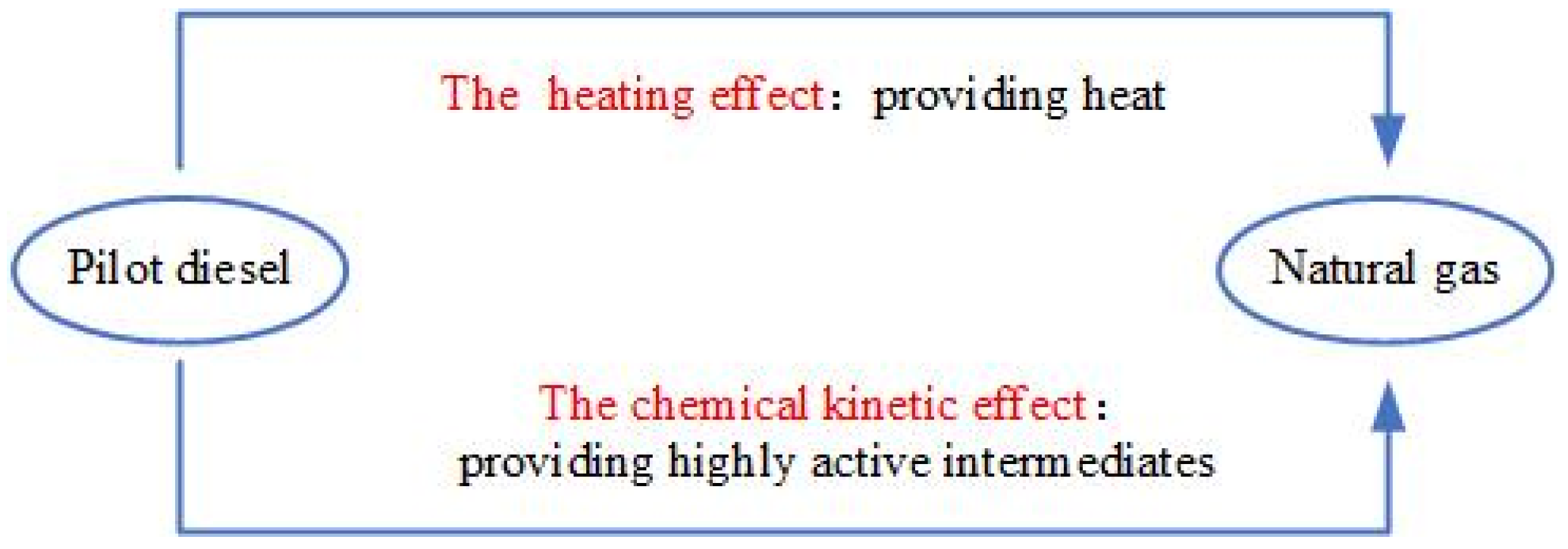
Beyond boundary condition adjustments, researchers have also decoupled the combustion processes of the two fuels to understand their interactions. Wang et al. [28] used numerical simulation to analyze the combustion phase changes of diesel and NG, and examined the relationship between pilot diesel combustion parameters and NG combustion parameters. It is now well recognized that pilot diesel combustion plays a decisive role in the subsequent NG combustion. Specifically, as illustrated in Figure 1, pilot diesel combustion provides two distinct contributions: a heating effect and a chemical kinetic effect [29]. Using a simulation method, our previous work [29] decoupled these two effects under various pilot diesel injection timings. The results showed that advancing the injection timing increases the chemical kinetic effect of pilot diesel, while the heating effect exhibits the opposite trend.
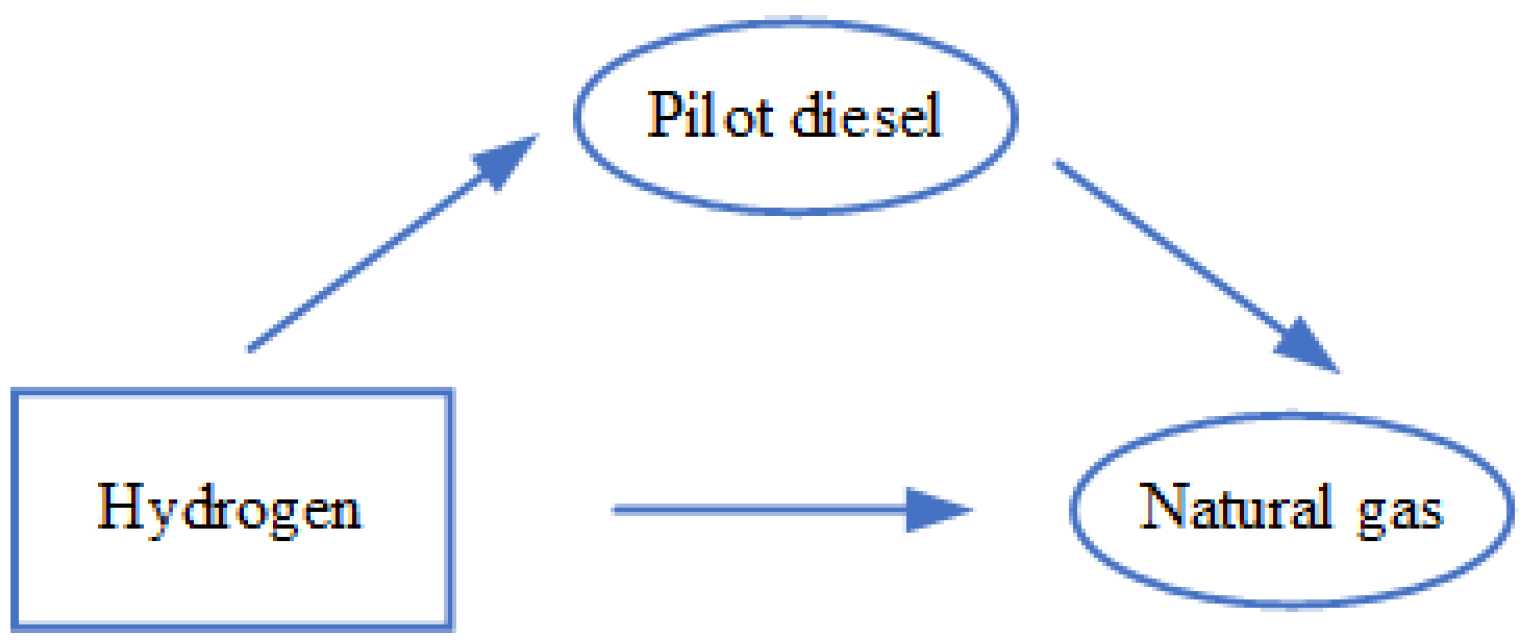
The introduction of hydrogen into a diesel-ignited NG engine is known to enhance the overall combustion process [30,31,32,33,34]. The underlying mechanism is schematically shown in Figure 2. Hydrogen first modifies the pilot diesel combustion, which in turn alters its two effects and ultimately influences NG combustion. In addition, hydrogen directly participates in the NG combustion chemistry. Nevertheless, how the two effects of pilot diesel change with increasing hydrogen blending ratio has remained unclear.
To address this gap, the present work systematically decouples the heating and chemical kinetic effects of pilot diesel under various hydrogen blending ratios, using numerical simulations combined with the chemical inertness method (as established in our previous work [29]) and the segmented variable component method (described in detail in Section 2.3). The results are expected to provide a deeper understanding of the combustion process in diesel-ignited NG engines with hydrogen enrichment, and to offer practical guidance for combustion optimization.
2. CFD Model, Simulation Condition and Research Method
The following will introduce the CFD model, simulation condition and research method.
2.1 CFD Model
This research used engine parameters and experimental data from reference [28]. The engine specifications are listed in Table 1. Based on those data, a simulation model for the diesel-ignited natural gas engine was built using CONVERGE software. To accelerate the simulation while preserving accuracy, a closed-cycle simulation of the engine working process (Figure 3) was adopted, considering the ignition and mixture formation characteristics.
Several numerical sub models were selected to capture the mechanisms of combustion and pollutant formation. The RNG k-ε renormalization group model, originally developed by Reitz and Han in 1995 [35], was employed for turbulence. Combustion chemistry was solved using the SAGE detailed chemical reaction solver [36]. A reduced chemical kinetic mechanism coupling n-heptane (a surrogate for pilot diesel) and methane (a surrogate for natural gas) were applied, comprising 76 species and 464 reactions [37]. The breakup of diesel spray was modeled using the Kelvin-Helmholtz and Rayleigh-Taylor (KH-RT) model, based on the physical properties of the pilot fuel [38,39,40,41]. Droplet collisions were handled by the No Time Counter (NTC) method proposed by Schmidt and Rutland [40]. Evaporation of fuel droplets followed the Frossling model [42]. The pressure-implicit with splitting of operators (PISO) algorithm was chosen for numerical solution [43]. NOx formation was predicted using the extended Zeldovich mechanism as described by Heywood [39]. Wall heat transfer was computed with the Han and Reitz models [44], which account for compressibility effects. Further justification for these choices can be found in Ref. [11].
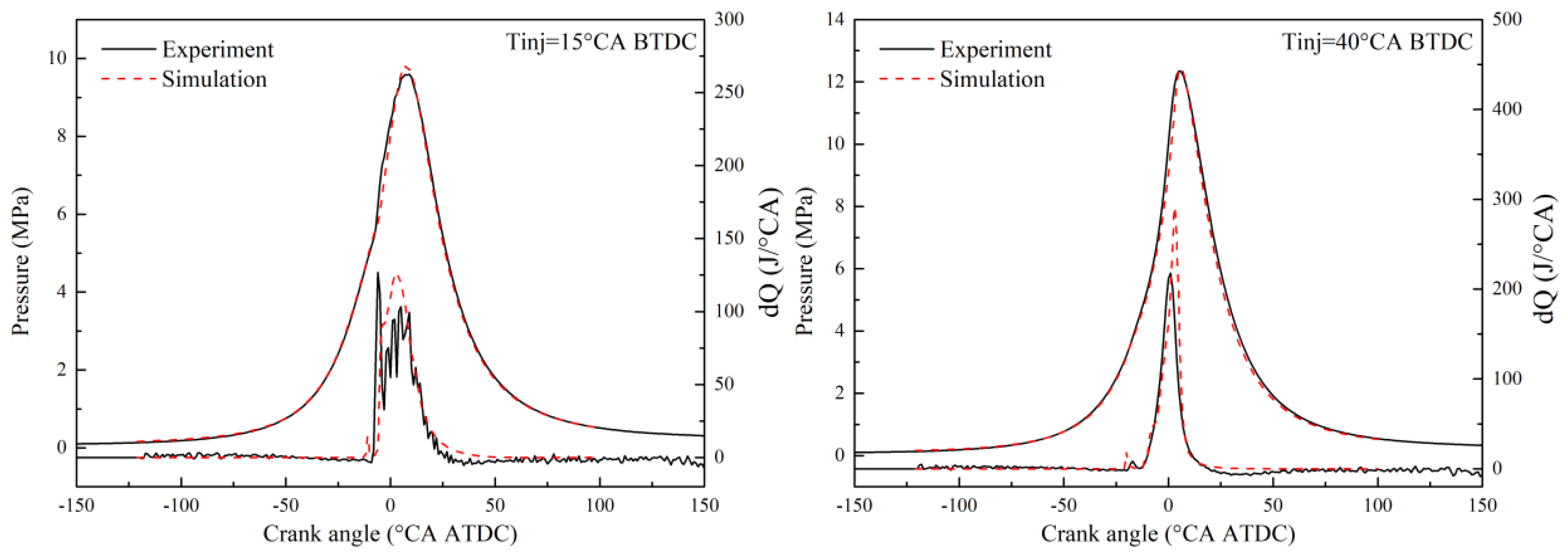
Model accuracy was verified by comparing the predicted cylinder pressure and heat release rate against experimental data from reference [28]. The comparison of simulated data and experimental data is shown in Figure 4. Quantitative error metrics were calculated for cylinder pressure at both injection timings. For the 15°CA BTDC case, the Root Mean Square Error (RMSE) = 0.35 MPa, the Mean Absolute Error (MAE) = 0.27 MPa, relative error ≈ 2.8%. For the 40°CA BTDC case, RMSE = 0.49 MPa, MAE = 0.38 MPa, relative error ≈ 4.0%. Both values are below 5%, which is within the generally acceptable range for engine CFD validation [38]. The simulated heat release rate is higher than the experimental value, primarily because the experimental heat release rate is the net heat release rate (after subtracting wall heat transfer losses), while the simulated value from the SAGE model is the total heat release rate [39]. Despite this quantitative difference, the overall trends of the heat release rate curves show good agreement. Therefore, the model is considered suitable for the comparative analysis in this study.
The engine parameters [28].
| Engine Parameters | Specifications |
|---|---|
| Bore × Stroke | 112 × 145 mm |
| Number of cylinders | 6 |
| Displacement | 8.6 L |
| Rated power/speed | 260 kW/2100 rpm |
| Rated torque/speed | 1500 Nm/1400 rpm |
| Compression ratio | 17.2:1 |
| Number of injector nozzle holes | 8 |

2.2 Simulation Condition
Hydrogen was introduced at pilot diesel injection timings of 15°CA BTDC and 40°CA BTDC, respectively. When the engine operates roughly, hydrogen is stopped from being introduced. If the maximum cylinder pressure rise rate of the engine exceeds 1.5 MPa/°CA, it is considered rough operation [45]. Hydrogen is introduced into the engine with a step size of 2% blending ratio. Under 15°CA BTDC fuel injection timing conditions, the engine operates roughly when the BRH2 (hydrogen blending ratio) exceeds 14%. Under 40°CA BTDC fuel injection timing condition, the engine operates roughly when the BRH2 exceeds 6%.
In addition, BRH2 is defined as follows:
2.3 The Research Method
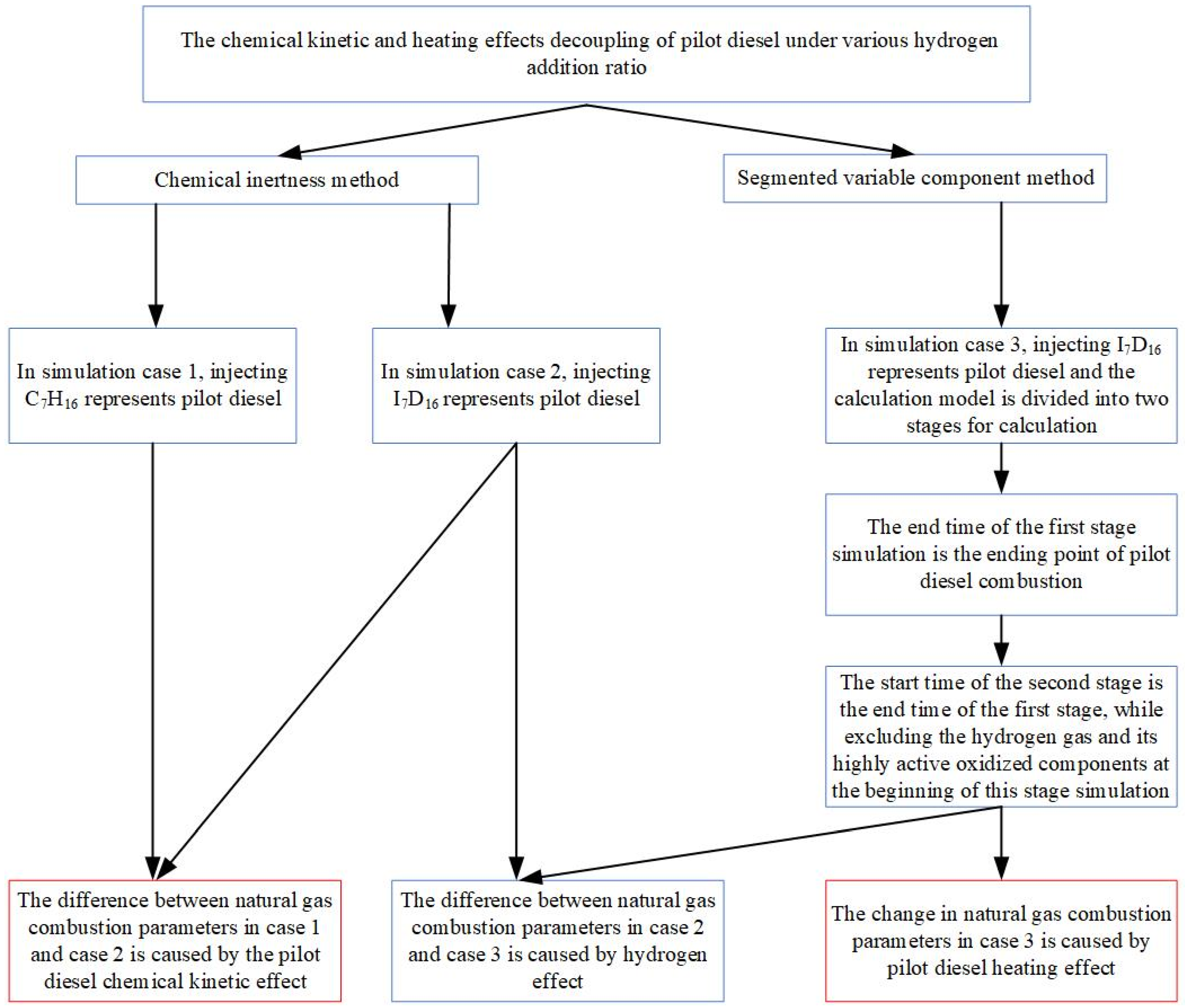
When the hydrogen blending ratio changes, natural gas combustion is affected not only by changes in pilot diesel combustion but also by changes in hydrogen combustion. In our previous study [29], the chemical inertness method was used to decouple the two effects of pilot diesel under various injection timings. The central theme of the chemical inertness method is to make the pilot diesel only provide heat to the natural gas combustion process, without providing active intermediates. So, chemical inertness is used to decouple the chemical kinetic effect of pilot diesel in this study. The segmented variable component method is used to decouple the heating effect of pilot diesel. The flowcharts for implementing these two methods are shown in Figure 5.
The implementation steps of the chemical inertness method are mentioned in reference [29]. The SAGE combustion model provided by Converge software provides a foundation for the application of the chemical inertness method. Firstly, this study selects a simplified mechanism (chemical reaction mechanism 1) consisting of 76 species and 464 reactions [37]. Secondly, the study replaces the C and H elements with I and D, respectively in chemical reaction mechanism 1 to form a new chemical reaction mechanism 2. Thirdly, the chemical reaction mechanism 1 and mechanism 2 are merged to form chemical reaction mechanism 3 using the mechanism merge function in the chemistry operation interface of Converge software. The chemical reaction mechanism 3 contains 144 species and 920 reaction pathways. The previous study [29] verified that the reaction of n-heptane and methane mixture using chemical reaction mechanism 3 and mechanism 1 is consistent. Lastly, this study simulated case 1 and case 2, in which pilot diesel was represented by C7H16 and I7D16, respectively. Therefore, the difference between natural gas combustion parameters in case 1 and case 2 is caused by the pilot diesel chemical kinetic effect. Importantly, the thermodynamic data (standard enthalpy of formation, entropy, and specific heat capacity) for species containing I and D are kept identical to those of the original counterparts containing C and H, as verified in the therm.dat file. Moreover, as demonstrated in our previous work [29], the consumption rate of C7H16 in the original mechanism (mechanism 1) is the same as that in the merged mechanism (mechanism 3), and the same holds for CH4. This confirms that the physical behavior of the fuels remains unchanged. In the merged mechanism, I7D16 and its derivatives have no reaction pathways with CH4 or other carbon-containing species because the atomic labels I and D do not match any reactants in the original reactions. Consequently, when I7D16 is used to represent pilot diesel, its combustion can only release heat and cannot generate reactive intermediates (e.g., OH, CH2O) that would promote CH4 oxidation. Thus, the difference between Case 1 and Case 2 purely reflects the chemical kinetic effect of pilot diesel on natural gas combustion.
The central theme of the segmented variable component method is to remove hydrogen and the highly active substances obtained from its oxidation at the ending point of pilot diesel combustion. During the implementation of this method, Case 3 was calculated. In Case 3, pilot diesel was represented by I7D16. The calculation model is divided into two stages. The first stage calculates the time from the start to the ending point of pilot diesel combustion. All parameters in each grid obtained at the stop time of the first stage, except for the hydrogen component and its highly active oxidized components, were imported into the second stage. At the same time, the start time of the second stage is the end time of the first stage. Here, hydrogen is oxidized into highly active substances, mainly referring to OH. Thus, the change in natural gas combustion parameters in case 3 is caused by the pilot diesel heating effect. The physical basis of this method is that hydrogen (H2) and its highly active oxidation product (OH) are the main species responsible for the direct chemical effect on natural gas combustion. Therefore, removing them at the end of pilot diesel combustion eliminates this chemical effect, leaving only the heating effect from pilot diesel.
3. Results and Discussions
3.1 The Analysis of Cylinder Pressure Change
Cylinder pressure is a key indicator of the combustion process, and its analysis provides the basis for decoupling the heating and chemical kinetic effects of the pilot diesel. Figure 6 illustrates the influence of hydrogen on cylinder pressure. As the hydrogen blending ratio (BRH2) rises, the peak cylinder pressure increases progressively, confirming that hydrogen substantially improves the overall combustion process.
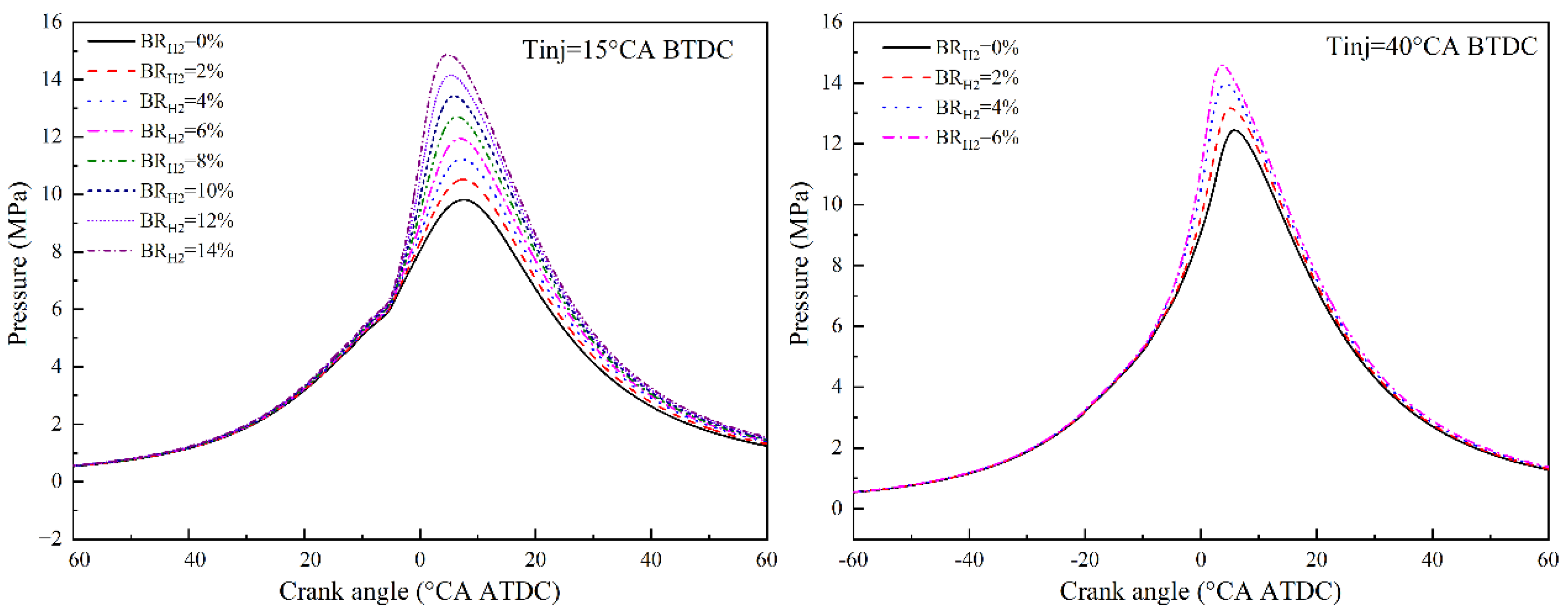
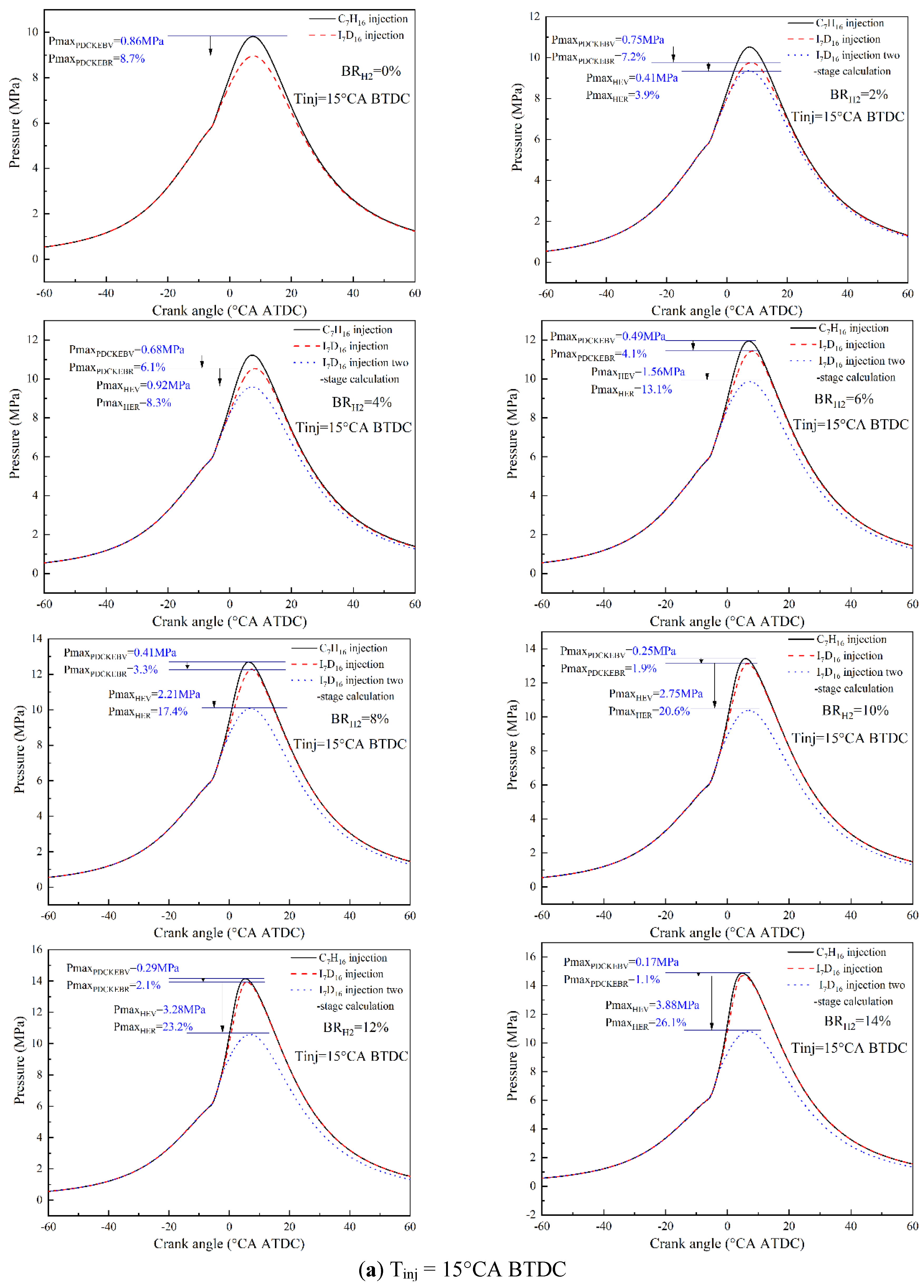
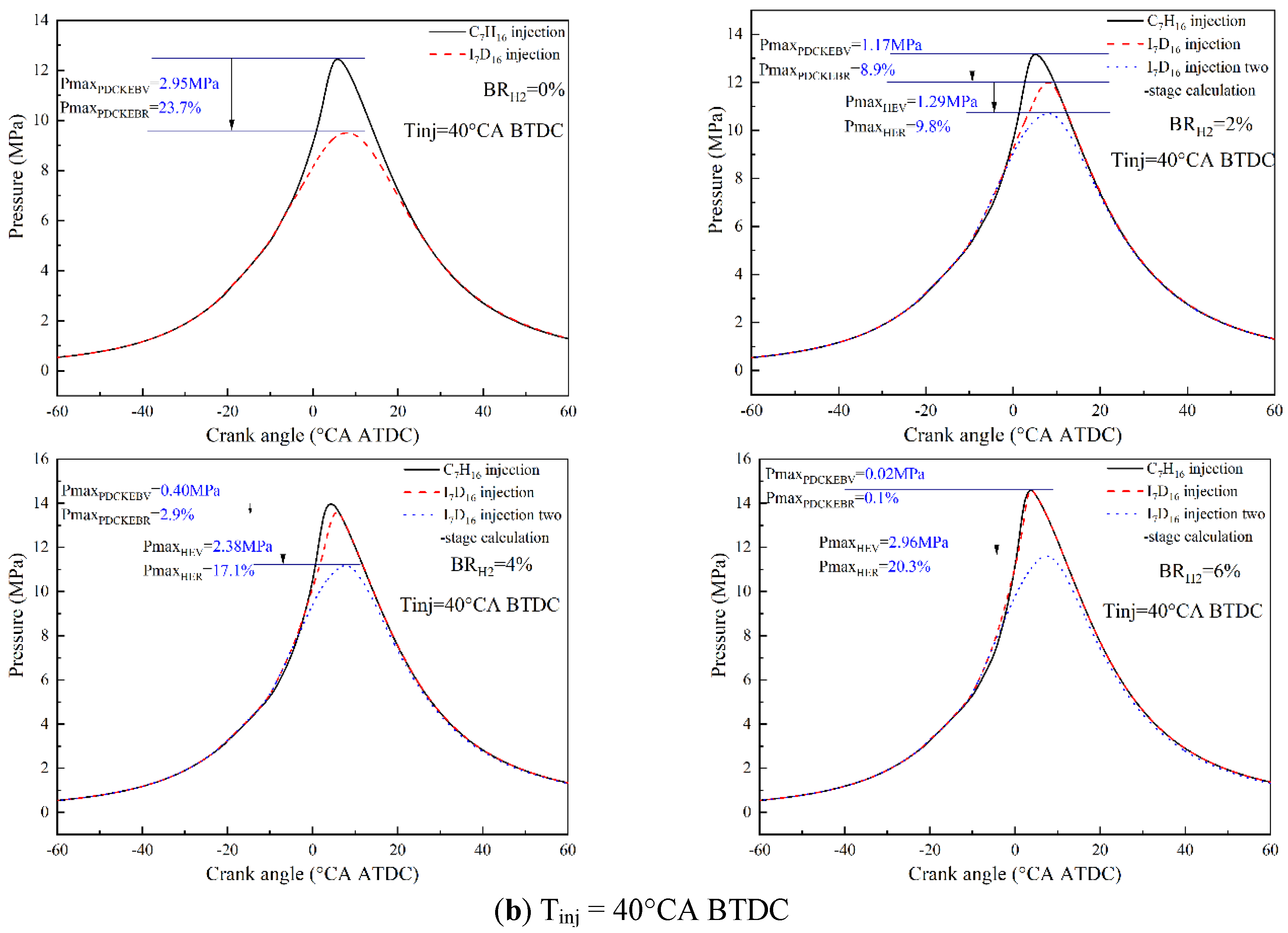
Figure 7 compares cylinder pressure traces among the three calculation modes at different BRH2 values. Following our previous definition [29], the difference in peak pressure between the C7H16 injection mode and the I7D16 injection mode is termed the pilot diesel chemical kinetic effect blockade value of cylinder pressure peak (PmaxPDCKEBV). The ratio of this value to the peak pressure in the C7H16 injection mode defines the corresponding blockade rate (PmaxPDCKEBR). Similarly, the difference in peak pressure between the I7D16 injection mode and its two-stage calculation mode is defined as the hydrogen effect value (PmaxHEV), and its ratio to the peak pressure in the C7H16 injection mode is the hydrogen effect rate (PmaxHER). Both PmaxPDCKEBV and PmaxPDCKEBR increase with increasing BRH2. This trend is more pronounced at Tinj = 40°CA BTDC than at Tinj = 15°CA BTDC, indicating that the chemical kinetic contribution of the pilot diesel to combustion diminishes as hydrogen content increases, and that the low-temperature combustion regime becomes more responsive to such changes. In contrast, PmaxHEV and PmaxHER also rise with BRH2, with a greater magnitude under the earlier injection timing condition (40°CA BTDC). This suggests that hydrogen’s role in combustion strengthens with increasing BRH₂, especially in low-temperature combustion.
3.2 The Analysis of Natural Gas Combustion Change
Changes in natural gas combustion with BRH2 originate from modifications in both diesel and hydrogen combustion. Thus, comparing the natural gas combustion processes under the three calculation modes is essential for decoupling the two effects of pilot diesel. Figure 8 shows the variation of unburned natural gas with crank angle for the three modes. As the BRH2 increases, the amount of natural gas remaining shows a trend of decreasing. The differences among the three modes are larger at Tinj = 15°CA BTDC than at Tinj = 40°CA BTDC, reflecting higher combustion efficiency at the earlier injection timing. The slope of the natural gas variation curve represents the consumption rate; however, to obtain a clearer quantitative description, the derivative of this curve is taken to derive the natural gas consumption rate.
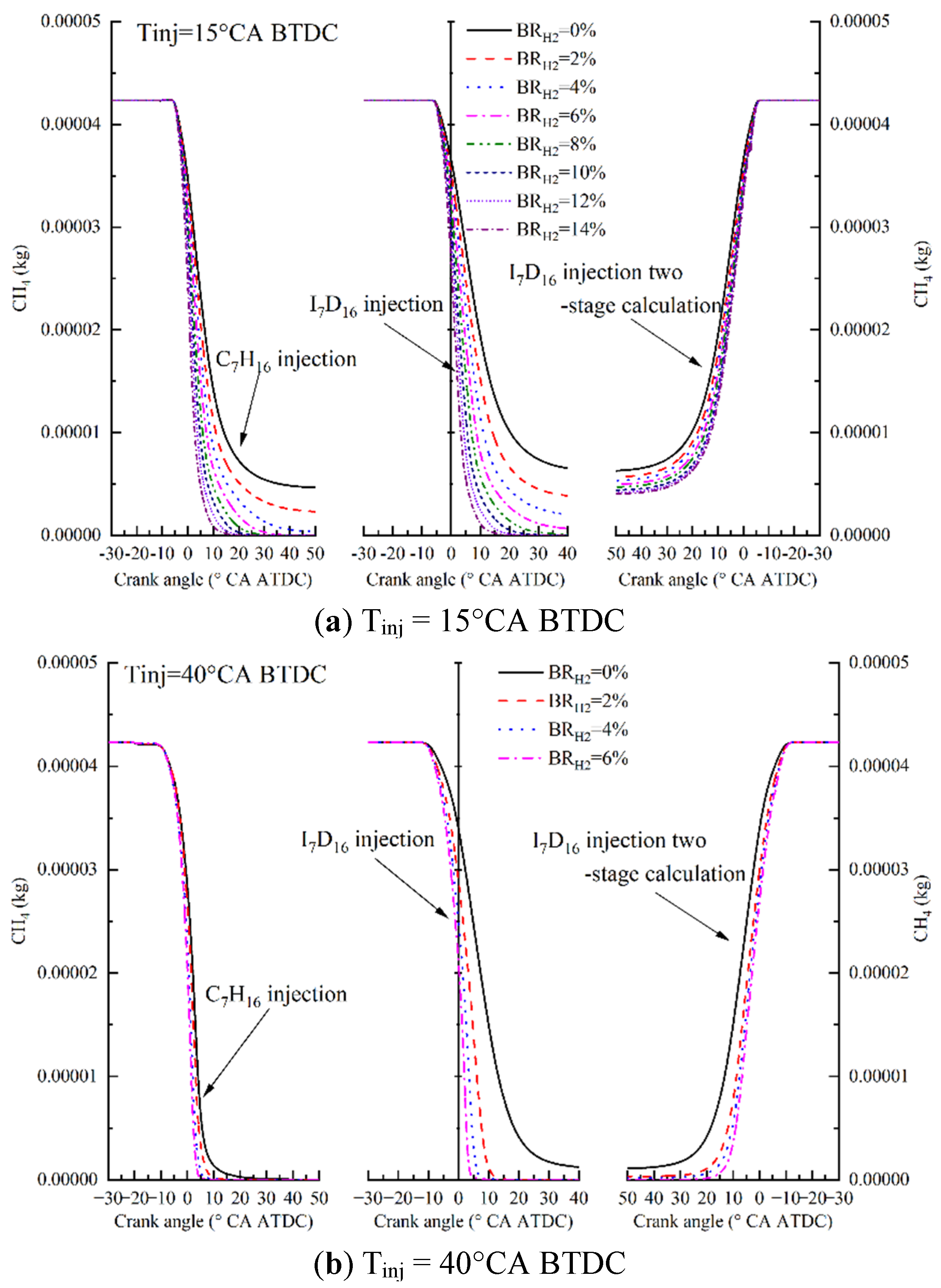
Figure 9 presents the natural gas consumption rates for the three modes. As previously discussed [29], the peak consumption rate is a critical metric for evaluating natural gas combustion. Therefore, this parameter is used to assess the impact of pilot diesel on natural gas combustion. The difference in peak consumption rates between the C7H16 injection mode and the I7D16 injection mode is attributable to the chemical kinetic effect of pilot diesel, while the difference between the I7D16 injection mode and its two-stage calculation mode reflects the hydrogen effect. The I7D16 two-stage calculation mode itself isolates the heating effect of the pilot diesel. The chemical kinetic effect value of pilot diesel decreases steadily with increasing BRH2. This decrease is much more pronounced at Tinj = 40°CA BTDC than at Tinj = 15°CA BTDC, indicating that hydrogen addition suppresses the chemical kinetic effect, and that this suppression is more sensitive under low-temperature combustion conditions. Conversely, both the hydrogen effect value and the pilot diesel heating effect value grow with increasing BRH2, again with larger changes at the earlier injection timing.
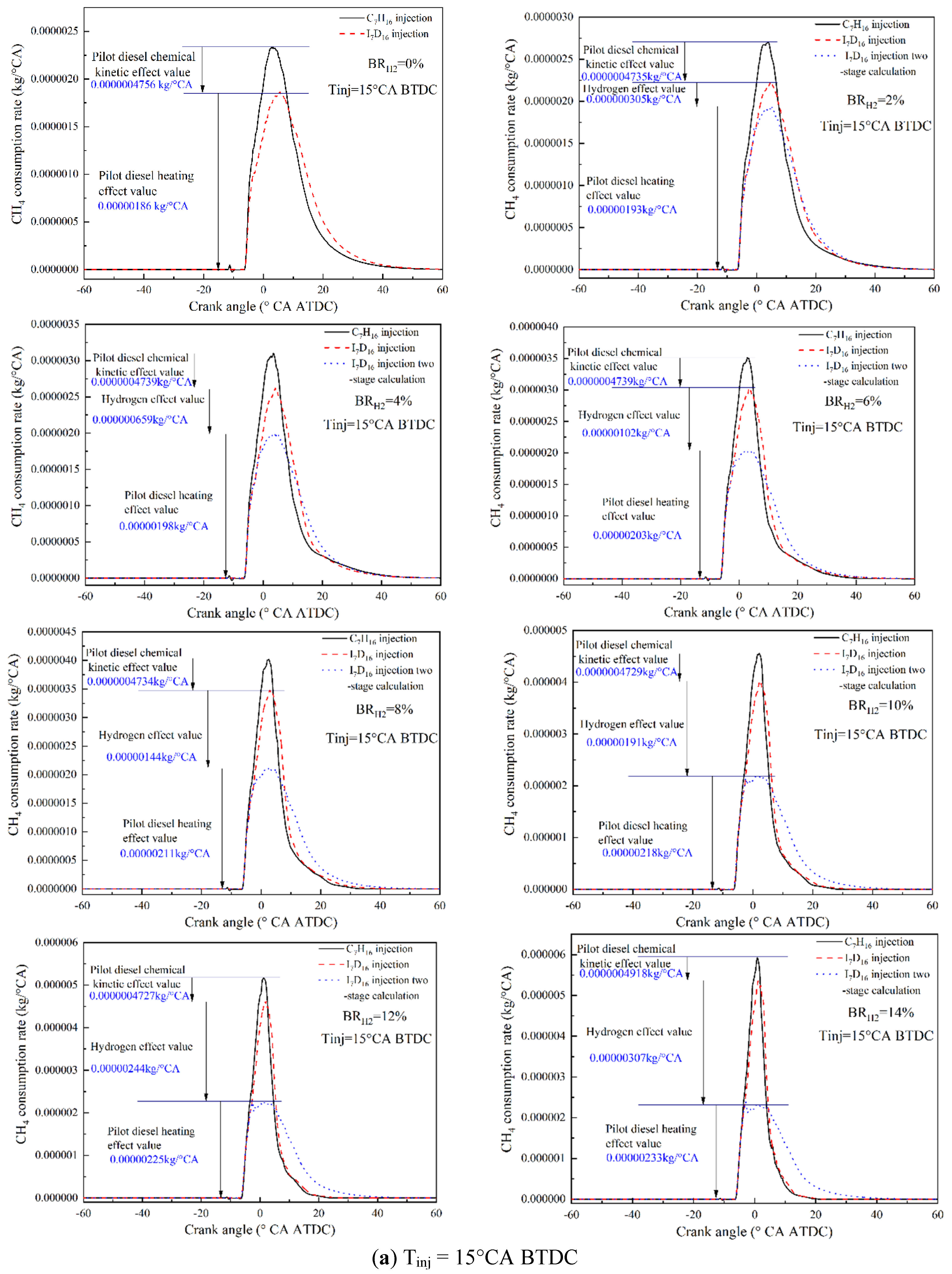
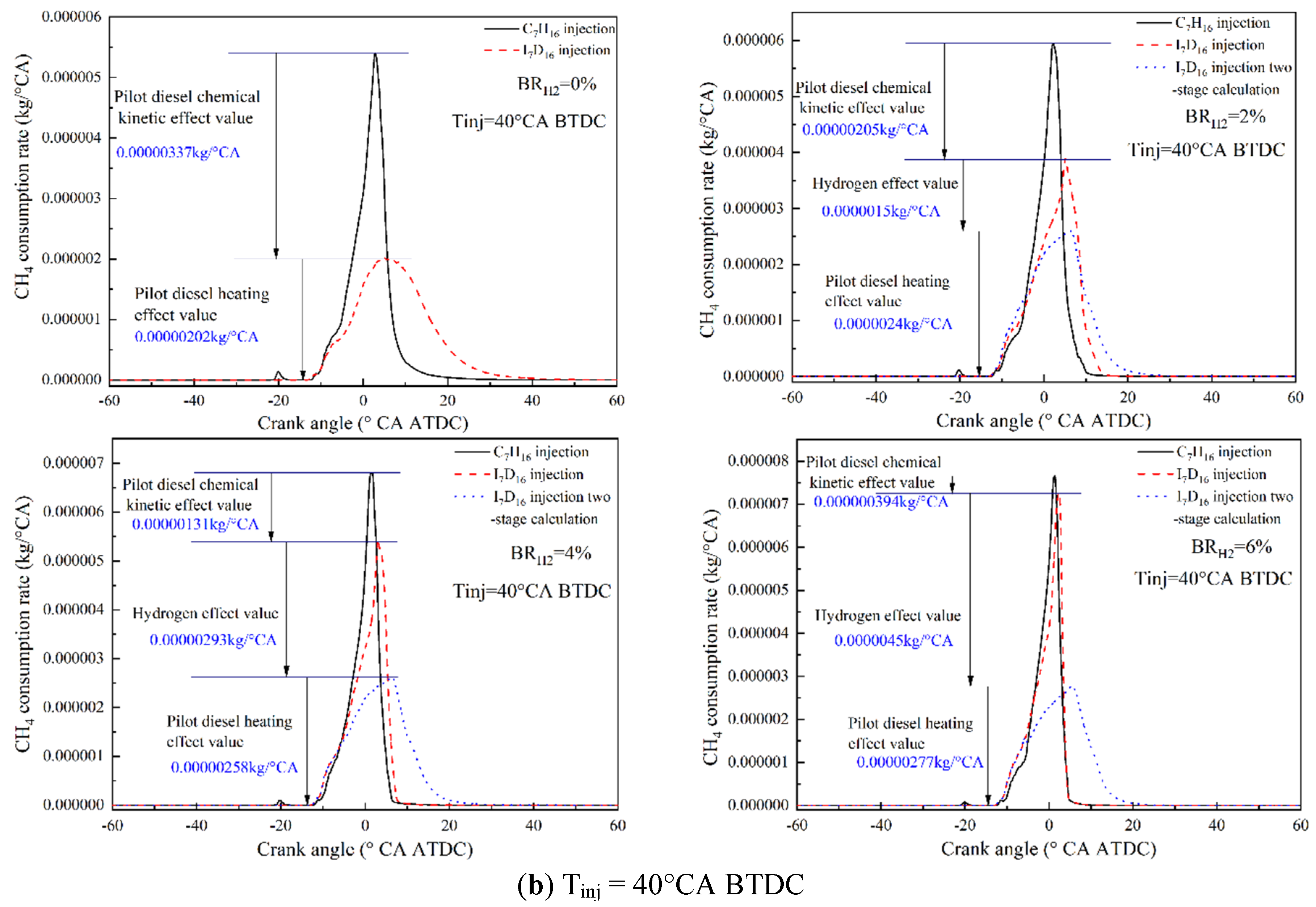
To more accurately quantify the two effects of pilot diesel, the chemical kinetic effect value to the sum of the two effect values of pilot diesel is defined as the pilot diesel chemical kinetic effect. And the heating effect value to the sum of the two effect values is defined as the pilot diesel heating effect. Figure 10 plots these ratios against BRH2. At Tinj = 15°CA BTDC, as BRH2 rises from 0 to 14%, the chemical kinetic effect decreases from 20.3% to 17.4%, while the heating effect increases from 79.7% to 82.6%. At Tinj = 40°CA BTDC, with BRH2 increasing from 0 to 6%, the chemical kinetic effect drops from 62.6% to 8%, and the heating effect rises from 37.4% to 92%. These results clearly demonstrate that the role of the pilot diesel chemical kinetic effect becomes progressively less important as hydrogen is added.
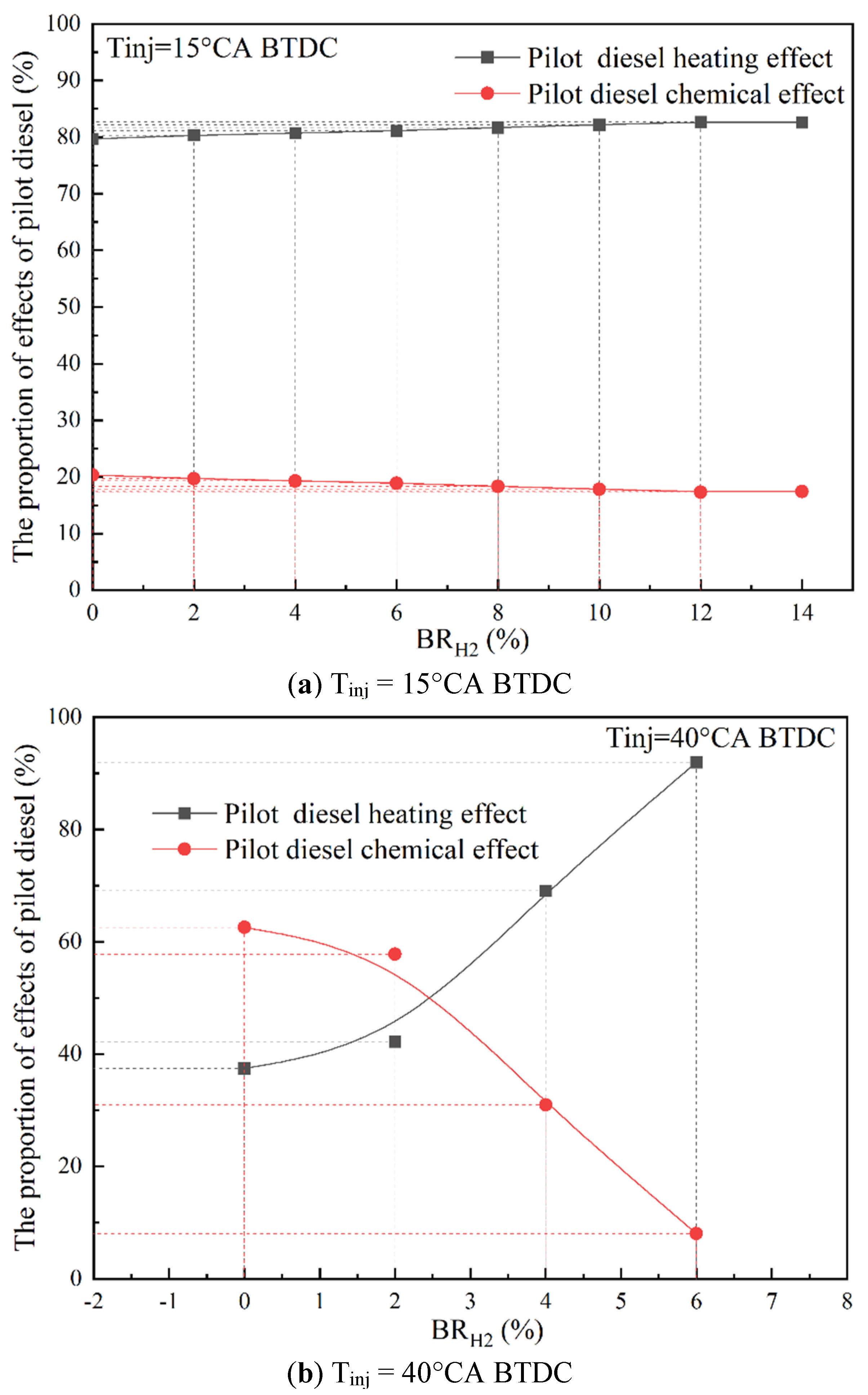
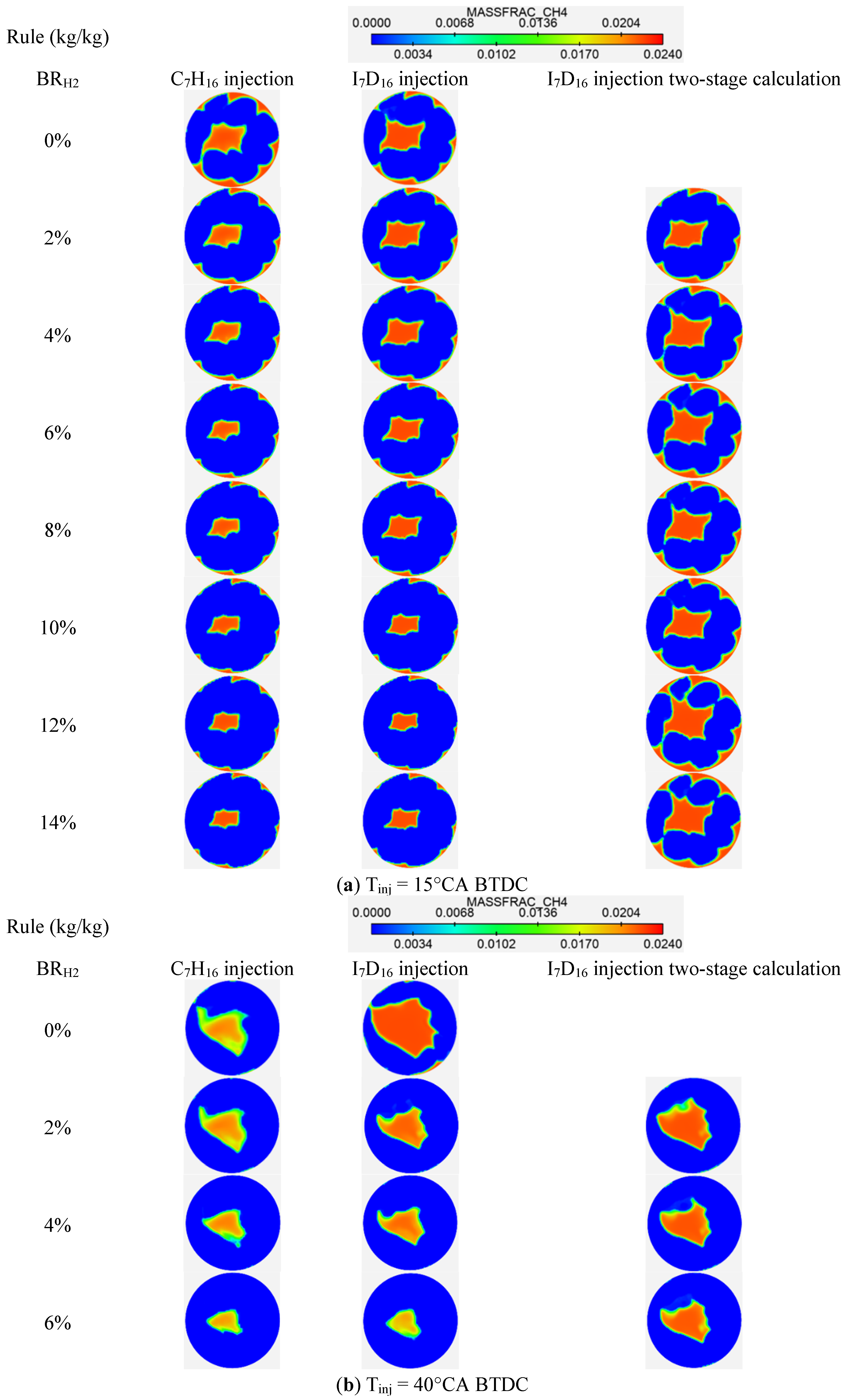
Figure 11 compares the microscopic fields of natural gas at the time of the consumption rate peak. The distribution area of natural gas in the cylinder shrinks with increasing BRH2. The natural gas area under the I7D16 injection mode is larger than that under the C7H16 injection mode, but this difference diminishes with increasing BRH2. The I7D16 two-stage calculation mode yields a smaller natural gas area than the I7D16 injection mode, and this gap widens at higher BRH2. These observations strongly support the conclusion that hydrogen plays an increasingly dominant role in the natural gas combustion process.
3.3 The Analysis of the Intrinsic Reasons for the Changes in Two Effects
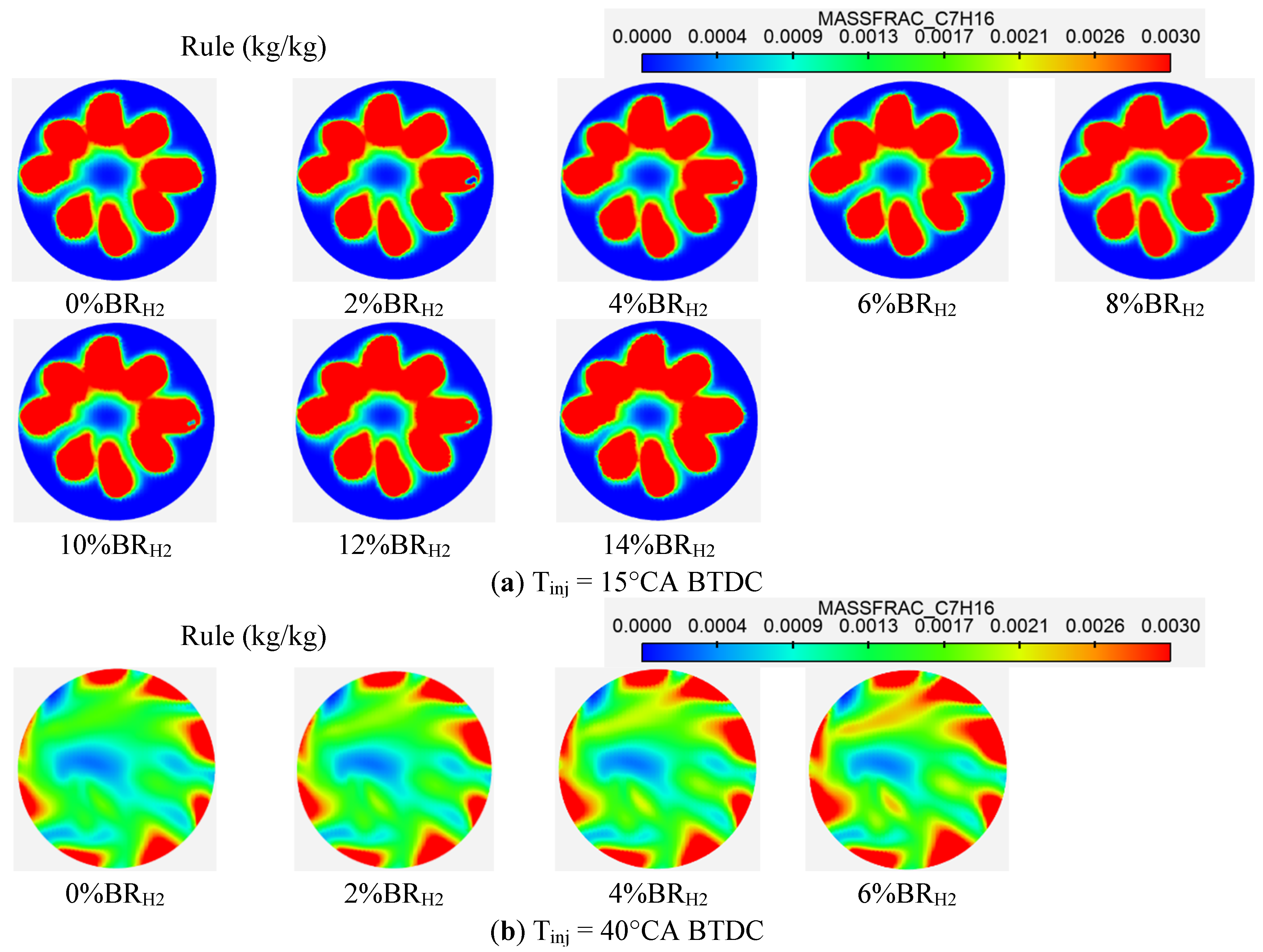
The distribution and concentration of pilot diesel at the moment of natural gas ignition directly affect the subsequent combustion. The crank angle at which the cumulative natural gas consumption reaches 2% of the total is defined as the ignition timing (CA2_C). Figure 12 shows the pilot diesel microscopic fields under the C7H16 injection mode at CA2_C for various BRH2 values. As the BRH2 increases, the distribution and concentration of pilot diesel in the cylinder remain basically unchanged. This indicates that hydrogen has little effect on the physical changes of the diesel ignition process.
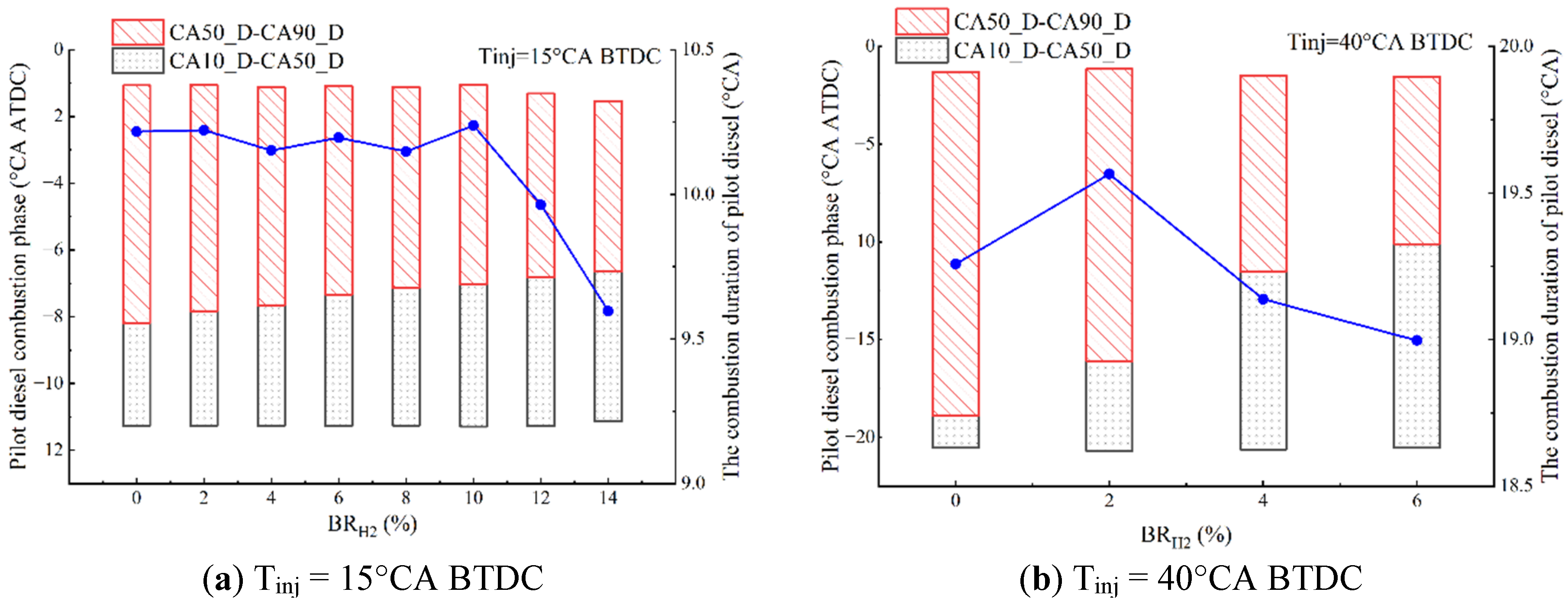
In order to further investigate the effect of pilot diesel on the natural gas combustion process under a hydrogen atmosphere, this study analyzed the combustion phase of pilot diesel. Similar to the definition of the natural gas combustion phase, the crank angle at which the cumulative consumption of pilot diesel accounts for 10%, 50%, and 90% of the total consumption is defined as the starting point (CA10_D), center of gravity (CA50_D), and termination (CA90_D) of pilot diesel combustion, respectively.
Figure 13 shows the effect of hydrogen blending ratio on pilot diesel combustion phase under the C7H16 injection mode. From the graph, it can be seen that CA10_D does not change much, CA50_D is delayed, and CA90_D is slightly advanced as the BRH2 increases. This phenomenon is more significant under the Tinj = 40°CA BTDC condition. This indicates that the early combustion of pilot diesel is suppressed, while the later combustion is accelerated. This is because hydrogen competes with pilot diesel for oxygen in the early stages of pilot diesel combustion, while hydrogen produces reactive species that promote the later stages of pilot diesel combustion. This also indicates that hydrogen can affect the highly active intermediates produced by pilot diesel, which are then delivered to natural gas combustion.
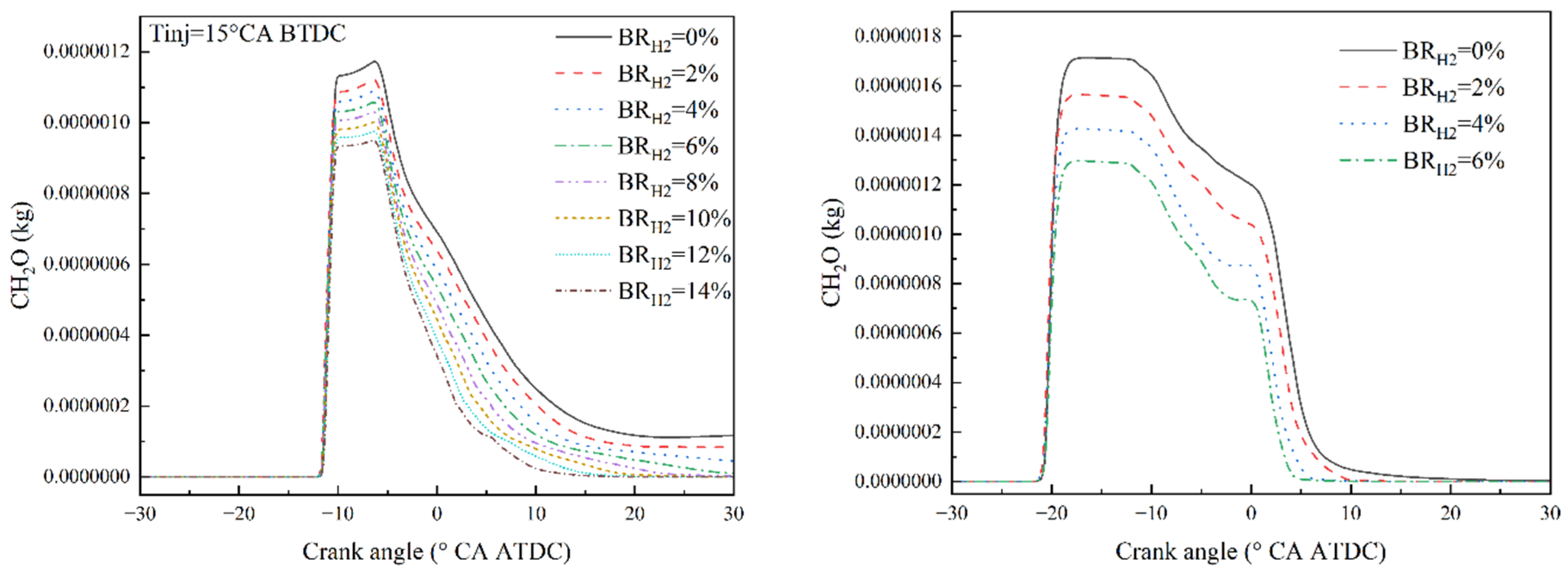
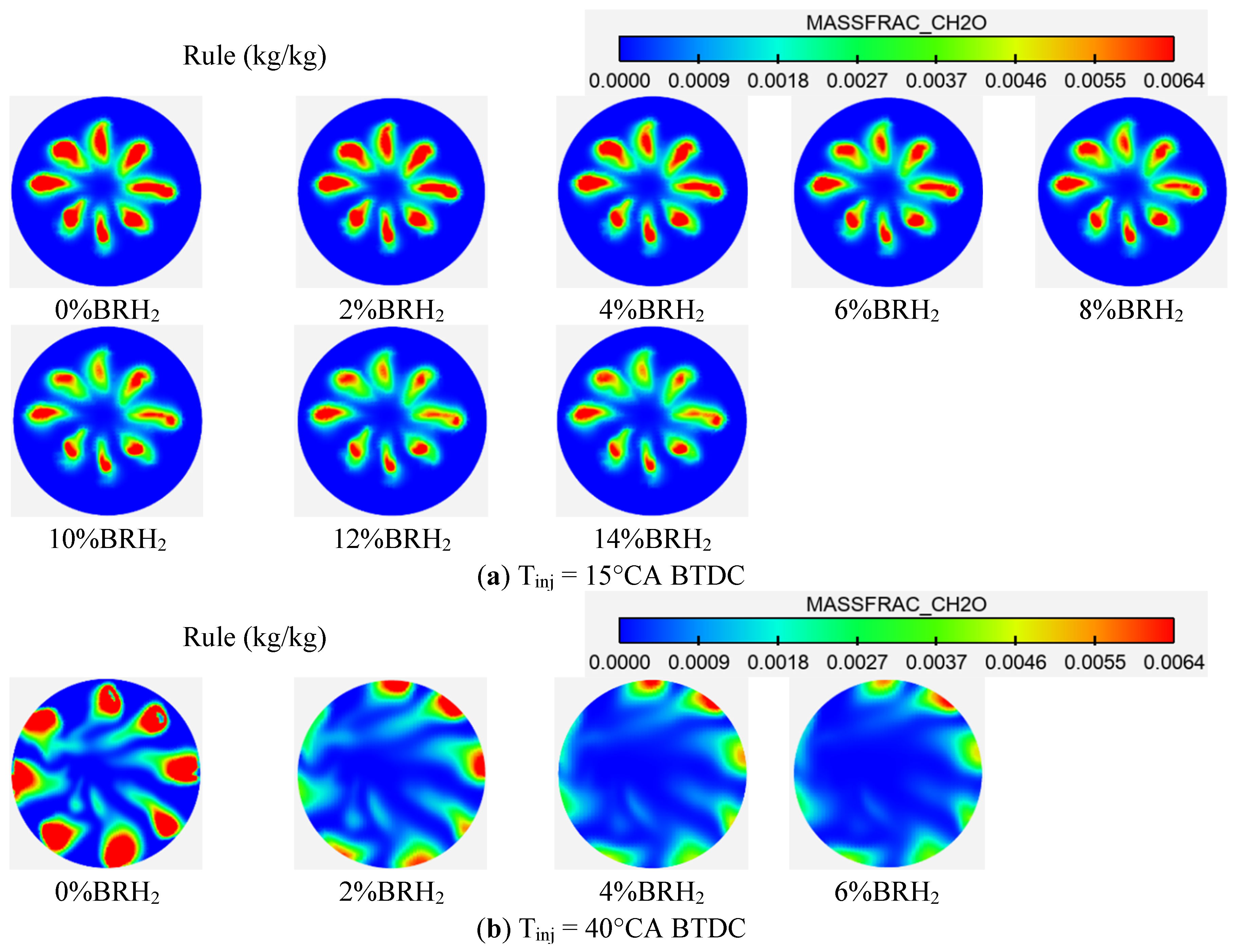
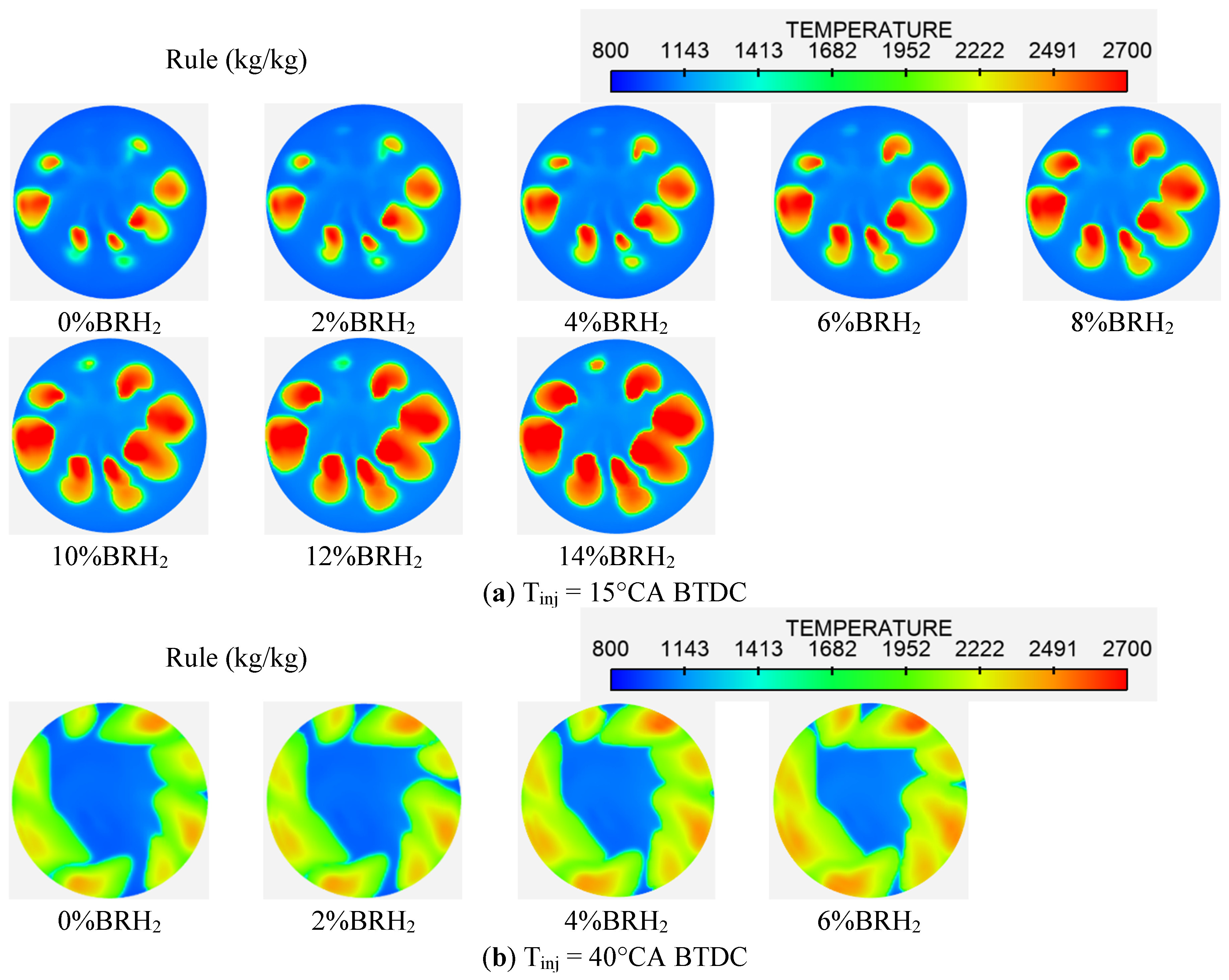
CH2O, a key intermediate from pilot diesel decomposition [31], was analyzed together with temperature to explain the changes in the two effects. Figure 14 shows the effect of hydrogen on CH2O variation with crank angle under the C7H16 injection mode. Figure 15 shows the microscopic fields of CH2O under the C7H16 injection mode at CA50_D under various hydrogen blending ratios. As the BRH2 increases, the peak value of CH2O decreases. Meanwhile, the distribution area of CH2O in the cylinder decreases and its concentration in the same area decreases. Under the Tinj = 40°CA BTDC condition, this change is more pronounced. This indicates that the pilot diesel chemical kinetic effect decreases as the BRH2 increases. Figure 16 shows the temperature microscopic fields under the C7H16 injection mode at CA90_D under various hydrogen blending ratios. As the BRH2 increases, the heat release area and the high-temperature area in the cylinder all show an increasing trend at CA90_D.
4. Conclusions
In this study, the heating and chemical kinetic effects of pilot diesel on natural gas combustion under various hydrogen blending ratios were systematically decoupled for a diesel-ignited natural gas engine. Numerical simulations were performed using the chemical inertness method and the segmented variable component method. The main findings are summarized below.
Firstly, the implementation of both the chemical inertness method and the segmented variable component method will cause a decrease in cylinder pressure. These two types of cylinder pressure drops are respectively caused by the pilot diesel chemical kinetic effect and the hydrogen effect. The decreased scope of the cylinder pressure peak caused by the chemical inertness method shows a downward trend, and the decreased scope of the cylinder pressure peak caused by the segmented variable component method shows an upward trend with the increasing BRH2.
Secondly, based on the natural gas consumption rate parameter, this paper describes the changes in the two effects of pilot diesel. As the BRH2 increases, the pilot diesel chemical kinetic effect gradually decreases, while its heating effect gradually increases. The magnitude of these changes is much greater at the condition of Tinj = 40°CA BTDC than at the condition of Tinj = 15°CA BTDC. This indicates that the pilot diesel heating effect and the hydrogen effect gradually dominate the natural gas combustion process with the increasing BRH2. The changes in various effects at earlier pilot diesel injection timing are more sensitive to the hydrogen blending ratio.
Thirdly, at the start of natural gas combustion, the distribution and concentration of pilot diesel in the cylinder remain basically unchanged as the BRH2 increases. The pilot diesel combustion starting point does not change much; its combustion center of gravity is delayed, and its combustion termination is slightly advanced as the BRH2 increases. At the time of pilot diesel combustion, both the distribution area and concentration of CH2O decrease as the BRH2 increases. This decrease in CH2O confirms the weakening of the chemical kinetic effect. At the time of pilot diesel combustion termination, the heat release area and the high-temperature area in the cylinder all show an increasing trend.
Author Contributions
J.Y.: Conceptualization, Methodology, Software, Investigation, Writing—Original Draft, Funding acquisition; J.S.: Validation, Formal analysis, Visualization; X.J.: Resources, Writing—Review & Editing, Supervision, Data Curation, Funding acquisition; F.H.: Validation, Formal analysis, Visualization, Investigation. All authors have read and agreed to the published version of the manuscript.
Funding
This research was supported by the National Natural Science Foundation of China (Grant Number 52405274) and the Shandong Provincial Natural Science Foundation of China (Grant Number ZR2024QE381 and ZR2023QE100).
Institutional Review Board Statement
Not applicable.
Informed Consent Statement
Not applicable.
Data Availability Statement
Not applicable.
Conflicts of Interest
The authors declare no conflict of interest.
Use of AI and AI-Assisted Technologies
During the preparation of this work, the authors used DeepSeek for grammar and language polishing only. After using this tool, the authors reviewed and edited the content as needed and take full responsibility for the content of the published article.
Nomenclature
| BTDC | before top dead center |
| BRH2 | hydrogen blending ratio |
| CA | crank angle |
| CFD | computational fluid dynamics |
| C7H16 | n-heptane |
| CA2_C | The crank angle at which the cumulative consumption of natural gas accounts for 2% of the total consumption |
| CA10_D | The crank angle at which the cumulative consumption of pilot diesel accounts for 10% of the total consumption |
| CA50_D | The crank angle at which the cumulative consumption of pilot diesel accounts for 50% of the total consumption |
| CA90_D | The crank angle at which the cumulative consumption of pilot diesel accounts for 90% of the total consumption ignition |
| I7D16 | n-heptane for decoupling |
| EGR | exhaust gas recirculation |
| CH2O | formaldehyde |
| NOx | nitrogen oxide |
| PmaxHEV | The difference in the cylinder pressure peak between I7D16 injection mode and I7D16 injection two-stage calculation mode |
| PmaxHER | The ratio of PmaxHEV to cylinder pressure peak in C7H16 injection mode |
| PmaxPDCKEBV | Pilot diesel chemical kinetic effect blockade value of cylinder pressure peak |
| PmaxPDCKEBR | The ratio of PmaxPDCKEBV to cylinder pressure peak in C7H16 injection mode |
| RCCI | Reactivity-controlled compression ignition |
| Tinj | Pilot diesel injection timing |
References
- 1.
Gültekin, N.; Gülcan, H.E.; Ciniviz, M. Investigation of the effects of hydrogen energy ratio and valve lift amount on performance and emissions in a hydrogen-diesel dual-fuel compression ignition engine. Int. J. Hydrogen Energy 2024, 49, 352–366.
- 2.
Park, H.; Shim, E.; Bae, C. Improvement of combustion and emissions with exhaust gas recirculation in a natural gas-diesel dual-fuel premixed charge compression ignition engine at low load operations. Fuel 2019, 235, 763–774.
- 3.
Gültekin, N.; Gülcan, H.E.; Ciniviz, M. The impact of hydrogen injection pressure and timing on exhaust, mechanical vibration, and noise emissions in a CI engine fueled with hydrogen-diesel. Int. J. Hydrogen Energy 2024, 78, 871–878.
- 4.
Fasching, P.; Sprenger, F.; Eichlseder, H. Experimental optimization of a small bore natural gas-diesel dual fuel engine with direct fuel injection. SAE Int. J. Engines 2016, 9, 1072–1086.
- 5.
Lian, Z.; Li, W.; Cai, Y.; Chen, H.; Jiang, J.; Li, G.; Zhao, F.; Yu, W. Investigations of diesel and natural gas injection interaction on combustion characteristics of a high-pressure direct-injection dual-fuel engine based on large eddy simulation. Appl. Energy 2025, 378, 124807.
- 6.
You, J.; Liu, Z.; Wang, Z.; Wang, D.; Xu, Y. Impact of natural gas injection strategies on combustion and emissions of a dual fuel natural gas engine ignited with diesel at low loads. Fuel 2020, 260, 116414.
- 7.
Qu, W.; Fang, Y.; Xie, Z.; Feng, L. Investigation of diesel pilot ignition strategy in a low-speed two-stroke marine hydrogen engine. Int. J. Hydrogen Energy 2025, 181, 151809.
- 8.
Yang, B.; Zeng, K. Effects of natural gas injection timing and split pilot fuel injection strategy on the combustion performance and emissions in a dual-fuel engine fueled with diesel and natural gas. Energy Convers. Manag. 2018, 168, 162–169.
- 9.
Zhang, M.; Su, W.; Jia, Z. Study of Efficient and Clean Combustion of Diesel-Natural Gas Engine at Low Loads with Concentration and Temperature Stratified Combustion. Energies 2024, 17, 4351.
- 10.
Shu, J.; Fu, J.; Liu, J.; Ma, Y.; Wang, S.; Deng, B.; Zeng, D. Effects of injector spray angle on combustion and emissions characteristics of a natural gas (NG)-diesel dual fuel engine based on CFD coupled with reduced chemical kinetic model. Appl. Energy 2019, 233, 182–195.
- 11.
Ebrahimi, M.; Najafi, M.; Jazayeri, S.A.; Mohammadzadeh, A.R. A detail simulation of reactivity controlled compression ignition combustion strategy in a heavy-duty diesel engine run on natural gas/diesel fuel. Int. J. Engine Res. 2018, 19, 774–789.
- 12.
Zhao, W.; Zhu, C.; Liu, Y.; Ji, Q.; Liu, J. Effects of compression ratio and EGR ratio on combustion stability and emission characteristics of natural gas/diesel engines with pre-injection strategy. J. Energy Inst. 2025, 415, 138508.
- 13.
Shu, J.; Fu, J.; Liu, J.; Wang, S.; Yin, Y.; Deng, B.; Becker, S.M. Influences of excess air coefficient on combustion and emission performance of diesel pilot ignition natural gas engine by coupling computational fluid dynamics with reduced chemical kinetic model. Energ. Convers. Manage. 2019, 187, 283–296.
- 14.
You, J.; Liu, Z.; Wang, Z.; Wang, D.; Xu, Y.; Du, G.; Fu, X. The exhausted gas recirculation improved brake thermal efficiency and combustion characteristics under different intake throttling conditions of a diesel/natural gas dual fuel engine at low loads. Fuel 2020, 266, 117035.
- 15.
Liu, J.; Ma, B.; Zhao, H. Combustion parameters optimization of a diesel/natural gas dual fuel engine using genetic algorithm. Fuel 2020, 260, 116365.
- 16.
Yang, L.; Ji, S.; Hunicz, J.; Wang, R.; Zare, A.; Su, Y.; Ji, D. Analysis of multi-mode combustion and performance in a marine diesel/natural gas dual-fuel engine based on an irreversible equivalent combustion cycle theory. Energy 2025, 326, 136248.
- 17.
Qin, W.; Shi, J.; Cheng, Q. Numerical simulation study on cycle-to-cycle variations of diesel-natural gas-hydrogen RCCI engine. Int. J. Hydrogen Energy 2025, 118, 449–456.
- 18.
Liu, J.; Zhao, W.; Zhang, X.; Ji, Q.; Ma, H.; Sun, P.; Wang, P. Optimizing combustion and emissions in natural gas/diesel dual-fuel engine with pilot injection strategy. Therm. Sci. Eng. Prog. 2024, 48, 102418.
- 19.
Guo, H.S.; Liko, B.; Luque, L.; Littlejohns, J. Combustion performance and unburned hydrocarbon emissions of a natural gas-diesel dual fuel engine at a low load condition. J. Eng. Gas Turbines Power 2018, 140, 112801.
- 20.
Kim, W.; Park, C.; Bae, C. Characterization of combustion process and emissions in a natural gas/diesel dual-fuel compression-ignition engine. Fuel 2021, 291, 120043.
- 21.
Xu, M.; Cheng, W.; Zhang, H.; An, T.; Zhang, S. Effect of diesel pre-injection timing on combustion and emission characteristics of compression ignited natural gas engine. Energy Convers. Manag. 2016, 117, 86–94.
- 22.
Liu, J.; Liu, Y.; Ji, Q.; Sun, P.; Zhang, X.; Wang, X.; Ma, H. Effects of split injection strategy on combustion stability and GHG emissions characteristics of natural gas/diesel RCCI engine under high load. Energy 2023, 266, 126542.
- 23.
Khatamnejad, H.; Khalilarya, S.H.; Jafarmadar, S.; Mirsalim, M. The effect of high-reactivity fuel injection parameters on combustion features and exhaust emission characteristics in a natural gas-diesel RCCI engine at part load condition. Int. J. Green Energy 2018, 15, 874–888.
- 24.
Ma, Y.; Gao, J.; Wang, Z.; Zhang, P.; Liu, X.; Yu, H. Co-combustion performance study of ammonia and natural gas in high pressure direct injection low-speed marine dual-fuel engine. Energy Convers. Manag. 2025, 346, 120518.
- 25.
Hamdi, T.; Hamdi, F.; Molima, S.; Chrigui, M. Eulerian-Lagrangian study of swirled combustion in heavy-duty natural gas/diesel dual-fuel engines under low load condition. Combust. Theory Model. 2025, 29, 815–839.
- 26.
Matijošius, J.; Zvirblis, T.; Rimkus, A.; Stravinskas, S.; Kilkevičius, A. Emissions, reliability and maintenance aspects of a dual-fuel engine (diesel-natural gas) using HVO additive and ANCOVA modeling. Eksploat. Niezawod. 2026, 28, 208439.
- 27.
Ma, Q.; Jiang, C.; Li, X.; Su, W. Combustion dynamics and emission characteristics of a diesel-ignited natural gas-ammonia blended fuel engine. Fuel 2025, 386, 134332.
- 28.
Wang, Z.; Du, G.; Wang, D.; Xu, Y.; Shao, M. Combustion process decoupling of a diesel/natural gas dual-fuel engine at low loads. Fuel 2018, 232, 550–561.
- 29.
You, J.; Liang, R.; Shi, J.; Song, Y.; Zhang, D.; Yang, L. The chemical kinetic and heating effects decoupling of pilot diesel in a diesel ignited natural gas engine under various pilot diesel injection timing. Fuel 2024, 374, 132408.
- 30.
Ouchikh, S.; Lounici, M.S.; Tarabet, L.; Loubar, K.; Tazerout, M. Effect of natural gas enrichment with hydrogen on combustion characteristics of a dual fuel diesel engine. Int. J. Hydrogen Energy 2019, 44, 13974–13987.
- 31.
Tutak, W.; Jamrozik, A.; Grab-Rogalinski, K. Effect of natural gas enrichment with hydrogen on combustion process and emission characteristic of a dual fuel diesel engine. Int. J. Hydrogen Energy 2020, 45, 9088–9097.
- 32.
Mabadi, R.H.; Jazayeri, S.A.; Ebrahimi, M. Hydrogen energy share enhancement in a heavy duty diesel engine under RCCI combustion fueled with natural gas and diesel oil. Int. J. Hydrogen Energy 2020, 45, 17975–17991.
- 33.
Zareei, J.; Haseeb, M.; Ghadamkheir, K.; Farkhondeh, S.A.; Yazdani, A.; Ershov, K. The effect of hydrogen addition to compressed natural gas on performance and emissions of a DI diesel engine by a numerical study. Int. J. Hydrogen Energy 2020, 45, 34241–34253.
- 34.
De Simio, L.; Iannaccone, S. Gaseous and particle emissions in low-temperature combustion diesel-HCNG dual-fuel operation with double pilot injection. Appl. Energy 2019, 253, 113602.
- 35.
Han, Z.; Reitz, R.D. Turbulence modeling of internal combustion engines using RNG κ-ε models. Combust. Sci. Technol. 1995, 106, 267–295.
- 36.
Richards, K.; Senecal, P.; Pomraning, E. CONVERGE Manual (version 2.3.19); Convergent Science, Inc.: Madison, WI, USA, 2016.
- 37.
Rahimi, A.; Fatehifar, E.; Saray, R.K. Development of an optimized chemical kinetic mechanism for homogeneous charge compression ignition combustion of a fuel blend of n-heptane and natural gas using a genetic algorithm. Proc. Inst. Mech. Eng. Part D J. Automob. Eng. 2010, 224, 1141–1159.
- 38.
Reitz, R.D.; Bracco, F.V. Mechanisms of breakup of round liquid jets. In: Encyclopedia of Fluid Mechanics; Gulf Publishing: Houston, TX, USA, 1986; pp. 233–249; Vol. 3.
- 39.
Heywood, J.B. Internal Combustion Engine Fundamentals; McGraw-Hill: New York, NY, USA, 1988.
- 40.
Schmidt, D.P.; Rutland, C.J. A New Droplet Collision Algorithm. J. Comput. Phys. 2000, 164, 62–80.
- 41.
Ricart, L.M.; Xin, J.; Bower, G.R.; Reitz, R.D. In-cylinder measurement and modeling of liquid fuel spray penetration in a heavy-duty diesel engine. In Proceedings of the International Spring Fuels & Lubricants Meeting & Exposition, Dearborn, MI, United States, 5 May 1997. https://doi.org/10.4271/971591.
- 42.
Amsden, A.A.; O'Rourke, P.; Butler, T. KIVA-II: A Computer Program for Chemically Reactive Flows with Sprays; Los Alamos National Lab.: Los Alamos, NM, USA, 1989.
- 43.
Issa R.I. Solution of the implicitly discretised fluid flow equations by operator-splitting. J. Comput. Phys. 1986, 62, 40–65.
- 44.
Han, Z.; Reitz, R.D. A temperature wall function formulation for variable-density turbulent flows with application to engine convective heat transfer modeling. Int. J. Heat Mass Transf. 1997, 40, 613–625.
- 45.
Wu, Z.; Rutland, C.J.; Han, Z. Numerical optimization of natural gas and diesel dual-fuel combustion for a heavy-duty engine operated at a medium load. Int. J. Engine Res. 2017, 19, 682–696.


This work is licensed under a Creative Commons Attribution 4.0 International License.

 Suite 4002 Level 4, 447 Collins Street, Melbourne, Victoria 3000, Australia
 General Inquiries: info@sciltp.com