
This paper reviews the next generation of automotive emission regulations, with particular focus on the European Union’s Euro 7 framework and the U.S. Environmental Protection Agency (EPA) Tier 4 requirements for light- and medium-duty vehicles beginning with model year 2027. These new regulations tighten control of regulated pollutants under a wider range of operating conditions, expand real-driving and low-temperature compliance expectations, and, in the case of Euro 7, extend regulations to non-exhaust sources such as brake and tire emissions while also strengthening durability requirements for electrified vehicles. Compared with current Euro 6 and Tier 3-era technologies, the new standards expose an important gap between existing production-ready emission-control solutions and the robustness required for future compliance. This gap is mainly driven by several factors: limited catalyst performance at low exhaust temperatures, slower catalyst light-off during cold starts and engine restarts, reduced emissions-control efficiency during rapid changes in engine operation, and the difficulty of maintaining low emission levels throughout the vehicle’s full useful life. The paper examines how conventional approaches based on incremental calibration refinement, conventional three-way catalysts, diesel oxidation catalysts, particulate filters, and Selective Catalytic Reduction (SCR) systems may no longer be sufficient on their own to meet the combined demands of lower emissions, broader operating boundaries, and long-term durability. To address this gap, the study summarizes the most relevant emerging technologies in exhaust aftertreatment. On the in-cylinder side, the paper briefly discusses ultra-high-pressure gasoline direct injection, advanced fuel-injection strategies, improved air-path and Exhaust Gas Recirculation (EGR) management, combustion optimization, ignition-system enhancement, and increased electrification or hybridization to reduce engine-out emissions. On the aftertreatment side, which is the main focus of this paper, it reviews electrically heated catalysts, close-coupled and dual-stage catalyst architectures, improved particulate filtration systems, low-temperature NOx-control technologies, and advanced thermal-management strategies. Together, these technologies form a multi-layer compliance pathway for achieving future NOx, CO, hydrocarbon, particulate, and greenhouse-gas targets while preserving vehicle performance, fuel economy, and cost competitiveness during the transition toward lower-emission mobility.
- Open Access
- Review
Next-Generation Emission Regulations and Strategies for Compliance
- Xiaoxi Zhang,
- Navjot Singh Sandhu,
- Xiao Yu *,
- Ming Zheng
Author Information
Received: 27 May 2026 | Revised: 04 Jul 2026 | Accepted: 09 Jul 2026 | Published: 28 Jul 2026
Abstract
Keywords
internal combustion engine | EPA Tier 4 | Euro 7 | emissions | in-cylinder emission controls | exhaust aftertreatment
1. Introduction
Automakers are navigating a complex transition toward electrification while continuing to improve internal combustion engine (ICE) technologies. Since 2020, industry planning in many regions has been shaped by expectations of rapid battery electric vehicle (BEV) growth, supported by regulatory pressure, incentive programs, and long-term decarbonization targets. However, from 2024 to 2025, the electric vehicle (EV) adoption rate was slower than expected in many markets. Combined with uneven regional demand and ongoing profitability challenges, this has pushed the industry toward a more cautious, multi-technology strategy, where ICE and hybrid platforms continue to play an important role.
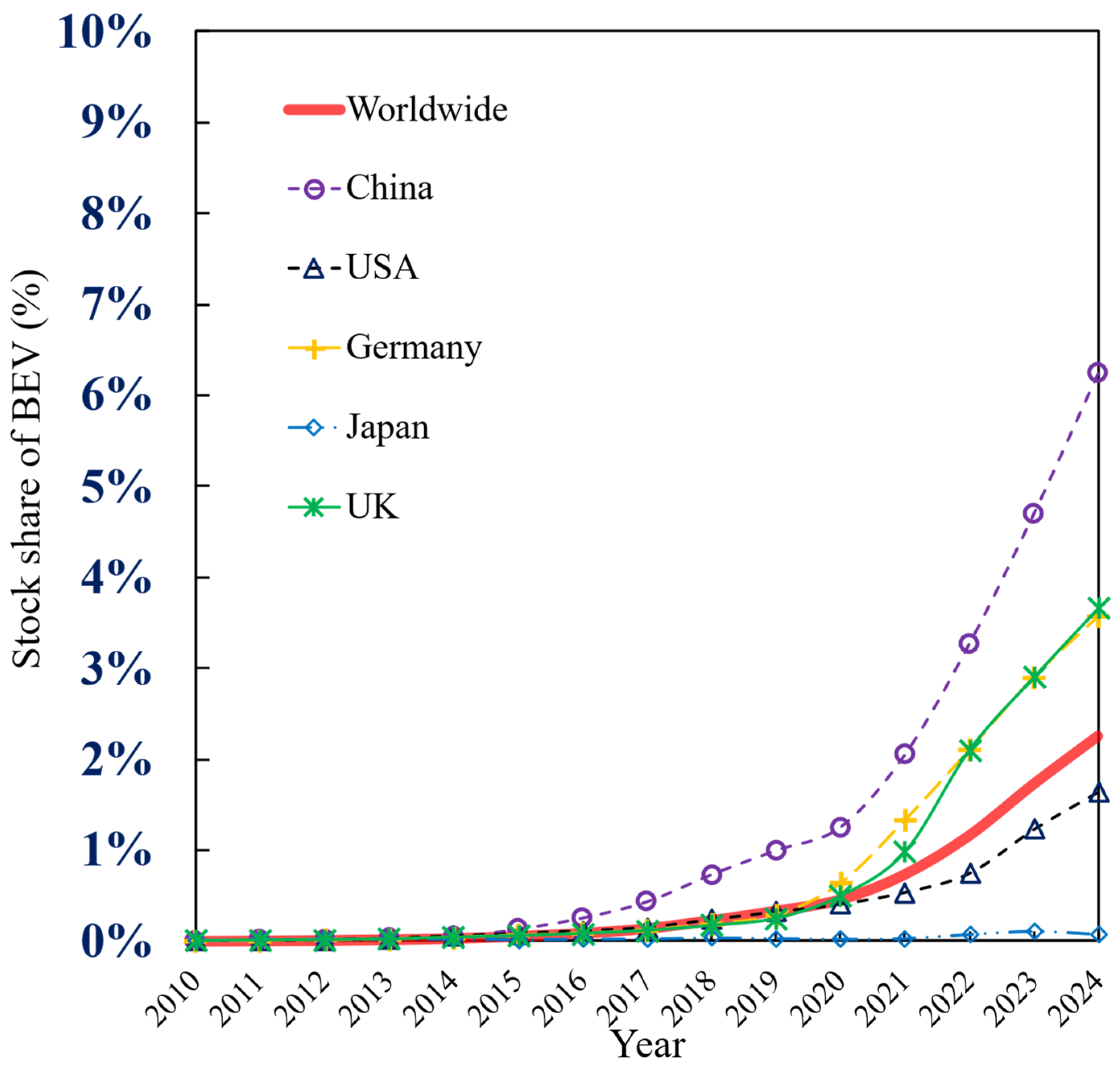
As of 2024, the global BEV fleet has surpassed 39 million vehicles, accounting for approximately 2% of the worldwide vehicle stock (see Figure 1). China continues to lead the BEV market, with around 22.5 million vehicles on the road, making up slightly more than 6% of its national vehicle fleet. In comparison, the European Union and the United States account for about 2.1% and 1.6% of their respective vehicle stocks. Additionally, plug-in hybrid electric vehicles (PHEVs) continue to play a significant role in the electrification of transportation [1,2,3].
International Council on Clean Transportation (ICCT) market tracking indicates that PHEVs represented approximately 40% of EV sales in 2024 and 37% in the first half of 2025 in the principal monitored markets [4].
Although EV sales have continued to grow in absolute terms, demand has weakened in several major markets, including the United States and parts of Europe, and the short-term pace of electrification has been slower than earlier projections suggested. BEV adoption also continues to face practical challenges, such as high vehicle prices, limited availability of affordable models, and insufficient charging infrastructure coverage and reliability. In the United States, average BEV transaction prices remained close to USD 55,000 in 2024 [5]. While battery pack prices have fallen to approximately USD 115/kWh, battery systems remain considerably more expensive than conventional internal combustion engine (ICE) powertrains [6]. These costs and infrastructure barriers indicate that ICE and hybrid vehicles are likely to remain an important part of the global transportation mix for the foreseeable future, even as electrification continues to expand.
At the same time, the continued use of ICE vehicles is being challenged by increasingly stringent pollutant and CO2 regulations. New regulatory frameworks, such as Euro 7 in Europe and the next phase of U.S. EPA emissions requirements, are pushing automakers toward lower tailpipe emissions, stronger real-world compliance, and longer useful-life performance. In Europe, Euro 7 also expands the scope of regulation beyond traditional tailpipe pollutants by adding limits on brake-particle emissions and battery durability requirements for electrified vehicles. This broadens the practical compliance challenge for manufacturers [7,8,9]. Meeting these requirements will require more than small calibration updates. Automakers will need to combine improved combustion systems, advanced boosting and thermal management, hybridization, cleaner or sustainable fuels, and more sophisticated exhaust aftertreatment systems.
This paper reviews the next generation of automotive emission regulations and examines the principal technical pathways available to meet them. Particular emphasis is placed on the gap between current mainstream production solutions and the more robust performance required under future Euro 7 and EPA standards, especially under cold-start, low-load, transient, and real-driving conditions. The paper then summarizes the main aftertreatment technologies that can help close this gap while preserving the competitiveness and cost-effectiveness of ICE and hybrid powertrains during the transition toward electrified mobility.
2. Upcoming Emission Regulations
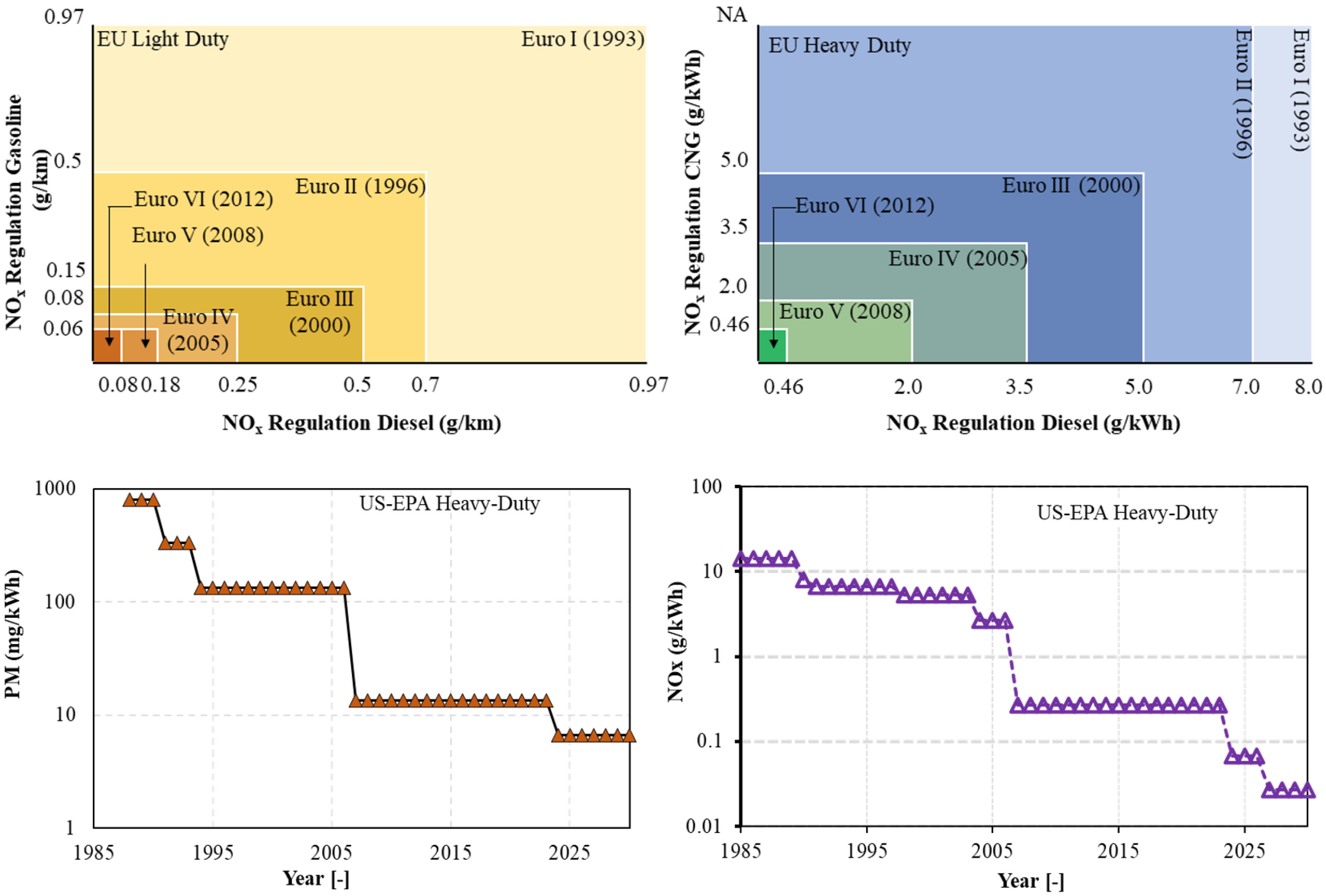
The proposed Euro 7 and U.S. EPA Tier 4-type light- and medium-duty regulations, applicable from 2027 onward, represent a further tightening of pollutant-control requirements. For the U.S. light- and medium-duty sectors, the EPA framework introduces a phased reduction in fleet-average Non-Methane Organic Gases + Nitrogen Oxides (NMOG + NOx) limits beginning in 2027, reaching an approximately 50% reduction for light-duty vehicles relative to the current Tier 3 level, together with tighter carbon monoxide (CO) and formaldehyde (HCHO) requirements; in Europe, Euro 7 strengthens the regulatory burden through broader real-driving, durability, and particle-control requirements even where some light-duty mass limits remain similar to Euro 6e [7,9,10,11]. Figure 2 illustrates the historical development of NOx limits in the U.S. and EU.
2.1. U.S. EPA Tier 4 Emissions Regulations
Emission regulations in the United States and Europe have evolved steadily since their introduction in the 1960s and 1970s, respectively, with progressively stricter limits on pollutants such as hydrocarbons (HC), carbon monoxide (CO), nitrogen oxides (NOx), and particulate matter (PM). These regulations have been a major driver of improvements in combustion efficiency, catalyst technology, particulate filtration, and overall aftertreatment-system performance. In the United States, this regulatory framework began with the 1965 Motor Vehicle Air Pollution Control Act, which introduced the first nationwide tailpipe limits for 1968 model year vehicles, and was further strengthened by the Clean Air Act of 1970 and the establishment of the Environmental Protection Agency (EPA), which was given authority to regulate vehicle emissions at the federal level. Building on this long progression, the next major step is the EPA Tier 4 program for light- and medium-duty vehicles, scheduled to begin with the 2027 model year [10,11]. Tier 4 does not prohibit internal combustion engine (ICE) vehicles, but it imposes much more stringent fleet-average requirements for pollutants and greenhouse gases (GHGs). As a result, ICE vehicles can remain in the market only if manufacturers achieve compliance through cleaner combustion, increased electrification, and more advanced aftertreatment systems; otherwise, non-compliance may lead to substantial financial penalties [10,11].
For criteria pollutants, Tier 4 introduces new fleet-average limits for NMOG + NOx, as well as tighter CO and HCHO standards. The fleet-average NMOG + NOx requirement is phased in beginning in 2027 and tightens over time, reaching 15 mg/mi for light-duty vehicles (LDVs) in 2032 and 75 mg/mi for medium-duty vehicles (MDVs) in 2033. The detailed phase-in NMOG + NOx limits specified by the Tier 4 standard are summarized in Table 1, while the corresponding CO and HCHO limits are presented in Table 2 [10,11].
In parallel with the pollutant limits, the planned EPA 2027–2032 regulatory roadmap also targets significant reductions in vehicle GHG emissions, with up to 56% CO2-equivalent reductions in the light-duty sector and 44% for the medium-duty sector by 2032, relative to current baselines [10]. This combined pollutant and GHG requirements will drive the deployment of high-efficiency combustion concepts, sophisticated exhaust aftertreatment, and varying levels of electrification to keep ICE-based powertrains viable in the Tier 4 era.
EPA Tier 4 NMOG + NOx fleet-average emissions standards.
| Model Year | Light-Duty Vehicles (mg/mi) | Medium-Duty Vehicles (mg/mi) | |
|---|---|---|---|
| Class 2b | Class 3 | ||
| 2026 | 30 * | 178 * | 247 * |
| 2027 | 25 | 175 | |
| 2028 | 23 | 160 | |
| 2029 | 21 | 140 | |
| 2030 | 19 | 120 | |
| 2031 | 17 | 100 | |
| 2032 | 15 | 80 | |
| 2033+ | 15 | 75 | |
These values define the fleet-average NMOG + NOx emissions targets that automakers must achieve, based on the mix of vehicles they sell. Rather than requiring every individual model to meet the same emissions limit, compliance is assessed across the entire fleet. This means vehicles with higher emissions need to be offset by cleaner models, such as improved combustion control, more effective aftertreatment systems, hybrid systems, and electrified powertrains.
For light-duty vehicles, the upcoming Tier 4 standard tightens these requirements significantly. The fleet-average NMOG + NOx limit will drop from 30 mg/mi under Tier 3 to 15 mg/mi by 2032—a 50% reduction [10,11]. Separately, EPA’s earlier nonroad diesel Tier 4 program applies to nonroad compression-ignition engines and is distinct from the on-road Tier 4 standards for light- and medium-duty vehicles, as the two regulatory programs apply to different engine categories [12]. Medium-duty limits are similarly tightened over the 2027–2033 timeframe, ensuring progressively stricter controls on NOx and organic emissions for improved air quality.
EPA Tier 4 emission standards for CO and HCHO.
| Pollutant | Test Cycle | Light-Duty Vehicles (g/mi) | Medium-Duty Vehicles (g/mi) |
|---|---|---|---|
| CO | 25 °C FTP, HFET, SC03 | 1.7 | 3.2 |
| CO | −7 °C FTP | 10.0 | 10.0 |
| HCHO | 25 °C FTP | 0.004 | 0.006 |
Although this review focuses primarily on criteria pollutants such as NOx, NMOG, CO, HC, PM, and particle number (PN), CO2 and GHG regulations remain an important parallel driver of powertrain development. In practice, CO2 and fuel-economy targets influence the adoption of hybridization and electrification strategies because OEMs must manage overall fleet-average fuel economy and CO2 emissions. To meet these requirements, manufacturers may need to produce more low-CO2 vehicles, such as EVs and plug-in hybrids, or purchase regulatory credits from EV manufacturers such as Tesla.
2.2. Euro 7 Emission Regulations
In April 2024, the European Parliament and Council adopted Regulation (EU) 2024/1257 (“Euro 7”), which replaces the current Euro 6e framework and establishes new emission requirements for cars, vans, trucks, and buses. Euro 7 consolidates light- and heavy-duty rules into a single legislative package and, for the first time, regulates not only tailpipe pollutants but also non-exhaust emissions from brake systems and tire wear. Compared with earlier Euro emission standards, Euro 7 introduces more stringent requirements by tightening or expanding pollutant limits for certain vehicle categories and by addressing several gaps that remained under Euro 6. These enhancements include improved particle-number measurement, stronger on-board monitoring requirements, longer durability obligations, and the regulation of non-exhaust emissions such as brake and tire particles. Euro 7 retains Real Driving Emissions (RDE) as a key compliance verification procedure, building on the testing framework established under the Euro 6d and Euro 6e regulations for passenger cars and light commercial vehicles [7,13].
As illustrated in Figure 3, earlier certification cycles such as New European Driving Cycle (NEDC), Worldwide Harmonized Light Vehicles Test Procedure (WLTP), and Euro 6 Real Driving Emissions (RDE) low-speed motorway operation cover progressively larger portions of the engine speed-load map, but they still do not represent the full operating envelope. In the conceptual comparison shown, NEDC is concentrated mainly below approximately 40% relative engine speed and 30% relative load, while WLTP extends the covered region to roughly 55% relative speed and 50–55% relative load. The RDE < 100 km/h region further expands operation toward approximately 70% relative engine speed and 75–80% relative load. In contrast, full-range RDE requirements push compliance toward nearly the complete engine operating map, approaching both high-speed and high-load regions. This expanded coverage means that low emissions can no longer be achieved only within a narrow set of calibrated laboratory test points; instead, robust emissions control must be maintained over a substantially wider range of real-world speed, load, and transient conditions [7,14,15].
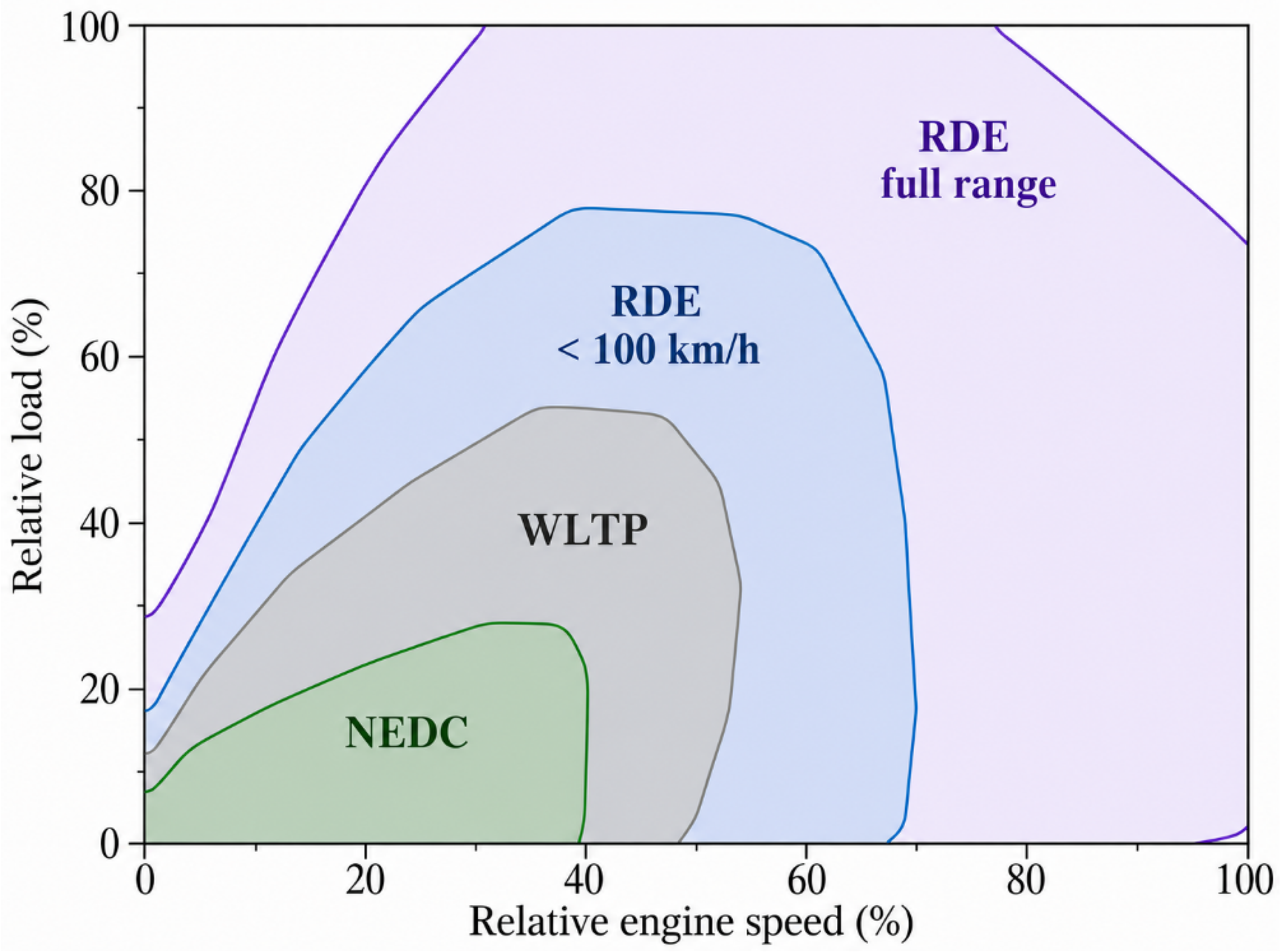
RDE pushes compliance toward higher load, wider speed ranges, and more transient real-world conditions. This broader coverage means that low emissions can no longer be achieved only in a relatively narrow set of calibrated test points; instead, robust control must be maintained across a far larger portion of actual vehicle operation [14,15]. For light-duty vehicles, the regulated tailpipe mass limits for core pollutants remain broadly similar to Euro 6e. Yet, compliance becomes more challenging because particle counting is extended from 23 nm to 10 nm, real-world conformity requirements are strengthened, brake emissions are regulated for the first time, and battery durability requirements are introduced for electrified vehicles. In other words, Euro 7 raises the practical compliance burden by broadening controlled emission sources, extending the useful-life and in-use performance expectations, and requiring consistently low-emission operation over a wider range of real-driving conditions [7,13,14,15].
Euro 7 does not introduce new fleet-average CO2 targets; these are defined in separate CO2 regulations that progressively reduce WLTP-based fleet limits for cars and vans between 2025 and 2034, followed by a zero-CO2 target from 2035 onward [13]. Instead, Euro 7 focuses on pollutant emissions and durability, including minimum battery-capacity retention requirements for electrified vehicles to ensure long-term performance. Collectively, these measures make Euro 7 a comprehensive standard that simultaneously addresses tailpipe pollutants, non-exhaust particles, and the robustness of electrified powertrains, while interacting with parallel CO2 legislation that ultimately drives the transition toward zero-emission vehicles in the EU [7,9]. The regulated emission species under the Euro 7 standard are listed in Table 3 [7].
Therefore, the significance of Euro 7 lies less in a simple reduction of every light-duty tailpipe limit and more in the expansion of regulatory scope, measurement sensitivity, durability expectations, and real-world compliance requirements relative to Euro 6.
Euro 7 emission standards for passenger cars.
| Pollutant | SI (Gasoline) (g/km) | CI (Diesel) (g/km) |
|---|---|---|
| CO | 1.0 | 0.5 |
| HC | 0.10 | 0.14 |
| NOx | 0.06 | 0.08 |
| PM | 0.0045 | 0.0045 |
| PN (1/km)—10 nm | 6 × 10¹¹ | 6 × 10¹¹ |
Euro 7 is issued as a single regulation that covers both light- and heavy-duty vehicles, with separate test procedures and emission limits defined for each category. Additional species, such as NH3 and N2O, have also been added as regulated pollutants for heavy-duty engines under Euro 7. For heavy-duty vehicles, the transition from Euro 6 to Euro 7 is more explicit: the regulation tightens several exhaust-emission limits, extends PN control down to 10 nm, and introduces additional regulated species such as NH3 and N2O [7,15]. As a result, Euro 7 is more challenging to meet than previous Euro standards, because manufacturers must now achieve low emissions not only over conventional certification cycles, but also across broader operating conditions, over longer useful lifetimes, and for a wider range of pollutants and non-exhaust sources [7,9,15].
Compliance limits for these species according to the Euro 7 heavy-duty emission standards are summarized in Table 4 [7]. It should be noted that emission limits for passenger cars and heavy-duty engines are expressed using different units because these vehicle categories are tested and certified under different procedures. Passenger-car emission limits (listed in Table 3) are typically reported on a distance basis, such as g/km or particles/km, since certification is based on vehicle driving cycles that represent real-world driving conditions. In contrast, heavy-duty engine emission limits are generally reported on a work basis, such as g/kWh or particles/kWh, because heavy-duty engines are certified using engine dynamometer test cycles, in which emissions are normalized to the engine’s brake work.
Euro 7 emission standards for heavy-duty engines.
| Pollutant | Steady Test Cycle Limits (g/kWh) | RDE Test Cycle Limits (g/kWh) |
|---|---|---|
| CO | 1.5 | 1.95 |
| NMHC | 0.08 | 0.105 |
| CH4 | 0.50 | 0.65 |
| NOx | 0.20 | 0.26 |
| NH3 | 0.06 | 0.085 |
| N2O | 0.20 | 0.26 |
| PM | 0.008 | - |
| PN (particle number /kw·hr) | 6.0 × 10¹¹ | 9.0 × 10¹¹ |
3. Emission Standard Compliance Strategies
Meeting future emission regulations, such as EPA Tier 4 and Euro 7, requires a multi-technology approach rather than relying on a single solution [7,10,11,15]. The principal pathways are in-cylinder emission control and exhaust aftertreatment, supported where appropriate by electrification and alternative fuels [15,16,17,18,19]. Although current combustion and aftertreatment technologies have enabled compliance with existing standards, they are increasingly challenged by the broader and more stringent demands of upcoming regulations. The difficulty lies not only in lower allowable emission limits, but also in the requirement to maintain compliance over a much wider range of operating and environmental conditions, including cold start, low-load urban driving, transient operation, real-driving conditions, and extended useful-life durability [7,13,14,18,20]. These are precisely the regions in which many conventional engine and aftertreatment systems are least effective [16,18,19,20].
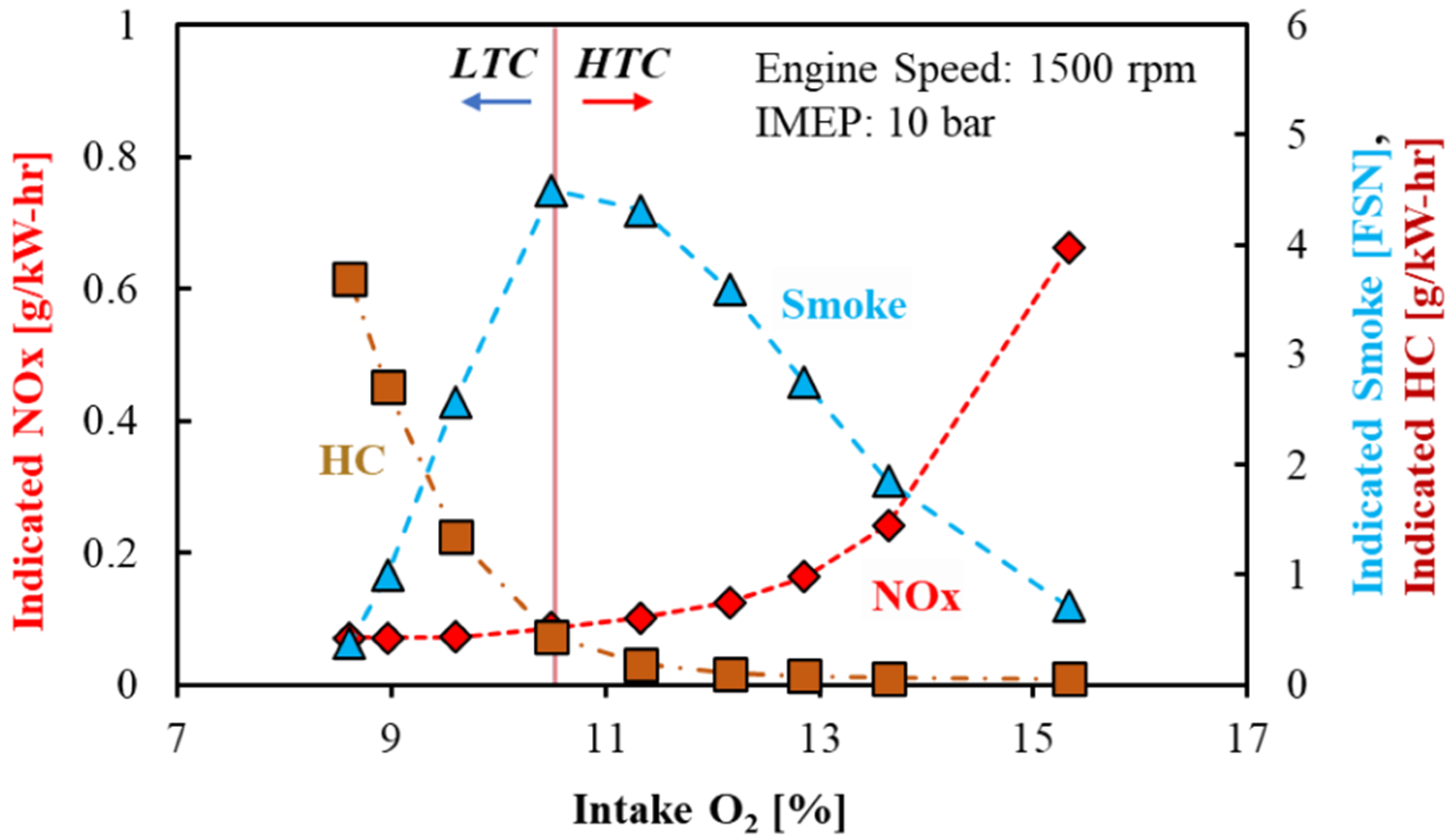
From the combustion perspective, further reductions in engine-out emissions are constrained by fundamental trade-offs. Measures such as exhaust gas recirculation, lean operation, retarded combustion phasing, increased dilution, and optimized injection strategies can reduce specific pollutants, but often at the expense of others [21,22,23,24,25,26,27,28,29]. The classical PM–NOx trade-off associated with the use of EGR in a diesel engine is shown in Figure 4. Figure 4 is plotted from empirical data obtained during an EGR sweep conducted at fixed engine speed and load conditions on a single-cylinder research diesel engine in the authors’ laboratory. This trade-off remains a central limitation in both diesel and gasoline direct-injection engines, while attempts to improve one aspect of combustion may negatively affect fuel economy, cyclic stability, cold-start performance, or exhaust enthalpy for catalyst activation. As a result, the remaining margin for emissions reduction through combustion optimization alone has become increasingly limited [30,31,32,33,34].
From the aftertreatment perspective, conventional systems are highly effective once they reach their intended operating temperatures. Still, future regulations place increasing emphasis on operating conditions under which catalyst activity is weakest, particularly during cold start and other low-temperature operating modes [15,18,20,35,36]. This limitation is expressed in measurable terms: three-way catalysts typically require catalyst temperatures of approximately 250–300 °C to achieve high CO, HC, and NOx conversion efficiency, whereas diesel SCR systems show reduced NOx conversion and limited urea decomposition below approximately 200–250 °C. This creates a widening gap between the performance of current mainstream solutions and the robustness required for future compliance [15,18,20,37,38]. Overall, the literature shows strong agreement that low-temperature operation remains the primary challenge for current aftertreatment systems, rather than catalyst performance under fully warmed conditions. While the precise light-off temperature and conversion efficiency depend on factors such as catalyst formulation, aging, exhaust gas composition, and testing methodology, studies consistently identify cold starts, low-load operation, and frequent engine restarts as the most demanding conditions for achieving effective emissions control. Consequently, emission control can no longer be approached as a collection of isolated hardware solutions. Instead, it must be treated as a fully integrated, system-level challenge involving combustion strategy, thermal management, catalyst design, controls, electrification, and fuel pathway selection [15,18,20,31,39,40,41,42].
For this reason, automakers and suppliers are pursuing parallel development pathways that combine advanced combustion concepts, improved exhaust-aftertreatment architectures, partial or full electrification, and alternative low-carbon or low-emission fuels [15,20,31,39,40,41,42]. The objective is not only to reduce regulated pollutants such as NOx, PM, THC, and CO, but also to do so consistently across the full range of real-world operating conditions while simultaneously addressing fuel economy, greenhouse-gas emissions, durability, packaging, and cost [7,9,15,20,40,42,43]. In this context, no single powertrain solution is universally optimal. Instead, future compliance will depend on the coordinated application of multiple complementary technologies, each addressing the limitations of the others [15,18,20,31,39,40,41,42].
Accordingly, this chapter reviews the principal technology pathways being adopted to meet future emissions requirements. Section 3.1 examines in-cylinder and combustion-based strategies, including mixture preparation, dilution, combustion phasing, low-temperature combustion concepts, and fuel effects. Section 4 then focuses on advanced exhaust-aftertreatment technologies, with emphasis on next-generation three-way catalysts and filtration systems, aggressive thermal management and electrically heated catalysts, and dual-dosing or dual-SCR architectures for low-temperature and real-driving NOx control. The subsequent discussion also considers electrification and alternative fuels as complementary pathways for reducing engine-out emissions and easing the burden on aftertreatment systems. Taken together, these sections highlight that future compliance with Euro 7 and EPA Tier 4 will depend not on a single technology, but on coordinated advances in combustion control, thermal management, catalyst systems, and overall powertrain integration.
3.1. In-Cylinder Emission Control Methods
In-cylinder emission-control methods act directly on the combustion process through dilution, temperature control, fuel selection, injection scheduling, and mixture preparation. Among the major pollutants, nitrogen oxides (NOx) and particulate matter (PM) are especially difficult to control because their formation is governed by local combustion temperature, oxygen availability, and mixture stratification, and they often exhibit opposing trends. In both conventional diesel engines and gasoline direct-injection (GDI) spark-ignition engines, locally rich regions, wall wetting, and incomplete premixing can promote soot and particle formation, whereas high-temperature, oxygen-rich zones favor thermal NOx formation [21,24,25,26,27,32,33,34,44]. For this reason, most in-cylinder control strategies aim to reduce peak burned-gas temperature while simultaneously improving mixture homogeneity and oxidation quality [21,22,23,24,25,26,27,31,32,33,34].
A central limitation of in-cylinder emission control is the classical NOx–PM trade-off, as illustrated in Figure 4. Measures that suppress NOx by reducing combustion temperature or increasing dilution may impair soot oxidation, combustion stability, and efficiency, whereas measures that improve oxidation and reduce particulate emissions can increase local flame temperature and promote NOx formation. In practice, the challenge extends beyond the NOx–PM trade-off alone, because in-cylinder measures must also balance cyclic variability, misfire tolerance, fuel consumption, transient drivability, and the need to maintain sufficient exhaust enthalpy for aftertreatment light-off. Consequently, although in-cylinder approaches can significantly reduce engine-out emissions, they are rarely sufficient on their own under all operating conditions [21,22,23,24,27,31,32,33,34].
For spark-ignition (SI) gasoline engines, the principal in-cylinder control levers are combustion phasing, dilution tolerance, and mixture preparation [25,26,32,33,34,45,46,47,48,49,50,51]. In practice, NOx can be reduced through external or internal exhaust gas recirculation (EGR), lean-burn operation where feasible, optimized spark timing, and variable valve timing or valve-overlap strategies that lower peak combustion temperature or provide internal residual dilution [28,29,38,46,47]. In GDI SI engines, PM and PN control depend strongly on minimizing wall wetting and fuel-rich pockets [25,26,32,33,34,44]. Increasing injection pressure and improving spray quality and targeting accelerate fuel-air mixing, thereby reducing locally over-rich zones that promote soot formation [25,26,32,33,34,45,49,50,51]. However, the resulting shorter ignition delay and hotter early combustion can increase NOx, reintroducing the NOx–PM trade-off and requiring careful calibration of injection pressure in combination with EGR and combustion phasing [25,26,27,28,29,32,33,34,45,46,47,48].
For direct-injection compression-ignition (CI/diesel) engines, the dominant in-cylinder measures include EGR, high injection pressure, injection-timing optimization, multiple injection, in-cylinder air-motion control, advanced boosting, and combustion-chamber geometry optimization [21,24,27,31]. EGR remains one of the most established methods for lowering engine-out NOx because it dilutes intake oxygen concentration and increases the heat capacity of the air charge, thereby reducing local combustion temperature and suppressing thermal NOx formation [21,24]. However, this also introduces the classical NOx–soot trade-off by slowing oxidation and increasing the tendency for locally rich diffusion flames. To mitigate this effect, modern diesel strategies combine cooled EGR with very high injection pressure, optimized start of injection, pilot, pre-, and post-injections, as well as tailored piston-bowl geometry and swirl to accelerate fuel-air mixing and improve soot oxidation [21,24,27,31].
Fuel selection provides an additional in-cylinder pathway for emission reduction in both SI and CI engines [22,23,31,33]. Oxygenated fuels and alcohol blends can improve evaporation and reduce soot tendency in GDI operation. In contrast, gaseous fuels such as methane and hydrogen can substantially reduce carbonaceous PM formation, albeit with their own challenges, including methane slip, abnormal combustion, and storage complexity [26,32,33]. In diesel engines, biodiesel and other oxygenated fuels can reduce soot because of their inherent fuel-bound oxygen, although NOx behavior remains strongly dependent on cetane number, injection timing, and EGR calibration [21,24,27].
Overall, in-cylinder strategies such as EGR, optimized injection, mixture-motion control, alternative fuels, and advanced low-temperature combustion modes can significantly reduce engine-out NOx and PM [21,22,23,24,25,26,27,31,32,33,34]. However, they are generally insufficient on their own to satisfy the most stringent present and future emissions regulations across all operating conditions [7,10,11,15]. Consequently, modern emissions control depends on close co-optimization of in-cylinder measures with robust exhaust aftertreatment systems [15,20,21,22,23,24,31].
3.2. Conventional Aftertreatment Technologies
In-cylinder emission-control strategies alone are generally insufficient to meet increasingly stringent emissions regulations [7,10,11,15]. Although combustion optimization can reduce engine-out emissions, it is inherently constrained by several competing trade-offs, including the classical NOx–PM trade-off, combustion stability, fuel economy, thermal efficiency, and transient drivability [21,22,23,24,25,26,27,31,32,33,34]. Measures that lower combustion temperature and suppress NOx formation may increase particulate, CO, and HC emissions or reduce combustion efficiency, while strategies that improve oxidation and reduce soot can raise local temperatures and promote NOx formation [21,24,27,31]. As a result, in-cylinder measures alone cannot reliably achieve ultra-low emissions across the full engine operating range and under all real-world driving conditions [7,10,11,14,15].
For this reason, OEMs and suppliers continue to develop increasingly advanced exhaust-aftertreatment systems to complement in-cylinder control and ensure compliance with upcoming emissions regulations. These systems are designed to convert or remove pollutants downstream of the engine, including NOx, PM, CO, and unburned hydrocarbons [15,16,18,19,20,37,38,52,53]. Their importance has grown significantly as regulatory frameworks have expanded beyond steady-state laboratory testing to include transient operation, cold-start emissions, low-load urban driving, and RDE requirements [7,10,11,14,15,18,20].
This section reviews the state of the art in exhaust-aftertreatment systems for both gasoline and diesel engines. Although the underlying control mechanisms differ—stoichiometric three-way catalysis for gasoline engines and lean-NOx reduction systems for diesel engines—both are highly sensitive to exhaust temperature and face similar challenges related to cold-start operation, catalyst light-off, and transient control.
For stoichiometric gasoline engines, the three-way catalyst (TWC), shown in Figure 5, remains the primary emissions-control device and the most mature and effective aftertreatment technology currently available. However, high TWC conversion efficiency can be achieved only within a narrow lambda window around 1.0, where the simultaneous oxidation of CO and HC and the reduction of NOx are thermodynamically favorable. In addition to precise air-fuel-ratio control, catalyst temperature is a dominant factor governing performance.
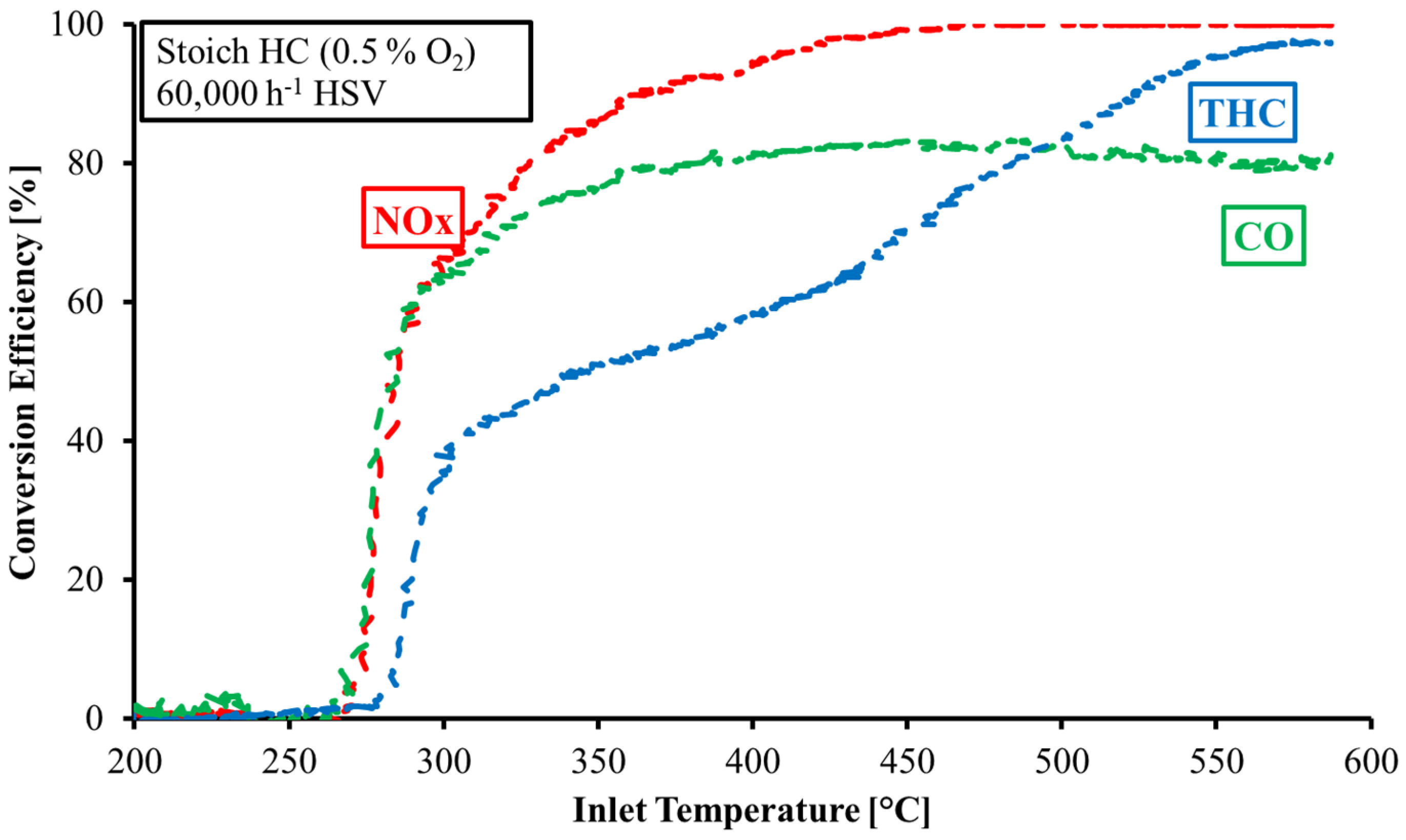
Typical light-off characteristics for modern TWC are shown in Figure 6. TWC conversion efficiency increases sharply with temperature, while tailpipe emissions of CO, HC, and NOx decrease steeply once the catalyst light-off threshold is reached at around 300 °C. CO typically exhibits the earliest activation, followed by NOx, while THC conversion occurs at higher temperatures. This temperature dependence is especially important for future compliance, since emissions released before the catalyst reaches light-off temperature can account for a significant portion of the total allowable emissions. As a result, achieving faster catalyst warm-up and better low-temperature conversion efficiency will be critical to meeting upcoming Euro 7 and EPA Tier 4 standards.
3.2.1. Cold-Start Challenges
Before the catalyst light-off, the three-way catalyst (TWC) is largely inactive. As a result, cold start and catalyst warm-up contribute disproportionately to total cycle emissions, particularly in urban driving, where short trips and repeated stops often prevent the catalyst from reaching its optimal operating temperature [17,18,28,35,36,54]. In an FTP cycle, experimental and real-world studies indicate that more than 50% of HC emissions occur before catalyst light-off, that over 50% of total particle emissions in the NEDC were emitted during the cold-start period, and that 64% of CO, 68% of HC, and 58% of NOx over an average on-road trip may be emitted before the TWC reaches its effective operating temperature [17,18,35,44]. Although close-coupled catalyst placement is already widely used to reduce warm-up time, additional thermal management measures remain necessary [18,28,35,36]. Retarded spark timing can increase exhaust enthalpy and promote faster catalyst heating, but it may also impair combustion stability and increase engine-out HC and PM emissions. Likewise, late-injection heating strategies can elevate exhaust temperature. Still, they may disturb stoichiometric air-fuel ratio control and shift operation away from the narrow lambda window required for optimal TWC efficiency [28,29,45].
3.2.2. Diesel Engine Aftertreatment
Unlike gasoline engines, diesel engines operate under lean conditions over most of the engine map, which precludes the use of three-way catalysts for simultaneous conversion of NOx, CO, and HC. Modern diesel aftertreatment systems therefore rely on a sequence of dedicated devices, typically including a diesel oxidation catalyst (DOC), a diesel particulate filter (DPF), and aSCR system. As in gasoline aftertreatment, temperature is the single most important factor governing overall diesel aftertreatment performance.
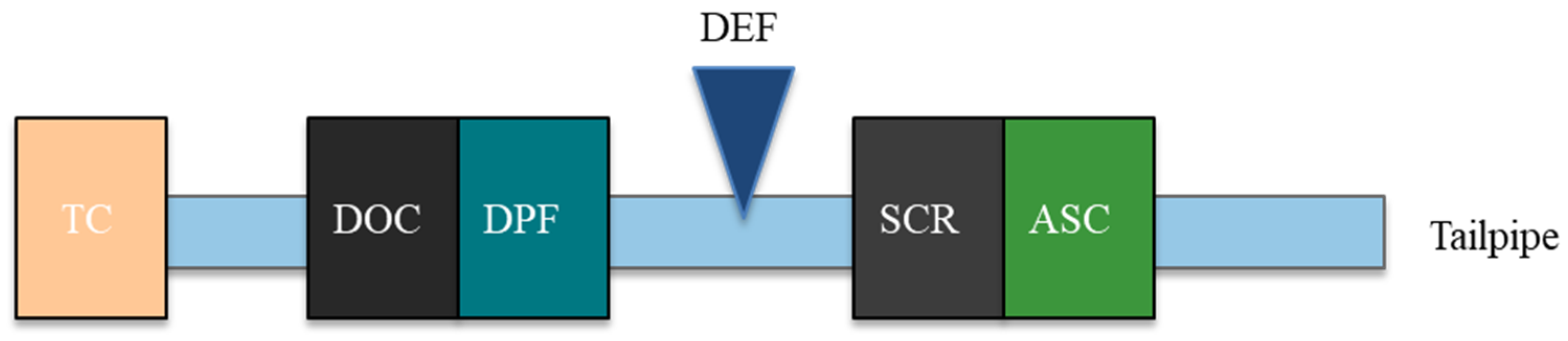
Typical aftertreatment layout for a diesel engine is shown in Figure 7. The aftertreatment system comprises various components placed in sequence, each designed to control specific emission species at different stages of the exhaust stream, making the system both complex and highly integrated.
3.2.3. Diesel Oxidation Catalyst (DOC)
The DOC performs several essential functions. It oxidizes CO and HC and partially oxidizes NO to NO2, which is beneficial for both DPF regeneration and enhanced SCR performance under fast-SCR conditions [20,37,52,53]. Like the TWC, the DOC exhibits characteristic light-off behavior. CO and HC conversion increase rapidly above approximately 200–250 °C, while effective NO-to-NO2 conversion generally occurs in the range of about 250–350 °C [20,37,53]. Once sufficiently heated, the DOC can maintain high and stable conversion efficiency [20,53].
3.2.4. Selective Catalytic Reduction (SCR)
SCR is the dominant NOx-control technology for medium- and heavy-duty diesel engines and is increasingly applied in light-duty diesel vehicles as well.
3.2.5. Ammonia Generation
In SCR systems, diesel exhaust fluid (DEF), a 32.5% urea-water solution, is injected upstream of the SCR catalyst. This process involves two sequential reactions. First, thermolysis converts urea into isocyanic acid (HNCO) and ammonia (NH3). Second, hydrolysis converts HNCO and water into additional NH3 and CO2 [20,37,52]. Only the generated NH3 participates directly in NOx reduction, making the efficiency of ammonia formation strongly temperature dependent [20,37]. The highest NOx-conversion efficiency is achieved under fast-SCR conditions, described by the reaction:
Fast-SCR chemistry requires an approximately 1:1 NO: NO2 ratio [20,37,38,52]. For this reason, the upstream DOC plays a critical role in generating the NO2 fraction needed to promote high SCR activity [20,37,52,55].
3.2.6. Diesel Particulate Filter (DPF)
DPFs capture soot and require periodic regeneration to oxidize the accumulated carbon. NO2 generated upstream at DOC can promote passive soot oxidation, whereas active regeneration typically relies on elevated exhaust temperatures achieved through postfuel injection strategies. DOC-assisted heat release may also be used, although it is less common in light-duty applications, while external burners are generally more applicable to heavy-duty diesel aftertreatment systems. Despite their high effectiveness under favorable operating conditions, current diesel aftertreatment systems remain limited by low exhaust temperatures and transient operation, both of which can reduce catalyst activity and regeneration efficiency [19,20,37,39,52,53]. One of the most significant challenges is limited low-temperature performance, typically below approximately 200–250 °C. In this range, SCR catalysts exhibit reduced activity, while urea injection may lead to incomplete thermolysis and insufficient NH3 generation [20,37,39]. Under such conditions, solid urea-derived byproducts, including ammonium nitrate, ammonium sulfate, and cyanuric acid, may form and accumulate, thereby reducing NOx-conversion efficiency and compromising long-term system durability [20,37]. Delayed light-off of the DOC further reduces NO2 availability, negatively affecting both DPF regeneration and SCR performance [20,37,52,53]. These limitations become even more severe during low-load urban driving, hybrid operation with frequent engine restarts, and operation in cold climates [18,20,37,39,40].
As a result, considerable development effort has been directed toward mitigation strategies, including advanced thermal-management measures such as late injection, EGR throttling, and turbo throttling, as well as hardware solutions such as close-coupled SCR catalysts, SCR-on-filter (SDPF) concepts, electrically heated catalysts, and dual-SCR architectures that combine a close-coupled low-temperature SCR with a larger underfloor SCR for higher-load operation [19,20,37,39,40,41,42,52]. A second major limitation is the difficulty of maintaining precise control of the ammonia-to-NOx ratio under real-driving conditions. SCR performance depends strongly on accurate NH3 dosing: under-dosing leads to insufficient NOx conversion, whereas over-dosing results in ammonia slip, which is itself a regulated pollutant in many markets. Achieving the optimal balance is particularly challenging during rapid transients, where exhaust conditions change continuously and control delays become significant. In practice, NOx sensors have limited accuracy and response time, exhaust temperature varies dynamically, and the decomposition of injected urea introduces a substantial open-loop delay before NH3 becomes available at the catalyst surface. In addition, the engine-out NO/NO2 ratio can vary widely, further complicating the maintenance of favorable fast-SCR conditions. Collectively, these factors make transient NH3 management one of the principal control challenges in modern diesel aftertreatment systems.
Consequently, current development trends are directed toward faster light-off behavior, wider effective temperature operating windows, improved conversion efficiency, and more robust integration between aftertreatment systems and engine calibration [15,18,19,20,37,38,39,40,41,42,52,53]. In practice, future compliance will depend on close co-optimization of combustion strategies and advanced aftertreatment technologies rather than on combustion improvements alone [15,20,21,22,23,24,31,37,38].
4. Next-Generation Aftertreatment Technologies
4.1. Next-Generation Three-Way Catalysts and Filters for Gasoline Engines
Next-generation three-way catalysts and filters are being advanced not only through improved exhaust mixing and lower-thermal-mass substrates, but also through more sophisticated washcoat design [55,56,57,58,59,60,61,62]. In conventional TWC systems, the washcoat is typically based on high-surface-area γ-alumina, ceria-zirconia oxygen-storage material, platinum-group metals (PGMs), and rare-earth stabilizers such as lanthana and yttria. Current development trends focus on improving the interaction between active precious metals and the oxygen-storage phase, as closer coupling between PGMs and ceria-zirconia can accelerate redox activity, suppress thermal sintering, and lower the light-off temperature. Recent literature indicates that incorporating ceria-zirconia into the washcoat improves HC and NO oxidation light-off and stabilizes the noble metals during thermal aging [55,56,57,58]. In addition, the architecture of the washcoat itself is being refined through layered or functionally differentiated designs, so that oxidation-promoting and NOx-reduction-promoting functions can be distributed more effectively across the coating thickness and along the catalyst length [55,56,57,58]. Another notable trend is partial substitution of PGMs with lower-cost catalytic components.
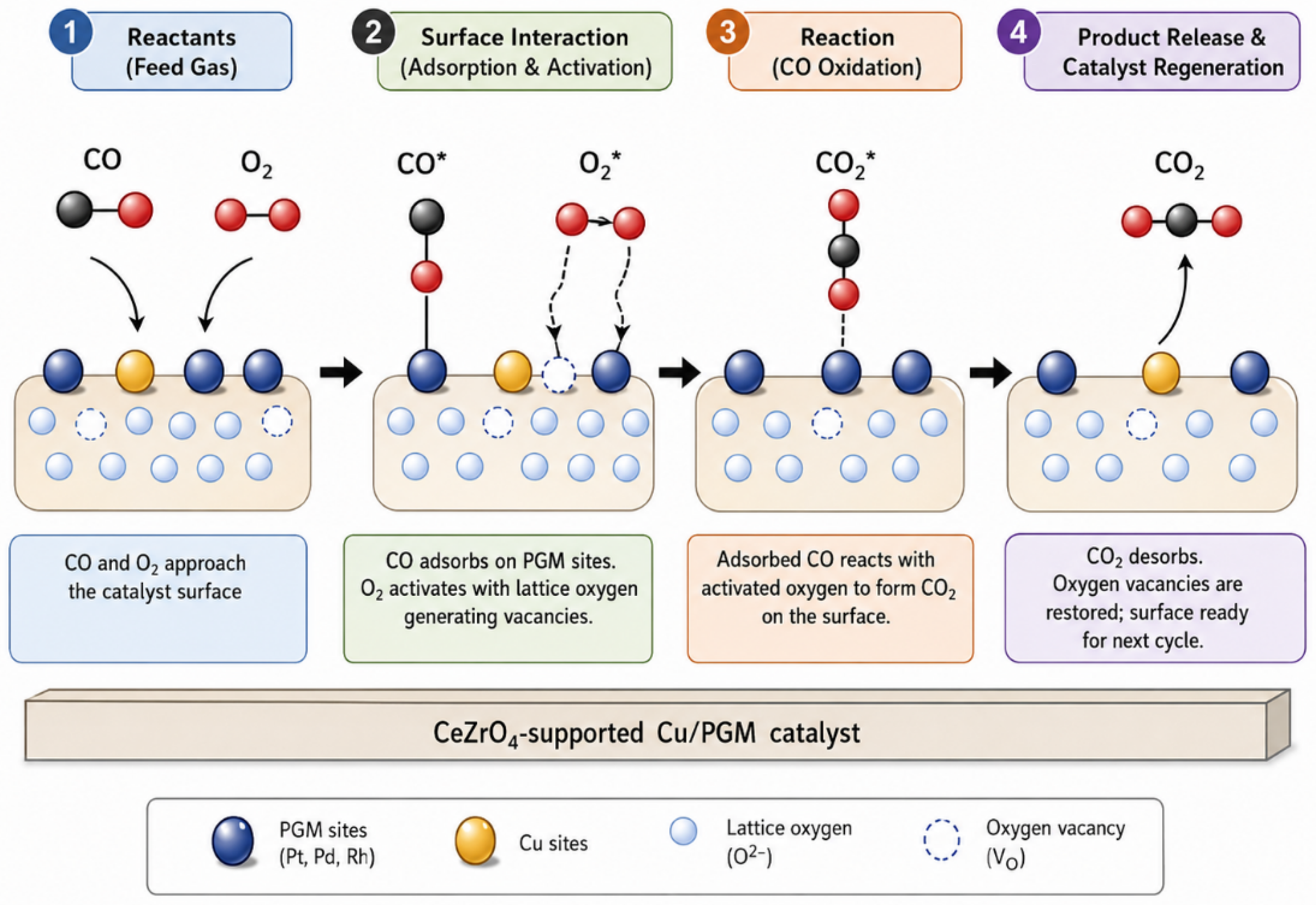
A 2025 review on the recently presented PROMETHEUS concept reports that Cu-containing, PGM-lean TWC formulations can achieve similar or even better catalytic efficiency than conventional state-of-the-art TWC systems. This suggests that adding copper-based oxidation functionality, together with a high oxygen-storage Ce–Zr support and well-controlled metal dispersion, can enable meaningful reductions in PGM content, as illustrated in Figure 8 [59]. These developments are consistent with recent industry reporting that next-generation TWC systems can achieve faster light-off and maintain emissions performance while reducing PGM loading by about 39%. Therefore, the key novelty in the latest washcoat systems is not a single new material, but rather the integrated optimization of support chemistry, oxygen-storage capacity, metal-support interaction, coating architecture, and metal utilization efficiency [55,56,57,58,59]. In combination, low-thermal-mass and high-porosity substrates further shorten heat-up time by reducing thermal inertia, complementing the gains achieved through the washcoat itself [60,61].
Cold-start operation and the associated catalyst light-off period can contribute a disproportionately large fraction of total cycle emissions [17,18,28,35,36,44,63]. Published studies have shown that this phase may account for more than 50% of FTP-cycle hydrocarbon emissions, more than 50% of total particle number emissions over the NEDC, and, in recent real-world gasoline vehicle datasets, approximately 64%, 68%, and 58% of total trip CO, HC, and NOx emissions, respectively [17,18,35,44]. As shown in Figure 6, TWC requires that the light-off temperature be reached before acceptable conversion efficiency can be achieved.
Rapid heating of the aftertreatment system is therefore critical for reducing cumulative emissions over the entire cycle [17,18,28,35,36]. For stoichiometric gasoline engines, once the TWC light-off temperature is reached and under well-controlled stoichiometric conditions, CO conversion can approach 98–99%, HC conversion is typically around or above 95%, and NOx conversion can also exceed 95% [16,36,38,62]. Diesel aftertreatment shows a similarly strong temperature dependence. DOCs are primarily responsible for oxidizing CO and HC and promoting the partial oxidation of NO to NO2. At the same time, SCR performance strongly depends on catalyst temperature, NH3 availability, and the upstream NO2/NOx ratio [20,37,52,53]. Recent literature indicates that once adequate operating temperature is reached, both DOC and SCR systems can achieve high and comparatively stable conversion efficiencies [20,42,45,64]. Thus, the main challenge is not improving the performance of a fully warmed catalyst, but shortening the cold-start interval before the aftertreatment system reaches its high-conversion regime [18,20,35,36].
Emission regulations such as those of the U.S. EPA and the European Euro framework generally do not prescribe the specific hardware or control strategy to be used for catalyst heating; instead, they define pollutant limits and certification procedures such as FTP, WLTP, and RDE, against which compliance is assessed. Accordingly, the catalyst warm-up strategies are largely determined by OEM engine and aftertreatment system design and calibration [7,10,11,13,14]. Traditional gasoline-engine approaches include load management, ignition timing retard, and elevated idle speed during the initial cold-start period [18,28]. These measures increase exhaust enthalpy and catalyst inlet temperature, but they may also involve penalties in fuel consumption, drivability, combustion stability, and raw engine-out emissions [18,28,29].
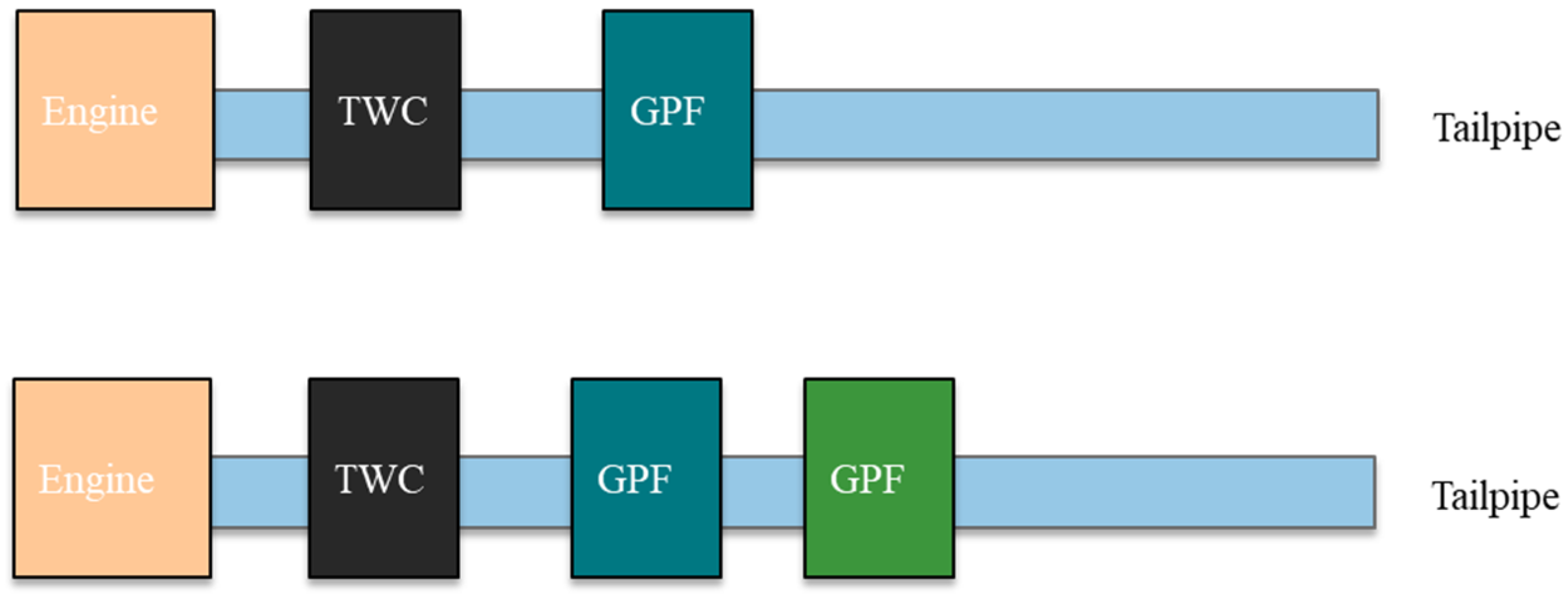
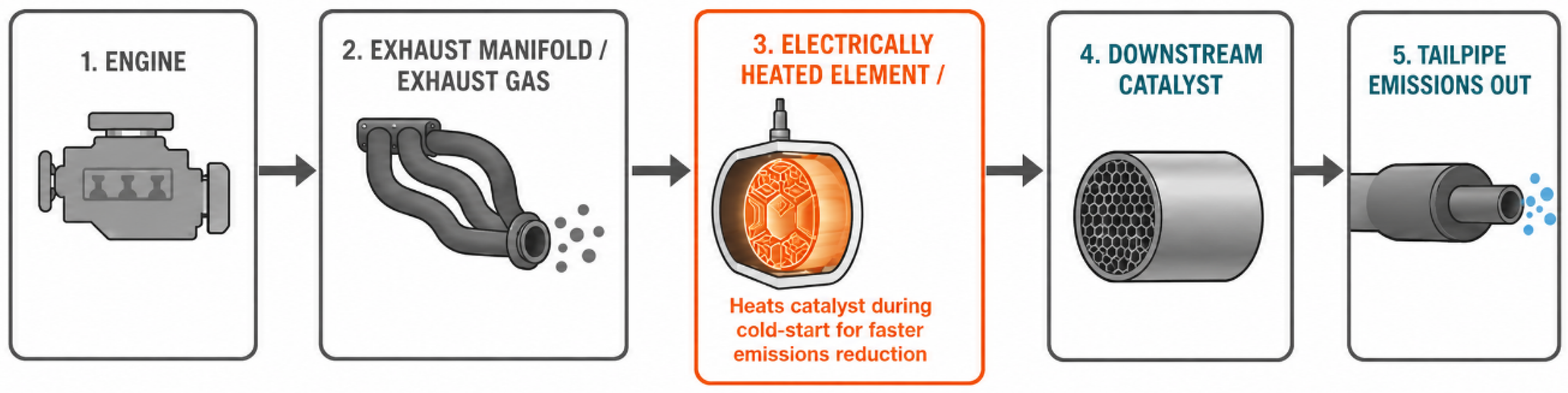
For this reason, more advanced thermal-management strategies have received increasing attention, including fuel burners, exhaust throttling, cylinder deactivation, improved insulation, and electrically heated catalysts (EHCs) [18,19,20,30,39]. Among these, EHCs are particularly attractive for light-duty gasoline, hybrid, and some diesel applications because they can accelerate catalyst activation without relying solely on engine-based heat generation [17,39,65,66]. By using electrical energy from a 12 V, 24 V, 48 V, or high-voltage vehicle network to preheat the catalyst brick or a dedicated heated element, EHC systems can reduce the duration of sub-light-off operation and improve emissions control during the first seconds after start [40,42,64]. In practice, the EHC architecture includes electrically heated catalyst bricks, heated-disc concepts, and integrated heated elements combined with TWC, DOC, NOx-adsorber, or SCR functions [42,64]. 12, 24, and 48 V commercial examples are available for both gasoline and diesel applications, with maximum current up to 300 A and power levels ranging from 1 to 10 kW [42,64]. For light-duty gasoline and hybrid vehicles, low-single-digit-kW systems are typical. In contrast, recent heavy-duty diesel demonstrations have used external electric heaters in the approximate 1.2–5.0 kW range to accelerate low-temperature SCR activation [39].
An additional advantage of electrically assisted heating is that it can enable a cleaner warm-up calibration [18,42]. Without EHC support, manufacturers often rely on mixture enrichment, elevated idle speed, or aggressive spark timing retard to generate exhaust heat, which can increase fuel consumption and elevate raw HC and CO emissions [18,28,29]. EHCs can reduce reliance on these measures and support operation closer to stoichiometric conditions during warm-up [17,42,65,66]. The concept of an electric heating element for exhaust aftertreatment is shown in Figure 9.
Recent Euro-7-oriented development programs likewise identify EHC systems as an important enabler of robust cold-start and low-load emissions control, especially in hybridized vehicles, where exhaust enthalpy is intermittent and often insufficient to heat the catalyst [15,18,40,42,65] rapidly. From a system-integration standpoint, EHCs add hardware costs and packaging complexity through the heater element or heated substrate, high-current conductors and connectors, relays or smart switches, and, in many cases, dedicated DC/DC conversion and additional sensing and diagnostic functions [40,42,64,67]. For higher-power applications, 48 V architectures are especially attractive because they enable faster heating than 12 V systems while avoiding excessive high current [40,42]. 48 V mild-hybrid architectures have become increasingly common in modern premium ICE and hybrid vehicles, including models from Mercedes-Benz, Audi, and BMW. These systems typically include a 48 V battery, an integrated starter-generator, and a DC/DC converter that connects the 48 V and 12 V electrical networks. Because EHCs require short-duration high electrical power during cold start, the higher voltage reduces current demand compared with 12 V systems, making 48 V architectures more practical for EHC integration. Based on an Eaton estimate, the added cost for the resistive heater, controller, harness, and integration is approximately $250 to $500 per vehicle. However, the total system cost still depends on heater power, voltage class, catalyst size, and overall electrical architecture [42,43].
Published studies also show that EHC effectiveness can be substantially improved when heater power, catalyst placement, and control strategy are properly matched to the application [17,42,65,66]. For gasoline TWC systems, cold-start studies have reported emissions reductions of roughly 70% for CO and about 50% for THC and NOx. Other cold-start experiments using short-duration electric heating have shown a smaller, but still notable, THC reduction of around 23% [17,65,66]. For diesel aftertreatment, EHC-assisted heating has been shown to raise SCR inlet temperature by about 19.9 °C on average, improve NOx conversion efficiency by up to 8%, and shorten SCR light-off time by about 62 s in electrically heated SCR/DOC configurations [39]. These benefits, however, require well-designed supervisory control. Key features of supervisory control include managing heater power, evaluating catalyst temperature, accounting for battery state-of-charge constraints, and protecting the EHC system from over-temperature or over-current conditions [42,65]. Although the magnitude of the benefits provided by EHC varies across studies due to differences in heater power, heating duration, catalyst size and thermal mass, and baseline engine warm-up strategies, the literature consistently shows that EHCs accelerate catalyst light-off and significantly reduce cold-start emissions.
4.2. Next-Generation Aftertreatment for Diesel Engines
For larger diesel engines, the preferred thermal-management solution is often a fuel burner rather than an EHC alone [19,20,68]. Heavy-duty low-NOx studies have shown that exhaust burners can raise and maintain SCR temperature very effectively over low-load cycles, in some cases yielding near-zero tailpipe NOx on selected cycles, albeit with a CO2 penalty [19]. For very large diesel and marine engines, scaling an EHC to the required thermal duty raises durability and energy-supply concerns; recent EPA marine-technology assessment work therefore notes that burner-based heating is generally more practical at those sizes, while electric heaters or EHCs remain possible but more challenging options for large-scale implementation [68].
An exhaust burner block diagram of the future aftertreatment system is shown in Figure 10. Fuel and air are injected upstream of the DOC and DPF, enabling rapid heat generation in the order of tens of kilowatts. This approach enables the catalysts to reach the light-off temperature more rapidly than an electrically heated catalyst system, making it more suitable for mid- and heavy-duty engines, although the primary trade-off is increased fuel consumption due to heat generation.

Modern diesel aftertreatment systems conventionally comprise a DOC, followed by a DPF, a selective catalytic reduction (SCR) catalyst, and an ammonia slip catalyst (ASC), typically combined with engine-side EGR for in-cylinder NOx reduction [37,52,69]. However, a single-SCR layout is increasingly challenged by stringent real-driving and low-temperature NOx requirements, because SCR efficiency is strongly limited during cold start and low-load operation when exhaust temperatures are insufficient [20,37]. For this reason, the industry trend has moved toward dual-dosing or dual-SCR architectures, typically consisting of a close-coupled SCR near the engine and a second underfloor SCR downstream [41,70]. The close-coupled unit improves early light-off and speeds up low-temperature NOx conversion, while the downstream SCR provides high conversion efficiency during higher-load, higher-temperature operation [41,70]. This arrangement widens the effective deNOx window over the entire drive cycle and is therefore well suited to Euro 7 and CARB ultra-low-NOx targets [7,15,41,43,70]. A conventional modern diesel aftertreatment system typically consists of a DOC, a diesel DPF, a urea dosing and mixing section, a selective catalytic reduction (SCR) catalyst, and an ammonia slip catalyst (ASC), often used together with engine-side exhaust gas recirculation for upstream NOx control [37,52,69].
Dual-dosing SCR architectures. Dual-dosing SCR layouts are expected to become increasingly common under Euro 7 because they provide a robust pathway to very low tailpipe NOx emissions over the wider temperature range and operating envelope mandated by the upcoming Euro 7 regulations [7,15,41,43,70].
In a typical layout, urea is injected at two locations: first upstream of a close-coupled SCR or SCRF positioned near the turbine outlet, and again ahead of an underfloor SCR catalyst located farther downstream [41,70]. The close-coupled catalyst benefits from the high exhaust enthalpy available directly after the engine, enabling rapid light-off and improved NOx conversion during cold start, urban driving, and other low-load transients, while the underfloor SCR provides additional conversion volume and ammonia storage capacity during sustained medium- and high-load operation [41,70].
Block diagram of dual-stage SCR shown in Figure 11 [41]. Reports indicate the deNOx performance of modern dual-SCR systems is much higher than that of a conventional single SCR configuration [41,70]. In a typical baseline single-SCR system, the SCR catalyst is located farther downstream from the engine, where it provides sufficient catalyst volume but may not warm up fast enough during cold-start, low-load conditions [37]. By adding a close-coupled SCR near the engine, the dual-SCR layout improves early low-temperature NOx conversion, while the downstream SCR maintains high conversion capacity during medium- and high-load operation [41]. DieselNet reported that Volkswagen’s passenger-car dual-SCR system reduced RDE NOx emissions by about 80% relative to the previous generation equipped with a single SCR, while general SCR literature indicates that once sufficient temperature and ammonia availability are established, overall NOx conversion efficiencies above 90% are achievable [70]. The main advantage of split dosing is that ammonia generation and storage can be more closely matched to local temperature and flow conditions, thereby improving transient deNOx efficiency while reducing the risk of local over-dosing, deposit formation, and ammonia slip [41].

A key drawback, however, is increased system complexity and cost [41,43,70], SCR can cost from $1000 to $2500, depending on the size. In practice, very low-slip systems often pair SCR bricks with ammonia-slip catalyst (ASC), especially downstream of the final SCR stage. An ASC is installed downstream of the SCR catalyst to oxidize unreacted ammonia, thereby preventing NH3 tailpipe emissions and enabling more aggressive urea dosing to achieve high deNOx efficiency [52,69]. Some advanced layouts use a close-coupled SCR/ASC assembly together with an underfloor SCR/ASC system. In practice, this means that ammonia slip must be treated after both SCR stages, or that ASC functionality must be integrated into each module [41,52,69,70]. While this approach can improve emissions control, it also increases catalyst volume, sensor requirements, heated dosing hardware, control complexity, and packaging constraints, making it more costly than a conventional single-SCR system [41,43,52,69,70]. Closed-loop urea dosing, using feedback from upstream and downstream NOx sensors, is therefore important for maintaining robust SCR performance during transient operation. This allows reductant delivery to be continuously adjusted according to the instantaneous NOx mass flow and catalyst condition [37,52]. Low-temperature NO2 formation upstream of the SCR can also be beneficial, because a favorable NO2/NOx ratio promotes the fast-SCR pathway and improves low-temperature deNOx performance [20,37,52,53].
In addition, low-temperature NO2 generation upstream of the SCR is beneficial because the fast-SCR pathway is promoted when the NO2/NOx ratio is favorable, thereby improving low-temperature deNOx activity [20,37,52,53]. However, aggressive NH3 dosing must be carefully managed to avoid ammonia slip; accordingly, downstream slip control through precise dosing calibration, NH3 storage management, and an ammonia slip catalyst (ASC) is required to ensure both high NOx conversion efficiency and low tailpipe NH3 emissions [37,52,69]. Figure 11 presents a conceptual diagram of the new diesel exhaust aftertreatment layout with dual SCR systems, the placement of a close-coupled SCR/ASC unit near the turbocharger to ensure rapid light-off, followed by a second underfloor SCR/ASC system that provides additional NOx reduction and ammonia storage capacity during higher temperature operation [41,52,69,70]. ICCT cost assessments for future low-NOx diesel systems show that adding a close-coupled SCR/ASC, a second heated urea doser, additional sensors, and underfloor SCR/ASC hardware materially increases aftertreatment system costs, although these penalties are considered technically justified to achieve near-zero NOx performance under cold and low-load operation [43]. Accordingly, dual-dosing SCR is likely to become a mainstream solution where ultra-low diesel NOx targets must be met over real-world driving, but it does so at the expense of additional hardware, calibration effort, and system integration burden [7,15,41,43,70].
While there is broad agreement on the need to combine advanced combustion control, thermal management, and aftertreatment technologies, no consensus exists on a single optimal solution. The most appropriate technology combination depends on factors such as vehicle application, duty cycle, hybridization level, available electrical power, packaging constraints, and cost considerations. Consequently, the final technology selection is largely determined by each OEM’s design philosophy and emissions-compliance strategy. Table 5 summarizes the major technology pathways available for complying with future emissions regulations and highlights their principal advantages, limitations, and application considerations. In practice, OEMs are expected to combine advanced combustion strategies, aftertreatment systems, low-carbon fuels, and varying levels of hybridization or electrification, depending on vehicle-specific technical and economic requirements.
Major technology pathways for future emission regulations compliance.
| Technology Pathway | In-Cylinder Methods | Electrically Heated Catalyst (EHC/ECAT) | Exhaust Burner | Low-Temperature PGM Catalysts | Dual-Dosing SCR | Hydrogen & Synthetic Fuels |
|---|---|---|---|---|---|---|
| Pros | •Reduces engine-out emissions •No additional aftertreatment hardware required •Improves overall system efficiency |
•Rapid catalyst light-off •Effective during cold-start and low-load operation |
•Fast aftertreatment warm-up •Particularly effective for heavy-duty applications with large exhaust systems |
•Improved NOx and HC conversion at low exhaust temperatures •Reduced dependence on thermal management strategies |
•Enhanced NOx conversion over a wider temperature range •Improved compliance with ultra-low NOx regulations |
•Significant carbon-reduction potential •Can leverage existing ICE platforms and supply chains |
| Cons | •Limited by combustion and EGR trade-offs •May negatively affect fuel economy and PM emissions |
•Increased electrical energy demand •Additional hardware complexity and cost |
•Fuel consumption penalty •Added system complexity and packaging requirements |
•Higher PGM loading and cost | •Increased system cost and packaging requirements •Additional urea consumption and control complexity |
•Fuel production infrastructure is still developing •Currently have high production costs |
5. Summary
This paper reviews the forthcoming EPA Tier 4 and Euro 7 emission regulations, focusing on their stricter pollutant and greenhouse gas limits, broader certification procedures, and stronger emphasis on real-world emissions measured with portable emissions measurement systems (PEMS). It then examines in-cylinder emissions-control strategies for gasoline and diesel engines. It shows that measures such as exhaust gas recirculation (EGR), advanced combustion concepts, and alternative fuels can substantially reduce engine-out NOx and particulate emissions, but are not sufficient on their own to meet future regulatory requirements across the full operating range.
This discussion highlights the growing importance of advanced emissions-control technologies, such as electrically heated catalysts, gasoline and diesel particulate filters, dual-dosing SCR systems, and improved thermal management and control strategies. Looking toward 2035 and beyond, future pollutant and CO2 targets are unlikely to be met through any single technology. Instead, progress will depend on the combined development of combustion systems, electrified powertrains, cleaner fuels, and exhaust aftertreatment.
One of the key challenges for compliance is the strong temperature dependence of aftertreatment systems. A large portion of total emissions is generated during cold start, low-load operation, and other low-temperature conditions, where catalyst efficiency is limited. As a result, faster catalyst light-off, improved low-temperature conversion efficiency, and advanced thermal-management strategies are critical priorities. In addition, maintaining low emissions under real-world and highly transient driving conditions remains essential for RDE compliance.
The paper also highlights the growing importance of advanced emission control technologies, including electrically heated catalysts, gasoline and diesel particulate filters, dual-stage SCR systems, improved catalyst formulations, and advanced thermal-management and control strategies. However, these systems must achieve consistently high performance over the service life periods while addressing catalyst aging, poisoning, and durability constraints. At the same time, practical system-level limitations—including packaging constraints, electrical power demand, cost, and overall system complexity—play a critical role in determining feasible implementation strategies.
Although internal combustion engines have matured through more than a century of continuous development, OEMs continue to invest in research and development to keep ICE-based powertrains competitive with electric alternatives. BEVs and fuel-cell vehicles are expected to play an important role in zero-tailpipe-emission applications, while hybrid powertrains will likely remain a key transition technology until zero-emission vehicles are more widely adopted. At the same time, hydrogen internal combustion engines (H2 ICEs) and synthetic fuels are increasingly recognized as important directions for the long-term evolution of internal combustion engine technology. These pathways offer the potential to significantly reduce lifecycle greenhouse-gas emissions while leveraging existing engine architectures and manufacturing capabilities.
Meanwhile, highly optimized ICE platforms that use cleaner fuels, employ improved combustion strategies, and feature advanced aftertreatment systems will continue to support vehicle segments and regions where full electrification remains challenging. This balanced roadmap gives OEMs the best opportunity to meet upcoming emissions regulations while maintaining vehicle performance, affordability, and durability across global markets.
Author Contributions
Conceptualization, methodology, and investigation, X.Z. and N.S.; validation, resources, writing—original draft preparation, and visualization, X.Z.; data curation, formal analysis, and writing—review and editing, N.S. and X.Y.; supervision, project administration, and funding acquisition, X.Y. and M.Z; conceptualization, interpretation and writing—review, M.Z. All authors have read and agreed to the published version of the manuscript.
Funding
This research received no external funding.
Acknowledgment
The research at the Clean Combustion Engine Laboratory is partially sponsored by: Natural Sciences and Engineering Research Council of Canada (NSERC), Research Tools and Instruments grants program (RTI), Canada Foundation for Innovation (CFI); and the University of Windsor. Special thanks to Original equipment manufacturers (OEMs) for their support, and Clean Combustion Engine Lab (CCEL) colleagues’ contribution in their time.
Institutional Review Board Statement
Not applicable.
Informed Consent Statement
Not applicable.
Data Availability Statement
No new datasets were generated during this study. All data supporting the reported findings are available in the publications and publicly accessible regulatory sources cited in the article.
Conflicts of Interest
The authors declare no conflict of interest.
Use of AI and AI-Assisted Technologies
During the preparation of this work, the authors used Grammarly and ChatGPT to check grammar and improve the clarity and readability of the manuscript. After using these tools, the authors reviewed and edited the content as needed and take full responsibility for the content of the published article.
References
- 1.
International Energy Agency (IEA). Global EV Outlook 2025; IEA: Paris, France, 2025.
- 2.
U.S. Energy Information Administration (EIA). U.S. Share of Electric and Hybrid Vehicle Sales Increased in the Second Quarter of 2024. In Today in Energy; EIA: Washington, DC, USA, 2024.
- 3.
BloombergNEF. Are Global EV Sales Really Slowing Down? BloombergNEF: London, UK, 2024.
- 4.
International Council on Clean Transportation (ICCT). Global EV Market Monitor H1 2025; ICCT: Washington, DC, USA, 2025.
- 5.
Fortune Business Insights. U.S. Electric Vehicle Market Size, Share & COVID‑19 Impact Analysis; Fortune Business Insights: Pune, India, 2025.
- 6.
BloombergNEF. Battery Price Survey Summarized by the EU Alternative Fuels Observatory; BloombergNEF: London, UK, 2024.
- 7.
Regulation (EU) 2024/1257; On Type‑Approval of Motor Vehicles and Engines with Respect to Their Emissions and Battery Durability (Euro 7). European Parliament and Council: Brussels, Belgium, 2024.
- 8.
AECC. Euro 7/VII Emission Standards; Association for Emissions Control by Catalyst: Brussels, Belgium, 2020.
- 9.
European Commission. Proposal and Impact Materials for Euro 7; European Commission: Brussels, Belgium, 2022.
- 10.
U.S. Environmental Protection Agency. Multi-Pollutant Emissions Standards for Model Years 2027 and Later Light-Duty and Medium-Duty Vehicles, Final Rule. 89 FR 27842; U.S. Environmental Protection Agency: Washington, DC, USA, 2024.
- 11.
40 CFR Part 86; Control of Emissions from New and In‑Use Highway Vehicles and Engines. U.S. Environmental Protection Agency: Washington, DC, USA, 1977.
- 12.
U.S. EPA. Diesel Tier 4 Emissions-Control Overview; EPA: Washington, DC, USA, 2004.
- 13.
Regulation (EU) 2017/1151; On Type‑Approval of Motor Vehicles with Respect to Emissions from Light Passenger and Commercial Vehicles (as Amended). European Union: Brussels, Belgium, 2017.
- 14.
European Commission. Worldwide Harmonized Light‑Duty Vehicles Test Procedure (WLTP) and Real Driving Emissions (RDE), Summary Page; European Commission: Brussels, Belgium, 2017.
- 15.
Morgan, C.; Goodwin, J. Impact of the proposed Euro 7 Regulations on exhaust aftertreatment system design. Johnson Matthey Technol. Rev. 2023, 67, 239–245.
- 16.
Kritsanaviparkporn, E.; Baena-Moreno, F.M.; Reina, T.R. Catalytic converters for vehicle exhaust: Fundamental aspects and technology overview for newcomers to the field. Chemistry 2021, 3, 630–646.
- 17.
Bhaskar, K.; Nagarajan, G.; Sampath, S. Experimental Investigation on Cold Start Emissions Using Electrically Heated Catalyst in a Spark Ignition Engine. Int. J. Automot. Mech. Eng. 2010, 2, 105–118. https://doi.org/10.15282/ijame.2.2010.1.0009.
- 18.
Gao, J.; Tian, G.; Sorniotti, A.; Karci, A.E.; Di Palo, R. Review of thermal management of catalytic converters to decrease engine emissions during cold start and warm up. Appl. Therm. Eng. 2019, 147, 177–187.
- 19.
McCarthy, J., Jr.; Matheaus, A.; Zavala, B.; Sharp, C.; Harris, T. Meeting Future NOx Emissions Over Various Cycles Using a Fuel Burner and Conventional Aftertreatment System. SAE Int. J. Adv. Curr. Pract. Mobil. 2022, 4, 2220–2234. https://doi.org/10.4271/2022-01-0539.
- 20.
Wu, G.; Feng, G.; Li, Y.; Ling, T.; Peng, X.; Su, Z.; Zhao, X. A Review of Thermal Energy Management of Diesel Exhaust After-Treatment Systems: Technology and Efficiency Enhancement Approaches. Energies 2024, 17, 584. https://doi.org/10.3390/en17030584.
- 21.
Jain, A.; Singh, A.P.; Agarwal, A.K. Effect of split fuel injection and EGR on NOx and PM emission reduction in a low temperature combustion (LTC) mode diesel engine. Energy 2017, 122, 249–264.
- 22.
Reitz, R.D.; Duraisamy, G. Review of High Efficiency and Clean Reactivity Controlled Compression Ignition (RCCI) Combustion in Internal Combustion Engines. Prog. Energy Combust. Sci. 2015, 46, 12–71. https://doi.org/10.1016/j.pecs.2014.05.003.
- 23.
Krishnamoorthi, M.; Malayalamurthi, R.; He, Z.; Kandasamy, S. A review on low temperature combustion engines: Performance, combustion and emission characteristics. Renew. Sustain. Energy Rev. 2019, 116, 109404.
- 24.
Zheng, M.; Reader, G.T.; Hawley, J.G. Diesel engine exhaust gas recirculation—A review on advanced and novel concepts. Energy Convers. Manag. 2004, 45, 883–900.
- 25.
Leach, F.; Knorsch, T.; Laidig, C.; Wiese, W. A Review of the Requirements for Injection Systems and the Effects of Fuel Quality on Particulate Emissions from GDI Engines. In Proceedings of the International Powertrains, Fuels & Lubricants Meeting, Heidelberg, Germany, 17 September 2018. https://doi.org/10.4271/2018-01-1710.
- 26.
Raza, M.; Chen, L.; Leach, F.; Ding, S. A Review of Particulate Number (PN) Emissions from Gasoline Direct Injection (GDI) Engines and Their Control Techniques. Energies 2018, 11, 1417.
- 27.
Sener, R.; Yangaz, M.U.; Gul, M.Z. Effects of injection strategy and combustion chamber modification on a single-cylinder diesel engine. Fuel 2020, 266, 117122.
- 28.
Hedinger, R.; Elbert, P.; Onder, C. Optimal cold‑start control of a gasoline engine. Energies 2017, 10, 1548.
- 29.
Jatana, G.S.; Chuahy, F.D.F.; Park, Y.; Lobodin, V.; Moses-DeBusk, M.; Szybist, J.P. Hydrocarbon and particulate matter evolution in the exhaust manifold of a spark-ignited engine under cold-start operation. Appl. Energy Combust. Sci. 2023, 16, 100200. https://doi.org/10.1016/j.jaecs.2023.100200.
- 30.
Burch, S.D.; Keyser, M.A.; Potter, T.F.; Benson, D.K. Thermal Analysis and Testing of a Vacuum‑Insulated Catalytic Converter. In Proceedings of the International Fuels & Lubricants Meeting & Exposition, Baltimore, MD, USA, 17 October 1994. https://doi.org/10.4271/941998.
- 31.
Agarwal, A.K.; Singh, A.P.; García, A.; Monsalve-Serrano, J. Challenges and Opportunities for Application of Reactivity-Controlled Compression Ignition Combustion in Commercially Viable Transport Engines. Prog. Energy Combust. Sci. 2022, 93, 101028.
- 32.
Awad, O.I.; Ma, X.; Kamil, M.; Ali, O.M.; Zhang, Z.; Shuai, S. Particulate emissions from gasoline direct injection engines: A review of how current emission regulations are being met by automobile manufacturers. Sci. Total Environ. 2020, 718, 137302. https://doi.org/10.1016/j.scitotenv.2020.137302.
- 33.
Duronio, F.; De Vita, A.; Allocca, L.; Anatone, M. Gasoline direct injection engines—A review of latest technologies and trends. Part 1: Spray breakup process. Fuel 2020, 265, 116948. https://doi.org/10.1016/j.fuel.2020.116948.
- 34.
Sun, Z.; Xu, Q.; Cui, M.; Nour, M.; Li, X.; Hung, D.L.; Xu, M. Impact of flash boiling multiple injections timing on the combustion and thermal efficiency of a gasoline direct injection engine under lean-burn. Fuel 2021, 304, 121450. https://doi.org/10.1016/j.fuel.2021.121450.
- 35.
Hu, J.; Frey, H.C.; Boroujeni, B.Y. Contribution of Cold Starts to Real‑World Trip Emissions for Light‑Duty Gasoline Vehicles. Atmosphere 2022, 14, 35.
- 36.
Gong, C.; Huang, K.; Deng, B.; Liu, X. Catalyst light-off behavior of a spark-ignition LPG (liquefied petroleum gas) engine during cold start. Energy 2011, 36, 53–59.
- 37.
Majewski, W.A. Selective Catalytic Reduction (SCR) Systems for Diesel Engines. In DieselNet Technology Guide; ECOpoint Inc.: Bramalea, ON, Canada, 2005.
- 38.
Granger, P.; Parvulescu, V.I. Catalytic NOx Abatement Systems for Mobile Sources: From Three‑Way to Lean‑Burn After‑Treatment Technologies. Chem. Rev. 2011, 111, 3155–3207.
- 39.
Zavala, B.; McCarthy, J.E., Jr.; Matheaus, A.; Sharp, C. Fast Diesel Aftertreatment Heat‑Up Using CDA and an Electrical Heater between 1.2 and 5.0 kW. Front. Mech. Eng. 2022, 8, 918003.
- 40.
Kuhberger, G.; Wancura, H.; Nenning, L.; Schutting, E. Current experimental developments in 48 V‑based CI‑driven SUVs in response to expected future EU7 legislation. Automot. Engine Technol. 2022, 7, 1–14.
- 41.
Demuynck, J.; Favre, C.; Bosteels, D.; Kuhrt, A.; Spitta, J.; Bunar, F. Ultra-Low On-Road NOx Emissions of a 48 V Mild-Hybrid Diesel with LNT and Dual-SCR. In Proceedings of the 10th Emission Control Conference, Dresden, Germany, 4–5 June 2019.
- 42.
Li, K.; Xiao, B.; Wang, Y.; Jia, J.; Wu, X. Applications of Electric Heating Technology in Vehicle Exhaust Pollution Control. Processes 2024, 12, 298.
- 43.
Posada, F.; Isenstadt, A.; Badshah, H. Estimated Cost of Diesel Emissions-Control Technology to Meet Future California Low NOₓ Standards in 2024 and 2027; International Council on Clean Transportation: Washington, DC, USA, 2020.
- 44.
Chen, L.; Liang, Z.; Zhang, X.; Shuai, S. Characterizing particulate matter emissions from GDI and PFI vehicles under transient and cold‑start conditions. Fuel 2017, 189, 131–140.
- 45.
Shi, P.; Zhang G.; Luo, H.; Ogata, Y.; Nishida, K. The effect of split injection on fuel adhesion characteristics under static flow and cross-flow field conditions. Fuel 2023, 354, 129282.
- 46.
Fontana, G.; Galloni, E. Variable valve timing for fuel economy improvement in a small spark-ignition engine. Appl. Energy 2009, 86, 96–105.
- 47.
Osorio J.D.; Rivera-Alvarez, A. Efficiency enhancement of spark-ignition engines using a Continuous Variable Valve Timing system for load control. Energy 2018, 161, 649–662.
- 48.
Drake, M.C.; Haworth, D.C. Advanced gasoline engine development using optical diagnostics and numerical modeling. Proc. Combust. Inst. 2007, 31, 99–124.
- 49.
Bosch Mobility. Gasoline Direct Injection; Technical Product Information Page; Robert Bosch GmbH: Stuttgart, Germany, 2025.
- 50.
PHINIA Inc. GDI Fuel Systems; Technical Product Information Page; PHINIA Inc.: Auburn Hills, MI, USA, 2026.
- 51.
PHINIA Inc. Chinese OEM Changan Auto Taps PHINIA’s High-Tech Fuel System for Global Hybrid Debut; PHINIA Inc.: Auburn Hills, MI, USA, 2024.
- 52.
DieselNet. Heavy-Duty Diesel Engines with Aftertreatment. In DieselNet Technology Guide; ECOpoint Inc.: Bramalea, ON, Canada, 2005.
- 53.
Zou, Y.; Xiao, L. DOC Study on the Effects of Catalyst Active Component Loading and Carrier Properties on the Catalytic Conversion Efficiency of Key Gaseous Pollutants. Sustainability 2025, 17, 6354.
- 54.
An, F.; Barth, M.; Scora, G.; Ross, M. Modal-Based Intermediate Soak-Time Emissions Modeling. Transp. Res. Rec. J. Transp. Res. Board 1999, 1664, 58–67. https://doi.org/10.3141/1664-07.
- 55.
Zhou, Z.; Harold, M.P.; Luss, D. Enhanced NO, CO and C3H6 conversion on Pt/Pd catalysts: Impact of oxygen storage material and catalyst architecture. Catal. Today 2021, 360, 375–387.
- 56.
Cao, Y.; Ran, R.; Wu, X.; Si, Z.; Kang, F.; Weng, D. Progress on metal‑support interactions in Pd‑based catalysts for automobile emission control. J. Environ. Sci. 2023, 125, 401–426.
- 57.
Rood, S.; Eslava, S.; Manigrasso, A.; Bannister, C. Recent advances in gasoline three‑way catalyst formulation: A review. Proc. Inst. Mech. Eng. D J. Automob. Eng. 2020, 234, 936–949.
- 58.
Nandi, S.; Arango, P.; Chaillou, C.; Dujardin, C.; Granger, P.; Laigle, E.; Nicolle, A.; Norsic, C.; Richard, M. Relationship between design strategies of commercial three-way monolithic catalysts and their performances in realistic conditions. Catal. Today 2022, 384, 122–132.
- 59.
Papadopoulos, C.; Kourtelesis, M.; Dimaratos, A.; Moschovi, A.M.; Yakoumis, I.; Samaras, Z. Mechanistic Aspects of the Chemical Reactions in a Three‑Way Catalytic Converter Containing Cu and Platinum Group Metals. Processes 2025, 13, 649.
- 60.
Kale, V.; M, R.; Hosur, V.; Sridhar, S.; Bhimavarapu, A.; Lende, N.A.; Rose, D.; Tao, T. Three‑Way Catalyst with Faster Light‑Off Substrates—A Promising Approach to Reduce Tailpipe Emissions. In Proceedings of the SAE International Congress and Exhibition, Pune, India, 23 January 2024. https://doi.org/10.4271/2024-26-0142.
- 61.
Tanner, C.; Twiggs, K.; Tao, T.; Bronfenbrenner, D.; Matsuzono, Y.; Otsuka, S.; Suehiro, Y.; Koyama, H. High Porosity Substrates for Fast‑Light‑Off Applications. In Proceedings of the SAE International Congress and Exhibition, Detroit, MI, USA, 21 April 2015. https://doi.org/10.4271/2015-01-1009.
- 62.
Getsoian, A.B.; Theis, J.R.; Lambert, C.K. Sensitivity of Three-Way Catalyst Light‑Off Temperature to Air‑Fuel Ratio. Emiss. Control Sci. Technol. 2018, 4, 136–142.
- 63.
Feng, C.; Deng, Y.; Chen, L.; Han, W.; Wei, K.; Han, D.; Zhang, B. Hydrocarbon Emission Control of a Hydrocarbon Adsorber and Converter under Cold Start of the Gasoline Engine. Energy 2022, 239, 122138. https://doi.org/10.1016/j.energy.2021.122138.
- 64.
Emitec Technologies GmbH. EMICAT® Electrically Heated Catalyst; Emitec Technologies GmbH: Lohmar, Germany, 2000.
- 65.
Sivakumar, S.; Shingyouchi, H.; Yan, X.; Okajima, T.; Yamaguchi, K.; Kusaka, J.; Nagata, M. Effects of Using an Electrically Heated Catalyst on the State of Charge of the Battery Pack for Series Hybrid Electric Vehicles at Cold Start. In Proceedings of the WCX SAE World Congress Experience, Detroit, MI, USA, 21 April 2020. https://doi.org/10.4271/2020-01-0444.
- 66.
Coppage, G.N.; Bell, S.R. Use of an Electrically Heated Catalyst to Reduce Cold-Start Emissions in a Bi-Fuel Spark Ignited Engine. J. Eng. Gas Turbines Power 2001, 123, 125–131.
- 67.
DieselNet. Emitec: Company and Technology Overview; ECOpoint Inc.: Bramalea, ON, Canada, 2006.
- 68.
U.S. EPA. Large Marine Engine Technology Evaluation. EPA 420‑R‑25‑007; U.S. Environmental Protection Agency: Washington, DC, USA, 2025.
- 69.
Johnson Matthey. Ammonia Slip Catalyst (ASC); Johnson Matthey PLC: London, UK, 2018.
- 70.
DieselNet News. Volkswagen Introduces Dual SCR Technology on Diesel Cars; ECOpoint Inc.: Bramalea, ON, Canada, 2019.

This work is licensed under a Creative Commons Attribution 4.0 International License.

 Suite 4002 Level 4, 447 Collins Street, Melbourne, Victoria 3000, Australia
 General Inquiries: info@sciltp.com