
Methanol, as a renewable and environmentally friendly fuel, can be utilized directly or blended with gasoline in spark-ignition engines. Blending methanol with gasoline has been investigated as a means to enhance engine performance and reduce exhaust emissions, with previous studies reporting improvements in octane number and certain performance parameters. However, the findings remain inconsistent, requiring further study. This research examines the effects of gasoline–methanol blends (10%, 15%, 20%, and 25% by volume) on engine performance and exhaust emissions. For comparison, gasoline with research octane numbers (RON) of 92 and 98 was also tested. Performance measurements were conducted using a dynamometer, while exhaust emissions were evaluated with a gas analyzer. A carburetor engine with factory-set air–fuel ratio was employed, and a four-hour continuous performance test was performed to assess long-term effects. The results indicate that higher methanol content increased power and torque, while reducing brake-specific fuel consumption (BSFC). Emission analysis showed reductions in carbon monoxide (CO) and total hydrocarbons (THC), alongside increased carbon dioxide (CO2). The continuous test revealed occasional engine power interruptions, which occurred more frequently at higher methanol concentrations.
- Open Access
- Article
Engine Performance and Emission Characteristics of Gasoline-Methanol Blends with Power Interruption Observations
- Raditya Hendra Pratama 1,*,
- Ihwan Haryono 1,
- Respatya Teguh Soewono 1,
- Ade Kurniawan 1,
- Rudi Cahyo Nugroho 1,
- Muchammad Taufiq Suryantoro 1,
- Ahmad Taufiqur Rohman 1,
- Singgih Aulliya Saputra 2,
- Heri Purwanto 3
Author Information
Received: 18 Jun 2026 | Revised: 23 Jul 2026 | Accepted: 29 Jul 2026 | Published: 11 Aug 2026
Abstract
Keywords
gasoline-methanol | fuel blend | engine performance | exhaust gas emissions | engine power interruption
1. Introduction
Methanol is increasingly recognized as a feasible renewable energy replacement for fossil fuels due to its flexible production pathways, which include renewable electricity, biomass, and CO2 capture. This liquid electrofuel is crucial for transitioning to a sustainable economy [1,2,3,4]. The carbon-neutral cycle of methanol, achieved through the reduction of carbon dioxide with hydrogen, significantly reduces reliance on fossil fuels [4]. The concept of the methanol economy further supports methanol as an alternative energy storage medium, addressing both CO2 emissions and energy shortages [5]. Recent technological advancements, particularly in catalytic processes that convert CO2 into CO2-neutral liquid hydrocarbons [5,6], underscore methanol’s potential. With its ability to be produced from both traditional and renewable sources, methanol stands out as a promising sustainable and clean energy resource [7].
As an additive in gasoline, methanol offers notable environmental benefits, such as reduced emissions and enhanced engine performance [8,9,10,11]. This is primarily due to its high octane number and oxygenate properties, which contribute to engine-knocking suppression and potentially improved thermal efficiency [10,12,13,14]. Methanol-gasoline blends can improve the research octane number (RON) of gasoline, making it a more environmentally attractive option by reducing combustion emissions and enhancing overall engine efficiency [13,15,16,17,18,19]. These properties make methanol a promising renewable fuel alternative, supporting efforts to lower greenhouse gas emissions and reliance on fossil fuels. However, the use of methanol also requires careful handling due to its high flammability and toxicity [20]. Stringent safety measures are necessary during transportation and usage to mitigate potential risks to human health and safety. Economically, while methanol has a lower calorific value compared to gasoline, leading to higher fuel consumption, this drawback can be partially offset by the improved thermal efficiency it offers. Additionally, methanol’s renewable nature and potential to reduce emissions make it an economically attractive alternative. Thus, methanol presents a balanced approach, offering significant environmental advantages while necessitating attention to safety and economic considerations.
Studies have demonstrated that adding methanol to gasoline can significantly enhance engine performance and reduce emissions. Methanol-gasoline blends, such as M10 to M15, show substantial emission reductions and performance improvements compared to standard gasoline [21]. Specifically, the M20 blend has achieved a remarkable 37% increase in engine power. Additionally, higher methanol ratios improve specific fuel consumption and thermal efficiency [22]. Research on methanol-gasoline blends (10%, 20%, and 30% methanol) indicates notable changes in combustion characteristics, with decreased peak heat release rates and cylinder pressures at low speeds, but increased peak combustion pressure and heat release rates at high speeds [23]. The environmental impacts of using methanol-gasoline blends have been extensively studied, revealing a reduction in emissions such as CO, CO2, HC, and NOx. For instance, the M10 blend at low engine loads shows a notable decrease in carbon monoxide emissions [24]. However, it is important to consider that methanol and hydrocarbon (HC) emissions were found to be higher than those from standard gasoline, especially when using the M10 blend. Despite these drawbacks, the overall reduction in harmful emissions positions methanol-gasoline mixtures as a viable option for more environmentally friendly fuel alternatives [25]. Future research should address the challenges associated with methanol-gasoline blends in engines, including their impact on combustion, emissions, and performance characteristics in compression ignition (CI) engines [8]. Additionally, further studies are needed to quantify the effects of methanol use on engine performance and emissions, particularly in marine fuel applications, to overcome existing barriers and facilitate the broader adoption of methanol as a marine fuel [26].
In this study, gasoline-methanol blends containing up to 25% methanol by volume were tested to investigate their effects on engine performance and exhaust gas emissions, compared to base gasoline with research octane numbers (RON) of 92 and 98. The testing involved coupling the engine to a dynamometer using a default setup to capture pre-optimization results, which have not been extensively covered in previous studies. Therefore, this study aims to reveal the impact of gasoline-methanol fuel blends on a carburetor engine in its default configuration. Additionally, the effect of gasoline-methanol fuel blends on engine performance during continuous long-term operation was also examined to understand their impact on the engine.
2. Experimental Setup
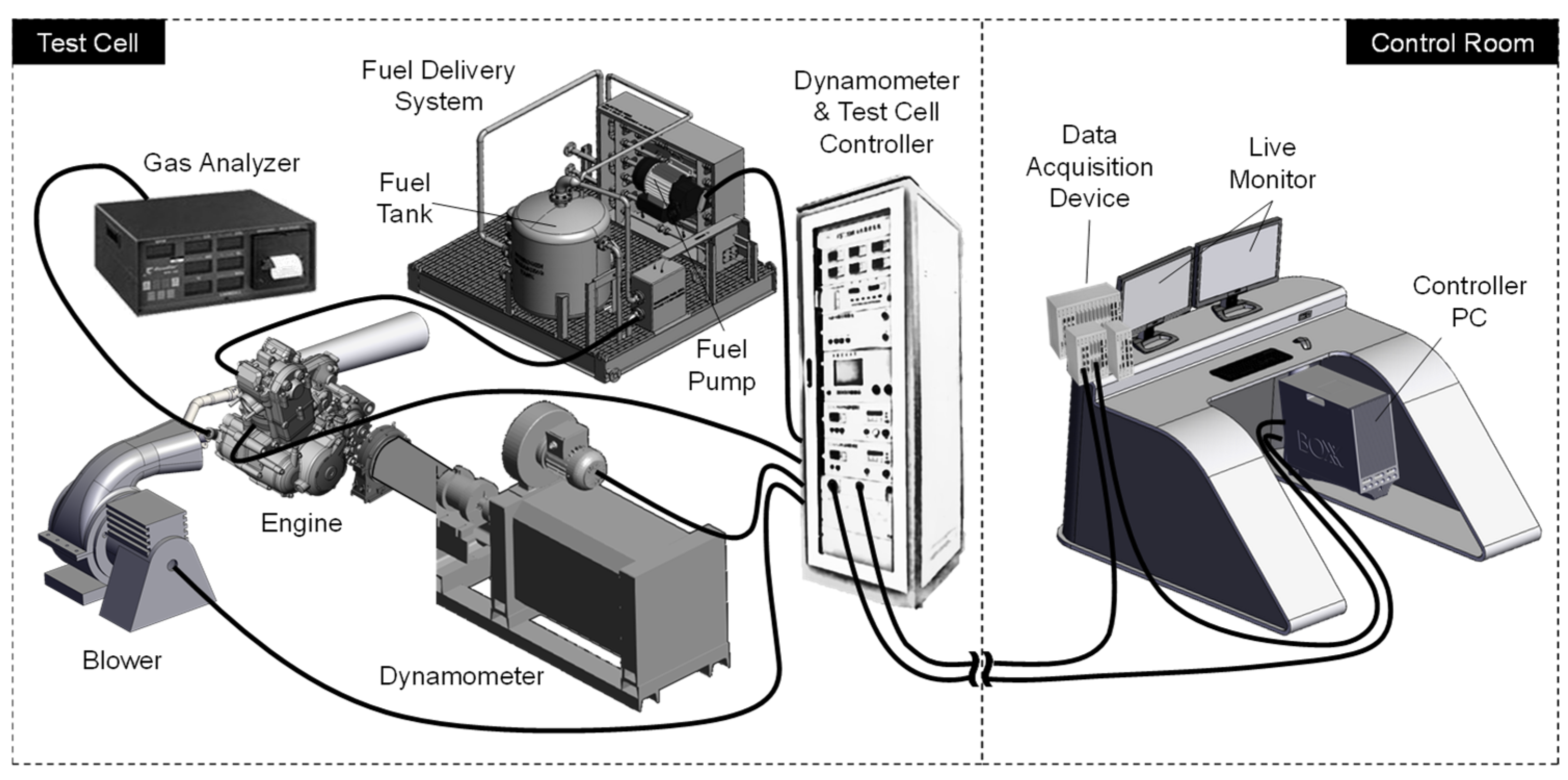
Figure 1 illustrates the experimental setup used for the engine performance and exhaust gas emission tests. The tests were conducted in Test Cell No. 3 of the Thermodynamics, Motor, and Propulsion Laboratory at the National Research and Innovation Agency. The test engine, a carburetor engine typically used in commercial motorbikes, is summarized in Table 1. The engine was coupled to the dynamometer using a double chain and a coupling shaft, which is supported by a bearing to minimize rotational moment, particularly at high engine speeds (RPM). The dynamometer in the test cell has a capacity of 30 kW and a maximum RPM of 4000. The fuel used was a gasoline-methanol mixture with various compositions, as detailed in Table 2. Fuel was delivered through a fuel delivery system, with the flow rate measured by a flowmeter, and the injection pressure into the carburetor could be adjusted from the control room. The carburetor engine was chosen for this study because of its fuel flexibility, allowing it to handle different types of fuels, such as gasoline and its methanol blends, without requiring modification. Additionally, the engine is not influenced by the auto-adjustment feature found in direct injection engines’ control units, providing more control over fuel delivery for experimental purposes. Lastly, carburetor engines are still widely used in many countries for various applications, making this research relevant to real-world scenarios.
Specifications of the tested engine [27].
| Parameter | Specification |
| Engine type | Single-cylinder, air-cooled |
| Stroke | 4-stroke |
| Capacity | 144 cc |
| Number of cylinders | 1 cylinder |
| Compression ratio | 9.5:1 |
| Fuel system | Carburetor |
| Maximum power | 12 HP (8.6 kW) at 8000 RPM |
| Maximum torque | 11.3 Nm at 6500 RPM |
| Primary reduction ratio | 2.880 (72/25) |
| 1st gear ratio | 2.917 (35/12) |
| 2nd gear ratio | 2.000 (32/16) |
| 3rd gear ratio | 1.474 (28/19) |
| 4th gear ratio | 1.182 (26/22) |
| 5th gear ratio | 1.000 (24/24) |
| Final reduction ratio | 3.714 (52/14) |
Tested fuel blends.
| No. | Tested Fuel Name | Gasoline RON98 (%vol) | Gasoline RON92 (%vol) | Methanol (%vol) |
| 1 | G98 | 100 | 0 | 0 |
| 2 | G92 | 0 | 100 | 0 |
| 3 | G-M10 | 0 | 90 | 10 |
| 4 | G-M15 | 0 | 85 | 15 |
| 5 | G-M20 | 0 | 80 | 20 |
| 6 | G-M25 | 0 | 75 | 25 |
The maximum power-torque performance testing followed the UN ECE R85 standard [28], which provides a comprehensive framework for the consistent and accurate measurement of engine and motor power, ensuring reliable performance data. The carburetor settings were kept at the factory defaults, optimized for gasoline with an octane number of 92. Exhaust gas emissions of CO, HC, and CO2 were measured using a QROTECH QRO-402 gas analyzer. Before testing each new fuel blend, the fuel line system was thoroughly flushed to ensure the purity of the tested fuel. A blower was placed in front of the engine to cool it down and prevent overheating. The dynamometer and test cell were equipped with a controller, allowing the tests to be controlled and monitored remotely from the control room.
Following the engine performance and exhaust gas emission tests, a continuous engine running test was conducted to assess the long-term effects of the gasoline-methanol fuel blends. This test involved running the engine at 80% of its maximum output power for each fuel over four hours. Power and torque were recorded to determine if any changes in engine performance occurred during the continuous run.
3. Experiment Results
3.1. Fuel Properties
Before conducting the engine performance and exhaust gas emission tests, the test fuels were evaluated according to relevant standards to determine their research octane number (RON) [29], vapor pressure [30], density [31], water content [32], lower and higher heating values [33], and distillation temperature [34]. The properties of the gasoline-methanol blends, including vapor pressure, density, and water content, were compared to those of both types of gasoline with different RON values. The results are presented in Table 3. The findings indicate that the octane number generally increases with higher methanol concentrations, while the blend density also shows an overall increasing trend despite a slight decrease for G-M25. In contrast, the heating values decrease as the methanol content increases. Notably, a blend closest in octane number to G98 can be achieved by mixing G92 with 15% methanol (G-M15). Adding 15% methanol raises the octane number by 5.7 points. Higher octane numbers indicate a fuel’s greater resistance to knocking (premature ignition) in the engine. This resistance allows engines to operate at higher compression ratios, which can improve power output and thermal efficiency. Previous studies have demonstrated that a higher octane number can increase power and torque output while reducing specific fuel consumption [35,36,37,38,39,40,41,42]. On average, a 1% improvement in fuel efficiency has been reported [43], which is expected to offset the reduced calorific value of the mixed fuel.
Properties of the gasoline-methanol blends.
| Properties | Unit | Test Method | G98 | G92 | G-M10 | G-M15 | G-M20 | G-M25 |
| Research Octane Number (RON) | - | ASTM D2699-19e1 | 98.5 | 92 | 96.2 | 97.7 | 99.2 | 99.9 |
| Vapor Pressure | kPa | ASTM D323-20a | 57.4 | 62.7 | 76.9 | 79.0 | 78.8 | 78.1 |
| Density, 15 °C | kg/m3 | ASTM D4052-18a | 746.8 | 741.5 | 746.7 | 748.3 | 750.7 | 749.3 |
| Water Content | ppm | ASTM D6304-20 | 400 | 380 | 630 | 690 | 580 | 630 |
| Lower Heating Value | MJ/kg | ASTM D240-19 | 43.951 | 43.1 | 42.04 | 41.496 | 40.150 | 39.673 |
| Higher Heating Value | MJ/kg | 47.152 | 45.84 | 44.49 | 43.740 | 41.870 | 41.206 | |
| Distillation | ASTM D86-20b | |||||||
| 10% | °C | 63.0 | 52.2 | 44.8 | 45.5 | 45.1 | 45.7 | |
| 50% | °C | 104.4 | 79.1 | 63.4 | 56.5 | 56.6 | 57.4 | |
| 90% | °C | 167.7 | 157.3 | 154.1 | 169.4 | 147.6 | 145.9 | |
| Final Boiling Point | °C | 208.3 | 193.2 | 192.0 | 191.7 | 189.1 | 187.9 |
Gasoline-methanol mixtures exhibit azeotropic behavior with respect to vapor pressure. Vapor pressure, measured as Reid vapor pressure (RVP) at 37.8 °C, indicates the presence of light fractions that vaporize at low temperatures. At low methanol concentrations in gasoline, the vapor pressure is higher than that of pure gasoline. In this study, vapor pressure increases for the G-M10 and G-M15 fuel blends, then slightly decreases for the G-M20 and G-M25 blends. Fuel density influences engine power, emissions, and fuel consumption. As the methanol concentration increases, the energy content, indicated by lower and higher calorific values, decreases due to methanol’s lower calorific value compared to gasoline. The boiling range provides insights into the fuel’s composition, properties, and behavior during storage and use. T10 represents the temperature at which 10% of the fuel has been distilled. Lower T10 values, ideally below 65 °C, are desirable as they enhance the engine’s cooling ability. T50, the temperature at which 50% of the fuel has distilled, is crucial for proper vaporization, affecting the engine’s warming speed after a cold start, operating temperature, and acceleration characteristics. The base gasoline fuels, G98 and G92, have high T50 values typical of modern gasoline (T50 ≈ 80 °C). It is important to note that high-boiling components in fuels can significantly contribute to the formation of solid combustion deposits [44]. From the results in Table 3, it can be concluded that increasing the methanol content in gasoline results in higher Research Octane Number (RON), generally higher vapor pressure, an overall increase in density, lower calorific values, and generally lower distillation temperatures, although a slight deviation in the T90 value is observed for the G-M15. However, for methanol concentrations above 15%, the vapor pressure decreases.
3.2. Engine Performance
Figure 2 presents the engine performance test results for the various tested fuels. As shown in Figure 2a, engine power increases with engine speed, peaking at around 8000 RPM, as specified in the engine’s specifications. Beyond this point, the power decreases as engine speed continues to rise. The impact of methanol blends in gasoline is clear: higher percentages of methanol in the blend lead to higher engine power output. Similarly, engine torque exhibits a comparable pattern, as depicted in Figure 2b. Engine torque increases with engine speed, reaching its peak at approximately 6200 RPM, which is slightly different from the specified value. After reaching this peak, torque decreases as engine speed increases further. The higher the methanol percentage in the gasoline blend, the higher the engine torque output. Notably, gasoline without methanol blends, such as G98 and G92, produce nearly identical results.
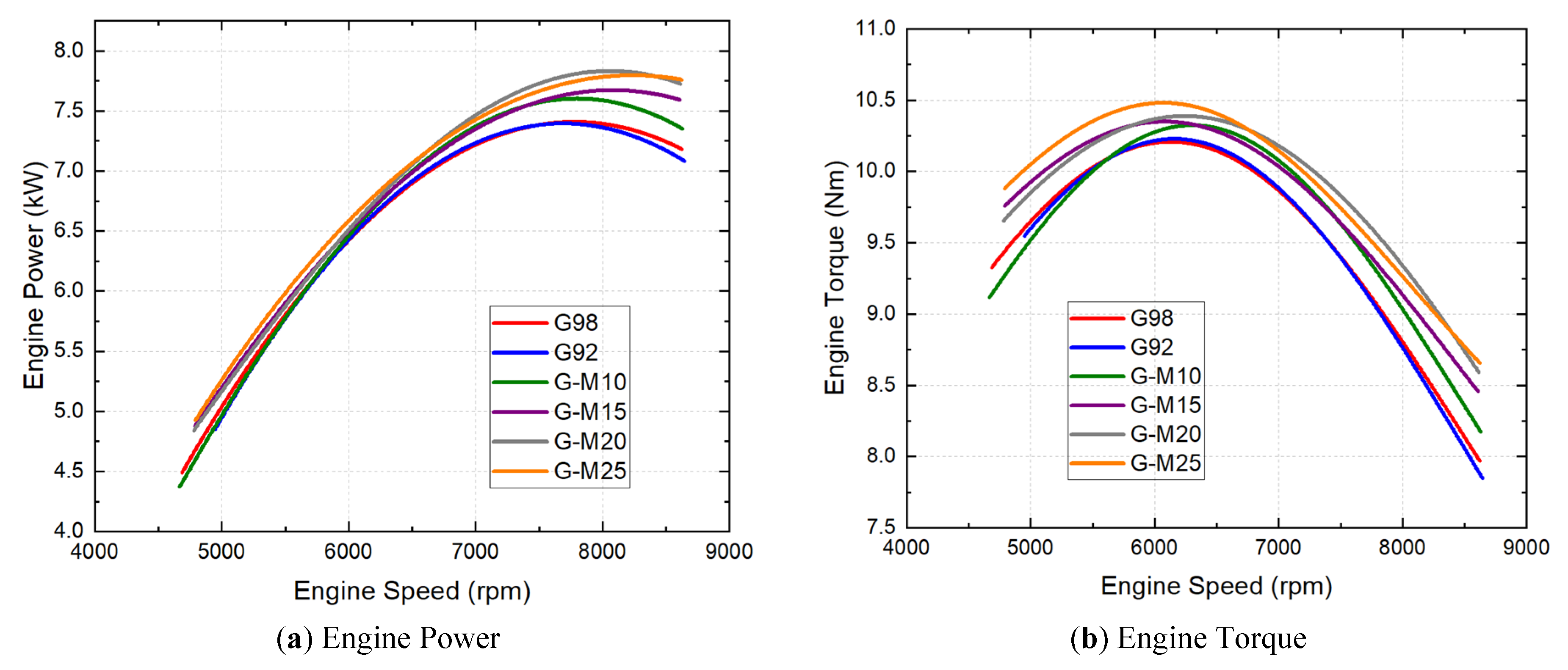
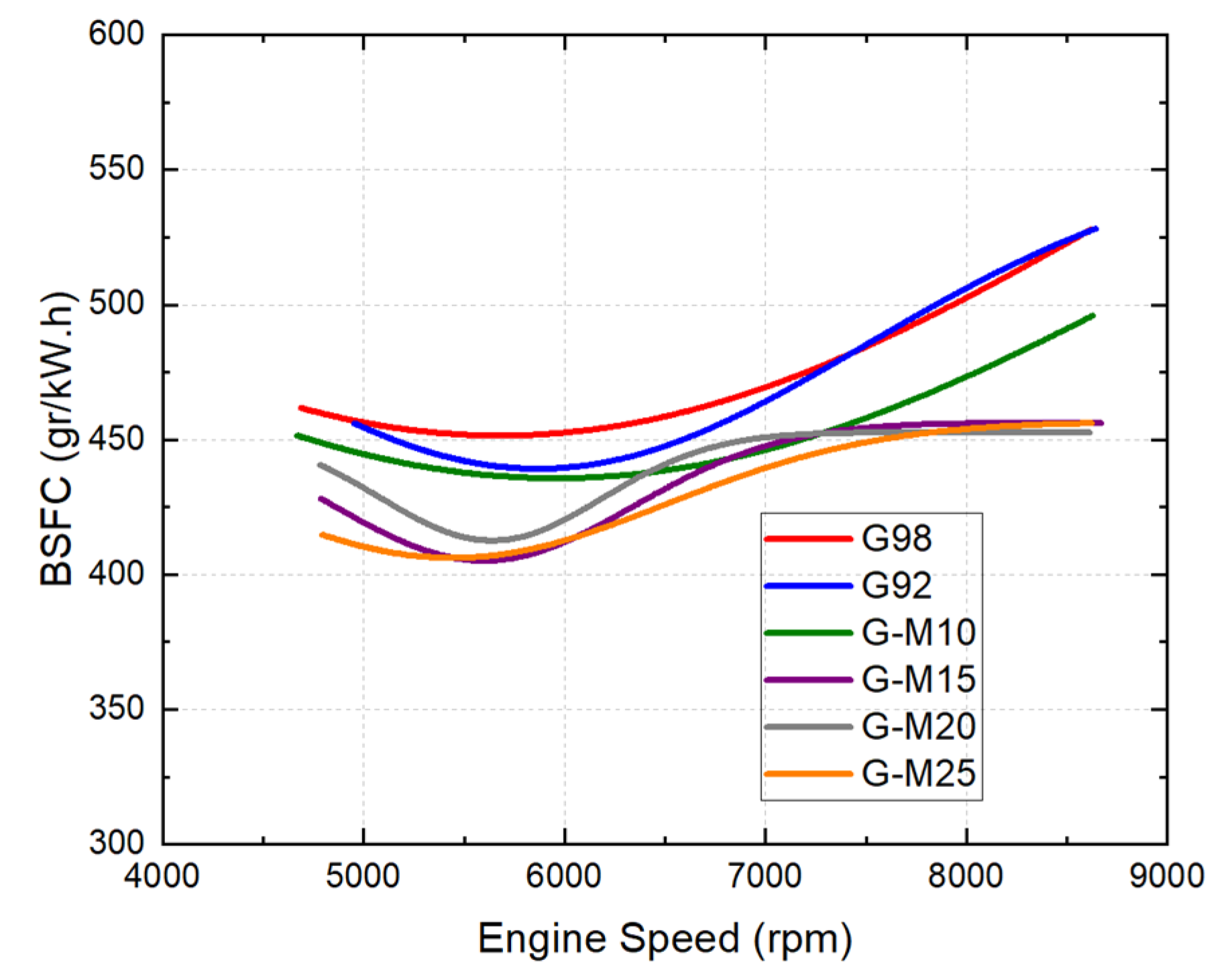
Figure 3 illustrates the brake-specific fuel consumption (BSFC) for the various tested fuels. The trend curve shows a decrease in BSFC until it reaches a minimum point, after which it begins to rise again as engine speed increases. The minimum BSFC typically occurs near the engine’s maximum torque point. A higher percentage of methanol in the gasoline blend lowers the overall BSFC trend curve, indicating more efficient fuel consumption relative to the engine’s power output. In other words, adding methanol to gasoline in the current engine setup can reduce fuel consumption while maintaining the same power output. Despite the gasoline-methanol blends (G-M10, G-M15, G-M20, and G-M25) having lower energy content than pure gasoline (G98 and G92), they demonstrate better combustion efficiency by producing more energy per unit of fuel.
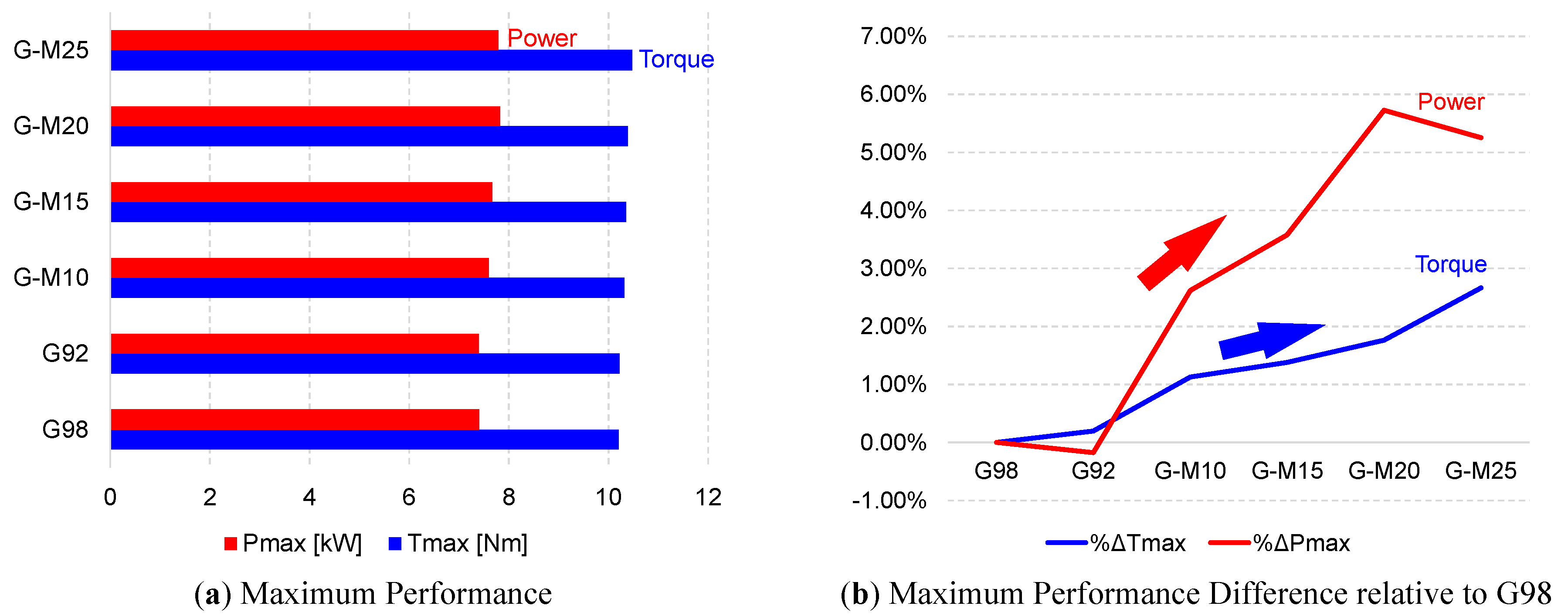
To better understand the effect of gasoline-methanol fuel blends on engine performance, the maximum power and torque for each tested fuel are compared in Figure 4. As shown in Figure 4a, the maximum power and torque of the base gasoline, G92 and G98, are quite similar. However, increasing the methanol percentage in the fuel blend leads to higher power and torque outputs. Figure 4b shows that power increases by nearly 6% relative to the base gasoline G98, while torque increases by almost 3%. These results strongly suggest that adding methanol to gasoline in the current engine setup enhances engine performance.
3.3. Exhaust Gas Emission
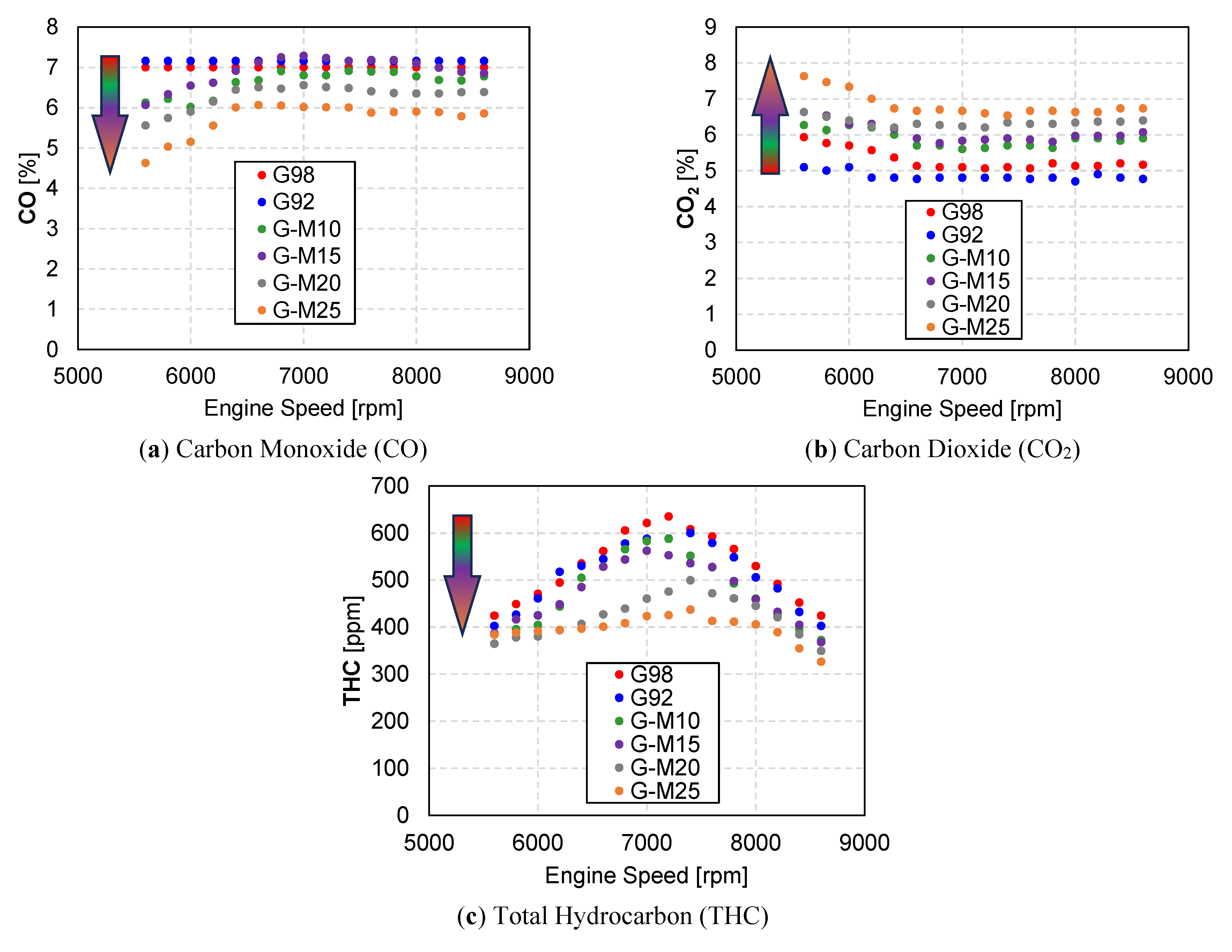
To assess the impact of gasoline-methanol blends on exhaust gas emissions, a gas analyzer was used to measure carbon monoxide (CO), carbon dioxide (CO2), and total hydrocarbons (THC) during the engine performance tests. Figure 5 presents the exhaust gas emissions (CO, CO2, and THC) for the various tested fuels at different engine speeds. As shown in Figure 5a, CO levels decrease as the methanol percentage in the fuel blend increases. CO emissions increase with engine speed but tend to stabilize once the engine speed reaches 6400 RPM. The presence of CO in exhaust gas indicates incomplete combustion, typically occurring when the air-fuel mixture is too rich, meaning there is more fuel than air available for complete combustion. In contrast, Figure 5b shows that CO2 levels increase with higher methanol content in the fuel blend. CO2 emissions decrease with rising engine speed but also stabilize around 6400 RPM. CO2 is a key indicator of combustion efficiency, as it is the primary product of the complete combustion of carbon-based fuels, such as gasoline and methanol. Higher CO2 levels in the exhaust suggest that the fuel is being efficiently burned, with the carbon in the fuel fully oxidized to CO2. The opposing trends in CO and CO2 relative to the methanol content suggest that methanol enhances the completeness of combustion in the fuel blend. Further analysis of these findings is provided in the discussion section. Figure 5c illustrates that overall THC emissions decrease as the methanol percentage in the fuel blend increases. THC levels rise with engine speed up to approximately 7200 RPM, after which they begin to decrease. The presence of THC in exhaust gases indicates incomplete combustion, as THC represents unburned or partially burned fuel. High THC levels are a sign of incomplete combustion, often due to a rich air-fuel mixture, where insufficient oxygen is available to fully oxidize all the fuel. The addition of methanol in the fuel appears to enhance combustion completeness by providing more oxygen content within the fuel blend.
3.4. Continuous Run Test
The implementation of a methanol blend in gasoline must be evaluated not only for engine performance and gas emissions but also for engine stability during prolonged operation. In this study, we conducted a continuous run test at 80% of maximum power for 4 h to simulate real-world engine applications, including both on-road and marine environments. The test involved measuring engine power and torque every 2 s to capture overall trends and any anomalies.
Figure 6 illustrates the engine power and torque measured during continuous run tests with different fuel blends. For the G98, G92, and G-M10 fuel cases, the engine operated in a stable and consistent manner throughout the test. However, when the methanol percentage in the gasoline blend was 15% or higher (i.e., G-M15, G-M20, and G-M25), there were noticeable drops in engine performance during the 4-h test. These drops, which increased with higher methanol percentages, manifested as intermittent engine power interruptions. It is important to note that these power interruptions did not cause the engine to stop completely but resulted in temporary reductions in power, torque, and RPM.
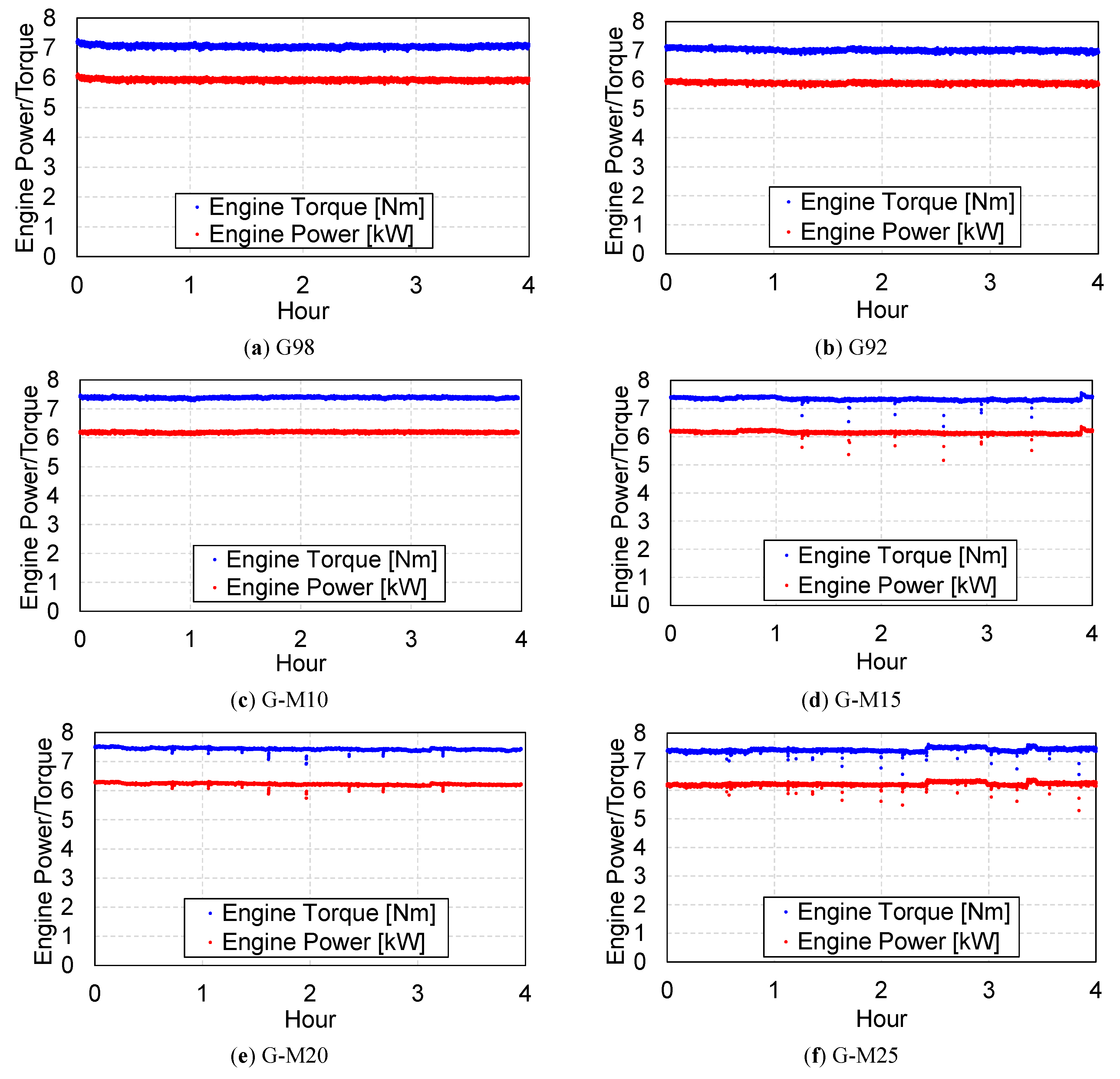
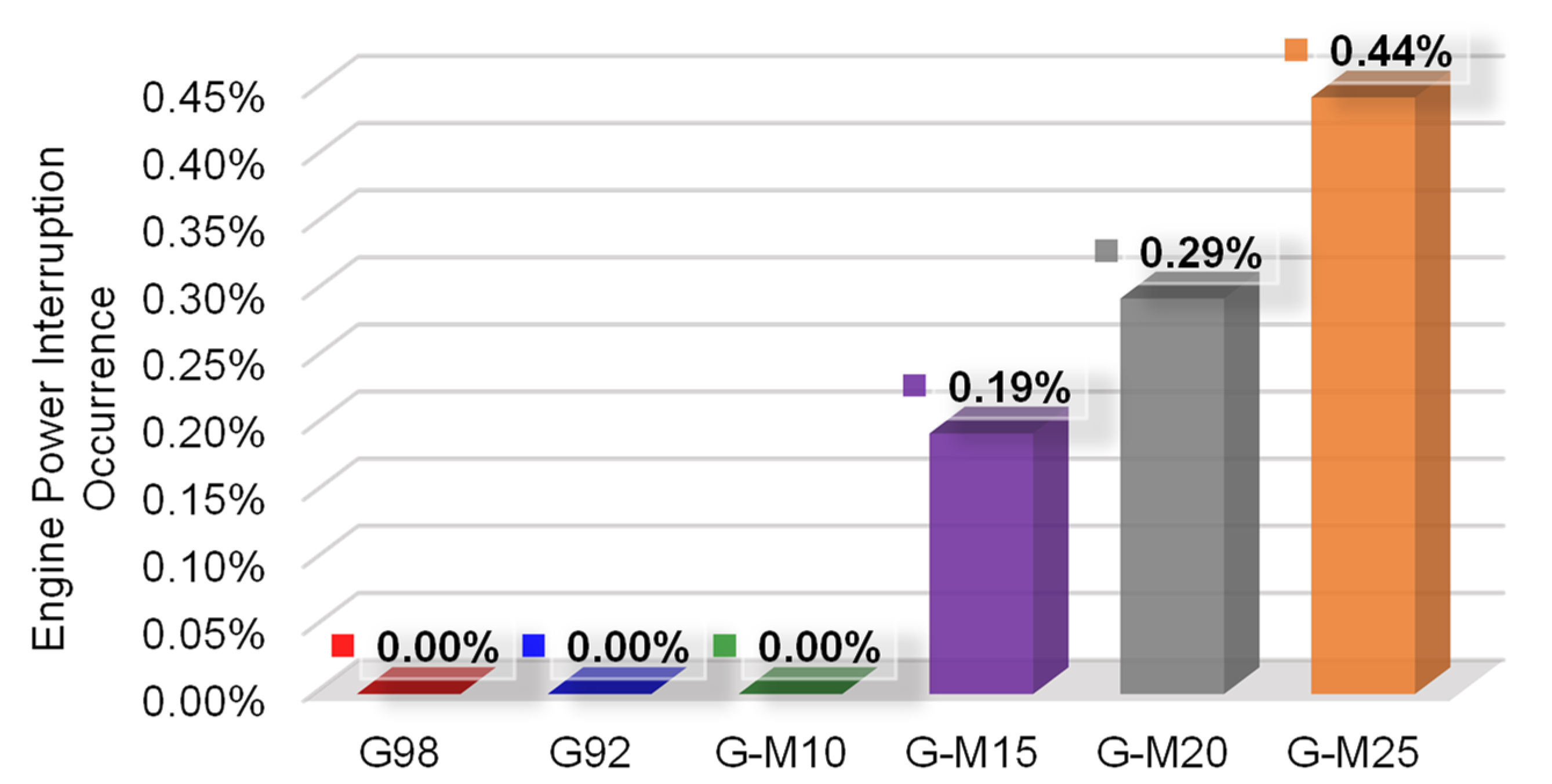
Figure 7 illustrates the frequency of engine power interruptions observed during the 4-h continuous run test. As noted earlier, no engine power interruptions were detected with the base gasolines G98 and G92, nor with the low methanol blend G-M10. However, as the methanol percentage in the gasoline blend increases, the occurrence of engine power interruptions also rises: 0.19% for G-M15, 0.29% for G-M20, and 0.44% for G-M25. This trend clearly shows that higher methanol percentages correlate with an increased likelihood of engine power interruptions. Although the power interruption occurrence rates are below 0.5%, these events are concerning for engine users, especially in vehicles used for passenger transportation. Even brief power drops can cause sudden decelerations, which may be uncomfortable for passengers. Moreover, these drops can evoke anxiety in passengers, as they may be perceived as potential engine failures, despite the engine not actually stopping completely. Therefore, it is crucial to consider the impact of short engine power interruptions on user experience, particularly with high methanol content in the fuel blend.
4. Discussion
The air-fuel ratio (AFR) is a crucial indicator of combustion in an engine, representing the ratio of the mass of air introduced into the combustion chamber to the mass of fuel. Achieving a stoichiometric AFR, where all fuel is completely burned, is essential for optimal combustion. Another key indicator is lambda (λ), the ratio of the actual AFR to the stoichiometric AFR. A lambda value of 1 signifies an ideal mixture that ensures complete combustion. A lambda less than 1 indicates a rich mixture with insufficient air for complete combustion, while a lambda greater than 1 denotes a lean mixture with excess air. In this study, we used a gas analyzer to measure AFR and lambda, whose algorithm is based on gasoline fuel combustion.
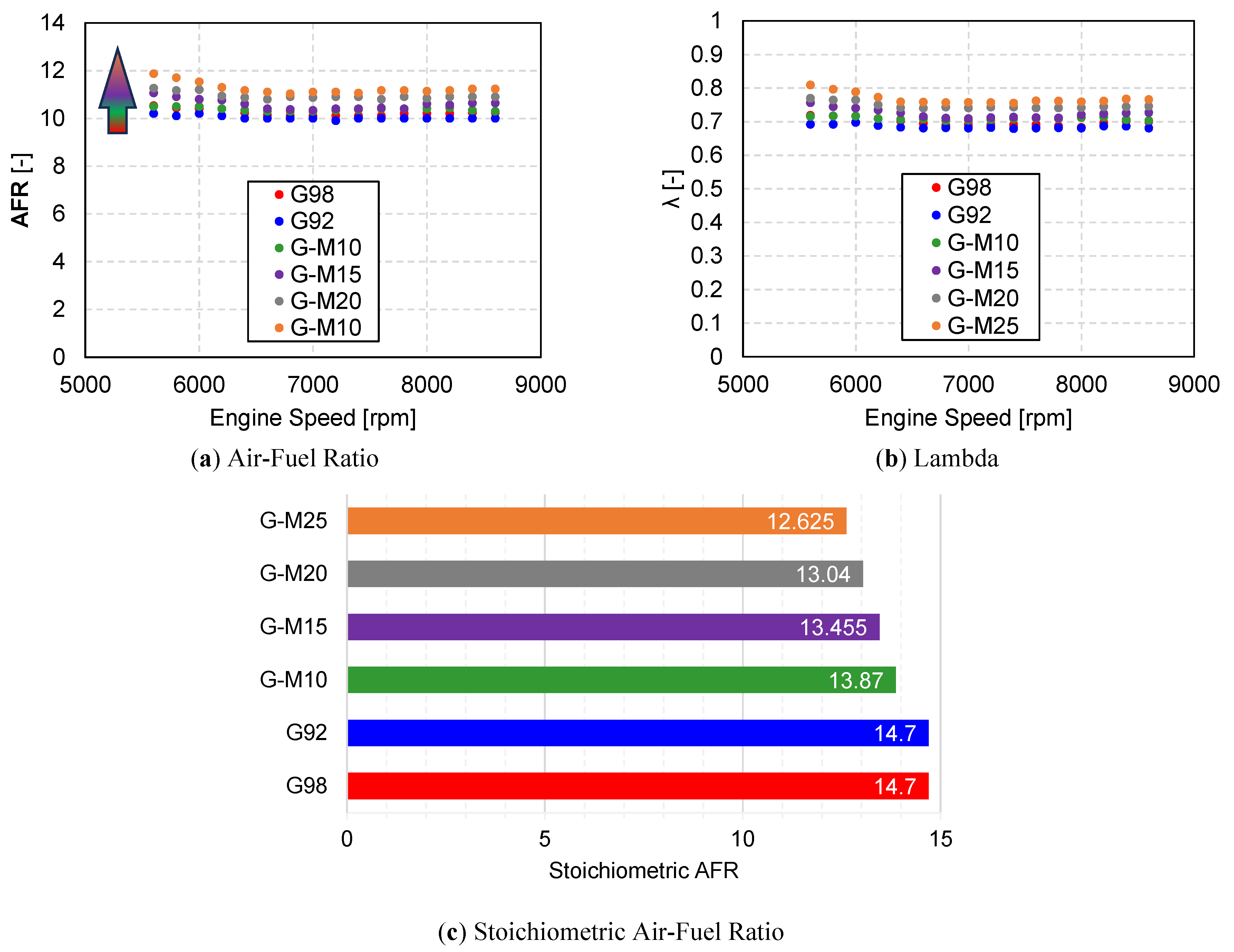
Figure 8 presents the results of AFR, lambda, and stoichiometric AFR for different fuel blends. As shown in Figure 8a, the AFR increases with the methanol percentage in the gasoline blend. Engine speed has minimal impact on AFR, particularly for base gasolines and low methanol blends, which exhibit a nearly constant AFR regardless of engine speed. Figure 8b shows that lambda follows a similar trend: it increases with higher percentages of methanol and remains relatively unaffected by changes in engine speed.
Since the gas analyzer was calibrated for gasoline combustion and the engine used a carburetor with wide-open throttle, the fuel and air volumes introduced into the combustion chamber were constant. Variations in AFR across different fuels are primarily due to differences in fuel density and oxygen content. While density differences are minor, as shown in Table 3, the oxygen content significantly affects AFR and lambda.
The stoichiometric AFR for gasoline, mainly composed of octane, is approximately 15:1. However, since gasoline is a mixture of various hydrocarbons, the stoichiometric ratio can vary slightly, with 14.7:1 being commonly used in automotive engineering [45]. For methanol, the stoichiometric AFR is around 6.4:1. The stoichiometric AFR for blended fuels can be calculated using the formula expressed in Equation (1):
AFRG-M is stoichiometric AFR for gasoline-methanol blend,
AFRG is stoichiometric AFR for gasoline,
WG is the weight fraction of gasoline in the blend,
AFRM is stoichiometric AFR for methanol,
WM is the weight fraction of methanol in the blend.
Figure 8c shows that the stoichiometric AFR for the gasoline-methanol blend decreases with increasing methanol content. This decrease explains why lambda increases with higher methanol percentages: as the denominator in the lambda equation (the stoichiometric AFR) becomes smaller, lambda approaches 1, indicating more complete combustion.
In gasoline-methanol carburetor engines, engine power interruptions can occur due to vapor lock caused by the methanol’s high latent heat of vaporization, which increases the evaporation rate of the fuel blend. This leads to gas bubbles forming in the fuel system, impairing fuel flow [46,47]. The tendency for increased evaporation under high temperatures amplifies this issue. Additives such as tartaric esters can mitigate vapor lock by stabilizing the fuel mixture and reducing evaporation [48]. Additionally, models have been developed to better understand vaporization behavior, aiding in the optimization of ignition and combustion, particularly during cold starts [49]. However, specific guidelines for preventing vapor lock in gasoline-methanol carburetor engines remain limited.
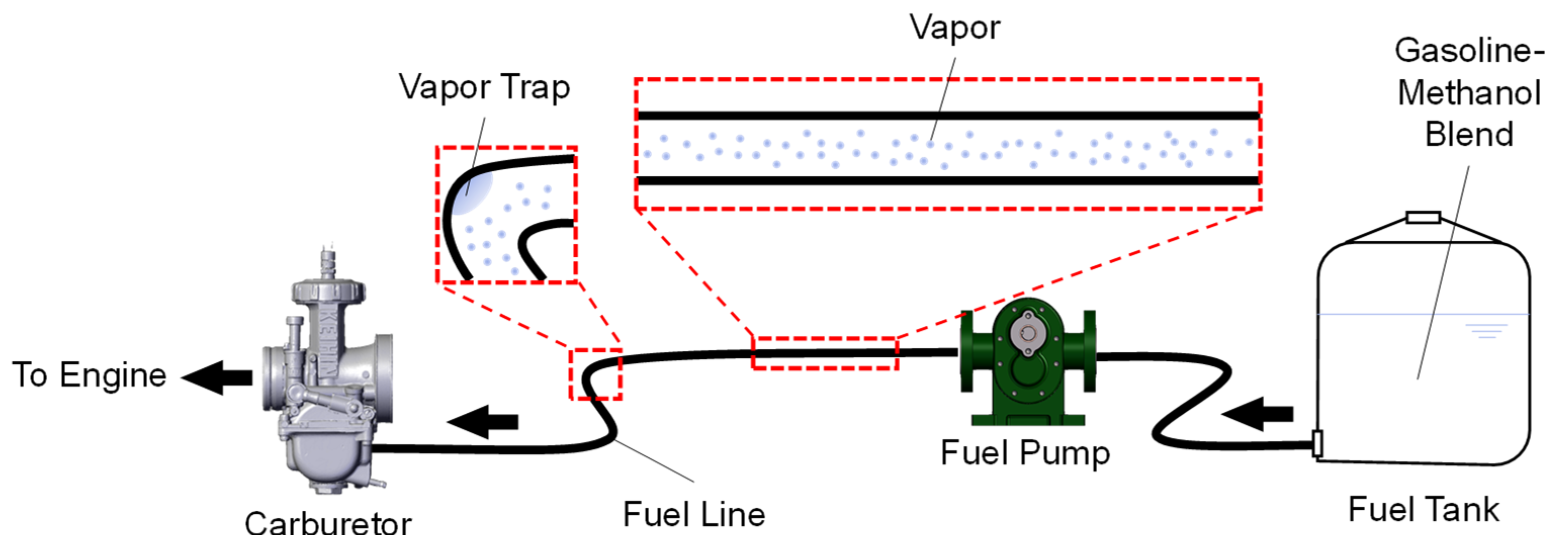
Based on previous studies, we hypothesize that engine power interruptions in gasoline-methanol engines are caused by vapor bubbles forming in the fuel line, as illustrated in Figure 9. As methanol evaporates, small gas bubbles can form and become trapped along the fuel line, especially at bends or turns. These bubbles eventually coalesce into larger vapor bubbles, which can flow into the carburetor and engine, leading to lean combustion and reduced power. This may explain the brief engine power interruptions observed in our experiments. Further research is needed to confirm this phenomenon.
Another challenge in studying the effects of gasoline-methanol mixtures on engine performance and emissions is the impact on lubricant oil. While methanol-gasoline blends improve engine performance and reduce carbon emissions, they also accelerate lubricant oil degradation. This issue calls for further investigation into the degradation rate of lubricant oil to optimize the use of methanol-gasoline blends in engines [50]. Future research should focus on strategies to mitigate the engine instability observed with higher methanol blends, such as optimizing the air-fuel ratio or incorporating additives to prevent vapor lock. Additionally, conducting long-term durability tests is crucial to evaluate the effects of methanol on engine components, particularly concerning lubricant degradation.
5. Conclusions
This study investigated the effects of various gasoline-methanol blends on engine performance and exhaust emissions in a carburetor engine. By blending methanol with RON 92 gasoline in volumes of 10%, 15%, 20%, and 25%, we observed improvements in engine power and torque, as well as reductions in brake-specific fuel consumption (BSFC). Exhaust gas analysis was conducted to determine the effects of gasoline-methanol blends on harmful emissions, such as carbon monoxide (CO), total hydrocarbons (THC), and carbon dioxide (CO2). The key conclusions from this study are as follows:
Mixing methanol with RON 92 gasoline at volumes of 10%, 15%, 20%, and 25% resulted in increased engine power and torque. The higher the methanol percentage, the higher the engine power and torque.
Brake-specific fuel consumption (BSFC) was reduced with higher methanol percentages in the fuel blend.
Exhaust gas analysis showed lower emissions of carbon monoxide (CO) and total hydrocarbons (THC), with an increase in carbon dioxide (CO2).
Brief engine power interruptions were more frequent with higher methanol percentages, indicating fuel instability issues.
These results underscore the potential of methanol as a renewable and environmentally friendly additive to gasoline, enhancing both engine performance and emission profiles. However, the study also highlighted some challenges associated with the use of gasoline-methanol blends. Therefore, further research is necessary to optimize fuel formulations and address the observed engine power interruption phenomena. Future investigations should also aim to improve the understanding of fuel behavior in different engine configurations and operating conditions, ensuring the reliability and efficiency of gasoline-methanol blends in practical applications.
Author Contributions
R.H.P.: conceptualization, methodology, validation, formal analysis, investigation, data curation, writing—original draft, visualization, project administration; I.H.: validation, writing—review & editing; R.T.S.: conceptualization, methodology, investigation; A.K.: conceptualization, methodology, investigation, project administration; R.C.N.: validation, investigation; M.T.S.: validation, supervision; A.T.R.: methodology, resources; S.A.S.: investigation, data curation; H.P.: conceptualization, funding acquisition. All authors have read and agreed to the published version of the manuscript.
Funding
This research received no external funding.
Institutional Review Board Statement
Not applicable.
Informed Consent Statement
Not applicable.
Data Availability Statement
Not applicable.
Acknowledgments
The authors would like to express their gratitude to the test cell staff of the Thermodynamics, Motor, and Propulsion Laboratory at the National Research and Innovation Agency—Mokhtar, Ali Akbar, Budi Hartono, Sarpudin Supriyadi, Sendi Indras Yanuar, and Hasanudin—for their invaluable technical support during the engine performance and exhaust gas emission tests.
Conflicts of Interest
The authors declare no conflict of interest.
Use of AI and AI-Assisted Technologies
During the preparation of this work, the authors used ChatGPT to assist in language refinement and improvement of clarity and readability. After using this tool, the authors reviewed and edited the content as needed and take full responsibility for the content of the published article.
Abbreviations/Nomenclature
| AFR | Air Fuel Ratio |
| AFRstoic | Stoichiometric Air Fuel Ratio |
| BSFC | Brake specific fuel consumption |
| CO | Carbon monoxide |
| CO2 | Carbon dioxide |
| G98 | Gasoline RON 98 |
| G92 | Gasoline RON 92 |
| G-M10 | Fuel blend of gasoline RON 92 (90% volume) with methanol (10% volume) |
| G-M15 | Fuel blend of gasoline RON 92 (85% volume) with methanol (15% volume) |
| G-M20 | Fuel blend of gasoline RON 92 (80% volume) with methanol (20% volume) |
| G-M25 | Fuel blend of gasoline RON 92 (75% volume) with methanol (25% volume) |
| RON | Research octane number |
| RPM | Rotation per minute |
| THC | Total hydrocarbon |
| λ | Ratio of air-fuel ratio with stoichiometric air-fuel ratio (AFR/AFRstoic) |
References
- 1.
Zhen, X.; Wang, Y. An Overview of Methanol as an Internal Combustion Engine Fuel. Renew. Sustain. Energy Rev. 2015, 52, 477–493. https://doi.org/10.1016/j.rser.2015.07.083.
- 2.
Araya, S.S.; Liso, V.; Cui, X.; Li, N.; Zhu, J.; Sahlin, S.L.; Jensen, S.H.; Nielsen, M.P.; Kær, S.K. A Review of the Methanol Economy: The Fuel Cell Route. Energies 2020, 13, 596. https://doi.org/10.3390/en13030596.
- 3.
Roode-Gutzmer, Q.I.; Kaiser, D.; Bertau, M. Renewable Methanol Synthesis. ChemBioEng Rev. 2019, 6, 209–236. https://doi.org/10.1002/cben.201900012.
- 4.
Liu, W.-C.; Baek, J.; Somorjai, G.A. The Methanol Economy: Methane and Carbon Dioxide Conversion. Top. Catal. 2018, 61, 530–541. https://doi.org/10.1007/s11244-018-0907-4.
- 5.
Liu, X.; Sun, D.; Ji, Y.; Zu, S.; Pei, Y.; Yan, S.; Qiao, M.; Zhang, X.; Zong, B. Effect of NaOH Concentration on Rapidly Quenched Cu–Al Alloy-Derived Cu Catalyst for CO2 Hydrogenation to CH3OH. Catalysts 2024, 14, 391. https://doi.org/10.3390/catal14060391.
- 6.
Filosa, C.; Gong, X.; Bavykina, A.; Chowdhury, A.D.; Gallo, J.M.; Gascon, J. Enabling the Methanol Economy: Opportunities and Challenges for Heterogeneous Catalysis in the Production of Liquid Fuels via Methanol. Acc. Chem. Res. 2023, 56, 3492–3503. https://doi.org/10.1021/acs.accounts.3c00551.
- 7.
Sepahi, S.; Rahimpour, M.R. Methanol Production from Syngas. In Advances in Synthesis Gas: Methods, Technologies and Applications: Syngas Products and Usages; Elsevier: Amsterdam, The Netherlands, 2022; pp. 111–146.
- 8.
Kumar, C.; Rana, K.B.; Tripathi, B. Combustion, Performance and Emission Analysis of Diesel-Methanol Fuel Blend in CI Engine. In Methanol: A Sustainable Transport Fuel for CI Engines; Springer Singapore: Singapore, 2021; pp. 229–246.
- 9.
Zhen, X. Methanol as an Internal Combustion Engine Fuel. In Methanol: Science and Engineering; Elsevier: Amsterdam, The Netherlands, 2018.
- 10.
Wang, C.; Li, Y.; Xu, C.; Badawy, T.; Sahu, A.; Jiang, C. Methanol as an Octane Booster for Gasoline Fuels. Fuel 2019, 248, 76–84. https://doi.org/10.1016/j.fuel.2019.02.128.
- 11.
Bharath, B.K.; Arul Mozhi Selvan, V. Influence of Higher Alcohol Additives in Methanol–Gasoline Blends on the Performance and Emissions of an Unmodified Automotive SI Engine: A Review. Arab. J. Sci. Eng. 2021, 46, 7057–7085. https://doi.org/10.1007/s13369-021-05408-x.
- 12.
Abdellatief, T.M.; Ershov, M.A.; Kapustin, V.M.; Chernysheva, E.A.; Savelenko, V.D.; Makhmudova, A.E.; Potanin, D.A.; Salameh, T.; Abdelkareem, M.A.; Olabi, A.G. Innovative Conceptional Approach to Quantify the Potential Benefits of Gasoline-Methanol Blends and Their Conceptualization on Fuzzy Modeling. Int. J. Hydrogen Energy 2022, 47, 35096–35111. https://doi.org/10.1016/j.ijhydene.2022.08.076.
- 13.
Pratama, R.F.; Wibowo, C.S.; Fathurrahman, N.A.; Hartulistyoso, E. Effect of Low Percentage Methanol Blends in Gasoline RON 90 on Fuel Volatility Characteristics and Spark Ignition Engine Performance. IOP Conf. Ser. Earth Environ. Sci. 2022, 1034, 012020.
- 14.
Likhanov, V.A.; Lopatin, O.P. Research of Load Modes of Diesel Engine at Work on Biofuel. IOP Conf. Ser. Earth Environ. Sci. 2020, 734, 012202.
- 15.
Uddeen, K.; Tang, Q.; Shi, H.; Almatrafi, F.; Magnotti, G.; Turner, J.A. A Comparative Study of Knock Formation in Gasoline and Methanol Combustion Using a Multiple Spark Ignition Approach: An Optical Investigation. In Proceedings of the WCX SAE World Congress Experience 2024, Detroit, MI, USA, 16–18 April 2024.
- 16.
Morganti, K.; Viollet, Y.; Head, R.; Kalghatgi, G.; Al-Abdullah, M.; Alzubail, A. Maximizing the Benefits of High Octane Fuels in Spark-Ignition Engines. Fuel 2017, 207, 470–487. https://doi.org/10.1016/j.fuel.2017.06.066.
- 17.
Hashim, A.; Khalid, A.; Sapit, A.; Samsudin, D. Effects of Biofuel and Variant Ambient Pressure on Flame Development and Emissions of Gasoline Engine. IOP Conf. Ser. Mater. Sci. Eng. 2016, 160, 012043.
- 18.
Demirbas, K.; Sahin-Demirbas, A. Gasoline Fuel Blends for Otto Engines and Gasoline Fuel Additives. Energy Sources Part B Econ. Plan. Policy 2010, 5, 243–249. https://doi.org/10.1080/15567240701759859.
- 19.
Yamin, J.; Abu-Zaid, M.; Badran, O. Comparative Performance of Spark Ignition Engine Using Blends of Various Methanol Percentages with Low Octane Number Gasoline. Int. J. Environ. Pollut. 2005, 23, 336–344. https://doi.org/10.1504/IJEP.2005.006872.
- 20.
Yadav, O.; Valera, H.; Dulani, D.; Krishnan, U.; Agarwal, A.K. Safety Aspects of Methanol as Fuel. In Methanol: A Sustainable Transport Fuel for CI Engines; Springer Singapore: Singapore, 2021; pp. 117–138.
- 21.
Danaiah, P.; Kumar, P.R.; Kumar, D.V. Effect of Methanol Gasoline Blended Fuels on the Performance and Emissions of SI Engine. Int. J. Ambient Energy 2013, 34, 175–180. https://doi.org/10.1080/01430750.2012.755609.
- 22.
Gassoumi, M.; Boutar, Z.; Raja Ahsan Shah, R.M.; Aljarrah, M.T.; Qubeissi, M.A.; Ennetta, R.; Onorati, A.; Soyhan, H.S. Methanol as a Fuel Additive: Effect on the Performance and Emissions of a Gasoline Engine. Energy Sources Part A Recovery Util. Environ. Eff. 2023, 45, 9485–9497. https://doi.org/10.1080/15567036.2023.2240741.
- 23.
Chen, H.; Du, J.; Li, Y.; Zhan, W.; Wu, J.; Xie, F.; Wu, G. Effect of Methanol Addition on Combustion and Emissions Characteristics on a Turbocharged GDI Engine. Int. J. Automot. Technol. 2022, 23, 1405–1417. https://doi.org/10.1007/s12239-022-0123-x.
- 24.
Qi, D.H.; Jia, C.C.; Feng, Y.M. Combustion and Emissions Behaviour for Methanol-Gasoline Blended Fuels in a Multipoint Electronic Fuel Injection Engine. Int. J. Sustain. Energy 2014, 33, 985–999. https://doi.org/10.1080/14786451.2013.774004.
- 25.
Wang, W.; Wang, K.; Wang, X.; Wei, Y.; Liu, S. Contribution Ratio of Methanol to HC Emission of a Gasohol Fueled Spark Ignition Engine. J. Xi’an Jiaotong Univ. 2014, 48, 39–43+114. https://doi.org/10.7652/xjtuxb201403008. (In Chinese)
- 26.
Karvounis, P.; Theotokatos, G.; Vlaskos, I.; Hatziapostolou, A. Methanol Combustion Characteristics in Compression Ignition Engines: A Critical Review. Energies 2023, 16, 8069. https://doi.org/10.3390/en16248069.
- 27.
Available online: https://www.kawasaki-motor.co.id/id-id/sepeda-motor/klx/dual-purpose-150/klx150/2024-klx150 (accessed on 13 August 2024).
- 28.
UNECE. Agreement Concerning the Adoption of Uniform Technical Prescriptions for Wheeled Vehicles, Equipment and Parts Which Can Be Fitted and/or Be Used on Wheeled Vehicles and the Conditions for Reciprocal Recognition of Approvals Granted on the Basis of These Prescriptions; UN ECE R85; United Nations Economic Commission for Europe (UNECE): Geneva, Switzerland, 2013.
- 29.
ASTM D2699-19e1; Standard Test Method for Research Octane Number of Spark-Ignition Engine Fuel. ASTM International: West Conshohocken, PA, USA, 2021.
- 30.
ASTM D323-20a; Standard Test Method for Vapor Pressure of Petroleum Products (Reid Method). ASTM International: West Conshohocken, PA, USA, 2020.
- 31.
ASTM D4052-18a; Standard Test Method for Density, Relative Density, and API Gravity of Liquids by Digital Density Meter. ASTM International: West Conshohocken, PA, USA, 2022.
- 32.
ASTM D6304-20; Standard Test Method for Determination of Water in Petroleum Products, Lubricating Oils, and Additives by Coulometric Karl Fischer Titration. ASTM International: West Conshohocken, PA, USA, 2021.
- 33.
ASTM D240-19; Standard Test Method for Heat of Combustion of Liquid Hydrocarbon Fuels by Bomb Calorimeter. ASTM International: West Conshohocken, PA, USA, 2019.
- 34.
ASTM D86-20b; Standard Test Method for Distillation of Petroleum Products and Liquid Fuels at Atmospheric Pressure. ASTM International: West Conshohocken, PA, USA, 2023.
- 35.
Wibowo, C.; Adian, F.; Nugroho, Y.; Bambang, S. The Optimization of the Relationship between Octane Number of Gasoline-Ethanol Blend Fuels in Various Settings of the Engine Control Module. Evergreen 2020, 7, 587–592. https://doi.org/10.5109/4150510.
- 36.
Adian, F.; Sugiarto, B.; Wibowo, C.S.; Primayandi, D.D.; Hargiyanto, R.; Krisnanto, H. Comparison of the Effect of 10% Ethanol Addition in 88 and 98 Gasoline RON on Motorcycle Engine Performance. AIP Conf. Proc. 2020, 2230, 050003.
- 37.
Pawlowski, A.; Splitter, D. SI Engine Trends: A Historical Analysis with Future Projections. In Proceedings of the 2015 SAE World Congress & Exhibition, Detroit, MI, USA, 21–23 April 2015. https://doi.org/10.4271/2015-01-0972.
- 38.
Rashid, A.K.; Mansor, M.R.A.; Ghopa, W.A.W.; Harun, Z.; Mahmood, W.M.F.W. An Experimental Study of the Performance and Emissions of Spark Ignition Gasoline Engine. Int. J. Automot. Mech. Eng. 2016, 13, 3540–3554. https://doi.org/10.15282/ijame.13.3.2016.1.0291.
- 39.
Sanjaya, F.L.; Fatkhurrozak, F.; Syarifudin, S. Brake Torque, Brake Power, Brake Thermal Efficiency and Brake Specific Fuel Consumption Gasoline Engine with EGR Fueled by a Mixture of Gasoline and Butanol. AIP Conf. Proc. 2024, 3070, 040005.
- 40.
Riduan, A.F.M.; Tamaldin, N.; Yamin, A.K.M.; Sudrajat, A. Engine Performance Comparison between Various RON97 Gasoline Brands Available in Malaysian Market. J. Adv. Manuf. Technol. 2019, 13, 115–126.
- 41.
Shen, Y.-T.; Wang, J.-Z.; Shuai, S.-J.; Wang, J.-X. Effects of Octane Number on Gasoline Engine Performance. Chin. Intern. Combust. Engine Eng. 2008, 29, 52–56.
- 42.
Prakash, A.; Jones, A.; Nelson, E.; Macias, J.; Jimenez, E.; Hinojosa, M. Octane Response of Premium-Recommended Vehicles. In Proceedings of the SAE 2013 World Congress & Exhibition, Detroit, MI, USA, 16–18 April 2013. https://doi.org/10.4271/2013-01-0883.
- 43.
Shuai, S.J.; Wang, Y.; Li, X.; Fu, H.; Xiao, J. Impact of Octane Number on Fuel Efficiency of Modern Vehicles. SAE Int. J. Fuels Lubr. 2013, 6, 702–712. https://doi.org/10.2307/26273264.
- 44.
Nagano, S.; Yokoo, N.; Kitano, K.; Nakata, K. Effects of High Boiling Point Fuel Additives on Deposits in a Direct Injection Gasoline Engine. SAE Int. J. Fuels Lubr. 2017, 10, 789–802. https://doi.org/10.4271/2017-01-2299.
- 45.
Robert Bosch GmbH. Bosch Automotive Handbook, 7th ed.; Bentley Publishers: Plochingen, Germany, 2007.
- 46.
Liu, X.; Xu, S. Research of Methanol Blended Motor Gasoline (M15). In ACS National Meeting Book of Abstracts, Proceedings of the 231st ACS National Meeting 2006: Abstracts of Papers, Atlanta, GA, USA, 26–30 March 2006; ACS: Washington, DC, USA, 2006. ISBN 0-8412-7408-8.
- 47.
Thanikasalam, K.; Rahmat, M.; Mohammad Fahmi, A.G.; Zulkifli, A.M.; Noor Shawal, N.; Ilanchelvi, K.; Ananth, M.; Elayarasan, R. A Review of Vapour Lock Issues during Motor Gasoline or Automotive Gasoline Usage in Piston Engine Aircraft. IOP Conf. Ser. Mater. Sci. Eng. 2018, 370, 012008.
- 48.
Zhang, J.; Yang, C.; Tang, Y.; Zhou, R.; Wang, X.; Xu, L. Development of Tartaric Esters as Bifunctional Additives of Methanol-Gasoline. Chem. Cent. J. 2014, 8, 25. https://doi.org/10.1186/1752-153X-8-25.
- 49.
Zhu, H.; Zhang, Y.; Xu, M.; Kee, R.J. Droplet Vaporization Characteristics of Multicomponent Mixtures of Methanol and Gasoline Surrogate in Opposed Stagnation Flows. Proc. Combust. Inst. 2013, 34, 1545–1552. https://doi.org/10.1016/j.proci.2012.05.087.
- 50.
Malik, M.A.I.; Usman, M.; Bashir, R.; Hanif, M.S.; Zubair, S.W.H. Use of Methanol-Gasoline Blend: A Comparison of SI Engine Characteristics and Lubricant Oil Condition. J. Chin. Inst. Eng. 2022, 45, 402–412. https://doi.org/10.1080/02533839.2022.2061599.

This work is licensed under a Creative Commons Attribution 4.0 International License.

 Suite 4002 Level 4, 447 Collins Street, Melbourne, Victoria 3000, Australia
 General Inquiries: info@sciltp.com