
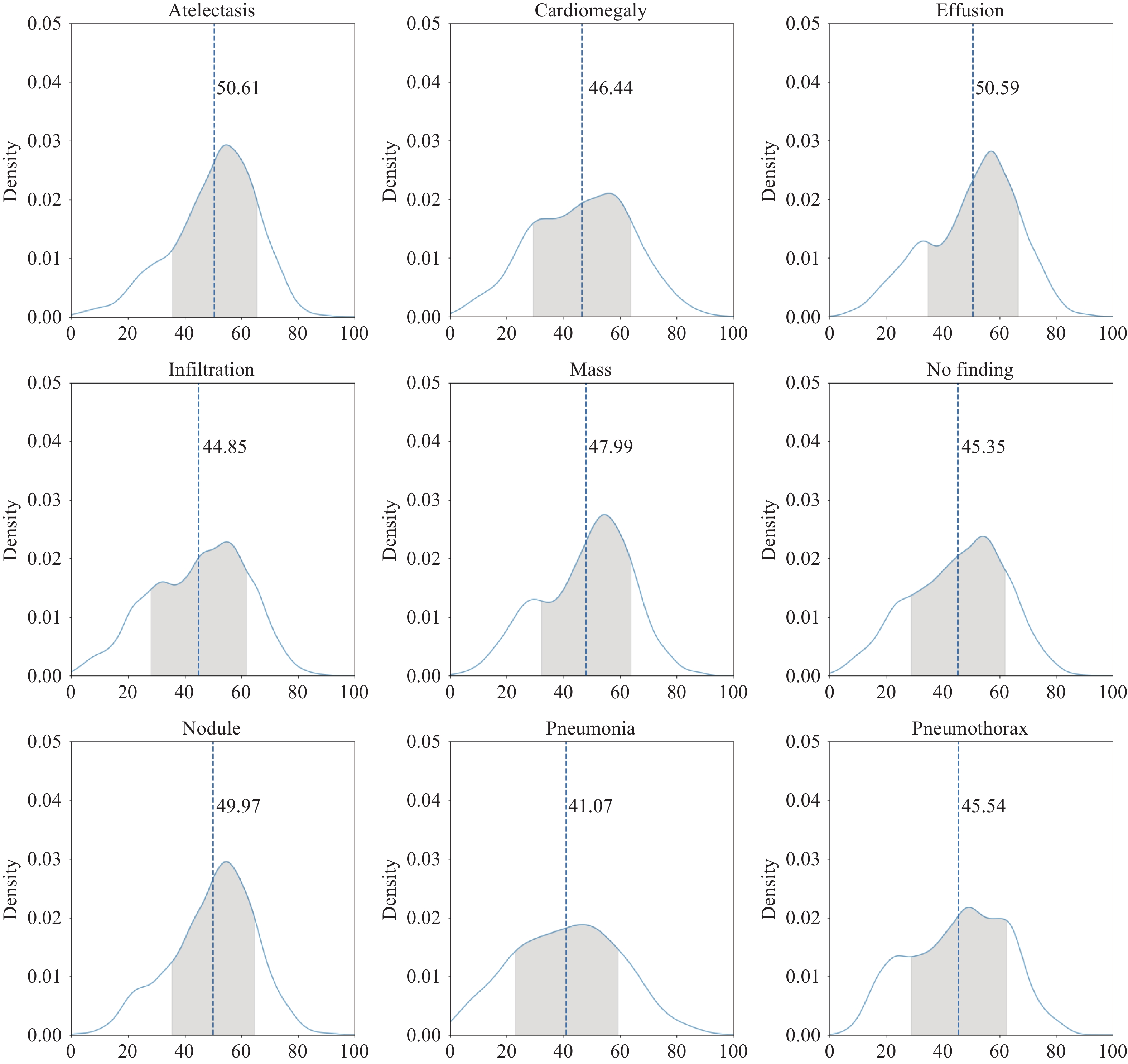
Recent advances in artificial intelligence (AI) have shown promising results in various image-based systems, improving accuracy and throughput, while reducing latency. All these factors are crucial in healthcare and have generated increased interest in this technology. However, there are also multiple challenges integrating AI in existing systems, such as poor explainability, data imbalance and bias. These challenges affect the reliability of the neural networks used in AI applications. The limitations may significantly affect the quality and cost of medical care by introducing false positive diagnosis. The false positives subsequently lead to increased stress in patients and necessitate additional testing and procedures. Lack of rich data representing all socio-economic groups can also undermine reliable decisions for underrepresented groups. Although various studies discussed techniques that may help with bias mitigation, to the best of our knowledge, no practical experiments have been conducted so far that compare different reweighting approaches using convolutional neural networks (CNN). This work focuses on in-depth explanatory analysis of chest X-ray datasets to understand and quantify the problem of class imbalance and bias. After that, various topologies of binary classifications are compared, followed by practical applications of loss reweighting techniques and comparison of their influence of privileged, underprivileged, and overall population. Experiments proved that high classification accuracy can be achieved using an efficient model topology suitable for embedded devices, making it possible to run locally without the need for cloud processing. Preliminary results showed that performance of the model for the underprivileged class can be improved by 15% if proper weighting factors are obtained and applied during the training procedure.
- Open Access
- Article
Can AI See Bias in X-ray Images?
- Kwasniewska Alicja 1, *,
- Szankin Maciej 2, *
Author Information
Received: 24 Oct 2022 | Accepted: 13 Dec 2022 | Published: 22 Dec 2022
Abstract
Graphical Abstract
Keywords
bias | computer vision | medical imaging | edge computing | artificial intelligence
References
- 1.Akter, S.; Michael, K.; Uddin, M.R.; et al, Transforming business using digital innovations: The application of AI, blockchain, cloud and data analytics. Ann. Oper. Res., 2022, 308: 7−39.
- 2.Adadi, A.; Berrada, M, Peeking inside the black-box: A survey on explainable artificial intelligence (XAI). IEEE Access, 2018, 6: 52138−52160.
- 3.Geirhos, R.; Temme, C.R.M.; Rauber, J.; et al. Generalisation in humans and deep neural networks. In
Proceedings of the 32nd International Conference on Neural Information Processing Systems ,Montréal Canada ,3 –8 December 2018 ; ACM: Montréal Canada, 2018; pp. 7549–7561. doi:10.5555/3327757.3327854 - 4.Kwaśniewska, A.; Giczewska, A.; Rumiński, J, Big data significance in remote medical diagnostics based on deep learning techniques. Task Quart., 2017, 21: 309−319.
- 5.Zhang, Z.J. Improved Adam optimizer for deep neural networks. In
2018 IEEE/ACM 26th International Symposium on Quality of Service (IWQoS) ,Banff ,AB ,Canada ,4 –6 June 2018 ; IEEE: Banff, AB, Canada, 2018; pp. 1–2. doi:10.1109/IWQoS.2018.8624183 - 6.Mikołajczyk, A.; Grochowski, M. Data augmentation for improving deep learning in image classification problem. In
2018 International Interdisciplinary PhD Workshop (IIPhDW), Swinoujście, Poland, 9–12 May 2018 ; IEEE: Swinoujście, Poland, 2018; pp. 117–122. doi:10.1109/IIPHDW.2018.8388338 - 7.Wang, L.; Han, M.; Li, X.J.; et al, Review of classification methods on unbalanced data sets. IEEE Access, 2021, 9: 64606−64628.
- 8.Gervasi, S.S.; Chen, I.Y.; Smith-McLallen, A.; et al, The potential for bias in machine learning and opportunities for health insurers to address it. Health Aff., 2022, 41: 212−218.
- 9.Chin, J.C.; Seidensticker, D.F.; Lin, A.H.; et al, Limited use of outpatient stress testing in young patients with atypical chest pain. Fed. Pract., 2018, 35: S30−S34.
- 10.Panch, T.; Mattie, H.; Atun, R, Artificial intelligence and algorithmic bias: Implications for health systems. J. Glob. Health, 2019, 9: 010318.
- 11.Sun, W.L.; Nasraoui, O.; Shafto, P, Evolution and impact of bias in human and machine learning algorithm interaction. PLoS One, 2020, 15: e0235502.
- 12.Zeimarani, B.; Costa, M.G.F.; Nurani, N.Z.; et al, Breast lesion classification in ultrasound images using deep convolutional neural network. IEEE Access, 2020, 8: 133349−133359.
- 13.Bhanumathi, V.; Sangeetha, R. CNN based training and classification of MRI brain images. In
2019 5th International Conference on Advanced Computing & Communication Systems (ICACCS) ,Coimbatore ,India ,15 –16 March 2019 ; IEEE: Coimbatore, India, 2019; pp. 129–133. doi:10.1109/ICACCS.2019.8728447 - 14.Singh, S.; Sapra, P.; Garg, A.; et al. CNN based Covid-aid: Covid 19 detection using chest X-ray. In
2021 5th International Conference on Computing Methodologies and Communication (ICCMC) ,Erode ,India ,8 –10 April 2021 ; IEEE: Erode, India, 2021; pp. 1791–1797. doi:10.1109/ICCMC51019.2021.9418407 - 15.Garud, S.; Dhage, S. Lung cancer detection using CT images and CNN algorithm. In
2021 International Conference on Advances in Computing ,Communication ,and Control (ICAC3) ,Mumbai ,India ,3 –4 December 2021 ; IEEE: Mumbai, India, 2021; pp. 1–6. doi:10.1109/ICAC353642.2021.9697158 - 16.Kwaśniewska, A.; Rumiński, J.; Rad, P. Deep features class activation map for thermal face detection and tracking. In
2017 10Th international conference on human system interactions (HSI) ,Ulsan ,Korea (South) ,17-19 July 2017 ; IEEE: Ulsan, Korea (South), 2017; pp. 41–47. doi:10.1109/HSI.2017.8004993 - 17.Xia, Y.F.; Yu, H.; Wang, F.Y, Accurate and robust eye center localization via fully convolutional networks. IEEE/CAA J. Autom. Sin., 2019, 6: 1127−1138.
- 18.Shi, J.; Fan, X.L.; Wu, J.Z.; et al. DeepDiagnosis: DNN-based diagnosis prediction from pediatric big healthcare data. In
2018 Sixth International Conference on Advanced Cloud and Big Data (CBD) ,Lanzhou ,China ,12 –15 August 2018 ; IEEE: Lanzhou, China, 2018; pp. 287–292. doi:10.1109/CBD.2018.00058 - 19.Dai, Y.; Gao, Y.F.; Liu, F.Y, TransMed: Transformers advance multi-modal medical image classification. Diagnostics, 2021, 11: 1384.
- 20.Seedat, N.; Aharonson, V.; Schlesinger, I. Automated machine vision enabled detection of movement disorders from hand drawn spirals. In
2020 IEEE International Conference on Healthcare Informatics (ICHI) ,Oldenburg ,Germany ,30 November 2020 –3 December 2020 ; IEEE: Oldenburg, Germany, 2020; pp. 1–5. doi:10.1109/ICHI48887.2020.9374333 - 21.Lakshmanaprabu, S.K.; Mohanty, S.N.; Rani S, S.; et al, Online clinical decision support system using optimal deep neural networks. Appl. Soft Comput., 2019, 81: 105487.
- 22.Kwasniewska, A.; Ruminski, J.; Szankin, M, Improving accuracy of contactless respiratory rate estimation by enhancing thermal sequences with deep neural networks. Appl. Sci., 2019, 9: 4405.
- 23.Kamala, Y.L.; Rao, K.V.S.N.R.; Josephine, B.M. Comparison and evaluation of studies on precision medicine using AI. In
2022 International Conference on Sustainable Computing and Data Communication Systems (ICSCDS) ,Erode ,India ,7 –9 April 2022 ; IEEE: Erode, India, 2022; pp. 330–335. doi:10.1109/ICSCDS53736.2022.9760969 - 24.Bohr, A.; Memarzadeh, K. The rise of artificial intelligence in healthcare applications. In
Artificial Intelligence in Healthcare ; Bohr, A.; Memarzadeh, K., Eds.; Elsevier: Amsterdam, 2020; pp. 25–60. doi:10.1016/B978-0-12-818438-7.00002-2 - 25.Szankin, M.; Kwasniewska, A.; Sirlapu, T.; et al. Long distance vital signs monitoring with person identification for smart home solutions. In
2018 40th Annual International Conference of the IEEE Engineering in Medicine and Biology Society (EMBC) ,Honolulu ,USA ,18 –21 July 2018 ; IEEE: Honolulu, USA, 2018; pp. 1558–1561. doi:10.1109/EMBC.2018.8512509 - 26.Norori, N.; Hu, Q.Y.; Aellen, F.M.; et al, Addressing bias in big data and AI for health care: A call for open science. Patterns, 2021, 2: 100347.
- 27.Ntoutsi, E.; Fafalios, P.; Gadiraju, U.; et al, Bias in data‐driven artificial intelligence systems—An introductory survey. WIREs Data Min. Knowl. Discovery, 2020, 10: e1356.
- 28.Fletcher, R.R.; Nakeshimana, A.; Olubeko, O, Addressing fairness, bias, and appropriate use of artificial intelligence and machine learning in global health. Front. Artif. Intell., 2021, 3: 561802.
- 29.Mehrabi, N.; Morstatter, F.; Saxena, N.; et al, A survey on bias and fairness in machine learning. ACM Comput. Surv., 2022, 54: 50.
- 30.Chakraborty, J.; Majumder, S.; Menzies, T. Bias in machine learning software: Why? How? What to do? In
Proceedings of the 29th ACM Joint Meeting on European Software Engineering Conference and Symposium on the Foundations of Software Engineering ,Athens Greece ,23 –28 August 2021 ; ACM: Athens Greece, 2021; pp. 429–440. doi:10.1145/3468264.3468537 - 31.Wang, X.S.; Peng, Y.F.; Lu, L.; et al. Chestx-ray8: Hospital-scale chest x-ray database and benchmarks on weakly-supervised classification and localization of common thorax diseases. In
Proceedings of the IEEE Conference on Computer Vision and Pattern Recognition ,Honolulu ,USA ,21 –26 July 2017 ; IEEE: Honolulu, USA, 2017; pp. 3462–3471. doi:10.1109/CVPR.2017.369 - 32.Kwaśniewska, A.; Rumiński, J.; Wtorek, J. The motion influence on respiration rate estimation from low-resolution thermal sequences during attention focusing tasks. In
2017 39th Annual International Conference of the IEEE Engineering in Medicine and Biology Society (EMBC) ,Jeju ,Korea (South) ,11 –15 July 2017 ; IEEE: Jeju, Korea (South), 2017; pp. 1421–1424. doi:10.1109/EMBC.2017.8037100 - 33.Dhannawat, R.; Patankar, A.B, Improvement to blind image denoising by using local pixel grouping with SVD. Procedia Comput. Sci., 2016, 79: 314−320.
- 34.Ilesanmi, A.E.; Ilesanmi, T.O, Methods for image denoising using convolutional neural network: A review. Complex Intell. Syst., 2021, 7: 2179−2198.
- 35.Bramich, D.M, A new algorithm for difference image analysis. Mon. Not. Roy. Astrono. Soc. Lett., 2008, 386: L77−L81.
- 36.Sanders, J.G.; Jenkins, R, Individual differences in hyper-realistic mask detection. Cognit. Res. Princ. Implic., 2018, 3: 24.
- 37.Bellamy, R.K.E.; Dey, K.; Hind, M.; et al, AI fairness 360: An extensible toolkit for detecting and mitigating algorithmic bias. IBM J. Res. Dev., 2019, 63: 4.
- 38.Kim, K.T.; Lee, D.R, Probabilistic parameter estimation using a Gaussian mixture density network: Application to X-ray reflectivity data curve fitting. J. Appl. Cryst., 2021, 54: 1572−1579.
- 39.Tan, M.X.; Le, Q. EfficientNet: Rethinking model scaling for convolutional neural networks. In
Proceedings of the 36th International Conference on Machine Learning ,Long Beach ,California ,9 –15 June 2019 ; PMLR: Long Beach, California, 2019; pp. 6105–6114.

How to Cite
Alicja, K.; Maciej, S. Can AI See Bias in X-ray Images?. International Journal of Network Dynamics and Intelligence 2022, 1 (1), 48–64. https://doi.org/10.53941/ijndi0101005.
RIS
BibTex
Copyright & License

Copyright (c) 2022 by the authors.
This work is licensed under a Creative Commons Attribution 4.0 International License.
Article Metrics
1,097
Article Views
33
Citations
Contents
References

 Suite 4002 Level 4, 447 Collins Street, Melbourne, Victoria 3000, Australia
 General Inquiries: info@sciltp.com