
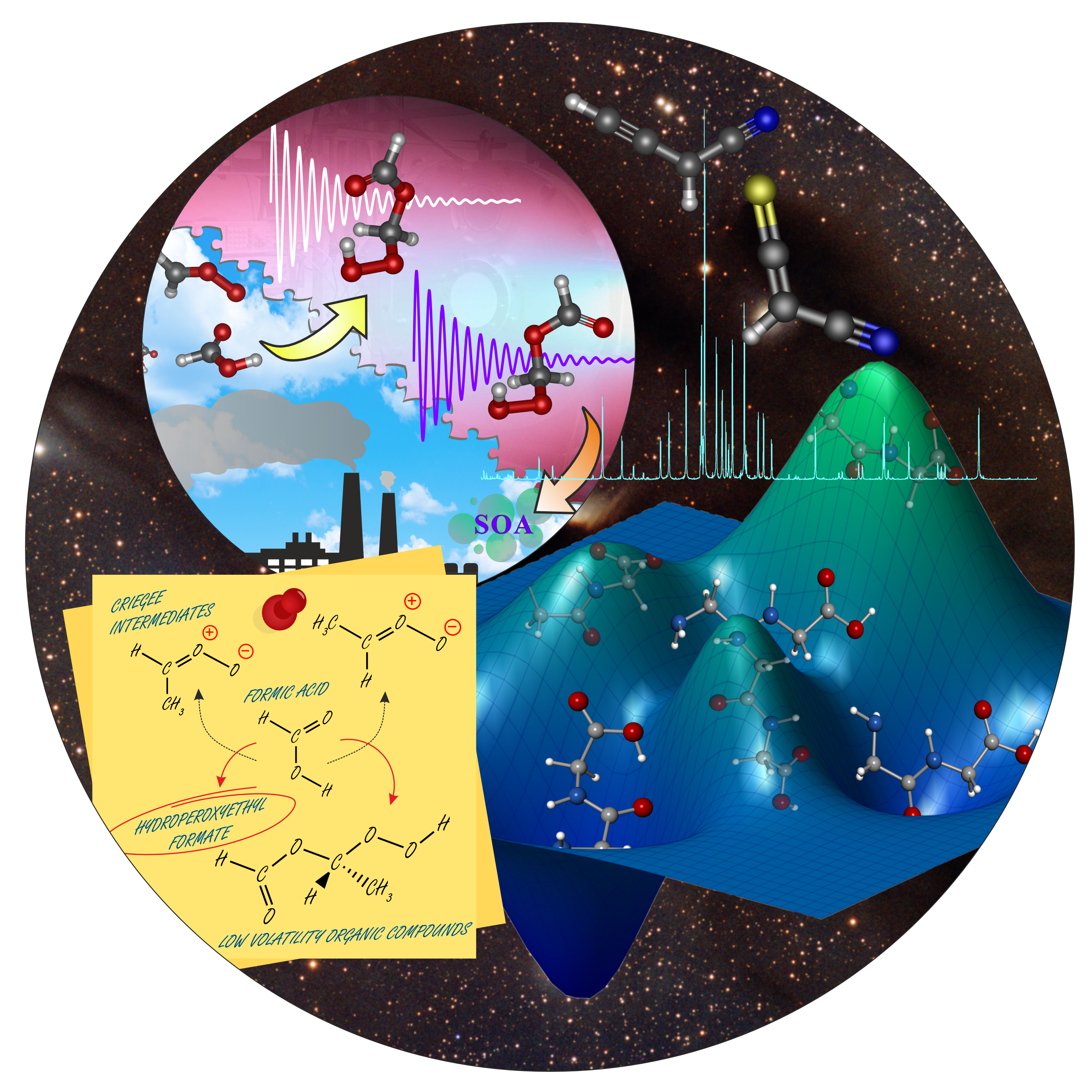
Rotational spectroscopy is one of the most outstanding techniques for investigating the structure and dynamics of gas-phase molecules. Pure rotational spectra are primarily observed in the frequency range from 300 MHz to 1 THz, spanning the centimeter to submillimeter wave regions. Over the past five decades, significant advances in radiation sources, detectors, and digital electronics have led to substantial improvements in experimental methodologies in this field. As a result, modern rotational spectroscopic measurements benefit from markedly enhanced sensitivity and resolution, enabling the study of an ever-increasing number of molecular species with growing structural complexity. These developments have expanded the scope of rotational spectroscopy from simple diatomic molecules to moderately large systems containing up to approximately 50 atoms. Rotational spectroscopy is widely applied to the investigation of molecules of atmospheric relevance and astrophysical interest, as well as biomolecules, weakly bound complexes, transient or unstable species, and metal-bearing or ionic clusters. In this work, recent laboratory spectroscopic studies employing rotational spectroscopy to probe biomolecules, atmospheric species, and molecules of astrophysical significance are reviewed. Particular attention is given to the experimental techniques employed, the strategies used to characterize the observed species, and the broader implications of the reported results.
- Open Access
- Review
Rotational Spectroscopy of Biomolecules, Atmospheric Species and Molecules with Astrophysical Interest
Author Information
Received: 31 Oct 2025 | Revised: 20 Jan 2026 | Accepted: 04 Feb 2026 | Published: 13 Jul 2026
Abstract
Graphical Abstract
References
- 1.
Wilson, E.B. Microwave Spectroscopy in Chemistry. Science 1968, 162, 59–66. https://doi.org/10.1126/science.162.3849.59.
- 2.
Gordy, W.; Cook, R.L. Microwave Molecular Spectra; Techniques of Chemistry; Wiley: New York, NY, USA, 1984.
- 3.
Vogt, N.; Demaison, J. Equilibrium Structure of Free Molecules; Lecture Notes in Chemistry; Springer International Publishing: Cham, Switzerland, 2023; Volume 111. https://doi.org/10.1007/978-3-031-36045-9.
- 4.
Marshall, S.A.; Weber, J. Microwave Stark Effect Measurement of the Dipole Moment and Polarizability of Carbonyl Sulfide. Phys. Rev. 1957, 105, 1502–1506. https://doi.org/10.1103/PhysRev.105.1502.
- 5.
Kisiel, Z.; Habdas, K. Electric Dipole Moments from Stark Effect in Supersonic Expansion: N-Propanol, n-Butanol, and n-Butyl Cyanide. Molecules 2023, 28, 1692. https://doi.org/10.3390/molecules28041692.
- 6.
Hirota, E. Rotational Isomerism and Microwave Spectroscopy. I. The Microwave Spectrum of Normal Propyl Fluoride. J. Chem. Phys. 1962, 37, 283–291. https://doi.org/10.1063/1.1701318.
- 7.
Domingos, S.R.; Pérez, C.; Medcraft, C.; et al. Flexibility Unleashed in Acyclic Monoterpenes: Conformational Space of Citronellal Revealed by Broadband Rotational Spectroscopy. Phys. Chem. Chem. Phys. 2016, 18, 16682–16689. https://doi.org/10.1039/C6CP02876D.
- 8.
Costain, C.C.; Srivastava, G.P. Study of Hydrogen Bonding. The Microwave Rotation Spectrum of CF3COOH–HCOOH. J. Chem. Phys. 1961, 35, 1903–1904. https://doi.org/10.1063/1.1732174.
- 9.
Pérez, C.; Zaleski, D.P.; Seifert, N.A.; et al. Hydrogen Bond Cooperativity and the Three-Dimensional Structures of Water Nonamers and Decamers. Angew. Chem. Int. Ed. 2014, 53, 14368–14372. https://doi.org/10.1002/anie.201407447.
- 10.
Li, W.; Pérez, C.; Steber, A.L.; et al. Evolution of Solute–Water Interactions in the Benzaldehyde-(H2O)1–6 Clusters by Rotational Spectroscopy. J. Am. Chem. Soc. 2023, 145, 4119–4128. https://doi.org/10.1021/jacs.2c11732.
- 11.
McCarthy, M.C.; Thaddeus, P. Microwave and Laser Spectroscopy of Carbon Chains and Rings. Chem. Soc. Rev. 2001, 30, 177–185. https://doi.org/10.1039/b006648f.
- 12.
Pate, B.H. Taking the Pulse of Molecular Rotational Spectroscopy. Science 2011, 333, 947–948. https://doi.org/10.1126/science.1207994.
- 13.
McGuire, B.A. 2021 Census of Interstellar, Circumstellar, Extragalactic, Protoplanetary Disk, and Exoplanetary Molecules. Astrophys. J. Suppl. Ser. 2022, 259, 30. https://doi.org/10.3847/1538-4365/ac2a48.
- 14.
Endres, C.P.; Schlemmer, S.; Schilke, P.; et al. The Cologne Database for Molecular Spectroscopy, CDMS, in the Virtual Atomic and Molecular Data Centre, VAMDC. J. Mol. Spectrosc. 2016, 327, 95–104. https://doi.org/10.1016/j.jms.2016.03.005.
- 15.
Woon, D.E. The Astrochymist. Available online: https://www.astrochymist.org/ (accessed on 20 October 2025).
- 16.
Cabezas, C.; Tang, J.; Agúndez, M.; et al. Laboratory and Astronomical Discovery of the Cyanovinyl Radical H2CCCN. Astron. Astrophys. 2023, 676, L5. https://doi.org/10.1051/0004-6361/202347385.
- 17.
Silva, W.G.D.P.; Cernicharo, J.; Schlemmer, S.; et al. Discovery of H2CCCH+ in TMC-1. Astron. Astrophys. 2023, 676, L1. https://doi.org/10.1051/0004-6361/202347174.
- 18.
Cabezas, C.; Vávra, K.; Molpeceres, G.; et al. Discovery of Propenethial (CH2CHCHS) in TMC-1 The Sulphur Analogue of Acrolein. Astron. Astrophys. 2025, 698, L24. https://doi.org/10.1051/0004-6361/202554670.
- 19.
Gupta, H.; Changala, P.B.; Cernicharo, J.; et al. Calcium Chemistry in Carbon-Rich Circumstellar Environments: The Laboratory and Astronomical Discovery of Calcium Dicarbide, CaC2. Astrophys. J. Lett. 2024, 966, L28. https://doi.org/10.3847/2041-8213/ad3336.
- 20.
Wenzel, G.; Gong, S.; Xue, C.; et al. Discovery of the Seven-Ring Polycyclic Aromatic Hydrocarbon Cyanocoronene (C24H11CN) in GOTHAM Observations of TMC-1. Astrophys. J. Lett. 2025, 984, L36. https://doi.org/10.3847/2041-8213/adc911.
- 21.
Cernicharo, J.; Cabezas, C.; Fuentetaja, R.; et al. Discovery of Two Cyano Derivatives of Acenaphthylene (C12H₈) in TMC-1 with the QUIJOTE Line Survey. Astron. Astrophys. 2024, 690, L13. https://doi.org/10.1051/0004-6361/202452196.
- 22.
Cabezas, C.; Agúndez, M.; Pérez, C.; et al. Discovery of Interstellar Phenalene (c-C13H1₀): A New Piece in the Chemical Puzzle of PAHs in Space. Astron. Astrophys. 2025, 701, 4–11. https://doi.org/10.1051/0004-6361/202556687.
- 23.
Uriarte, I.; Écija, P.; Spada, L.; et al. Potential Energy Surface of Fluoroxene: Experiment and Theory. Phys. Chem. Chem. Phys. 2016, 18, 3966–3974. https://doi.org/10.1039/C5CP06522D.
- 24.
Puzzarini, C.; Biczysko, M.; Barone, V.; et al. Accurate Molecular Structure and Spectroscopic Properties of Nucleobases: A Combined Computational-Microwave Investigation of 2-Thiouracil as a Case Study. Phys. Chem. Chem. Phys. 2013, 15, 16965–16975. https://doi.org/10.1039/c3cp52347k.
- 25.
Sutikdja, L.W.; Nguyen, H.V.L.; Jelisavac, D.; et al. Benchmarking Quantum Chemical Methods for Accurate Gas-Phase Structure Predictions of Carbonyl Compounds: The Case of Ethyl Butyrate. Phys. Chem. Chem. Phys. 2023, 25, 7688–7696. https://doi.org/10.1039/D2CP05774C.
- 26.
Alessandrini, S.; Melosso, M.; Bizzocchi, L.; et al. The Semiexperimental Approach at Work: Equilibrium Structure of Radical Species. J. Phys. Chem. A 2024, 128, 5833–5855. https://doi.org/10.1021/acs.jpca.4c01758.
- 27.
Neill, J.L.; Shipman, S.T.; Alvarez-Valtierra, L.; et al. Rotational Spectroscopy of Iodobenzene and Iodobenzene–Neon with a Direct Digital 2–8 GHz Chirped-Pulse Fourier Transform Microwave Spectrometer. J. Mol. Spectrosc. 2011, 269, 21–29. https://doi.org/10.1016/j.jms.2011.04.016.
- 28.
Park, G.B.; Field, R.W. Perspective: The First Ten Years of Broadband Chirped Pulse Fourier Transform Microwave Spectroscopy. J. Chem. Phys. 2016, 144, 200901. https://doi.org/10.1063/1.4952762.
- 29.
Patterson, D.; Schnell, M.; Doyle, J.M. Enantiomer-Specific Detection of Chiral Molecules via Microwave Spectroscopy. Nature 2013, 497, 475–477. https://doi.org/10.1038/nature12150.
- 30.
Domingos, S.R.; Pérez, C.; Schnell, M. Sensing Chirality with Rotational Spectroscopy. Annu. Rev. Phys. Chem. 2018, 69, 499–519. https://doi.org/10.1146/annurev-physchem-052516-050629.
- 31.
Domingos, S.R.; Pérez, C.; Marshall, M.D.; et al. Assessing the Performance of Rotational Spectroscopy in Chiral Analysis. Chem. Sci. 2020, 11, 10863–10870. https://doi.org/10.1039/D0SC03752D.
- 32.
Bizzocchi, L.; Lattanzi, V.; Laas, J.; et al. Accurate Sub-Millimetre Rest Frequencies for HOCO+ and DOCO+ Ions. Astron. Astrophys. 2017, 602, A34. https://doi.org/10.1051/0004-6361/201730638.
- 33.
Insausti, A.; Alonso, E.R.; Municio, S.; et al. Determining the Molecular Shape of Progesterone: Insights from Laser Ablation Rotational Spectroscopy. J. Phys. Chem. Lett. 2025, 16, 2425–2432. https://doi.org/10.1021/acs.jpclett.4c03618.
- 34.
Steber, A.L.; Li, W.; Pate, B.H.; et al. The First Stages of Nanomicelle Formation Captured in the Sevoflurane Trimer. J. Phys. Chem. Lett. 2022, 13, 3770–3775. https://doi.org/10.1021/acs.jpclett.2c00671.
- 35.
Cazzoli, G.; Dore, L. Observation of Crossing Resonances in the Hyperfine Structure of the J = 1 ← 0 Transition of DC1⁵N. J. Mol. Spectrosc. 1990, 143, 231–236. https://doi.org/10.1016/0022-2852(91)90087-Q.
- 36.
Lesarri, A.G.; Charro, M.E.; Villamañán, R.M.; et al. The Centimeter and Millimeter Microwave Spectra of Butadiene Sulfone and α,α’-D4 Butadiene Sulfone. J. Mol. Spectrosc. 1991, 149, 317–328. https://doi.org/10.1016/0022-2852(91)90288-L.
- 37.
Daly, A.M.; Kolesniková, L.; Mata, S.; et al. The Millimeter and Submillimeter Wave Spectrum of Cis-Methyl Vinyl Ether. J. Mol. Spectrosc. 2014, 298, 11–18. https://doi.org/10.1016/j.jms.2014.10.003.
- 38.
Motiyenko, R.A.; Armieieva, I.A.; Margulès, L.; et al. Rotational Spectroscopy of Malononitrile and Its Corresponding Monoisocyanide Isomer, Isocyanoacetonitrile. Astron. Astrophys. 2019, 623, A162. https://doi.org/10.1051/0004-6361/201834587.
- 39.
Ziurys, L.M.; Barclay, W.L.; Anderson, M.A.; et al. A Millimeter/Submillimeter Spectrometer for High Resolution Studies of Transient Molecules. Rev. Sci. Instrum. 1994, 65, 1517–1522. https://doi.org/10.1063/1.1144885.
- 40.
Kania, P.; Stříteská, L.; Šimečková, M.; et al. Pressure Shifts of Acetonitrile Ground State Parameters. J. Mol. Struct. 2006, 795, 209–218. https://doi.org/10.1016/j.molstruc.2006.02.025.
- 41.
Balle, T.J.; Flygare, W.H. Fabry–Perot Cavity Pulsed Fourier Transform Microwave Spectrometer with a Pulsed Nozzle Particle Source. Rev. Sci. Instrum. 1981, 52, 33–45. https://doi.org/10.1063/1.1136443.
- 42.
Travers, M.J.; McCarthy, M.C.; Kalmus, P.; et al. Laboratory Detection of the Linear Cyanopolyyne HC11N. Astrophys. J. 1996, 469, L65–L68. https://doi.org/10.1086/310254.
- 43.
Thaddeus, P.; McCarthy, M.C.; Travers, M.J.; et al. New Carbon Chains in the Laboratory and in Interstellar Space. Faraday Discuss. 1998, 109, 121–135. https://doi.org/10.1039/a800286j.
- 44.
Suma, K.; Sumiyoshi, Y.; Endo, Y. The Rotational Spectrum and Structure of the HOOO Radical. Science 2005, 308, 1885–1886. https://doi.org/10.1126/science.1112233.
- 45.
Umeki, H.; Nakajima, M.; Endo, Y. Laboratory Detections of SiC2N and SiC3N by Fourier Transform Microwave Spectroscopy. J. Chem. Phys. 2014, 141, 184303. https://doi.org/10.1063/1.4900740.
- 46.
Martinez, O.; Lattanzi, V.; Thorwirth, S.; et al. Detection of Protonated Vinyl Cyanide, CH2CHCNH+, a Prototypical Branched Nitrile Cation. J. Chem. Phys. 2013, 138, 094316. https://doi.org/10.1063/1.4793316.
- 47.
McCarthy, M.C.; Gottlieb, C.A.; Gupta, H.; et al. Laboratory and Astronomical Identification of the Negative Molecular Ion C6H⁻. Astrophys. J. 2006, 652, L141–L144. https://doi.org/10.1086/510238.
- 48.
Xu, Y.; van Wijngaarden, J.; Jäger, W. Microwave Spectroscopy of Ternary and Quaternary van Der Waals Clusters. Int. Rev. Phys. Chem. 2005, 24, 301–338. https://doi.org/10.1080/01442350500252039.
- 49.
Peña, I.; Cabezas, C.; Alonso, J.L. The Nucleoside Uridine Isolated in the Gas Phase. Angew. Chem. Int. Ed. 2015, 54, 2991–2994. https://doi.org/10.1002/anie.201412460.
- 50.
Peña, I.; Sanz, M.E.; López, J.C.; et al. Preferred Conformers of Proteinogenic Glutamic Acid. J. Am. Chem. Soc. 2012, 134, 2305–2312. https://doi.org/10.1021/ja2101449.
- 51.
Zack, L.N.; Min, J.; Harris, B.J.; et al. Fourier-Transform Microwave Spectroscopy of FeCN (X4Δi): Confirmation of the Quartet Electronic Ground State. Chem. Phys. Lett. 2011, 514, 202–206. https://doi.org/10.1016/j.cplett.2011.08.040.
- 52.
Mizoguchi, A.; Ohshima, Y.; Endo, Y. The Study for the Incipient Solvation Process of NaCl in Water: The Observation of the NaCl–(H2O)n (n = 1, 2, and 3) Complexes Using Fourier-Transform Microwave Spectroscopy. J. Chem. Phys. 2011, 135, 064307. https://doi.org/10.1063/1.3616047.
- 53.
Caminati, W.; Grabow, J.-U. Advancements in Microwave Spectroscopy. In Frontiers and Advances in Molecular Spectroscopy; Elsevier: Amsterdam, The Netherlands, 2018; pp. 569–598. https://doi.org/10.1016/B978-0-12-811220-5.00018-6.
- 54.
Brown, G.G.; Dian, B.C.; Douglass, K.O.; et al. The Rotational Spectrum of Epifluorohydrin Measured by Chirped-Pulse Fourier Transform Microwave Spectroscopy. J. Mol. Spectrosc. 2006, 238, 200–212. https://doi.org/10.1016/j.jms.2006.05.003.
- 55.
Brown, G.G.; Dian, B.C.; Douglass, K.O.; et al. A Broadband Fourier Transform Microwave Spectrometer Based on Chirped Pulse Excitation. Rev. Sci. Instrum. 2008, 79, 053103. https://doi.org/10.1063/1.2919120.
- 56.
Pérez, C.; Steber, A.L.; Rijs, A.M.; et al. Corannulene and Its Complex with Water: A Tiny Cup of Water. Phys. Chem. Chem. Phys. 2017, 19, 14214–14223. https://doi.org/10.1039/c7cp01506b.
- 57.
Prozument, K.; Park, G.B.; Shaver, R.G.; et al. Chirped-Pulse Millimeter-Wave Spectroscopy for Dynamics and Kinetics Studies of Pyrolysis Reactions. Phys. Chem. Chem. Phys. 2014, 16, 15739–15751. https://doi.org/10.1039/C3CP55352C.
- 58.
Mata, S.; Peña, I.; Cabezas, C.; et al. A Broadband Fourier-Transform Microwave Spectrometer with Laser Ablation Source: The Rotational Spectrum of Nicotinic Acid. J. Mol. Spectrosc. 2012, 280, 91–96. https://doi.org/10.1016/j.jms.2012.08.004.
- 59.
Gao, Z.; Wang, G.; Agundez, M.; et al. Rotational Spectroscopy Investigation of the Potential Interstellar Candidate Phenylketene and Its Derivative Phenylglyoxal. Mon. Not. R. Astron. Soc. 2025, 542, 1423–1429. https://doi.org/10.1093/mnras/staf1299.
- 60.
Kidwell, N.M.; Vaquero-Vara, V.; Ormond, T.K.; et al. Chirped-Pulse Fourier Transform Microwave Spectroscopy Coupled with a Flash Pyrolysis Microreactor: Structural Determination of the Reactive Intermediate Cyclopentadienone. J. Phys. Chem. Lett. 2014, 5, 2201–2207. https://doi.org/10.1021/jz5010895.
- 61.
Fatima, M.; Pérez, C.; Arenas, B.E.; et al. Benchmarking a New Segmented K-Band Chirped-Pulse Microwave Spectrometer and Its Application to the Conformationally Rich Amino Alcohol Isoleucinol. Phys. Chem. Chem. Phys. 2020, 22, 17042–17051. https://doi.org/10.1039/D0CP01141J.
- 62.
Hermanns, M.; Wehres, N.; Heyne, B.; et al. Performance of a Chirped-Pulse Fourier Transform Millimeter Wave Spectrometer in the Range of 75–110 GHz. Rev. Sci. Instrum. 2023, 94, 034705. https://doi.org/10.1063/5.0141579.
- 63.
Steber, A.L.; Janeiro, J.; Cabezas, C.; et al. Low D/H Ratio for Benzonitrile in TMC-1: Implication for the Origin of Polycyclic Aromatic Hydrocarbons in Cold Dark Clouds. Astron. Astrophys. 2025, 700, A281. https://doi.org/10.1051/0004-6361/202555552.
- 64.
Lesarri, A.; Mata, S.; López, J.C.; et al. A Laser-Ablation Molecular-Beam Fourier-Transform Microwave Spectrometer: The Rotational Spectrum of Organic Solids. Rev. Sci. Instrum. 2003, 74, 4799–4804. https://doi.org/10.1063/1.1611611.
- 65.
Alonso, J.L.; Pérez, C.; Sanz, M.E.; et al. Seven Conformers of L-Threonine in the Gas Phase: A LA-MB-FTMW Study. Phys. Chem. Chem. Phys. 2009, 11, 617–627. https://doi.org/10.1039/b810940k.
- 66.
Alonso, J.L.; López, J.C. Microwave Spectroscopy of Biomolecular Building Blocks. In Gas-Phase IR Spectroscopy and Structure of Biological Molecules; Rijs, A.M., Oomens, J., Eds.; Springer International Publishing: Cham, Switzerland, 2014; pp. 335–401. https://doi.org/10.1007/128_2014_601.
- 67.
Bermúdez, C.; Mata, S.; Cabezas, C.; et al. Tautomerism in Neutral Histidine. Angew. Chem. Int. Ed. 2014, 53, 11015–11018. https://doi.org/10.1002/anie.201405347.
- 68.
Hirahara, Y.; Ohshima, Y.; Endo, Y. Pulsed‐discharge‐nozzle Fourier‐transform Microwave Spectroscopy of HC3S(2Πᵣ) and HC4S(2Πi). J. Chem. Phys. 1994, 101, 7342–7349. https://doi.org/10.1063/1.468292.
- 69.
Cabezas, C.; Guillemin, J.-C.; Endo, Y. Fourier-Transform Microwave Spectroscopy of a Halogen Substituted Criegee Intermediate ClCHOO. J. Chem. Phys. 2016, 145, 184304. https://doi.org/10.1063/1.4967250.
- 70.
Sumiyoshi, Y.; Katsunuma, H.; Suma, K.; et al. Spectroscopy of Ar–SH and Ar–SD. I. Observation of Rotation-Vibration Transitions of a van Der Waals Mode by Double-Resonance Spectroscopy. J. Chem. Phys. 2005, 123, 054324. https://doi.org/10.1063/1.1943967.
- 71.
Endo, Y.; Kohguchi, H.; Ohshima, Y. PDN–FTMW Spectroscopy of Open-Shell Complexes. Faraday Discuss. 1994, 97, 341–350. https://doi.org/10.1039/FD9949700341.
- 72.
Webster, R.A. Neurotransmitters, Drugs and the Brain Function; Wiley: New York, NY, USA, 2001.
- 73.
Siegel, G.J. Basic Neurochemistry: Molecular, Cellular and Medical Aspects, 7th ed.; Elsevier-Academic Press: London, UK, 2006.
- 74.
Bergin, R.; Carlström, D. The Structure of the Catecholamines. II. The Crystal Structure of Dopamine Hydrochloride. Acta Crystallogr. B 1968, 24, 1506–1510. https://doi.org/10.1107/S0567740868004553.
- 75.
Giesecke, J. Refinement of the Structure of Dopamine Hydrochloride. Acta Crystallogr. B 1980, 36, 178–181. https://doi.org/10.1107/S0567740880002798.
- 76.
Bustard, T.M.; Egan, R.S. The Conformation of Dopamine Hydrochloride. Tetrahedron 1971, 27, 4457–4469. https://doi.org/10.1016/S0040-4020(01)98158-X.
- 77.
Šolmajer, P. Conformational Study of Catecholamines in Solution. Z. Naturforsch. C 1983, 38, 758–762. https://doi.org/10.1515/znc-1983-9-1016.
- 78.
Cabezas, C.; Varela, M.; Peña, I.; et al. The Microwave Spectrum of Neurotransmitter Serotonin. Phys. Chem. Chem. Phys. 2012, 14, 13618–13623. https://doi.org/10.1039/c2cp42654d.
- 79.
Cabezas, C.; Varela, M.; Peña, I.; et al. The Conformational Locking of Asparagine. Chem. Commun. 2012, 48, 5934–5936. https://doi.org/10.1039/c2cc32109b.
- 80.
Cabezas, C.; Varela, M.; Alonso, J.L. The Structure of the Elusive Simplest Dipeptide Gly-Gly. Angew. Chem. Int. Ed. 2017, 56, 6420–6425. https://doi.org/10.1002/anie.201702425.
- 81.
Godfrey, P.D.; Brown, R.D.; Rodgers, F.M. The Missing Conformers of Glycine and Alanine: Relaxation in Seeded Supersonic Jets. J. Mol. Struct. 1996, 376, 65–81. https://doi.org/10.1016/0022-2860(95)09065-7.
- 82.
Blanco, S.; Lesarri, A.; López, J.C.; et al. The Gas-Phase Structure of Alanine. J. Am. Chem. Soc. 2004, 126, 11675–11683. https://doi.org/10.1021/ja048317c.
- 83.
Ruoff, R.S.; Klots, T.D.; Emilsson, T.; et al. Relaxation of Conformers and Isomers in Seeded Supersonic Jets of Inert Gases. J. Chem. Phys. 1990, 93, 3142–3150. https://doi.org/10.1063/1.458848.
- 84.
Atkinson, R.; Arey, J. Atmospheric Degradation of Volatile Organic Compounds. Chem. Rev. 2003, 103, 4605–4638. https://doi.org/10.1021/cr0206420.
- 85.
Criegee, R.; Wenner, G. Die Ozonisierung Des 9,10-Oktalins. Justus Liebigs Ann. Chem. 1949, 564, 9–15. https://doi.org/10.1002/jlac.19495640103.
- 86.
Criegee, R. Mechanism of Ozonolysis. Angew. Chem. Int. Ed. Engl. 1975, 14, 745–752. https://doi.org/10.1002/anie.197507451.
- 87.
Taatjes, C.A.; Meloni, G.; Selby, T.M.; et al. Direct Observation of the Gas-Phase Criegee Intermediate (CH2OO). J. Am. Chem. Soc. 2008, 130, 11883–11885. https://doi.org/10.1021/ja804165q.
- 88.
Osborn, D.L.; Taatjes, C.A. The Physical Chemistry of Criegee Intermediates in the Gas Phase. Int. Rev. Phys. Chem. 2015, 34, 309–360. https://doi.org/10.1080/0144235X.2015.1055676.
- 89.
Lee, Y.-P. Perspective: Spectroscopy and Kinetics of Small Gaseous Criegee Intermediates. J. Chem. Phys. 2015, 143, 020901. https://doi.org/10.1063/1.4923165.
- 90.
Cabezas, C.; Nakajima, M.; Endo, Y. Criegee Intermediates Meet Rotational Spectroscopy. Int. Rev. Phys. Chem. 2020, 39, 351–384. https://doi.org/10.1080/0144235X.2020.1782651.
- 91.
Taatjes, C.A. Criegee Intermediates: What Direct Production and Detection Can Teach Us About Reactions of Carbonyl Oxides. Annu. Rev. Phys. Chem. 2017, 68, 183–207. https://doi.org/10.1146/annurev-physchem-052516-050739.
- 92.
Lin, J.-M.; Chao, W. Structure-Dependent Reactivity of Criegee Intermediates Studied with Spectroscopic Methods. Chem. Soc. Rev. 2017, 46, 7483–7497. https://doi.org/10.1039/c7cs00336f.
- 93.
Stephenson, T.A.; Lester, M.I. Unimolecular Decay Dynamics of Criegee Intermediates: Energy-Resolved Rates, Thermal Rates, and Their Atmospheric Impact. Int. Rev. Phys. Chem. 2020, 39, 1–33. https://doi.org/10.1080/0144235X.2020.1688530.
- 94.
Lester, M.I.; Klippenstein, S.J. Unimolecular Decay of Criegee Intermediates to OH Radical Products: Prompt and Thermal Decay Processes. Acc. Chem. Res. 2018, 51, 978–985. https://doi.org/10.1021/acs.accounts.8b00077.
- 95.
Chhantyal-Pun, R.; Khan, M.A.H.; Taatjes, C.A.; et al. Criegee Intermediates: Production, Detection and Reactivity. Int. Rev. Phys. Chem. 2020, 39, 385–424. https://doi.org/10.1080/0144235X.2020.1792104.
- 96.
Nakajima, M.; Endo, Y. Communication: Spectroscopic Characterization of an Alkyl Substituted Criegee Intermediate Syn -CH3CHOO through Pure Rotational Transitions. J. Chem. Phys. 2014, 140, 011101. https://doi.org/10.1063/1.4861494.
- 97.
Nakajima, M.; Yue, Q.; Endo, Y. Fourier-Transform Microwave Spectroscopy of an Alkyl Substituted Criegee Intermediate Anti-CH3CHOO. J. Mol. Spectrosc. 2015, 310, 109–112. https://doi.org/10.1016/j.jms.2014.11.004.
- 98.
Kuwata, K.T. Computational Modeling of the Conformation-Dependent Atmospheric Reactivity of Criegee Intermediates. J. Phys. Chem. A 2024, 128, 7331–7345. https://doi.org/10.1021/acs.jpca.4c04517.
- 99.
Chung, C.-A.; Kao, T.-Y.; Lee, Y.-P. Conformation-Specific Reactions of Criegee Intermediates. J. Chem. Phys. 2025, 163, 130901. https://doi.org/10.1063/5.0278251.
- 100.
Liu, F.; Beames, J.M.; Green, A.M.; et al. UV Spectroscopic Characterization of Dimethyl- and Ethyl-Substituted Carbonyl Oxides. J. Phys. Chem. A 2014, 118, 2298–2306. https://doi.org/10.1021/jp412726z.
- 101.
Fang, Y.; Liu, F.; Klippenstein, S.J.; et al. Direct Observation of Unimolecular Decay of CH3CH2CHOO Criegee Intermediates to OH Radical Products. J. Chem. Phys. 2016, 145, 044312. https://doi.org/10.1063/1.4958992.
- 102.
Erlekam, U.; Frankowski, M.; von Helden, G.; et al. Cold Collisions Catalyse Conformational Conversion. Phys. Chem. Chem. Phys. 2007, 9, 3786–3789. https://doi.org/10.1039/b703571c.
- 103.
Cabezas, C.; Guillemin, J.-C.; Endo, Y. Conformational Analysis of Ethyl-Substituted Criegee Intermediate by FTMW Spectroscopy. J. Chem. Phys. 2016, 145, 044312. https://doi.org/10.1063/1.4972017.
- 104.
Cabezas, C.; Guillemin, J.-C.; Endo, Y. Conformational Preferences of Criegee Intermediates: Isopropyl Substituted Carbonyl Oxide. J. Chem. Phys. 2018, 149, 084309. https://doi.org/10.1063/1.5045768.
- 105.
Khan, M.A.H.; Percival, C.J.; Caravan, R.L.; et al. Criegee Intermediates and Their Impacts on the Troposphere. Environ. Sci. Process. Impacts 2018, 20, 437–453. https://doi.org/10.1039/c7em00585g.
- 106.
Chhantyal-Pun, R.; Rotavera, B.; McGillen, M.R.; et al. Criegee Intermediate Reactions with Carboxylic Acids: A Potential Source of Secondary Organic Aerosol in the Atmosphere. ACS Earth Space Chem. 2018, 2, 833–842. https://doi.org/10.1021/acsearthspacechem.8b00069.
- 107.
Welz, O.; Eskola, A.J.; Sheps, L.; et al. Rate Coefficients of C1 and C2 Criegee Intermediate Reactions with Formic and Acetic Acid near the Collision Limit: Direct Kinetics Measurements and Atmospheric Implications. Angew. Chem. Int. Ed. 2014, 53, 4547–4550. https://doi.org/10.1002/anie.201400964.
- 108.
Berndt, T.; Herrmann, H.; Kurtén, T. Direct Probing of Criegee Intermediates from Gas-Phase Ozonolysis Using Chemical Ionization Mass Spectrometry. J. Am. Chem. Soc. 2017, 139, 13387–13392. https://doi.org/10.1021/jacs.7b05849.
- 109.
Aplincourt, P.; Ruiz-López, M.F. Theoretical Study of Formic Acid Anhydride Formation from Carbonyl Oxide in the Atmosphere. J. Phys. Chem. A 2000, 104, 380–388. https://doi.org/10.1021/jp9928208.
- 110.
Long, B.; Cheng, J.-R.; Tan, X.; et al. Theoretical Study on the Detailed Reaction Mechanisms of Carbonyl Oxide with Formic Acid. J. Mol. Struct. THEOCHEM 2009, 916, 159–167. https://doi.org/10.1016/j.theochem.2009.09.028.
- 111.
Vereecken, L. The Reaction of Criegee Intermediates with Acids and Enols. Phys. Chem. Chem. Phys. 2017, 19, 28630–28640. https://doi.org/10.1039/c7cp05132h.
- 112.
Cabezas, C.; Endo, Y. The Criegee Intermediate-Formic Acid Reaction Explored by Rotational Spectroscopy. Phys. Chem. Chem. Phys. 2019, 21, 18059–18064. https://doi.org/10.1039/C9CP03001H.
- 113.
Porterfield, J.P.; Lee, K.L.K.; Dell’Isola, V.; et al. Characterization of the Simplest Hydroperoxide Ester, Hydroperoxymethyl Formate, a Precursor of Atmospheric Aerosols. Phys. Chem. Chem. Phys. 2019, 21, 18065–18070. https://doi.org/10.1039/C9CP03466H.
- 114.
Chung, C.-A.; Su, J.W.; Lee, Y.-P. Detailed Mechanism and Kinetics of the Reaction of Criegee Intermediate CH2OO with HCOOH Investigated via Infrared Identification of Conformers of Hydroperoxymethyl Formate and Formic Acid Anhydride. Phys. Chem. Chem. Phys. 2019, 21, 21445–21455. https://doi.org/10.1039/C9CP04168K.
- 115.
Kumar, M.; Busch, D.H.; Subramaniam, B.; et al. Barrierless Tautomerization of Criegee Intermediates via Acid Catalysis. Phys. Chem. Chem. Phys. 2014, 16, 22968–22973. https://doi.org/10.1039/C4CP03065F.
- 116.
Liu, F.; Fang, Y.; Kumar, M.; et al. Direct Observation of Vinyl Hydroperoxide. Phys. Chem. Chem. Phys. 2015, 17, 20490–20494. https://doi.org/10.1039/C5CP02917A.
- 117.
Cabezas, C.; Endo, Y. Observation of Hydroperoxyethyl Formate from the Reaction between the Methyl Criegee Intermediate and Formic Acid. Phys. Chem. Chem. Phys. 2020, 22, 446–454. https://doi.org/10.1039/C9CP05030B.
- 118.
Dunham, T.J. Interstellar Neutral Potassium and Neutral Calcium. Publ. Astron. Soc. Pac. 1937, 49, 26–27. https://doi.org/10.1086/124759.
- 119.
Adams, W.S. Some Results with the COUDÉ Spectrograph of the Mount Wilson Observatory. Astrophys. J. 1941, 93, 11–23. https://doi.org/10.1086/144237.
- 120.
Douglas, A.E.; Herzberg, G. Note on CH+ in Interstellar Space and in the Laboratory. Astrophys. J. 1941, 94, 381–383. https://doi.org/10.1086/144342.
- 121.
Cernicharo, J.; Guélin, M. Metals in IRC+10216: Detection of NaCl, AlCl, and KCl, and Tentative Detection of AlF. Astron. Astrophys. 1987, 183, L10–L12.
- 122.
Kawaguchi, K.; Kagi, E.; Hirano, T.; et al. Laboratory Spectroscopy of MgNC—The First Radioastronomical Identification of Mg-Bearing Molecule. Astrophys. J. 1993, 406, L39–L42. https://doi.org/10.1086/186781.
- 123.
Ziurys, L.M.; Apponi, A.J.; Guelin, M.; et al. Detection of MgCn in IRC + 10216: A New Metal-Bearing Free Radical. Astrophys. J. 1995, 445, L47–L50. https://doi.org/10.1086/187886.
- 124.
Cabezas, C.; Cernicharo, J.; Alonso, J.L.; et al. Laboratory and Astronomical Discovery of Hydromagnesium Isocyanide. Astrophys. J. 2013, 775, 133. https://doi.org/10.1088/0004-637X/775/2/133.
- 125.
Cabezas, C.; Mata, S.; Daly, A.M.; et al. LA-MB-FTMW Spectroscopy of AlCCH and AgCCH with a Discharge Source. J. Mol. Spectrosc. 2012, 278, 5–8. https://doi.org/10.1016/j.jms.2012.07.003.
- 126.
Gronowski, M.; Kołos, R. Ab Initio Studies of the Structure and Spectroscopy of CHNMg Stoichiometry Molecules and van Der Waals Complexes. J. Phys. Chem. A 2013, 117, 4455–4461. https://doi.org/10.1021/jp312861s.
- 127.
Cernicharo, J.; Cabezas, C.; Pardo, J.R.; et al. Discovery of Two New Magnesium-Bearing Species in IRC+10216: MgC3N and MgC4H. Astron. Astrophys. 2019, 630, L2. https://doi.org/10.1051/0004-6361/201936372.
- 128.
Pardo, J.R.; Cabezas, C.; Fonfría, J.P.; et al. Magnesium Radicals MgC₅N and MgC6H in IRC+10216. Astron. Astrophys. 2021, 652, L13. https://doi.org/10.1051/0004-6361/202141671.
- 129.
Cernicharo, J.; Cabezas, C.; Pardo, J.R.; et al. The Magnesium Paradigm in IRC+10216: Discovery of MgC4H+, MgC3N+, MgC6H+, and MgC₅N+. Astron. Astrophys. 2023, 672, L3. https://doi.org/10.1051/0004-6361/202346467.
- 130.
Changala, P.B.; Gupta, H.; Cernicharo, J.; et al. Laboratory and Astronomical Discovery of Magnesium Dicarbide, MgC2. Astrophys. J. Lett. 2022, 943, L14. https://doi.org/10.3847/2041-8213/aca144.
- 131.
Cabezas, C.; Barrientos, C.; Largo, A.; et al. Alkaline and Alkaline-Earth Cyanoacetylides: A Combined Theoretical and Rotational Spectroscopic Investigation. J. Chem. Phys. 2019, 151, 054312. https://doi.org/10.1063/1.5110670.
- 132.
Cabezas, C.; Pardo, J.R.; Agúndez, M.; et al. Discovery of Two Metallic Cyanoacetylides in IRC+10216: HMgCCCN and NaCCCN. Astron. Astrophys. 2023, 672, L12. https://doi.org/10.1051/0004-6361/202346462.
- 133.
Pardo, J.R.; Cernicharo, J.; Tercero, B.; et al. Ultra-Deep 31.0–50.3 GHz Spectral Survey of IRC+10216. Astron. Astrophys. 2022, 658, A39. https://doi.org/10.1051/0004-6361/202142263.
- 134.
Cernicharo, J.; Agúndez, M.; Kaiser, R.I.; et al. Discovery of Benzyne, o-C6H4, in TMC-1 with the QUIJOTE Line Survey. Astron. Astrophys. 2021, 652, L9. https://doi.org/10.1051/0004-6361/202141660.
- 135.
Cabezas, C.; Agúndez, M.; Marcelino, N.; et al. Discovery of a New Molecular Ion, HC₇NH+, in TMC-1. Astron. Astrophys. 2022, 659, L8. https://doi.org/10.1051/0004-6361/202142972.
- 136.
Cernicharo, J.; Fuentetaja, R.; Cabezas, C.; et al. Discovery of Five Cyano Derivatives of Propene with the QUIJOTE Line Survey. Astron. Astrophys. 2022, 663, L5. https://doi.org/10.1051/0004-6361/202244255.
- 137.
Cabezas, C.; Agúndez, M.; Fuentetaja, R.; et al. Discovery of the Cyclic C₅H Radical in TMC-1. Astron. Astrophys. 2022, 663, L2. https://doi.org/10.1051/0004-6361/202244063.
- 138.
Cernicharo, J.; Agúndez, M.; Kaiser, R.I.; et al. Discovery of Two Isomers of Ethynyl Cyclopentadiene in TMC-1: Abundances of CCH and CN Derivatives of Hydrocarbon Cycles. Astron. Astrophys. 2021, 655, L1. https://doi.org/10.1051/0004-6361/202142226.
- 139.
Cabezas, C.; Agúndez, M.; Marcelino, N.; et al. Discovery of the Elusive Thioketenylium, HCCS+, in TMC-1. Astron. Astrophys. 2022, 657, L10. https://doi.org/10.1051/0004-6361/202142815.
- 140.
Cernicharo, J.; Cabezas, C.; Endo, Y.; et al. Space and Laboratory Discovery of HC3S+. Astron. Astrophys. 2021, 646, L3. https://doi.org/10.1051/0004-6361/202040013.
- 141.
Cernicharo, J.; Cabezas, C.; Agúndez, M.; et al. More Sulphur in TMC-1: Discovery of the NC3S and HC3S Radicals with the QUIJOTE Line Survey. Astron. Astrophys. 2024, 688, L13. https://doi.org/10.1051/0004-6361/202451256.
- 142.
Cernicharo, J.; Cabezas, C.; Endo, Y.; et al. The Sulphur Saga in TMC-1: Discovery of HCSCN and HCSCCH. Astron. Astrophys. 2021, 650, L14. https://doi.org/10.1051/0004-6361/202141297.
- 143.
Esplugues, G.; Agúndez, M.; Molpeceres, G.; et al. First Detection of HS2 in a Cold Dark Cloud. Astron. Astrophys. 2025, 699, L2. https://doi.org/10.1051/0004-6361/202555384.
- 144.
Cabezas, C.; Agúndez, M.; Endo, Y.; et al. Laboratory and Astronomical Discovery of Cyanothioketene, NCCHCS, in the Cold Starless Core TMC-1. Astron. Astrophys. 2024, 686, L3. https://doi.org/10.1051/0004-6361/202450323.
- 145.
Cabezas, C.; Agúndez, M.; Marcelino, N.; et al. Discovery of Interstellar 3-Cyano Propargyl Radical, CH2CCCN. Astron. Astrophys. 2021, 654, L9. https://doi.org/10.1051/0004-6361/202142156.
- 146.
Su, H.-F.; Kaiser, R.I.; Chang, A.H.H. A Theoretical Study for the Reaction of Vinyl Cyanide C2H3CN(X1A′) with the Ground State Carbon Atom C(3P) in Cold Molecular Clouds. J. Chem. Phys. 2005, 122, 074320. https://doi.org/10.1063/1.1846672.
- 147.
Guo, Y.; Gu, X.; Zhang, F.; et al. A Crossed Beams Study of the Reaction of Carbon Atoms, C(3Pⱼ), with Vinyl Cyanide, C2H3CN(X1A′)—Investigating the Formation of Cyano Propargyl Radicals. Phys. Chem. Chem. Phys. 2006, 8, 5454–5461. https://doi.org/10.1039/B611936K.
- 148.
Watson, J.K.G. Determination of Centrifugal Distortion Coefficients of Asymmetric‐Top Molecules. J. Chem. Phys. 1967, 46, 1935–1949. https://doi.org/10.1063/1.1840957.
- 149.
Hirota, E. High-Resolution Spectroscopy of Transient Molecules; Springer Series in Chemical Physics; Springer: Berlin/Heidelberg, Germany, 1985; Volume 40. https://doi.org/10.1007/978-3-642-82477-7.
- 150.
Cabezas, C.; Nakajima, M.; Chang, C.H.; et al. Laboratory Observation and Astronomical Search of 1-Cyano Propargyl Radical, HCCCHCN. Astron. Astrophys. 2022, 657, A24. https://doi.org/10.1051/0004-6361/202142188.
- 151.
Cabezas, C.; Agúndez, M.; Marcelino, N.; et al. Identification of the Interstellar 1-Cyano Propargyl Radical (HCCCHCN) in TMC-1. Astron. Astrophys. 2025, 693, L14. https://doi.org/10.1051/0004-6361/202453419.

This work is licensed under a Creative Commons Attribution 4.0 International License.

 Suite 4002 Level 4, 447 Collins Street, Melbourne, Victoria 3000, Australia
 General Inquiries: info@sciltp.com