
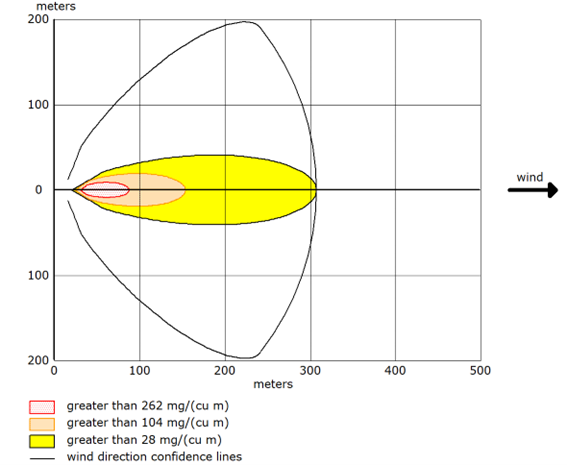
The interest in risk analysis and in the effects of chemical releases on the environment and people has steadily increased in recent years, both in the industry and academia. The classical approach in the related courses is essentially based on the teaching of the main theoretical aspects, and the subsequent application by the professor to a series of examples, among which there can be real cases involving major accidents. A somewhat different approach consists in organizing several sessions in such a way that it is a team of students who will analyse a case. The professor will give the required information to them, but they will have to manage to solve the case and to answer a set of questions, as if they were an expert team. Usually, the result is quite satisfactory and enriching for both the students and the professor.
- Open Access
- Methodology
The Analysis of Real Accidents as a Didactic Tool: The Case of a Toxic Cloud
- Juan A. Vilchez 1,
- Oriol Casal 2,
- Eulàlia Planas 2,
- Joaquim Casal 2, *
Author Information
Received: 05 Jul 2025 | Revised: 30 Jul 2025 | Accepted: 07 Aug 2025 | Published: 11 Aug 2025
Abstract
Graphical Abstract
Keywords
risk analysis | toxic clouds | environmental impact | teaching
References
- 1.Eskenazi, B.; Warner, M.; Brambilla, P.; et al. The Seveso accident: A look at 40 years of health research and beyond. Environ. Int. 2018, 121, 71–84. https://doi.org/10.1016/j.envint.2018.08.051.
- 2.Buckley, R.L.; Hunter, C.H.; Werth, D.W.; et al. A case study of chlorine transport and fate following a large accidental release. Atmos. Environ. 2012, 62, 184–198. https://doi.org/10.1016/j.atmosenv.2012.08.025.
- 3.Stolecka, K.; Rusin, A. Hazards associated with syngas storage and mitigation measures. E3S Web Conf. 2019, 137, 01022. https://doi.org/10.1051/e3sconf/201913701022.
- 4.Fabiano, B.; Pettinato, M.; Currò, F; et al. Safety Concerns for Ammonia as a Green Energy Vector and the Role of Spray Curtains for Its Accidental Release Mitigation. Energies 2025, 18, 3412. https://doi.org/10.3390/en18133412.
- 5.Cao, C.; Wen, B.; Fang, Y.; et al. A comprehensive comparison of green ammonia and green methanol from a full chain: Production, transportation, storage and utilization. Carbon Neutral Syst. 2025, 1, 8. https://doi.org/10.1007/s44438-025-00009-9.
- 6.Abara, W.; Wilson, S.; Vena, J.; et al. Engaging a chemical disaster community: Lessons from Graniteville. Int. J. Environ. Res. Public Health 2014, 11, 5684–5697. https://doi.org/10.3390/ijerph110605684.
- 7.Kletz, T.; Amyotte, P. What Went Wrong? 6th ed.; Butterworth-Heinemann: Oxford, UK, 2019.
- 8.Vílchez, J.A.; Pérez-Alavedra, F.X.; Cisteró, J; et al. The problem of fire in ships transporting chemicals. In Proceedings of the 9th Symposium on Loss Prevention and Safety Promotion in the Process Industry; AEIC: Barcelona, Spain, 1998; pp. 1047–1056.
- 9.International Maritime Organization (IMO). IMDG Code—2024 Edition: International Maritime Dangerous Goods Code; IMO: London, UK, 2024. https://doi.org/10.62454/KO200S.
- 10.Planas-Cuchí, E.; Vílchez, J.A.; Pérez-Alavedra, X.; et al. Effects of fire on a container storage system: Case study. J. Loss Prev. Process Ind. 2019, 13, 47–56.
- 11.NIOSH (National Institute for Occupational Safety and Health). IDLH Values. Available online: https://www.cdc.gov/niosh/idlh/intridl4.html (accessed on 12 October 2024).
- 12.American Industrial Hygiene Association (AIHA). Emergency Response Planning Guidelines. In ERPG/WEEL Handbook; AIHA: Falls Church, VA, USA, 2016. Available online: https://downloads.regulations.gov/FAA-2019-0229-0021/attachment_1.pdf (accessed on 22 October 2024).
- 13.U.S. Environmental Protection Agency (EPA). Acute Exposure Guideline Levels for Airborne Chemicals (AEGL). 2018. Available online: https://www.epa.gov/aegl/access-acute-exposure-guideline-levels-aegls-values#chemicals (accessed on 22 October 2024).
- 14.U.S. Department of Energy (DOE). Protective Action Criteria (PAC). 2025. Available online: https://edms3.energy.gov/pac#/ (accessed on 12 February 2025).
- 15.U.S. Environmental Protection Agency (EPA). Risk Management Program Guidance for Offsite Consequence Analysis (Report EPA 550-B-99-009, Appendix B). 2009. Available online: https://www.epa.gov/rmp/rmp-guidance-offsite-consequence-analysis (accessed on 15 November 2024).
- 16.Crowl, D.A.; Louvar, J.F. Chemical Process Safety: Fundamentals with Applications, 4th ed.; Pearson: London, UK, 2019.
- 17.Prugh, R.W. Quantitative evaluation of inhalation toxicity hazards. In Proceedings of the 29th Loss Prevention Symposium; AIChE: New York, NY, USA, 1995.
- 18.Casal, J. Evaluation of the Effects and Consequences of Major Accidents in Industrial Plants, 2nd ed.; Elsevier: Amsterdam, The Netherlands, 2018.
- 19.NOAA (National Oceanic and Atmospheric Administration). ALOHA Software (Version 5.4.7, Sept 2016). U.S. Department of Commerce. 2016. Available online: https://www.epa.gov/cameo/aloha-software (accessed on 15 January 2025).

How to Cite
Vilchez, J. A.; Casal, O.; Planas, E.; Casal, J. The Analysis of Real Accidents as a Didactic Tool: The Case of a Toxic Cloud. Science for Energy and Environment 2025, 2 (3), 10. https://doi.org/10.53941/see.2025.100010.
RIS
BibTex
Copyright & License

Copyright (c) 2025 by the authors.
This work is licensed under a Creative Commons Attribution 4.0 International License.
Article Metrics
193
Article Views
0
Citations
Contents
References

 Suite 4002 Level 4, 447 Collins Street, Melbourne, Victoria 3000, Australia
 General Inquiries: info@sciltp.com