
Integrated Building Envelopes and Energy Systems for Climate-Responsive, Low-Carbon Buildings
Introduction
Buildings are increasingly required to deliver low-carbon performance while maintaining thermal, visual, and indoor environmental quality under more variable and extreme climatic conditions. This Research Topic focuses on integrated approaches that connect building envelopes, energy systems, passive and active strategies, and reliable performance simulation. Rather than treating the envelope and mechanical systems as isolated components, the topic invites studies that examine how façade design, envelope assemblies, shading, ventilation, heating and cooling systems, renewables, and controls interact across design, retrofit, and operation.
The Research Topic, “Integrated Building Envelopes and Energy Systems for Climate-Responsive, Low-Carbon Buildings”, is intended to bridge architectural engineering, building physics, sustainable construction technologies, and data-informed performance assessment. It welcomes contributions on climate-responsive envelope design, envelope-HVAC-renewable integration, building energy systems, indoor environmental quality, low-carbon retrofit, and simulation-supported decision-making. Particular attention will be given to studies that combine physical understanding with measured data, calibrated simulation, uncertainty analysis, life-cycle thinking, and future climate scenarios.
The Research Topic welcomes Original Research Articles, Review Articles, Case Studies, Methodological Papers, Perspectives, and Short Communications with strong methodological or empirical contributions. Collectively, the Research Topic aims to advance robust, climate-responsive, and low-carbon building solutions that are technically credible, environmentally meaningful, and transferable across different building types and climatic contexts.
The Topic Themes
This Research Topic welcomes submissions on, but is not limited to, the following areas:
- Climate-responsive building envelope design and adaptive façade technologies
- Envelope-HVAC-renewable energy system integration for low-carbon buildings
- Passive, active, and hybrid strategies for thermal regulation and energy reduction
- Low-carbon, circular, bio-based, and high-performance envelope materials and systems
- Building physics, dynamic thermal behaviour, indoor environmental quality, and occupant comfort
- Solar-responsive design, shading systems, daylighting, and thermo-visual performance
- Deep energy retrofit, nearly zero-energy buildings, and climate-neutral building stocks
- Building performance simulation, model calibration, validation, and uncertainty quantification
- Measured-data quality control, real-time simulation, digital twins, and data-informed operation
- Future weather scenarios, overheating risk, climate resilience, and performance robustness
Academic Editors

- Dr. Haoxiang Zhan (haoxiang.zhan@sz.tsinghua.edu.cn)
Affiliation: Institute of Future Human Habitats, Tsinghua University, Shenzhen, China
Official website: https://orcid.org/0000-0003-1992-4126
Dr. Haoxiang Zhan is a Researcher at the Institute of Future Human Habitats, Tsinghua University, Shenzhen, China. His research focuses on building energy systems, phase change materials, demand-responsive cooling, building thermal flexibility, and urban heat mitigation. His work addresses the integration of passive thermal storage, active cooling systems, operational control, and climate-responsive design to improve building energy performance, energy flexibility, and urban environmental resilience. His broader academic interests include low-carbon building technologies, building environmental performance, architectural engineering, urban climate adaptation, and climate-responsive built environments. He is particularly interested in interdisciplinary research that connects building physics, energy systems, thermal comfort, and practical decarbonisation strategies for buildings and cities.
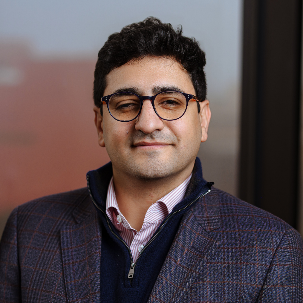
- Dr. Fazel Khayatian (fazel.khayatian@utsa.edu)
Affiliation: School of Architecture and Planning, University of Texas at San Antonio, San Antonio, Texas, United States
Official website: https://klesse.utsa.edu/faculty/profiles/khayatian-fazel.html
Dr. Fazel Khayatian is an Assistant Professor of Architecture and Planning at the University of Texas at San Antonio. He received his Ph.D. from Politecnico di Milano and works at the intersection of architectural engineering, building performance assessment, life-cycle thinking, and trustworthy data-informed methods. His research background includes building energy model calibration, measurement resolution, uncertainty, performance simulation, and environmental life-cycle assessment of buildings. He also leads work related to reliable and interpretable approaches for architectural engineering. His expertise is directly relevant to the methodological side of this Research Topic. Climate-responsive and low-carbon building solutions require not only new envelope and system concepts but also credible modelling, measured data, calibration, and uncertainty analysis. He can help guide contributions that combine physics-based simulation and data-driven approaches, especially those addressing reliability, robustness, interpretability, and decision support for design, retrofit, and operation. His contribution would also help maintain methodological quality in simulation- and data-intensive submissions.

- Dr. Maryam Meshkin kiya (maryam.meshkinkiya@utsa.edu)
Affiliation: School of Architecture and Planning, University of Texas at San Antonio, San Antonio, Texas, United States
Official website: https://klesse.utsa.edu/faculty/profiles/meshkinkiya-maryam.html
Dr. Maryam Meshkin kiya is a Bridge to Faculty Fellow in Architecture and Planning at the University of Texas at San Antonio. Her academic background is in architecture, built environment, and construction engineering, and her research interests include climate-adaptive design, urban microclimate, solar availability, building energy simulation, and data quality for building performance assessment. Her work is particularly relevant to the interface between outdoor climatic conditions and indoor building performance, including how solar radiation, boundary conditions, and weather-data uncertainty affect thermal and visual comfort. Her participation would strengthen the climate-responsive and simulation-driven scope of the Research Topic. She can help attract manuscripts that examine urban and climatic boundary conditions, solar-responsive design, future weather scenarios, data preparation, anomaly detection, missing-data treatment, and the propagation of environmental uncertainty into building energy and comfort outcomes. This expertise makes the topic more clearly responsive to climate variability and urban boundary conditions. She can also support manuscripts that connect microclimate evidence with design decisions.

- Dr. Farzad Hashemi (farzad.hashemi@utsa.edu)
Affiliation: School of Architecture and Planning, University of Texas at San Antonio, San Antonio, Texas, United States
Official website: https://klesse.utsa.edu/faculty/profiles/hashemi-farzad.html
Dr. Farzad Hashemi is an Assistant Professor in the School of Architecture and Planning at the University of Texas at San Antonio and Coordinator of the High-Performance Design and Sustainability Graduate Certificate. He leads the Climate-Sensitive Design Lab. His research addresses climate-sensitive design, urban microclimates, thermal comfort, building energy performance, heat exposure, energy use, and climate resilience through simulation, field measurement, and community-oriented evidence. His participation would strengthen the Research Topic’s coverage of climate-responsive design, high-performance buildings, urban heat, and sustainability. He can help guide submissions on urban microclimate-envelope-system interactions, thermal comfort, environmental performance, and climate-resilient design across buildings and communities.
Important Dates
- Submission opens: 15 June 2026
- Submission deadline: 31 December 2026
- Expected publication: before 31 March 2027
All accepted papers will be published in the earliest available issue.
Submission Guideline
To submit your manuscript, please visit the Urban and Building Science journal website:
https://sciflux.org/authors/submissions/add-submissions?journalCode=1909189238240141313
When submitting your manuscript, please ensure that you select the Research Topic:
“Integrated Building Envelopes and Energy Systems for Climate-Responsive, Low-Carbon Buildings”
Author submission guidelines can be found at:
https://www.sciltp.com/journals/ubs/instructionForAuthors
There is No Article Processing Charge (APC) for all submissions and accepted papers.
All manuscripts will undergo peer review in accordance with the journal’s established policies and procedures. Final acceptance will be based on the peer-review reports and the evaluation of the Academic Editors and the Editor-in-Chief. Decisions will be made by the Editor-in-Chief or Academic Editors who have no conflicts of interest with any of the authors.

 Suite 4002 Level 4, 447 Collins Street, Melbourne, Victoria 3000, Australia
 General Inquiries: info@sciltp.com