
- An understanding of the complex and heterogeneous nature of particulate air pollution.
- Elucidating the causes and mechanisms of disease related to particulate pollution.
- A review of analytical methods.
- An insight into likely future trends and technologies.
- Open Access
- Article
A Review of the Research Methods Used to Determine the Health Effects of Respirable Atmospheric Particles
- Longyi Shao 1,*,
- Xiaolei Feng 1,2,*,
- Susu Fan 1,
- Tim Jones 3,
- Yaxin Cao 1,
- Wenjun Li 1,4,
- Mengyuan Zhang 1,5,
- Hongya Niu 6,
- Shushen Yang 7 and
- Kelly BéruBé 8
Author Information
Received: 25 June 2026 | Revised: 17 August 2026 | Accepted: 30 August 2026 | Published: 09 September 2026
Highlights
Abstract
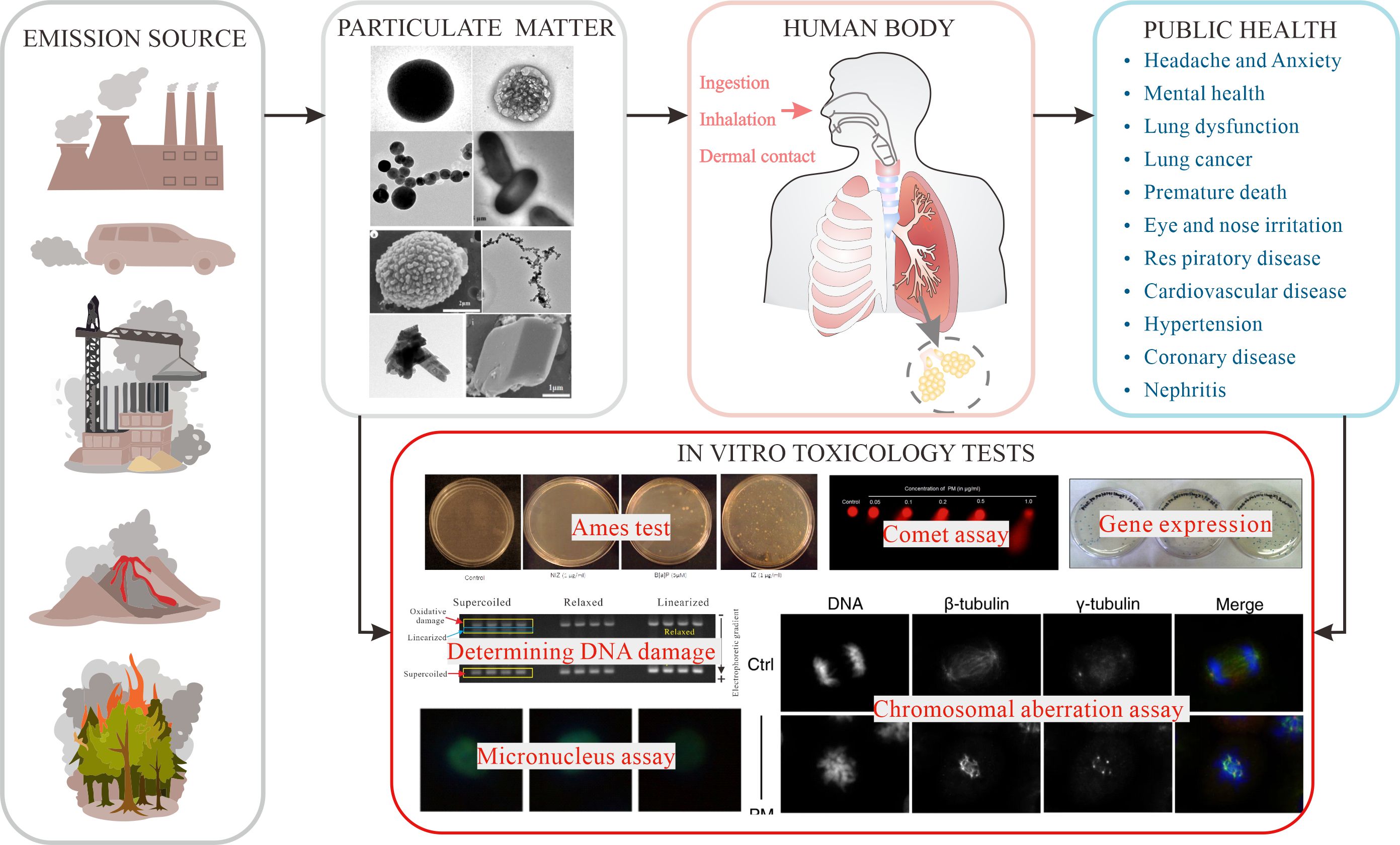
The adverse health effects of air pollution are being increasingly recognized as major causes of disease. Atmospheric particles, as a major component of air pollution, have been extensively studied in terms of their sources, physicochemical characteristics, transport in the atmosphere, and changes in particulate composition during their time in the atmosphere. The relationships between particles and diseases are complex, so research on the health effects and damage mechanisms of particulate matter (PM) is of significant importance. This study reviews the health effects of PM and provides an overview of the hazards of atmospheric PM to various human organs. In addition, this review explores the mechanisms of damage, summarizes the research methods used to determine the health effects, and discusses the influential health factors caused by PM. In combination with current Chinese and global research, the modern technologies and research trends on the health effects of particles are elucidated.
Graphical Abstract
Keywords
atmospheric particles | health effects | toxicological assessment methods | chemical components of particles | particle size and morphology
References
- 1.
Li, X.; Yan, C.Q.; Wang, C.Y.; et al. PM2.5-bound elements in Hebei Province, China: Pollution levels, source apportionment and health risks. Sci. Total Environ. 2022, 806, 150440. https://doi.org/10.1016/j.scitotenv.2021.150440
- 2.
Rogula-Kozlowska, W.; Kozielska, B.; Majewski, G.; et al. Submicron particle-bound polycyclic aromatic hydrocarbons in the Polish teaching rooms: Concentrations, origin and health hazard. J. Environ. Sci. 2018, 64, 235–244. https://doi.org/1016/j.jes.2017.06.022
- 3.
Wang, X.Y.; Banks, A.P.W.; He, C.; et al. Polycyclic aromatic hydrocarbons, polychlorinated biphenyls and legacy and current pesticides in indoor environment in Australia - Occurrence, sources and exposure risks. Sci. Total Environ. 2019, 693, 133588. https://doi.org/10.1016/j.scitotenv.2019.133588
- 4.
Valavanidis, A.; Fiotakis, K.; Vlachogianni, T. Airborne particulate matter and human health: Toxicological assessment and importance of size and composition of particles for oxidative damage and carcinogenic mechanisms. J. Environ. Sci. Health C Environ. Carcinog. Ecotoxicol. Rev. 2008, 26, 339–362. https://doi.org/10.1080/10590500802494538
- 5.
World Health Organization. State of the Science of Endocrine Disrupting Chemicals-2012; United Nations Environment Programme and the World Health Organization, Geneva, Switzerland, 2013.
- 6.
Zhang, L.; Zhang, X.; Xing, W.; et al. Natural aeolian dust particles have no substantial effect on atmospheric polycyclic aromatic hydrocarbons (PAHs): A laboratory study based on naphthalene. Environ. Pollut. 2020, 263, 114454. https://doi.org/10.1016/j.envpol.2020.114454
- 7.
Ramli, N.A.; Yusof, N.F.F.; Shith, S.; et al. Chemical and biological compositions associated with ambient respirable particulate matter: A review. Water Air Soil Pollut. 2020, 231, 120. https://doi.org/10.1007/s11270-020-04490-5
- 8.
Vithanage, M.; Bandara, P.C.; Novo, L.A.B.; et al. Deposition of trace metals associated with atmospheric particulate matter: Environmental fate and health risk assessment. Chemosphere 2022, 303, 135051. https://doi.org/10.1016/j.chemosphere.2022.135051
- 9.
Guo, C.X.; Lv, S.Q.; Liu, Y.F.; et al. Biomarkers for the adverse effects on respiratory system health associated with atmospheric particulate matter exposure. J. Hazard. Mater. 2022, 421, 126760. https://doi.org/10.1016/j.jhazmat.2021.126760
- 10.
Zhang, L.L.; Yang, L.; Zhou, Q.Y.; et al. Size distribution of particulate polycyclic aromatic hydrocarbons in fresh combustion smoke and ambient air: A review. J. Environ. Sci. 2020, 88, 370–384. https://doi.org/10.1016/j.jes.2019.09.007
- 11.
Chen, Q.; Luo, X.S.; Chen, Y.; et al. Seasonally varied cytotoxicity of organic components in PM2.5 from urban and industrial areas of a Chinese megacity. Chemosphere 2019, 230, 424–431. https://doi.org/10.1016/j.chemosphere.2019.04.226
- 12.
Dong, Z.; Jiang, N.; Zhang, R.; et al. Molecular characteristics, source contributions, and exposure risks of polycyclic aromatic hydrocarbons in the core city of Central Plains Economic Region, China: Insights from the variation of haze levels. Sci. Total Environ. 2021, 757, 143885. https://doi.org/10.1016/j.scitotenv.2020.143885
- 13.
Ren, Y.; Luo, Q.; Zhuo, S.; et al. Bioaccessibility and public health risk of heavy metal(loid)s in the airborne particulate matter of four cities in northern China. Chemosphere 2021, 277, 130312. https://doi.org/10.1016/j.chemosphere.2021.130312
- 14.
Sun, Y.; Tian, Y.; Xue, Q.; et al. Source-specific risks of synchronous heavy metals and PAHs in inhalable particles at different pollution levels: Variations and health risks during heavy pollution. Environ. Int. 2021, 146, 106162. https://doi.org/10.1016/j.envint.2020.106162
- 15.
Kim, K.H.; Kabir, E.; Kabir, S. A review on the human health impact of airborne particulate matter. Environ. Int. 2015, 74, 136–143. https://doi.org/10.1016/j.envint.2014.10.005
- 16.
Kumar, P.; Kalaiarasan, G.; Porter, A.E.; et al. An overview of methods of fine and ultrafine particle collection for physicochemical characterisation and toxicity assessments. Sci. Total Environ. 2021, 756, 143553. https://doi.org/10.1016/j.scitotenv.2020.143553
- 17.
MohseniBandpi, A.; Eslami, A.; Shahsavani, A.; et al. Physicochemical characterization of ambient PM2.5 in Tehran air and its potential cytotoxicity in human lung epithelial cells (A549). Sci. Total Environ. 2017, 593, 182–190. https://doi.org/10.1016/j.scitotenv.2017.03.150
- 18.
Chen, C.; Liu, S.; Dong, W.; et al. Increasing cardiopulmonary effects of ultrafine particles at relatively low fine particle concentrations. Sci. Total Environ. 2021, 751, 141726. https://doi.org/10.1016/j.scitotenv.2020.141726
- 19.
Breitner, S.; Su, C.; Franck, U.; et al. The association between particulate air pollution and respiratory mortality in Beijing before, during, and after the 2008 olympic and paralympic games. Front. Environ. Sci. 2021, 9, 624180. https://doi.org/10.3389/fenvs. 2021.624180
- 20.
Mallah, M.A.; Li, C.X.; Mallah, M.A.; et al. Polycyclic aromatic hydrocarbon and its effects on human health: An overeview. Chemosphere 2022, 296, 133948. https://doi.org/10.1016/j.chemosphere. 2022.133948
- 21.
Wang, Y.; Xiong, L.; Tang, M. Toxicity of inhaled particulate matter on the central nervous system: Neuroinflammation, neuropsychological effects and neurodegenerative disease. J. Appl. Toxicol. 2017, 37, 644–667. https://doi.org/10.1002/jat.3451
- 22.
Kalenik, S.; Zaczek, A.; Rodacka, A. Air pollution-induced neurotoxicity: The relationship between air pollution, epigenetic changes, and neurological disorders. Int. J. Mol. Sci. 2025, 26, 3402. https://doi.org/10.3390/ijms26073402
- 23.
Patel, H.; Eo, S.; Kwon, S. Effects of diesel particulate matters on inflammatory responses in static and dynamic culture of human alveolar epithelial cells. Toxicol. Lett. 2011, 200, 124–131. https://doi.org/10.1016/j.toxlet.2010.11.007
- 24.
Apte, J.S.; Brauer, M.; Cohen, A.J.; et al. Ambient PM2.5 reduces global and regional life expectancy. Environ. Sci. Technol. Lett. 2018, 5, 546–551. https://doi.org/10.1021/acs.estlett.8b00360
- 25.
Maji, K.J.; Arora, M.; Dikshit, A.K. Premature mortality attributable to PM2.5 exposure and future policy roadmap for 'airpocalypse' affected Asian megacities. Process Saf. Environ. Prot. 2018, 118, 371–383. https://doi.org/10.1016/j.psep.2018.07.009
- 26.
Huang, J.; Pan, X.; Guo, X.; et al. Health impact of China's Air Pollution Prevention and Control Action Plan: An analysis of national air quality monitoring and mortality data. Lancet Planet. Health 2018, 2, e313–e323. https://doi.org/10.1016/S2542-5196(18)30141-4
- 27.
Ruckerl, R.; Schneider, A.; Breitner, S.; et al. Health effects of particulate air pollution: A review of epidemiological evidence. Inhal. Toxicol. 2011, 23, 555–592. https://doi.org/10.3109/08958378. 2011.593587
- 28.
Shao, L.Y.; Li, Y.W.; Jones, T.; et al. Airborne microplastics: A review of current perspectives and environmental implications. J. Clean. Prod. 2022, 347, 131048. https://doi.org/10.1016/j.jclepro. 2022.131048
- 29.
Ravish, P. Airborne microplastics and human health in urban environments. Discov. Public Health 2025, 22, 725. https://doi.org/10.1186/s12982-025-01098-0
- 30.
Dong, C.D.; Chen, C.W.; Chen, Y.C.; et al. Polystyrene microplastic particles: In vitro pulmonary toxicity assessment. J. Hazard. Mater. 2020, 385, 121575. https://doi.org/10.1016/j.jhazmat.2019.121575
- 31.
U.S. Environmental Protection Agency. Risk Assessment Guidance for Superfund, Volume I: Human Health Evaluation Manual (Part F, Supplemental Guidance for Inhalation Risk Assessment); U.S. Environmental Protection Agency: Washington, DC, USA, 2009. https://www.epa.gov/risk/risk-assessment-guidancesuperfund- rags-part-f
- 32.
Jiang, N.; Li, L.; Wang, S.; et al. Variation tendency of pollution characterization, sources, and health risks of PM2.5-bound polycyclic aromatic hydrocarbons in an emerging megacity in China: Based on three-year data. Atmos. Res. 2019, 217, 81–92. https://doi.org/10.1016/j.atmosres.2018.10.023
- 33.
Xue, Q.; Jiang, Z.; Wang, X.; et al. Comparative study of PM10- bound heavy metals and PAHs during six years in a Chinese megacity: Compositions, sources, and source-specific risks. Ecotoxicol. Environ. Saf. 2019, 186, 109740. https://doi.org/10.1016/j.ecoenv.2019.109740
- 34.
Jain, A.K.; Singh, D.; Dubey, K.; et al. Models and methods for in vitro toxicity. In In Vitro Toxicology; Academic Press: Cambridge, MA, USA, 2018; pp. 45–65.
- 35.
Du, X.M.; Gao, S.X.; Hong, L.L.; et al. Genotoxicity evaluation of titanium dioxide nanoparticles using the mouse lymphoma assay and the Ames test. Mutat. Res. - Genet. Toxicol. Environ. Mutagen. 2019, 838, 22–27.
- 36.
Feng, X.L.; Shao, L.Y.; Xi, C.X.; et al. Particle-induced oxidative damage by indoor size-segregated particulate matter from coalburning homes in the Xuanwei lung cancer epidemic area, Yunnan Province, China. Chemosphere 2020, 256, 127058. https://doi.org/10.1016/j.chemosphere.2020.127058
- 37.
Shan, X.F.; Liu, L.; Li, G.; et al. PM2.5 and the typical components cause organelle damage, apoptosis and necrosis: Role of reactive oxygen species. Sci. Total Environ. 2021, 782, 146785. https://doi.org/10.1016/j.scitotenv.2021.146785
- 38.
Zhang, M.Y.; Shao, L.Y.; Jones, T.; et al. Hemolysis of PM10 on RBCs in vitro: An indoor air study in a coal-burning lung cancer epidemic area. Geosci. Front. 2022, 13, 101176. https://doi.org/10.1016/j.gsf.2021.101176
- 39.
Huffman, J.A.; Treutlein, B.; Poschl, U. Fluorescent biological aerosol particle concentrations and size distributions measured with an Ultraviolet Aerodynamic Particle Sizer (UV-APS) in Central Europe. Atmos. Chem. Phys. 2010, 10, 3215–3233. https://doi.org/10.5194/acp-10-3215-2010
- 40.
Li, W.J.; Shao, L.Y.; Zhang, D.Z.; et al. A review of single aerosol particle studies in the atmosphere of East Asia: Morphology, mixing state, source, and heterogeneous reactions. J. Clean. Prod. 2016, 112, 1330–1349. https://doi.org/10.1016/j.jclepro.2015.04.050
- 41.
Shao, L.Y.; Liu, P.J.; Jones, T.; et al. A review of atmospheric individual particle analyses: Methodologies and applications in environmental research. Gondwana Res. 2022, 110, 347–369. https://doi.org/10.1016/j.gr.2022.01.007
- 42.
U.S. Environmental Protection Agency. Air quality Criteria for Particulate Matter; Final report, October 2004; EPA: Research Triangle Park, NC, USA, 2004.
- 43.
Jones, T.; Moreno, T.; BeruBe, K.; et al. The physicochemical characterisation of microscopic airborne particles in south Wales: A review of the locations and methodologies. Sci. Total Environ. 2006, 360, 43–59. https://doi.org/10.1016/j.scitotenv.2005.08.055
- 44.
Wang, Y.; Tang, M.; Yang, Z.B.; et al. Toxical effects of PM2.5 from different regions on individual cells examined by Raman Microspectroscopy and Atomic Force Microscopy. Spectrosc. Spect. Anal. 2018, 38, 3758–3763.
- 45.
Hameed, S.; Zhao, J.; Zare, R.N. Ambient PM particles reach mouse brain, generate ultrastructural hallmarks of neuroinflammation, and stimulate amyloid deposition, tangles, and plaque formation. Talanta Open 2020, 2, 100013. https://doi.org/10.1016/j.talo.2020.100013
- 46.
Magnani, N.D.; Muresan, X.M.; Belmonte, G.; et al. Skin damage mechanisms related to airborne particulate matter exposure. Toxicol. Sci. 2016, 149, 227–236. https://doi.org/10.1093/toxsci/kfv230
- 47.
Lippmann, M.; Chen, L.C.; Gordon, T.; et al. National particle component toxicity (NPACT) Initiative: Integrated epidemiologic and toxicologic studies of the health effects of particulate matter components. Res. Rep. Health Eff. Inst. 2013, 117, 5–13.
- 48.
Yu, W.H.; Guo, Y.M.; Shi, L.H.; et al. The association between long-term exposure to low-level PM2.5 and mortality in the state of Queensland, Australia: A modelling study with the difference-in-differences approach. PLoS Med. 2020, 17, e1003141. https://doi.org/10.1371/journal.pmed.1003141
- 49.
Shao, L.Y.; Hu, Y.; Wang, J.; et al. Particle-induced oxidative damage of indoor PM10 from coal burning homes in the lung cancer area of Xuan Wei, China. Atmos. Environ. 2013, 77, 959–967. https://doi.org/10.1016/j.atmosenv.2013.05.079
- 50.
Kim, K.H.; Shamin A.J.; Ehsanul K.; et al. A review of airborne polycyclic aromatic hydrocarbons (PAHs) and their human health effects. Environ. Int. 2013, 60, 71–80. https://doi.org/10.1016/j.envint.2013.07.019
- 51.
Han, F.L.; Guo, H.; Hu, J.L.; et al. Sources and health risks of ambient polycyclic aromatic hydrocarbons in China. Sci. Total Environ. 2020, 698, 134229. https://doi.org/10.1016/j.scitotenv.2019.134229
- 52.
Feng, X.L.; Shao, L.Y.; Jones, T.; et al. Oxidative potential and water-soluble heavy metals of size-segregated airborne particles in haze and non-haze episodes: Impact of the ”Comprehensive Action Plan” in China. Sci. Total Environ. 2022, 814, 152774. https://doi.org/10.1016/j.scitotenv.2021.152774
- 53.
Saliba, Y.; B˘arbulescu, A. Assessing pollution with heavy metals and its impact on population health. Toxics 2025, 13, 52. https://doi.org/10.3390/toxics13010052
- 54.
Liu, Y.F.; Xu, F.; Liu, W.Q.; et al. Characteristics, sources, exposure, and health effects of heavy metals in atmospheric particulate matter. Curr. Pollution Rep. 2025, 11, 16. https://doi.org/10.1007/s40726-025-00344-y
- 55.
Zhang, J.S.; Cheng, H.X.; Wang, D.B.; et al. Chronic exposure to PM2.5 nitrate, sulfate, and ammonium causes respiratory system impairments in mice. Environ. Sci. Technol. 2021, 55, 3081–3090. https://doi.org/10.1021/acs.est.0c05814
- 56.
Tong, H.J.; Liu, F.B.; Filippi, A.; et al. Aqueous-phase reactive species formed by fine particulate matter from remote forests and polluted urban air. Atmos. Chem. Phys. 2021, 21, 10439–10455. https://doi.org/10.5194/acp-21-10439-2021
- 57.
Fahmy, H.M.; Aly, E.M.; Mohamed, F.F.; et al. Neurotoxicity of green-synthesized magnetic iron oxide nanoparticles in different brain areas of wistar rats. Neurotoxicology 2020, 77, 80–93. https://doi.org/10.1016/j.neuro.2019.12.014
- 58.
Lu, S.L.; Liu, J.; Hou, G.Q.; et al. Physicochemical characterization and oxidative potential of iron-containing particles emitted from Xuanwei coal combustion. Toxics 2023, 11, 921. https://doi.org/10.3390/toxics11110921
- 59.
Wei, X.; Gao, B.;Wang, P.; et al. Pollution characteristics and health risk assessment of heavy metals in street dusts from different functional areas in Beijing, China. Ecotoxicol. Environ. Saf. 2015, 112, 186–192. https://doi.org/10.1016/j.ecoenv.2014.11.005
- 60.
Jin, L.; Luo, X.; Fu, P.; et al. Airborne particulate matter pollution in urban China: A chemical mixture perspective from sources to impacts. Natl. Sci. Rev. 2017, 4, 593–610. https://doi.org/10.1093/nsr/nww079
- 61.
Liu, Q.; Liu, Y.; Zhao, Q.; et al. Increases in the formation of water soluble organic nitrogen during Asian dust storm episodes. Atmos. Res. 2021, 253, 105486. https://doi.org/10.1016/j.atmosres. 2021.105486
- 62.
Liu, L.; Zhou, Q.H.; Yang, X.Z.; et al. Cytotoxicity of the soluble and insoluble fractions of atmospheric fine particulate matter. J. Environ. Sci. 2020, 91, 105–116. https://doi.org/10.1016/j.jes.2020.01.012
- 63.
Niu, H.Y.; Wu, C.M.; Schindler, M.; et al. Characterization of PM(2.5) carbonaceous components in a typical industrial city in China under continuous mitigation measures. Toxics 2024, 12, 461. https://doi.org/10.3390/toxics12070461
- 64.
Liu, K.; Wang, X.H.; Fang, T.; et al. Source and potential risk assessment of suspended atmospheric microplastics in Shanghai. Sci. Total Environ. 2019, 675, 462–471. https://doi.org/10.1016/j.scitotenv.2019.04.110
- 65.
Ridley, D.A.; Heald, C.L.; Ridley, K.J.; et al. Causes and consequences of decreasing atmospheric organic aerosol in the United States. Proc. Natl. Acad. Sci. USA 2018, 115, 290–295. https://doi.org/10.1073/pnas.1700387115
- 66.
Frohlich-Nowoisky, J.; Kampf, C.J.; Weber, B.; et al. Bioaerosols in the Earth system: Climate, health, and ecosystem interactions. Atmos. Res. 2016, 182, 346–376. https://doi.org/10.1016/j.atmosres.2016.07.018
- 67.
Ariya, P.A.; Amyot, M. New Directions: The role of bioaerosols in atmospheric chemistry and physics. Atmos. Environ. 2004, 38, 1231–1232. https://doi.org/10.1016/j.atmosenv.2003.12.006
- 68.
Tang, K.; Huang, Z.W.; Huang, J.P.; et al. Characterization of atmospheric bioaerosols along the transport pathway of Asian dust during the dust-bioaerosol 2016 campaign. Atmos. Chem. Phys. 2018, 18, 7131–7148. https://doi.org/10.5194/acp-18-7131-2018
- 69.
Niu, M.; Zhou, F.; Yang, Y.; et al. Abundance and composition of airborne archaea during springtime mixed dust and haze periods in Beijing, China. Sci. Total Environ. 2021, 752, 141641. https://doi.org/10.1016/j.scitotenv.2020.141641
- 70.
Chen, N.T.; Cheong, N.S.; Lin, C.Y.; et al. Ambient viral and bacterial distribution during long-range transport in Northern Taiwan. Environ. Pollut. 2021, 270, 116231. https://doi.org/10.1016/j.envpol.2020.116231
- 71.
Cao, Y.X.; Shao, L.Y.; Jones, T.; et al. Multiple relationships between aerosol and COVID-19: A framework for global studies. Gondwana Res. 2021, 93, 243–251. https://doi.org/10.1016/j.gr.2021.02.002
- 72.
Brunekreef, B.; Forsberg, B. Epidemiological evidence of effects of coarse airborne particles on health. Eur. Respir. J. 2005, 26, 309–318. https://doi.org/10.1183/09031936.05.00001805
- 73.
Li, J.M.; Zhao, S.M.; Wu, S.P.; et al. Size-segregated characteristics of water-soluble oxidative potential in urban Xiamen: Potential driving factors and implications for human health. Sci. Total Environ. 2023, 912, 168902. https://doi.org/10.1016/j.scitotenv.2023.168902
- 74.
Ali, M.U.; Lin, S.; Yousaf, B.; et al. Pollution characteristics, mechanism of toxicity and health effects of the ultrafine particles in the indoor environment: Current status and future perspectives. Crit. Rev. Environ. Sci. Technol. 2022, 52, 436–473. https://doi.org/10.1080/10643389.2020.1831359
- 75.
Yang, B.Y.; Guo, Y.; Morawska, L.; et al. Ambient PM1 air pollution and cardiovascular disease prevalence: Insights from the 33 communities chinese health study. Environ. Int. 2019, 123, 310–317. https://doi.org/10.1016/j.envint.2018.12.012
- 76.
Kwon, H.S.; Ryu, M.H.; Carlsten, C. Ultrafine particles: Unique physicochemical properties relevant to health and disease. Exp. Mol. Med. 2020, 52, 318–328. https://doi.org/10.1038/s12276-020- 0405-1
- 77.
Breitner, S.; Liu, L.; Cyrys, J.; et al. Sub-micrometer particulate air pollution and cardiovascular mortality in Beijing, China. Sci. Total Environ. 2011, 409, 5196–5204. https://doi.org/10.1016/j.scitotenv.2011.08.023
- 78.
Yin, G.J.; Liu, C.; Hao, L.P.; et al. Associations between sizefractionated particle number concentrations and COPD mortality in Shanghai, China. Atmos. Environ. 2019, 214, 116875. https://doi.org/10.1016/j.atmosenv.2019.116875
- 79.
He, L.C.; Zhang, J.F. Particulate matter (PM) oxidative potential: Measurement methods and links to PM physicochemical characteristics and health effects. Crit. Rev. Environ. Sci. Technol. 2023, 53, 177–197. https://doi.org/10.1080/10643389.2022.2050148
- 80.
Ali, M.U.; Liu, G.; Yousaf, B.; et al. A systematic review on global pollution status of particulate matter-associated potential toxic elements and health perspectives in urban environment. Environ. Geochem. Health 2019, 41, 1131–1162. https://doi.org/10.1007/s10653-018-0203-z
- 81.
Atkinson, R.W.; Fuller, G.W.; Anderson, H.R.; et al. Urban ambient particle metrics and health: A time-series analysis. Epidemiology 2010, 21, 501–511.
- 82.
Conibear, L.; Butt, E.W.; Knote, C.; et al. Residential energy use emissions dominate health impacts from exposure to ambient particulate matter in India. Nat. Commun. 2018, 9, 617. https://doi.org/10.1038/s41467-018-02986-7
- 83.
Xue, T.; Geng, G.N.; Meng, X.; et al. New WHO global air quality guidelines help prevent premature deaths in China. Natl. Sci. Rev. 2022, 9, nwac055. https://doi.org/10.1093/nsr/nwac055
- 84.
Chai, G.; He, H.; Sha, Y.; et al. Effect of PM2.5 on daily outpatient visits for respiratory diseases in Lanzhou, China. Sci. Total Environ. 2019, 649, 1563–1572. https://doi.org/10.1016/j.scitotenv.2018.08.384
- 85.
Kan, H.D.; London, S.J.; Chen, G.H.; et al. Differentiating the effects of fine and coarse particles on daily mortality in Shanghai, China. Environ. Int. 2007, 33, 376–384. https://doi.org/10.1016/j.envint.2006.12.001
- 86.
Correia, A.W.; Pope, C.A. 3rd; Dockery, D.W.; et al. Effect of air pollution control on life expectancy in the United States: An analysis of 545 U.S. counties for the period from 2000 to 2007. Epidemiology 2013, 24, 23–31. https://doi.org/10.1097/EDE.0b013e3182770237
- 87.
Chiu, H.F.; Yang, C.Y. Short-term effects of fine particulate air pollution on ischemic stroke occurrence: A case-crossover study. J. Toxicol. Environ. Health - A: Curr. Issues 2013, 76, 1188–1197. https://doi.org/10.1080/15287394.2013.842463
- 88.
WHO. WHO Global Air Quality Guidelines; World Health Organization: Geneva, Switzerland, 2021.
- 89.
Pope, C.A.; Dockery, D.W.; Schwartz, J. Review of epidemiological evidence of health effects of particulate air pollution. Inhal. Toxicol. 2008, 7, 1–18. https://doi.org/10.3109/08958379509014267
- 90.
Lu, F.; Xu, D.; Cheng, Y.; et al. Systematic review and meta-analysis of the adverse health effects of ambient PM2.5 and PM10 pollution in the Chinese population. Environ. Res. 2015, 136, 196–204.
- 91.
Ireri H. C.; Maria B.; David S. The impact of air pollution on COVID- 19 incidence, severity, and mortality: A systematic review of studies in Europe and North America. Environ. Res. 2022, 215, 114155. https://doi.org/10.1016/j.envres.2022.114155
- 92.
Wang, S.T.; Liu, T.Y.; Su,Y,Q.; et al. Air pollution and COVID-19 mortality in Chinese cities: Insights from a multi-city analysis during the pandemic’s first wave. NPJ Clim. Atmos. Sci. 2025, 8, 151. https://doi.org/10.1038/s41612-025-01042-8
- 93.
National Health Commission of the People’s Republic of China. Technical Specifications for Health Risk Assessment Of Ambient Air Pollution; National Health Commission of the People’s Republic of China: Beijing, China, 2019.
- 94.
Xue, X.; You, Y.; Wu, J.; et al. Exposure measurement, risk assessment and source identification for exposure of traffic assistants to particle-bound PAHs in Tianjin, China. J. Environ. Sci. 2014, 26, 448–457. https://doi.org/10.1016/s1001-0742(13)60427-1
- 95.
Kim, B.S.M.; Angeli, J.L.F.; Ferreira, P.A.L.; et al. Critical evaluation of different methods to calculate the Geoaccumulation Index for environmental studies: A new approach for Baixada Santista – Southeastern Brazil. Mar. Pollut. Bull. 2018, 127, 548–552. https://doi.org/10.1016/j.marpolbul.2017.12.049
- 96.
Liu, R.; Zhang, H.; Gou, X.; et al. Approaches of health risk assessment for heavy metals applied in china and advance in exposure assessment models: A review. Ecol. Environ. Sci. 2014, 23, 1239–1244. https://doi.org/10.16258/j.cnki.1674-5906.2014.07.018. (In Chinese with English abstract)
- 97.
Gao, P. The human airborne exposome. Nat. Health 2026, 1, 26–34. https://doi.org/10.1038/s44360-025-00026-5
- 98.
Behrooz, R.D.; Kaskaoutis, D.G.; Grivas, G.; et al. Human health risk assessment for toxic elements in the extreme ambient dust conditions observed in Sistan, Iran. Chemosphere 2021, 262, 127835. https://doi.org/10.1016/j.chemosphere.2020.127835
- 99.
Han, J.; Liang, Y.S.; Zhao, B.; et al. Polycyclic aromatic hydrocarbon (PAHs) geographical distribution in China and their source, risk assessment analysis. Environ. Pollut. 2019, 251, 312–327. https://doi.org/10.1016/j.envpol.2019.05.022
- 100.
Liu, Y.; Wang, R.S.; Zhao, T.N.; et al. Source apportionment and health risk due to PM10 and TSP at the surface workings of an underground coal mine in the arid desert region of northwestern China. Sci. Total Environ. 2022, 803, 149901. https://doi.org/10.1016/j.scitotenv.2021.149901
- 101.
Das, D.N.; Sinha, N.; Naik, P.P.; et al. Mutagenic and genotoxic potential of native air borne particulate matter from industrial area of Rourkela city, Odisha, India. Environ. Toxicol. Pharmacol. 2016, 46, 131–139. https://doi.org/10.1016/j.etap.2016.07.011
- 102.
Shu, Y.; Zhu, L.C.; Yuan, F.; et al. Analysis of the relationship between PM2.5 and lung cancer based on protein-protein interactions. Comb. Chem. High Throughput Screen. 2016, 19, 100–108. https://doi.org/10.2174/1386207319666151110123345
- 103.
Abayalath, N.; Malshani, I.; Ariyaratne, R.; et al. Characterization of airborne PAHs and metals associated with PM10 fractions collected from an urban area of Sri Lanka and the impact on airway epithelial cells. Chemosphere 2022, 286, 131741. https://doi.org/10.1016/j.chemosphere.2021.131741
- 104.
Yuan, F.S.; Ma, Y.P.; Zhao, W.H. Effect of different particle sizes on the micronucleation rate of human binucleated lymphocytes. J. Toxicol. 1999, 13, 132–133. (In Chinese)
- 105.
Niu, B.Y.; Li, W.K.; Li, J.S.; et al. Effects of DNA damage and oxidative stress in human bronchial epithelial cells exposed to PM2.5 from Beijing, China, in winter. Int. J. Environ. Res. Public Health 2020, 17, 4874. https://doi.org/10.3390/ijerph17134874
- 106.
Longhin, E.; Holme, J.A.; Gutzkow, K.B.; et al. Cell cycle alterations induced by urban PM2.5 in bronchial epithelial cells: Characterization of the process and possible mechanisms involved. Part. Fibre Toxicol. 2013, 10, 63. https://doi.org/10.1186/1743-8977-10-63
- 107.
Velali, E.; Pantazaki, A.; Besis, A.; et al. Oxidative stress, DNA damage, and mutagenicity induced by the extractable organic matter of airborne particulates on bacterial models. Regul. Toxicol. Pharmacol. 2019, 104, 59–73. https://doi.org/10.1016/j.yrtph.2019.03.004
- 108.
Shao, L.Y.; Shen, R.R.; Wang, J.; et al. A toxicological study of inhalable particulates by plasmid DNA assay: A case study from Macao. Sci. China Earth Sci. 2013, 56, 1037–1043. https://doi.org/10.1007/s11430-013-4581-x
- 109.
Estela, D.V.; Isabella, C.; Yago, C.; et al. Indoor PM10 from fireplace, wood- and coal stove: Morphology, composition, and oxidative potential in real residential settings. Environ. Pollut. 2026, 390, 127510. https://doi.org/10.1016/j.envpol.2025.127510
- 110.
Xue, X.; Yang, S.; Fan, S.; et al. Exposure toxicity of dust storm particles based on plasmid scission assay: An example from Beijing. Atmosphere 2026, 17, 155. https://doi.org/10.3390/atmos17020155
- 111.
Daellenbach, K.R.; Uzu, G.; Jiang, J.H.; et al. Sources of particulate-matter air pollution and its oxidative potential in Europe. Nature 2020, 587, 414–419. https://doi.org/10.1038/s41586-020-2902-8
- 112.
Mesdaghinia, A.; Pourpak, Z.; Naddafi, K.; et al. An in vitro method to evaluate hemolysis of human red blood cells (RBCs) treated by airborne particulate matters (PM10). MethodsX 2019, 6, 156–161.
- 113.
Li, N.; Sioutas, C.; Cho, A.; et al. Ultrafine particulate pollutants induce oxidative stress and mitochondrial damage. Environ. Health Perspect. 2003, 111, 455–460. https://doi.org/10.1289/ehp.6000
- 114.
Wang, B.M.; Chan, Y.L.; Li, G.R.; et al. Maternal particulate matter exposure impairs lung health and is associated with mitochondrial damage. Antioxidants 2021, 10, 1029. https://doi.org/10.3390/antiox10071029
- 115.
Dong, T.T.T.; Hinwood, A.L.; Callan, A.C.; et al. In vitro assessment of the toxicity of bushfire emissions: A review. Sci. Total Environ. 2017, 603, 268–278. https://doi.org/10.1016/j.scitotenv. 2017.06.062
- 116.
Sun, B.Y.; Shi, Y.F.; Li, Y.; et al. Short-term PM2.5 exposure induces sustained pulmonary fibrosis development during post-exposure period in rats. J. Hazard. Mater. 2020, 385, 121566. https://doi.org/10.1016/j.jhazmat.2019.121566
- 117.
Chen, Q.C.; Wang, M.M.; Sun, H.Y.; et al. Enhanced health risks from exposure to environmentally persistent free radicals and the oxidative stress of PM2.5 from Asian dust storms in Erenhot, Zhangbei and Jinan, China. Environ. Int. 2018, 121, 260–268. https://doi.org/10.1016/j.envint.2018.09.012
- 118.
Cong, L.H.; Li, T.; Wang, H.; et al. IL-17A-producing T cells exacerbate fine particulate matter-induced lung inflammation and fibrosis by inhibiting PI3K/Akt/mTOR-mediated autophagy. J. Cell. Mol. Med. 2020, 24, 8532–8544. https://doi.org/10.1111/jcmm.15475
- 119.
Diao, P.; He, H.; Tang, J.; et al. Natural compounds protect the skin from airborne particulate matter by attenuating oxidative stress. Biomed. Pharmacother. 2021, 138, 111534. https://doi.org/10.1016/j.biopha.2021.111534
- 120.
Lin, C.C.; Chen, S.J.; Huang, K.L.; et al. PAHs, PAH-induced carcinogenic potency, and particle-extract-Induced cytotoxicity of traffic-related nano/ultrafine particles. Environ. Sci. Technol. 2008, 42, 4229–4235. https://doi.org/10.1021/es703107w
- 121.
Liu, Q.Y.; Zhang, D.Y.; Hu, D.Y.; et al. The role of mitochondria in NLRP3 inflammasome activation. Mol. Immunol. 2018, 103, 115–124. https://doi.org/10.1016/j.molimm.2018.09.010
- 122.
Health Effects Institute. State of Global Air 2020. Special Report; Health Effects Institute: Boston, MA, USA, 2020.
- 123.
Huang, F.F.; Pan, B.; Wu, J.; et al. Relationship between exposure to PM2.5 and lung cancer incidence and mortality: A meta-analysis. Oncotarget 2017, 8, 43322–43333. https://doi.org/110.18632/oncotarget. 17313
- 124.
Qiu, H.B.; Cao, S.M.; Xu, R.H. Cancer incidence, mortality, and burden in China: A time-trend analysis and comparison with the United States and United Kingdom based on the global epidemiological data released in 2020. Cancer Commun. 2021, 41, 1037–1048. https://doi.org/10.1002/cac2.12197
- 125.
Xia, C.F.; Dong, X.S.; Li, H.; et al. Cancer statistics in China and United States, 2022: Profiles, trends, and determinants. Chin. Med. J. 2022, 135, 584–590. https://doi.org/10.1097/Cm9. 0000000000002108
- 126.
Huang, F.;Wang, P.; Pan, X.; et al. Effects of short-term exposure to particulate matters on heart rate variability: A systematic review and meta-analysis based on controlled animal studies. Environ. Pollut. 2020, 256, 113306. https://doi.org/10.1016/j.envpol.2019.113306
- 127.
Shah, A.S.V.; Langrish, J.P.; Nair, H.; et al. Global association of air pollution and heart failure: A systematic review and meta-analysis. Lancet 2013, 382, 1039–1048. https://doi.org/10.1016/S0140- 6736(13)60898-3
- 128.
Sadeghimoghaddam, A.; Khankeh, H.; Norozi, M.; et al. Investigating the effects of dust storms on morbidity and mortality due to cardiovascular and respiratory diseases: A systematic review. J. Educ. Health promot. 2021, 10, 191. https://doi.org/10.4103/jehp.jehp 1272 20
- 129.
Cristaldi, A.; Fiore, M.; Conti, G.O.; et al. Possible association between PM2.5 and neurodegenerative diseases: A systematic review. Environ. Res. 2022, 208, 112581. https://doi.org/10.1016/j.envres.2021.112581
- 130.
Nkhama, E.; Ndhlovu, M.; Dvonch, J.T.; et al. Prevalence and determinants of mucous membrane irritations in a community near a cement factory in Zambia: A cross sectional study. Int. J. Environ. Res. Public Health 2015, 12, 871–887. https://doi.org/10.3390/ijerph120100871/
- 131.
Chen, H.; Oliver, B.G.; Pant, A.; et al. Effects of air pollution on human health - Mechanistic evidence suggested by in vitro and in vivo modelling. Environ. Res. 2022, 212, 113378. https://doi.org/10.1016/j.envres.2022.113378
- 132.
Chen, J.; Wu, L.; Yang, G.; et al. The influence of PM2.5 exposure on non-alcoholic fatty liver disease. Life Sci. 2021, 270, 119135. https://doi.org/10.1016/j.lfs.2021.119135/
- 133.
Nagappan, A.; Park, S.B.; Lee, S.J.; et al. Mechanistic implications of biomass-derived particulate matter for immunity and immune disorders. Toxics 2021, 9, 18. https://doi.org/10.3390/toxics9020018
- 134.
Yazdi, M.D.;Wang, Y.; Di, Q.; et al. Long-term association of air pollution and hospital admissions among medicare participants using a doubly robust additive model. Circulation 2021, 143, 1584–1596. https://doi.org/10.1161/Circulationaha.120.050252
- 135.
Guo, Y.; Zeng, H.; Zheng, R.; et al. The association between lung cancer incidence and ambient air pollution in China: A spatiotemporal analysis. Environ. Res. 2016, 144, 60–65. https://doi.org/10.1016/j.envres.2015.11.004
- 136.
Lee, S.; Lee, W.; Lee, E.; et al. Effects of Asian dust-derived particulate matter on ST-elevation myocardial infarction: Retrospective, time series study. Bmc Public Health 2021, 21, 68. https://doi.org/10.1186/s12889-020-10067-y
- 137.
Ahmed, C.M.S.; Jiang, H.; Chen, J.Y.; et al. Traffic-related particulate matter and cardiometabolic syndrome: A review. Atmosphere 2018, 9, 336. https://doi.org/10.3390/atmos9090336
- 138.
Guo, L.L.; Zhang, Z.H.; Yuan, F.S.; et al. Immunotoxicity of traffic related fine particles to human peripheral blood lymphocytes and calcium signal mechanism. J. Environ. Health 2010, 27, 946–949. https://doi.org/10.16241/j.cnki.1001- 5914.2010.11.036. (In Chinese with English abstract)
- 139.
Lin, L.; Li, Q.; Yang, J.; et al. The associations of particulate matters with fetal growth in utero and birth weight: A birth cohort study in Beijing, China. Sci. Total Environ. 2020, 709, 136246. https://doi.org/10.1016/j.scitotenv.2019.136246
- 140.
Xue, T.; Guan, T.J.; Geng, G.N.; et al. Estimation of pregnancy losses attributable to exposure to ambient fine particles in south Asia: An epidemiological case-control study. Lancet Planet. Health 2021, 5, E15–E24.
- 141.
Zhu, W.; Zheng, H.; Liu, J.; et al. The correlation between chronic exposure to particulate matter and spontaneous abortion: A meta-analysis. Chemosphere 2022, 286, 131802. https://doi.org/10.1016/j.chemosphere.2021.131802
How to Cite
Shao, L.; Feng, X.; Fan, S.; Jones, T.; Cao, Y.; Li, W.; Zhang, M.; Niu, H.; Yang, S.; BéruBé, K. A Review of the Research Methods Used to Determine the Health Effects of Respirable Atmospheric Particles. Earth Systems, Resources, and Sustainability 2026, 1 (4), 457–474. https://doi.org/10.53941/esrs.2026.100026.
RIS
BibTex
Copyright & License

Copyright (c) 2026 by the authors.
This work is licensed under a Creative Commons Attribution 4.0 International License.
Contents
References
