
- The foundational Hume’s law of metaethics is shown to be a fallacy.
- An alternative metaethics framework is proposed: ethics as an evolutionary adaptation.
- Panbiotic ethics of terrestrial guardianship and extraterrestrial gardening is hypothesized to provide an evolutionary advantage to the species choosing this paradigm, its home biosphere, and potentially even its home Universe.
- Normative and applied ethics derived from this evolutionary framework can provide practical resource allocation guidance relevant to current global challenges (examples included).
- Open Access
- Article
Panbiotic Ethics as an Evolutionary Adaptation of a Habitable Planet in a Habitable Universe
Author Information
Received: 01 Mar 2026 | Revised: 27 Jul 2026 | Accepted: 04 Aug 2026 | Published: 11 Aug 2026
Highlights
Abstract
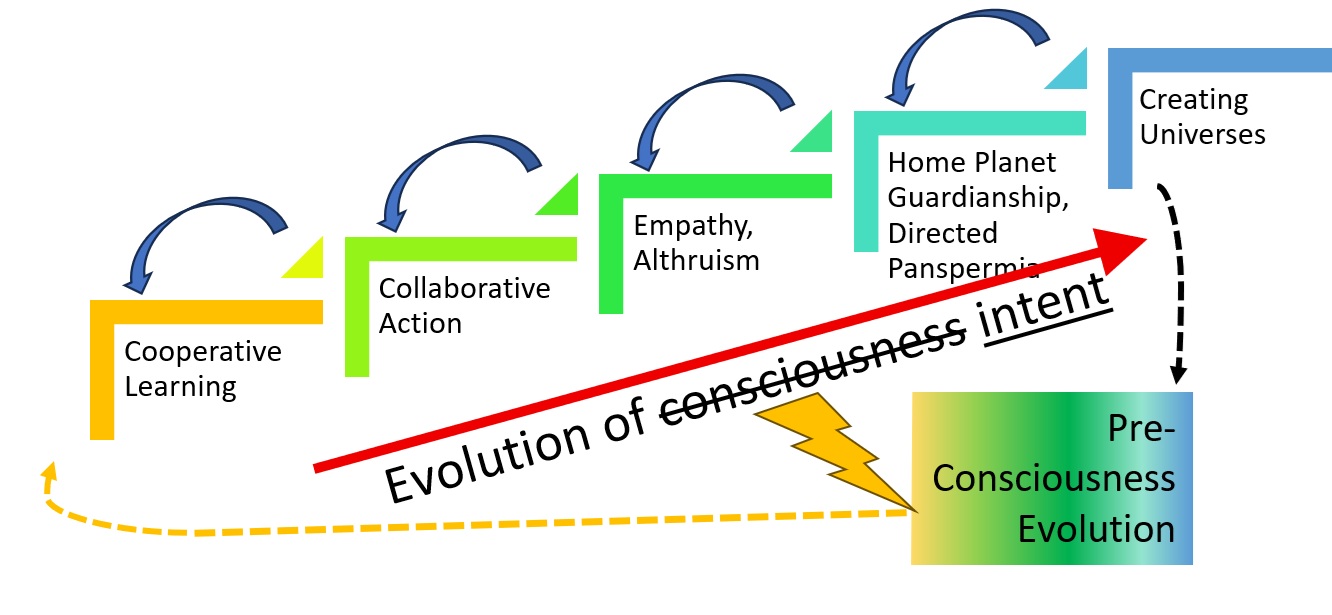
The evolutionary concept of survival of the fittest is applied to civilization-building species and their prevalent ethical paradigm. Continuation of consciousness (sufficiently advanced to concern itself with ethics) is applied as an evaluation criterion for metaethics frameworks, normative ethics models and applied ethics practice. In particular, assertive panbiotic ethics of terrestrial guardianship and extraterrestrial gardening is likely advantageous to the fitness of a civilization-forming species choosing this paradigm—as well as that of the species’ home biosphere, and potentially even its home Universe. The only biospheres—and Universes—that can get a deliberate reproductive boost are the ones that evolve civilizations able and willing to provide it. Civilizations that can, and choose to, protect and replicate their systems of origin appear likely to give these systems (including themselves) a decisive evolutionary advantage. Developing and using these abilities depend on the civilization’s prevalent ethics. Evolving advanced civilization-forming consciousnesses deliberately helping their systems of origin immortalize themselves (through maintenance and reproduction) therefore appears to be a natural selection condition for these systems. This broad outlook appears highly relevant to humanity’s ongoing challenges. Accepting such an assertive panbiotic ethical paradigm may help avert the energy crisis (and ensuing collapse of the global civilization) by enabling the transition to renewable energy while we still have the energy from fossil fuels to invest in it. Adoption of panbiotic ethics appears to be a selection criterion for civilizations to develop beyond planetary stage (that human civilization currently is at) and eventually help spread life beyond their home planet.
Graphical Abstract
Keywords
ethics as evolutionary adaptation | assertive panbiotic ethics | ethics of sustainable development | evolution of intent | cosmological natural selection for ethics | ethics of panspermia
References
- 1.
Hume, D. A Treatise Of Human Nature; Mossner, E.C., Ed.; Penguin Books: London, UK, 1985; (Original work published 1739–1740).
- 2.
Huxley, T.H. Evolution and ethics (1893). In Evolution & Ethics and Other Essays; London: Macmillan and Co.: London, UK, 1901; pp. 46–116.
- 3.
FitzPatrick, W.J. Morality and evolutionary biology. In The Stanford Encyclopedia of Philosophy, Fall 2025 edn.; Zalta, E.N.; Nodelman, U., Eds.; Stanford, CA, USA: Metaphysics Research Lab, Stanford University: Stanford, CA, USA, 2025. Available online: https://plato.stanford.edu/archives/fall2025/entries/moralitybiology/(accessed on 14 June 2026).
- 4.
Rakos, R.; Rehfeldt, R.; Killeen, P. The free will: Determinism debate in contemporary science and society (Or: Why Are You Reading This Article?) Perspect. Behav. Sci. 2025, 48, 475–497. https://doi.org/10.1007/s40614-025-00447-3
- 5.
Darwin, C. The Descent of Man, and Selection in Relation to Sex; John Murray: London, UK, 1871.
- 6.
Wolpert, D.H. Physical limits of inference. Phys. D Nonlinear Phenom. 2008, 237, 1257–1281. https://doi.org/10.1016/j.physd.2008.03.040
- 7.
Shenderov, A. Homo Exploratoris: Is Humanity An Apprentice God?; SacraSage Press: Durham, NC, USA, 2022.
- 8.
Sagan, C. Cosmos; Random House: New York, NY, USA, 1980.
- 9.
Smolin, L. Did the Universe evolve? Class. Quantum Grav. 1992, 9, 173–191. https://doi.org/10.1088/0264-9381/9/1/016
- 10.
Smart, J.M. Cosmological natural selection (fecund universes). Evo Devo Universe Wiki. Available online: https://evodevouniverse.com/wiki/Cosmological natural selection (fecund universes) (accessed on 14 June 2026).
- 11.
Zubrin, R.; Gilster, P. Artificial Singularity Power: A Basis For Developing And Detecting Advanced Spacefaring Civilizations. Available online: https://www.centauri-dreams.org/2019/10/17/artificialsingularity-power-a-basis-for-developing-and-detecting-advancedspacefaring-civilizations/ (accessed on 14 June 2026).
- 12.
Gardner, J.N. The selfish biocosm: Compexity as cosmology. Complexity 2000, 5, 34–45. https://doi.org/10.1002/(SICI)1099-0526(200001/02)5:3<34::AID-CPLX7>3.0.CO;2-8
- 13.
Vidal, C. The Beginning and the End: The Meaning of Life in a Cosmological Perspective; Springer: New York, NY, USA, 2014.
- 14.
Price, M. Could Cosmological Natural Selection Assign a Function to Life? Available online: https://www.prosocial.world/posts/couldcosmological-natural-selection-assign-a-function-to-life (accessed on 18 May 2026).
- 15.
Price, M. Cosmological natural selection and the function of life. In Evolution, Development and Complexity; Georgiev, G.; Smart, J.; Flores Martinez, C.; et al., Eds.; Springer Proceedings in Complexity; Springer: Cham, Switzerland, 2019.
- 16.
Marshall, M. Life Happened Fast. 2025. Available online: https://aeon.co/essays/life-on-earth-emerged-fast-far-quickerthan-we-thought (accessed on 18 June 2026).
- 17.
Caldeira, K.; Kasting, J. The life span of the biosphere revisited. Nature 1992, 360, 721–723. https://doi.org/10.1038/360721a0
- 18.
Napier, W.M. A mechanism for interstellar panspermia. Mon. Not. R. Astron. Soc. 2004, 348, 46–51. https://academic.oup.com/mnras/article/348/1/46/1415892
- 19.
Cleaves II, H.J.; Butch, C.; Burger, P.B.; et al. One among millions: The chemical space of nucleic acid-like molecules. J. Chem. Inf. Model. 2019, 59, 4266–4277. https://doi.org/10.1021/acs.jcim.9b00341.
- 20.
Zubrin, R. The Case for Space; Prometheus Books: New York, NY, USA, 2019; pp. 158–159.
- 21.
Shapiro, J.A. Thinking about bacterial populations as multicellular organisms. Annu. Rev. Microbiol. 1998, 52, 81–104. https://doi.org/10.1146/annurev.micro.52.1.81
- 22.
Meadows, R. A social amoeba discriminates in favor of kin. PLoS Biol. 2008, 6, e290. https://doi.org/10.1371/journal.pbio.0060290
- 23.
Voorhees, B.; Read, D.; Gabora, L. Identity, kinship, and the evolution of cooperation. Curr. Anthropol. 2020, 61, 194–218. https://doi.org/10.1086/708176
- 24.
Henrich, J.; Henrich, N. Culture, evolution and the puzzle of human cooperation. Cogn. Syst. Res. 2006, 7, 220–245. https://doi.org/10.1016/j.cogsys.2005.11.010
- 25.
Stewart, J. The meaning of life in a developing universe. Found. Sci. 2010, 15, 395–409. https://doi.org/10.1007/s10699-010-9184-9
- 26.
Carroll, S. A Series of Fortunate Events: Chance and the Making of the Planet, Life, and You; Princeton University Press: Princeton, NJ, USA, 2020.
- 27.
Soryl, A.; Sandberg, A. To seed or not to seed: Estimating the ethical value of directed panspermia. Acta Astronaut. 2025, 232, 397–404. https://doi.org/10.1016/j.actaastro.2025.03.025
- 28.
Gintis, H. The evolution of human cooperation (with comment). Cliodynamics 2012, 3, 172–190. https://doi.org/10.21237/C7clio3112928
- 29.
Kelly, R.C. The Nuer Conquest; University of Michigan: Ann Arbor, MI, USA, 1985.
- 30.
Lasco, G. Did Margaret Mead Think a Healed Femur Was the Earliest Sign of Civilization?; SAPIENS: New York, NY, USA, 2022. Available online: https://www.sapiens.org/culture/margaret-mead-femur/ (accessed on 13 May 2026).
- 31.
Bronstein, J.L.; Shuster, S.H. Connecting and integrating cooperation within and between species. Philos. Trans. R. Soc. B 2024, 379, 1909. https://doi.org/10.1098/rstb.2023.0203
- 32.
Nicolau Jr., D.V.; Armitage, J.P.; Maini, P.K. Directional persistence and the optimality of run-and-tumble chemotaxis. Comput. Biol. Chem. 2009, 33, 269–274. https://doi.org/10.1016/j.compbiolchem.2009.06.003
- 33.
Ortega, B.A.D.; Huang, A.; Oikonomou, C.; et al. Structural conservation of chemotaxis machinery across Archaea and Bacteria. Environ. Microbiol. Rep. 2015, 7, 414–419. https://doi.org/10.1111/1758-2229.12265
- 34.
Jee, J.; Rasouly, A.; Shamovsky, I.; et al. Rates and mechanisms of bacterial mutagenesis from maximum-depth sequencing. Nature 2016, 534, 693–696. https://doi.org/10.1038/nature18313
- 35.
Gibson, B.; Wilson, D.; Feil, E.; et al. The distribution of bacterial doubling times in the wild. Proc. Biol. Sci. 2018, 285, 20180789. https://doi.org/10.1098/rspb.2018.0789
- 36.
Chernetsov, U.G.; Chernetsov, N.B. Do first-time avian migrants know where they are going: The clock-and-compass concept today. Front. Physiol. 2025, 16, 1562569. https://doi.org/10.3389/fphys.2025.1562569
- 37.
Malville, J.; Schild, R.; Wendorf, F.; et al. Astronomy of Nabta Playa. In African Cultural Astronomy; Springer: New York, NY, USA, 2008, pp. 131–143.
- 38.
Overmann, K.A. The material difference in human cognition, Adapt. Behav. 2021, 29, 123–136. https://doi.org/10.1177/105971232093073
- 39.
Lahiff, N.J.; Clay, Z.; Epping, A.J.; et al. Conspecific alarm calls, but not food-associated calls, elicit affect-based and object-based mental representations in a bonobo (Pan paniscus). R. Soc. Open Sci. 2025, 12, 241901. https://doi.org/10.1098/rsos.241901
- 40.
Pruetz, J.D.; Bertolani, P. Savanna Chimpanzees, Pan troglodytes verus, Hunt with Tools. Curr. Biol. 2007, 17, 412–417. https://doi.org/10.1016/j.cub.2006.12.042
- 41.
Sasaki, T.B.D. Cumulative culture can emerge from collective intelligence in animal groups. Nat. Commun. 2017, 8, 15049. https://doi.org/10.1038/ncomms15049
- 42.
Semaw, S.; Rogers, M.J.; Quade, J.; et al. 2.6-Million-year-old stone tools and associated bones from OGS-6 and OGS-7, Gona, Afar, Ethiopia. J. Hum. Evol. 2003, 45, 169–177. https://doi.org/10.1016/S0047-2484(03)00093-9
- 43.
Adler, D.; Wilkinson, K.; Blockley, S.; et al. Early levallois technology and the transition from the lower to middle palaeolithic in the Southern Caucasus. Science 2014, 345, 1609–1613. https://doi.org/10.1126/science.1256484
- 44.
Wilkins, J.; Schoville, B.; Brown, K.; et al. Evidence for early hafted hunting technology. Science 2012, 338, 942–946. https://doi.org/10.1126/science.1227608
- 45.
Muthukrishna, M.; Henrich, J. Innovation in the collective brain. Philos. Trans. R. Soc. B 2016, 371, 20150192. https://doi.org/10.1098/rstb.2015.0192
- 46.
Mesoudi, A.; Thornton, A. What is cumulative cultural evolution? Proc. Biol. Sci. 2018, 285, 20180712. https://doi.org/10.1098/rspb.2018.0712
- 47.
Oktaviana, A.; Joannes-Boyau, R.; Hakim, B.; et al. Narrative cave art in Indonesia by 51,200 years ago. Nature 2024, 631, 814–818. https://doi.org/10.1038/s41586-024-07541-7
- 48.
Bird, M.; Condie, S.; O’Connor, S.; et al. Early human settlement of Sahul was not an accident. Sci. Rep. 2019, 9, 1–10. https://doi.org/10.1038/s41598-019-42946-9
- 49.
Bradshaw, C.; Ulm, S.; Williams, A.; et al. Minimum founding populations for the first peopling of Sahul. Nat. Ecol. Evol. 2019, 3, 1057–1063. https://doi.org/10.1038/s41559-019-0902-6
- 50.
Liu, C.; Shi, R.; Zhang, Y.; et al. 2015 How large land areas, and how long of shorelines in the world—Vector data based on google earth images. J. Glob. Chang. Data Discov. 2020, 3, 124–147.
- 51.
Henrich, J. The WEIRDest People in the World: How the West Became Psychologically Peculiar and Particularly Prosperous; Farrar, Straus and Giroux: New York, NY, USA, 2020.
- 52.
Boden, M.A. Optimism. Philosophy 1966, 41, 291–303. https://doi.org/10.1017/S0031819100058848
- 53.
Roser, M.; Ritchie, H. Optimism and Pessimism. Available online: https://archive.ourworldindata.org/20251125-173858/optimismand-pessimism.html (accessed on 31 May 2026).
- 54.
IEA. Electricity Grids and Secure Energy Transitions; IEA: Paris, France, 2023.
- 55.
Statista, Electric Transmission Projects Completed in the United States from 2019 to 2024, by Voltage. Available online: https://www.statista.com/statistics/551519/us-line-length-ofelectricity-transmission-projects-completed/ (accessed on 10 May 2025).
- 56.
Slater, M.D. Reinforcing spirals model: Conceptualizing the relationship between media content exposure and the development and maintenance of attitudes. Media Psychol. 2015, 18, 370–395. https://doi.org/10.1080/15213269.2014.897236
- 57.
Mastroianni, A.G.D. The illusion of moral decline. Nature 2023, 618, 782–789. https://doi.org/10.1038/s41586-023-06137-x
- 58.
Pew Research Center. Trust and Distrust in America. Available online: https://www.pewresearch.org/internet/2019/07/22/trustand-distrust-in-america/ (accessed on 7 June 2026).
- 59.
Ratuva, S. The politics of imagery: understanding the historical genesis of Sinophobia in Pacific Geopolitics. East Asia 2022, 39, 13–28. https://doi.org/10.1007/s12140-021-09376-9
- 60.
Bazian, H. Islamophobia, “Clash of Civilizations”, and Forging a Post-Cold War Order! Religions 2018, 9, 282. https://doi.org/10.3390/ rel9090282
- 61.
North Atlantic Treaty Organization. Defence Expenditures and NATO’s 5% Commitment. Available online: https://www.nato.int/en/what-we-do/introduction-to-nato/defenceexpenditures-and-natos-5-commitment (accessed on 13 June 2026).
- 62.
Shenderov, A. Powering human civilization beyond the fossil fuels era. Earth Syst. Resour. Sustain. 2026, 1, 320–331. https://doi.org/10.53941/esrs.2026.100019
- 63.
Goldthau, A.; Sitter, N. Horses for courses. The roles of IPE and Global Public Policy in global energy research. Policy Soc. 2021, 40, 467–483. https://doi.org/10.1080/14494035.2021.1975216
- 64.
Schneider, J.; Peeples, J. The energy covenant: Energy dominance and the rhetoric of the aggrieved. Front. Commun. 2018, 3, 5. https://doi.org/10.3389/fcomm.2018.00005
- 65.
Docquier, F.; Rapoport, H. The vicious circle of xenophobia: Immigration and right-wing populism. In Working Papers 2025–06; CEPII Research Center: Paris, France, 2025.
- 66.
Jarvis, S. The economic costs of NIMBYism: Evidence from renewable energy projects. J. Assoc. Environ. Resour. Econ. 2025, 12, 983–1022. https://doi.org/10.1086/732801
- 67.
Ujomu, P. ‘Ubuntu’ Ethical Perspective and the Global Order. Methexis, J. Res. Val. Spiritual. 2025, 2, 67–109. https://doi.org/10.71210/mjrvs.3.a.5
- 68.
Nie, J.-B. Confucian ethics of Xin (trust) and practical idealism: Reorienting world order beyond Western realist international relations. Front. Commun. 2026, 10, 1680442. https://doi.org/10.3389/fcomm.2025.1680442
- 69.
Baggio, G.; Qadir, M.; Smakhtin, V. Freshwater availability status across countries for human and ecosystem needs. Sci. Total Environ. 2021, 792, 148230. https://doi.org/10.1016/j.scitotenv.2021.148230
- 70.
You, X. China leads research in 90% of crucial technologies — A dramatic shift this century. Nature 2026, 649, 13–14. https://doi.org/10.1038/d41586-025-04048-7
- 71.
Bahman, N.; Naser, N.; Hussain, M. A systematic review of the space industry’s environmental burden within earth system limits. J. Environ. Earth Sci. 2026, 8, 88–101. https://doi.org/10.30564/jees.v8i4.13010
- 72.
Hou, C.; Yang, Y.; Yang, Y.; et al. Electromagnetic-launch-based method for cost-eflcient space debris removal. Open Astron. 2020, 29, 94–106. https://doi.org/10.1515/astro-2020-0016
- 73.
Schrogl, K.-U. “Due Regard” in Outer Space – A Lost Cause? Geneva Centre for Security Policy: Geneva, Switzerland, 2026.
- 74.
NASA. The Artemis Accords: Principles for Cooperation in the Civil Exploration and Use of the Moon, Mars, Comets, and Asteroids for Peaceful Purposes. Available online: https://www.nasa.gov/wp-content/uploads/2022/11/Artemis-Accords-signed-13Oct2020.pdf?emrc=6a2ebd69089cc (accessed on 14 June 2026).
- 75.
Lofstrom, K.H. The launch loop–a low cost Earth-to-high orbit launch system. In AIAA Paper 85-1368; American Institute of Aeronautics and Astronautics (AIAA): New York, NY, USA, 1985.
- 76.
United Nations DESA. The Sustainable Development Goals Report 2025; DESA Publications: New York, NY, USA, 2025.
- 77.
Chinomona, E.; Maziriri, E. Examining the Phenomenon of Xenophobia as Experienced by African Immigrant Entrepreneurs in Johannesburg, South Africa: Intensifying the Spirit of “Ubuntu”. Int. J. Res. Bus. Stud. Manag. 2015, 2, 20–31.
- 78.
Russell, T.; Jenkins, M. 29 years to Abundance: Why US Mines Never Open. Available online: https://pacificlegal.org/wpcontent/uploads/2026/05/SR-1571-Jenkins-and-Russell-Researchin-Brief-Permitting-Reform-for-US-Mining-v1.pdf (accessed on 15 June 2026).
- 79.
Miller, H.I.; Henderson, D.R. The FDA’s Risky Risk-Aversion. Available online: https://www.hoover.org/research/fdas-risky-riskaversion (accessed on 15 June 2027).
- 80.
Burgos, R.; Badowski, M.; Drwiega, E.; et al. The race to a COVID-19 vaccine: Opportunities and challenges in development and distribution. Drugs Context 2021, 10, 1–10. https://doi.org/10.7573/dic.2020-12-2
- 81.
Jha, P.; Brown, P.; Ansumana, R. Counting the global COVID-19 dead. Lancet 2022, 399, 1937–1938. https://doi.org/10.1016/S0140-6736(22)00845-5

How to Cite
Shenderov, A. D. (2026). Panbiotic Ethics as an Evolutionary Adaptation of a Habitable Planet in a Habitable Universe. Habitable Planet, 2(2), 432–447. https://doi.org/10.63335/j.hp.2026.0047
RIS
BibTex
Copyright & License

Copyright (c) 2026 by the authors.
This work is licensed under a Creative Commons Attribution 4.0 International License.
Article Metrics
243
Article Views
0
Citations
Contents
References

 Suite 4002 Level 4, 447 Collins Street, Melbourne, Victoria 3000, Australia
 General Inquiries: info@sciltp.com