Propylene glycol alginate sodium sulfate (PSS) is the first oral heparinoid marine drug, derived from brown algal alginic acid and marketed in 1986. Its core pharmacology, including anticoagulation, lipid-lowering, microcirculation improvement, and neuroprotection, makes it an affordable oral option for chronic ischemic cardiovascular and cerebrovascular diseases. Pharmacological studies have also revealed anti-inflammatory, anti-fibrotic, anti-metastatic, and FGF/FGFR-activating effects. Notably, these activities can be independently modulated by molecular weight and M/G ratio, enabling activity-specific structural optimization, guiding the development of safer derivatives. This review summarizes PSS’s R&D, mechanisms, clinical applications, and safety, aiming to inform precision medication strategies and inspire similar drug development.
- Open Access
- Review
Propylene Glycol Alginate Sodium Sulfate (PSS): The First Oral Heparinoid Marine Drug—A Pharmacological and Clinical Review
- Xuan Xia 1,2,*,
- Quancai Li 1,2,
- Jiayu Li 3,4,
- Caixia Hao 2,
- Yupeng Wang 3,4,* and
- Guanhua Du 2,*
Author Information
Received: 16 July 2026 | Revised: 21 August 2026 | Accepted: 21 August 2026 | Published: 12 November 2026
Abstract
Keywords
propylene glycol alginate sodium sulfate | oral heparinoid | cardiovascular and cerebrovascular diseases | pharmacological mechanism | sulfated polysaccharide
1. Introduction
Cardiovascular and cerebrovascular diseases remain the leading causes of death and long-term disability worldwide. According to the most recent global reports, cardiovascular diseases alone account for approximately 17.9 million deaths annually [1], constituting a persistent and urgent global health crisis. Concurrently, stroke remains the second-leading cause of death and a primary contributor to chronic disability, measured in years lived with disability and disability-adjusted life years [2]. For patients requiring long-term or even lifelong oral anticoagulation, including those with ischemic stroke, coronary heart disease, or atrial fibrillation requiring thromboprophylaxis, the accessibility, adherence, and safety profile of oral anticoagulants are therefore of paramount importance.
Unfractionated heparin, a classic anticoagulant, has been in clinical use for over eighty years; however, its lack of oral bioavailability and the need for parenteral administration limit its use in long-term outpatient prevention. Low-molecular-weight heparin (LMWH) offers improved pharmacokinetics but still requires injection. Direct oral anticoagulants (DOACs), introduced around 2010, target single coagulation factors (e.g., thrombin or factor Xa) and have transformed anticoagulation therapy by enabling oral administration. Nevertheless, DOACs have notable limitations: they are contraindicated in patients with mechanical heart valves or antiphospholipid syndrome; their dosing depends on renal function; they interact with multiple drugs (e.g., rifampin, phenytoin, azole antifungals); they carry a residual risk of gastrointestinal bleeding; and their high cost restricts widespread use, particularly in low- and middle-income countries [3]. PSS addresses a different clinical need. Rather than replacing DOACs in guideline-directed anticoagulation, its multi-target profile, encompassing anticoagulation, lipid-lowering, and microcirculation improvement, is suited to comprehensive cardiovascular risk management, particularly in settings where cost and accessibility are primary considerations. Currently, PSS is not included in international anticoagulation guidelines (e.g., ACCP, ESC), and its clinical evidence is predominantly derived from studies conducted in China. Chinese researchers had, however, begun exploring this alternative pathway decades before the introduction of DOACs, searching for orally active anticoagulant molecules from marine biological resources.
The marine environment endows marine polysaccharides (e.g., alginate, carrageenan, chitosan) with unique chemical structures and biological activities. Compared with mammalian-derived heparin, marine polysaccharides are free from contamination risks associated with mammalian-sourced materials, are sustainably sourced, and have a low production cost. The strategy of preparing heparin functional analogues by sulfation modification using marine-derived alginate as a raw material is structurally rational: sulfate groups on the polysaccharide backbone can mimic the binding domains of heparin for antithrombin III (AT-III) and heparin cofactor II (HC-II). This approach has drawn sustained international attention for years [4].
Propylene glycol alginate sodium sulfate (PSS) stands as a successful precedent of this strategy. PSS is an orally active heparinoid substance chemically modified from alginic acid extracted from marine brown algae. Approved for trial production in 1985 and launched in 1986, it is the world’s first oral heparinoid drug [5,6,7,8], providing a highly accessible therapeutic option for the prevention and treatment of cardiovascular and cerebrovascular diseases. Unlike DOACs that act on a single target, PSS exhibits multiple pharmacological activities, including anticoagulation, antithrombosis, lipid-lowering, hemorheology improvement, microcirculation enhancement, and neuroprotection, making it well-suited for the complex, multi-pathological nature of ischemic cardiovascular and cerebrovascular diseases.
Focusing on the application of PSS in cardiovascular and cerebrovascular diseases, this article systematically reviews its research and development history, pharmacological mechanisms, clinical applications, and safety profile. A central theme of this review is the concept of “one backbone, multiple functions, independent modulation,” which we propose as a conceptual framework for understanding how distinct pharmacological activities can be independently tuned on a single polysaccharide scaffold, thereby informing precision medication strategies and the design of next-generation marine-derived carbohydrate drugs.
2. Discovery and Development History
2.1. Research Background and Historical Evolution
The discovery of PSS originated from the exploration of comprehensive utilization of brown algae resources in China. During the 1970s and 1980s, the research team led by Huashi Guan focused on the structural modification and bioactivity screening of alginic acid in the process of researching the utilization of processing by-products from brown algae. Drawing on the structural basis of heparin’s anticoagulant activity—the specific interaction between sulfated polysaccharide chains and antithrombin III (AT-III)—the team implemented systematic chemical modifications to alginic acid [5].
In August 1985, the Shandong Provincial Science and Technology Commission organized a technical appraisal of PSS, and the Shandong Provincial Health Department simultaneously organized a new drug evaluation. Trial production was approved in November of the same year, and in April 1986, it was put into national clinical use, becoming the first approved marine drug in China. In 1990, the Shandong Provincial Health Department converted the PSS quality standard to an official drug standard, which was upgraded to a ministerial standard in 1995, documented in Ref. [9].
The historical status of PSS has been clearly defined in the international academic community: the world’s first approved oral heparinoid drug, the first modern marine drug in China, and the first marine carbohydrate-based drug approved for marketing in China [4,5,6,7].
2.2. Chemical Structure and Physicochemical Properties
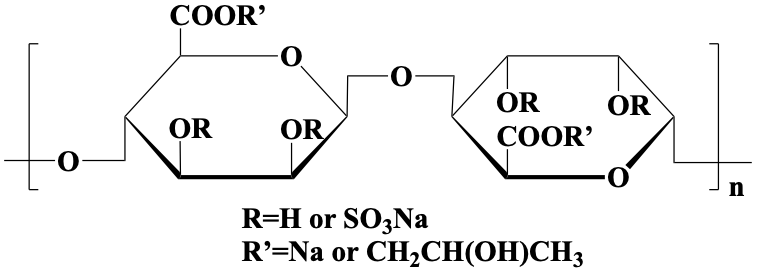
The chemical nature of PSS is the sodium salt of propylene glycol alginate sulfate (as shown in Figure 1). It is a polyanionic compound derived from alginic acid extracted from brown algae (such as Laminaria japonica). The basic preparation process involves first degrading it to obtain low-molecular-weight alginic acid, followed by the introduction of propylene glycol ester groups and sulfate ester groups through chemical modification. Its basic sugar chain backbone consists of β-D-(1,4)-mannuronic acid (M) and α-L-(1,4)-guluronic acid (G). The relative molecular weight of the PSS active pharmaceutical ingredient is generally 10,000–20,000 Da, with a distribution width <1.80, and the ratio of mannuronic acid to guluronic acid (M/G ratio) is approximately 7:3 [8].
Compared with heparin, the degree of sulfation of PSS is lower: heparin’s sulfation degree can reach approximately 40% (based on sulfate content), whereas the quality standard for PSS specifies an organic sulfur content of 9.0–13.0% in the dried product [10]. In aqueous solution, PSS exhibits typical polyanionic electrolyte behavior. The molecular chain carries both sulfate groups (strongly acidic, fully dissociated at physiological pH) and carboxylic acid groups (weakly acidic, partially dissociated), resulting in a high-density negative charge distribution along the polysaccharide chain [8].
3. Clinical Applications
3.1. Indication Areas
The ministerial standard of the Chinese Ministry of Health describes propylene glycol alginate sodium sulfate as: a heparinoid drug with effects including reducing blood viscosity, anticoagulation, lowering blood lipids, and improving microcirculation. It is used for the prevention and treatment of ischemic cardiovascular and cerebrovascular diseases and hyperlipidemia. The formulations include injections and oral tablets. The injection acts rapidly with complete bioavailability and is suitable for inpatient treatment scenarios requiring rapid anticoagulation, such as acute cerebral infarction and myocardial infarction. The oral tablet is convenient to administer, with a half-life of approximately 4–6 h, and is suitable for the long-term prevention and rehabilitation management of ischemic cardiovascular and cerebrovascular diseases. In clinical practice, intravenous administration is often used for patients in the acute phase, transitioning to long-term maintenance with oral formulations once the condition stabilizes [4,8,11].
During PSS’s 40 years of clinical application, its indications have covered multiple fields including cardiovascular diseases, cerebrovascular diseases, peripheral vascular diseases, hyperlipidemia and hyperviscosity, renal diseases, diabetes and its complications, and dermatological conditions, as summarized in Table 1. Among these, ischemic cardiovascular and cerebrovascular diseases (cerebral infarction, cerebral thrombosis, coronary heart disease, angina pectoris) and hyperlipidemia are the mainstays of PSS clinical application. Its efficacy has been extensively validated over 40 years of clinical application and controlled studies: In a clinical study of 282 patients with ischemic cerebrovascular disease, the total effective rate of PSS for acute cerebral infarction was 93.2%, with a marked efficacy rate of 62.9%, both significantly superior to the control group; favorable results were also achieved in patients during the convalescent and sequelae stages of cerebral infarction, as well as in transient ischemic attacks [12]. Regarding hyperlipidemia and hyperviscosity, significant decreases in triglycerides, total cholesterol, and low-density lipoprotein cholesterol levels were observed after PSS injection. The lipid-lowering mechanism is associated with its anionic polyelectrolyte nature, inhibition of HMG-CoA reductase, and improvement of hemorheology [8]. The dual action of PSS in reducing lipids and improving microcirculation confers distinct clinical value in the patient population receiving comprehensive management for cardiovascular and cerebrovascular diseases.
Overview of Clinical Applications of PSS.
| Category | Clinical Applications |
|---|---|
| Cardiovascular diseases | Coronary heart disease [13,14], Cor pulmonale [15,16,17], Angina pectoris [18,19,20], Heart failure [21], Hypertension [22,23] |
| Cerebrovascular diseases | Cerebral thrombosis [24], Cerebral infarction [25,26,27,28,29], Transient ischemic attack [30], Otogenic vertigo [31,32], Migraine [33], Pseudobulbar palsy [34] |
| Peripheral vascular diseases | Lower extremity deep venous thrombosis [35] |
| Hyperlipidemia & Hyperviscosity | Hyperlipidemia [36,37,38], Hyperviscosity [39,40], Hyperviscosity in pediatric Henoch-Schönlein purpura [41], Atherosclerosis [42,43] |
| Hematological diseases | Prevention of disseminated intravascular coagulation during chemotherapy for leukemia [44] |
| Renal diseases | Nephrotic syndrome [45,46], Diabetic nephropathy [47] |
| Diabetes mellitus and its complications | Type 2 diabetes [37,48,49], Diabetic foot [50], Diabetic peripheral neuropathy [51,52] |
| Others | Hepatitis [53], Pneumonia [54], Sudden deafness [55,56] |
Taken together, the clinical applications of PSS are anchored in its three core pharmacological effects: anticoagulation, lipid-lowering, and microcirculation improvement. In ischemic cardiovascular and cerebrovascular diseases, these effects act synergistically on thrombosis, atherosclerosis, and microvascular perfusion, providing a coherent rationale for the use of PSS as a comprehensive management agent. For other conditions listed in Table 1, including nephrotic syndrome, diabetic complications, cor pulmonale, and sudden deafness, PSS addresses secondary hypercoagulability, dyslipidemia, or microcirculatory disturbance rather than the primary etiology, and is therefore used as an adjuvant therapy, aiming to alleviate clinical symptoms, improve target organ function, or mitigate the pathophysiological conditions that promote disease progression (specific combination regimens are detailed in Section 3.2). Clinical evidence for several additional conditions, such as xanthelasma palpebrarum [57,58,59], psoriasis [60], neonatal cold injury syndrome [61], restless legs syndrome [62], and cold erythema multiforme [63], remains limited to small case series or individual reports. Overall, the core value of PSS lies in the prevention and treatment of ischemic cardiovascular and cerebrovascular diseases and hypercoagulability-related disorders, while the expanded indications await validation through higher-quality clinical research.
3.2. Areas of Clinical Combination Therapy
As an anticoagulant with well-documented lipid-lowering and microcirculation-improving effects, PSS has been used clinically for decades and is often combined with other medications to exert synergistic effects. In the field of cardiovascular and cerebrovascular diseases, the combination of PSS with aspirin provides complementary advantages and synergistic enhancement, used for the prevention and treatment of ischemic cardiovascular and cerebrovascular diseases and recurrent cerebral infarction [25,32,64,65]. PSS combined with clopidogrel synergistically enhances the antithrombotic effect without the adverse reaction of thrombocytopenia [65]. PSS combined with Shexiang Baoxin Wan, Isoket, Lunan Xinkang, Danhong, etc., effectively improves myocardial blood supply and reduces angina attacks, and can be used to treat unstable angina pectoris [19,20,66,67]. In the management of hyperlipidemia, PSS combined with bezafibrate effectively improves blood lipid profiles [49,68]; combination with ahylysantinfarctase results in a more significant reduction in β-lipoprotein and triglyceride levels [69]; combination with simvastatin lowers concentrations of total cholesterol, triglycerides, and low-density lipoprotein cholesterol while increasing high-density lipoprotein cholesterol concentration, significantly improving the hypercoagulable state [36]. In hypertension management, PSS combined with captopril or felodipine is safe and effective in lowering blood pressure and improving hemorheological characteristics [22]; combination with nifedipine as an adjuvant treatment for elderly hypertension has also achieved satisfactory results [23]. Additionally, PSS combined with Astragalus, captopril, dopamine, etc., can be used to treat cor pulmonale [70,71,72,73,74,75,76]. These combination therapy regimens fully demonstrate the clinical value of PSS as a multi-target drug for anticoagulation, lipid regulation, and microcirculation improvement in the comprehensive management of cardiovascular and cerebrovascular diseases.
In addition to the aforementioned core cardiovascular and cerebrovascular indications, PSS has also been used in multiple fields such as nephrotic syndrome, type 2 diabetes, diabetic complications, sudden deafness, and migraine (Table 2) [4,6,8,70].
Drugs Combined with PSS and Their Clinical Indications.
| Clinical Indications | Drugs |
|---|---|
| Pulmonary heart disease | Astragalus [71], Captopril [72,73], Dopamine [74], Hydroxyethyl starch [75], Compound Danshen Injection [76] |
| Hepatitis B | Ribavirin [77], Lentinan [77], Compound Danshen Injection [78], Anisodamine [78] |
| Hyperviscosity & Hyperlipidemia & Hypercoagulable state | Mailuoning [79,80], Xinnaoshutong [81], Oryzanol [82], Mannose Ester [83], Lovastatin [84] |
| Diabetes mellitus and its complications | Bezafibrate [49], Mecobalamin [51], Oryzanol [82], Lovastatin [84], Aspirin [85], Vitamin E [85], Yiqi Huoxue Prescription [86] |
| Nephrotic syndrome | Compound Danshen Injection [87], Heparin [88], Astragalus [89], Dipyridamole [46], Captopril [90,91], Potenline [92] |
| Sudden Deafness | Alprostadil [55], Dihydroergotoxine mesylate [56] |
| Vertigo | Cinepazide maleate [31,32], Betahistine [93], Dipyridamole [94] |
| Migraine | Nimodipine [33] |
| Angina | Shexiang Baoxin Pills [19], Danhong [20], Isoket (Isosorbide dinitrate) [66], Isosorbide Mononitrate [67] |
| Pneumonia | Scopolamine [54], Naloxone [95], Mannose Ester [96] |
Collectively, these regimens highlight the versatile role of PSS as a multi-target adjunctive therapy in cardiovascular and cerebrovascular diseases, contributing to synergistic effects across anticoagulation, lipid regulation, and microcirculation improvement.
3.3. Medication Safety
The incidence of adverse reactions to PSS injection is approximately 5–23% [5]. Bleeding tendency is the most concerning anticoagulation-related adverse reaction, manifesting as gingival bleeding, skin ecchymosis, epistaxis, and in severe cases, gastrointestinal bleeding [10,97]. Allergic reactions mainly present as skin rash and pruritus, and can lead to anaphylactic shock in severe cases [5]. Other adverse reactions include occasional gastrointestinal symptoms such as nausea, vomiting, and diarrhea, and transient, reversible elevation of liver transaminases [5,98]. Excessively rapid intravenous infusion can cause dizziness, headache, and palpitations, necessitating strict control of the drip rate. Additionally, PSS has documented incompatibility with several drugs (e.g., lomefloxacin, amikacin sulfate, ciprofloxacin, levofloxacin), resulting in visible precipitation upon co-administration through the same intravenous line [99,100,101,102,103]. Flushing the infusion line with normal saline or 5% glucose before and after PSS administration is recommended.
In contrast, the oral formulation of PSS demonstrates a substantially more favorable safety profile. In a pooled analysis of 24,089 cases reported up to 2019, the total adverse event reporting rate was 1.29%, with 303 cases related to intravenous infusion and only 7 cases to oral administration [5]. This pronounced difference likely reflects lower peak plasma concentrations via the oral route. Mild gastrointestinal symptoms may occur. Regular monitoring of liver function is advisable for long-term oral users as a precautionary measure. Across both formulations, PSS is not recommended for patients with a history of bleeding disorders or severe hepatic and renal insufficiency. From a pharmacovigilance perspective, several gaps merit attention: the safety data derive primarily from spontaneous reporting and small-scale studies rather than prospective registries; drug–drug interactions with antiplatelet agents and other anticoagulants have not been systematically evaluated; and the mechanistic basis of PSS-induced bleeding, whether due to anticoagulant activity or off-target effects on platelets and vascular integrity, warrants further investigation [97].
4. Pharmacological Research
The multiple clinical effects of PSS, including anticoagulation, lipid-lowering, microcirculation improvement, and neuroprotection, as well as adverse reactions such as bleeding and allergies, can find their pharmacological and structure-activity explanations at the molecular level.
4.1. Pharmacokinetic Profile
The oral bioavailability of PSS stems from its structural modification: the propylene glycol ester group introduced at the C-6 carboxyl group of alginic acid reduces the overall hydrophilicity of the molecule, improves transmembrane performance, and makes oral administration feasible [8]. After intravenous administration, PSS is rapidly distributed widely to tissues such as the liver and kidneys and eliminated relatively quickly. Approximately 40% is excreted within 3 h post-dose, about 70% within 12 h, and about 80% within 72 h. After oral administration, the plasma protein binding rate of PSS is extremely high (up to 98% at 24 h), the elimination half-life is approximately 4–6 h, and it is mainly excreted via the renal route [11,104].
4.2. Anticoagulant and Antithrombotic Effects
Anticoagulation and antithrombosis are the core pharmacological actions of PSS, with an anticoagulant potency approximately 1/3 to 1/2 that of heparin, which has been fully validated in long-term clinical practice. Mechanistic studies reveal that, unlike heparin, which acts primarily through AT-III, PSS exerts anticoagulant effects through both AT-III-dependent and HC-II-mediated pathways [104]. Research at the methodological level further confirms this difference: traditional potency assays using heparin as a standard are not entirely suitable for PSS because its anticoagulant activity curve is not parallel to that of heparin [105]. Fragments of different molecular weights prepared through precise fractionation show significant differences in anticoagulant activity, confirming the dependence of anticoagulant activity on specific structural domains such as molecular weight and degree of sulfation [104,105,106,107]. This multi-target, structure-dependent anticoagulant mode provides a crucial molecular basis for understanding the balance between its therapeutic efficacy and bleeding risk.
4.3. Lipid-Lowering Effect
Numerous clinical and animal experiments consistently confirm that PSS can comprehensively regulate the blood lipid profile, including reducing serum total cholesterol, triglycerides, and low-density lipoprotein cholesterol, and increasing high-density lipoprotein cholesterol levels [4,8,108,109]. Its lipid-lowering mechanism is multi-faceted: First, as an anionic polyelectrolyte, PSS can interact electrostatically with the surface of lipoprotein particles, endowing lipid droplets with a negative charge, hindering their adhesion to vascular endothelium, and accelerating hepatic uptake and clearance of lipids [110]. Second, PSS’s effects on reducing blood viscosity and improving hemorheology also promote lipid metabolic transport from a hemodynamic perspective [8]. These mechanisms collectively form the pharmacological basis for its anti-atherosclerotic effect.
4.4. Improvement of Hemorheology and Microcirculation
The anticoagulant and lipid-lowering effects of PSS synergistically improve the macroscopic and microscopic flow properties of blood. Clinical observations confirm that PSS can effectively accelerate microvascular blood flow velocity and disaggregate erythrocyte aggregation, thereby improving microcirculatory perfusion in the nail fold, kidneys, and nervous tissues [8]. In a rat model of diabetic cardiomyopathy, the use of PSS-loaded PLGA nanoparticles further revealed the molecular pathways by which it improves coronary microcirculation: this formulation significantly increased myocardial microvessel density and improved their structural integrity. The mechanisms were respectively attributed to the alleviation of microvascular dysfunction by inhibiting the NF-κB signaling pathway, and the improvement of mitochondrial function and inhibition of oxidative stress by regulating the Sirt1/HIF-1α pathway [111,112,113]. These findings expand the understanding of PSS’s cardiovascular and cerebrovascular protective effects at the microvascular level.
4.5. Neuroprotective Effects
In ischemic brain injury, PSS exhibits multifaceted direct neuroprotective effects, distinct from the indirect benefits derived from its anticoagulant action. In vitro, PSS significantly protects against neuronal cell damage induced by oxygen-glucose deprivation or sodium nitroprusside. The core mechanisms involve antioxidation (reducing malondialdehyde, increasing superoxide dismutase activity), inhibiting intracellular calcium overload, and reducing apoptosis by inhibiting caspase-3 activity [114,115]. In cell-free systems, PSS has been demonstrated to possess the chemical activity of directly scavenging peroxyl radicals, providing a molecular basis for the aforementioned cytoprotective effects [116]. In in vivo cerebral ischemia-reperfusion models, PSS inhibits the pathological increase in intracellular calcium concentration in damaged neurons, downregulates the expression of the pro-apoptotic protein p53 and the transcription factor NF-κB, ameliorates disturbances in the metabolism of sodium, calcium ions, and monoamine neurotransmitters in brain tissue, and enhances ion pump ATPase activity [117,118,119]. Furthermore, in a chick embryo dorsal root ganglion culture model, PSS dose-dependently promotes neurite outgrowth, suggesting potential neurotrophic or pro-regenerative capacity [120]. These interrelated antioxidative, anti-apoptotic, and neural microenvironment-modulating effects constitute the core pharmacological basis for its neuroprotection in the treatment of ischemic stroke.
4.6. Anti-Fibrotic Effect
Fibrosis is a common pathological outcome in various chronic diseases, including those of the heart and liver. PSS exhibits anti-fibrotic activity across multiple organs, with its core mechanism primarily involving the inhibition of the TGF-β1/Smad2/3 signaling pathway. In the myocardium, a PSS nano-formulation downregulates fibrinogen-like protein 2 expression, alleviating myocardial fibrosis and improving left ventricular function in rats with diabetic cardiomyopathy [121]. In the liver, PSS inhibits the TGF-β1/Smad2/3 and JAK2/STAT3 signaling pathways, reducing liver inflammation and inhibiting hepatic stellate cell activation, thereby delaying the progression of liver fibrosis [122]. Notably, in the field of atrial fibrosis, studies using PSS derivatives with different M/G ratios have confirmed that this activity can be significantly optimized by specific structural parameters, laying an important foundation for subsequent precision design [123].
4.7. Anti-Inflammatory Effect
The inflammatory response is a common pathophysiological basis for atherosclerosis, atrial fibrillation, and ischemic stroke [124,125,126]. Recent studies have revealed the multi-target regulatory characteristics of PSS on multiple inflammatory signaling pathways. In an acute pancreatitis model, PSS alleviates caerulein-induced pancreatic injury by upregulating the MEK/ERK pathway [127]; in a liver injury model, PSS alleviates concanavalin A-induced immune liver injury by activating the PI3K/Akt pathway, while also attenuating hepatic ischemia-reperfusion injury by inhibiting the JNK, ERK, and P38 MAPK pathways [128,129]. Furthermore, in an LPS-induced acute lung injury model, PSS inhibits the NF-κB signaling pathway, reducing the release of pro-inflammatory cytokines and neutrophil recruitment [130]. This coordinated regulation of multiple key pathways, including MEK/ERK, PI3K/Akt, MAPK, and NF-κB, under different disease contexts, particularly its property of simultaneously inhibiting inflammation and fibrotic processes [122,123], closely aligns with the need for multi-target intervention in the chronic management of cardiovascular and cerebrovascular diseases.
4.8. Other Pharmacological Actions
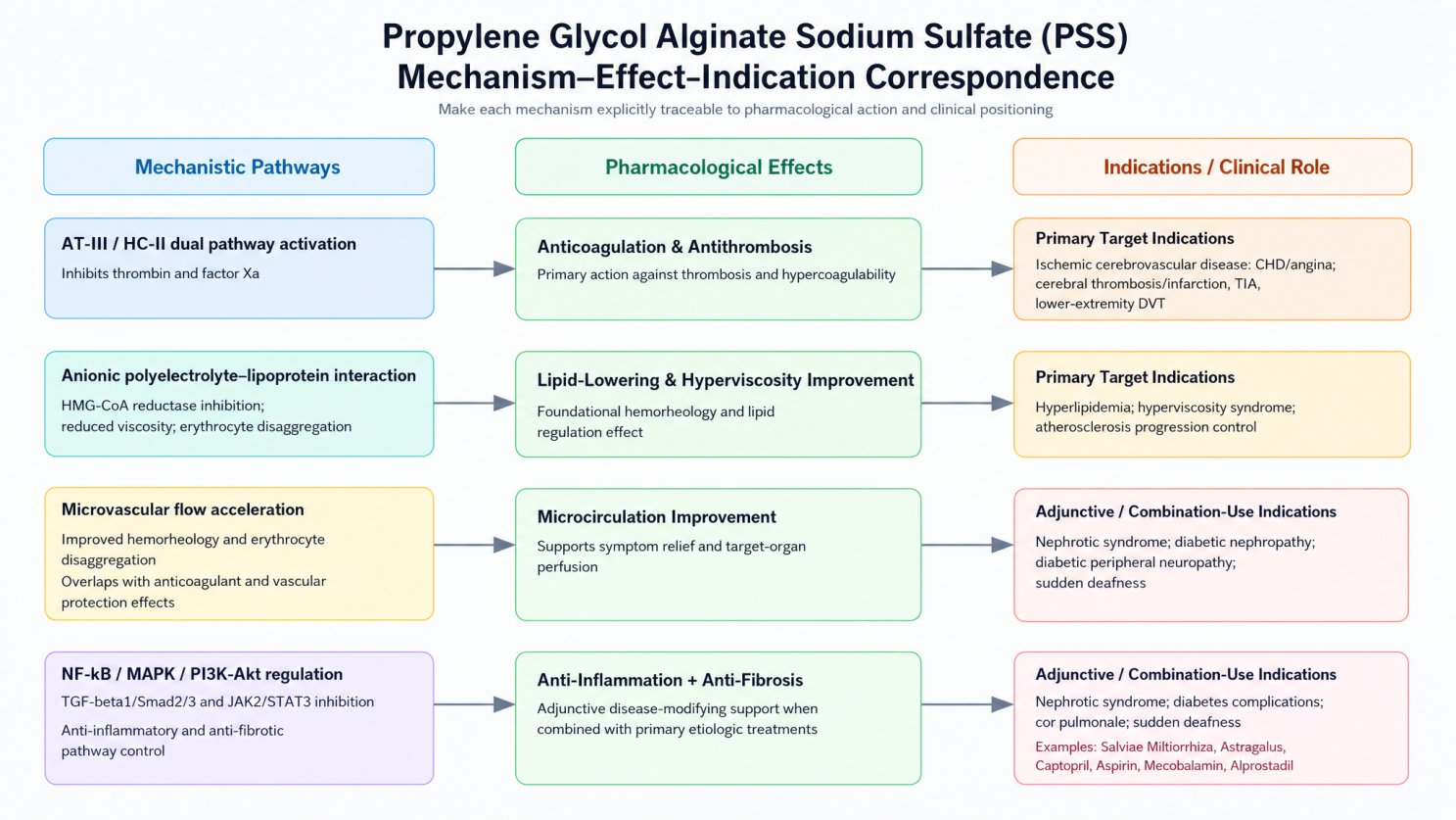
In addition to the above pharmacological actions closely related to cardiovascular and cerebrovascular systems, PSS has also accumulated preclinical evidence in anti-tumor metastasis and FGF/FGFR signaling regulation. Regarding anti-tumor metastasis, PSS exhibits significant inhibitory activity against both P- and L-selectins, with weaker blockade of E-selectin; fractions with high G content and high molecular weight show superior activity [131]. Subsequent research further confirmed that PSS inhibits the infiltration of regulatory T cells (Tregs) into tumors by blocking P-selectin, increasing the proportion of CD8⁺ T cells and Granzyme B⁺ CD8⁺ T cells, significantly inhibiting lung metastasis and prolonging overall survival [132]. In terms of FGF/FGFR signaling regulation, PSS selectively binds FGF2 with high affinity (KD = 2.73 × 10⁻8 M, comparable to heparin), inhibits FGF2-mediated angiogenesis and tumor cell invasion in vitro, and downregulates the expression and activity of MMP-2 and MMP-9 [107]. Regarding antiviral activity, PSS and its derivative polyguluronic acid sulfate (PGS) exhibit significant inhibitory activity against the SARS-CoV-2 main protease 3CLpro (IC50 of 1.42 μM and 1.20 μM, respectively) [133]. These findings expand the pharmacological spectrum of PSS from anti-tumor and antiviral dimensions. The molecular mechanisms, pharmacological effects, and clinical indications of PSS are summarized in Figure 2.
4.9. Structure-Activity Relationship and the “Independent Modulation” Feature
Collectively, the pharmacological activities described above exemplify a “one backbone, multiple functions, independent modulation” framework. Anticoagulation and antithrombosis are core, while lipid-lowering, microcirculation improvement, neuroprotection, and anti-fibrosis complement and enhance its comprehensive therapeutic effects.
From the perspective of structure-activity relationships (SAR), the dependence patterns of various activity dimensions on the structural parameters of PSS show significant differences. In the dimension of molecular weight, anticoagulant activity is positively correlated with molecular weight, reflecting the requirement for a minimal chain length to form a stable ternary complex bridging AT-III and the target serine protease; oligosaccharide fractions almost completely lose anticoagulant activity [107], whereas FP-6k retains antithrombotic activity with reduced bleeding risk [105], indicating that the molecular weight threshold for anticoagulation can be decoupled from bleeding risk. In the dimension of the M/G ratio, fractions with a low M/G ratio (high G content) have stronger anticoagulant activity but also higher bleeding risk [10,97]. Meanwhile, the high G content derivative PGGS shows optimal activity in anti-atrial fibrosis [123]; the same structural parameter may have opposite effects on different activities. In FGF/FGFR signaling, the anticoagulant potency of PSS is only 1/3 to 1/2 that of heparin, whereas its anti-FGF2 activity is comparable to or even stronger than that of heparin [134]. Oligosaccharide fractions, while losing anticoagulant activity, can still retain or even enhance FGF/FGFR activation activity [107], further confirming that the structural basis of these two activities can be differentiated.
The core implication is that activities carried on the PSS backbone can be independently modulated through differential combinations of molecular weight, M/G ratio, and degree of sulfation. An M/G ratio > 1.5, a Mw of approximately 9 kDa, and a DS of 9.0–13.0% represent the critical quality control window for balancing efficacy and safety [10]. FP-6k and PGGS represent two precision optimization strategies based on SAR [104,123]. A systematic summary of SAR is provided in Supplementary Table S1. A remaining translational challenge is the inherent heterogeneity of alginate-derived polysaccharides, which can cause batch-to-batch variability in molecular weight distribution, M/G ratio, and sulfation pattern. Advanced analytical methods (e.g., high-resolution SEC-MALLS, NMR-based M/G determination) and bioactivity-based quality control assays are needed to narrow this variability and ensure the consistency required for precise SAR-driven development.
5. Conclusions and Future Perspectives
As the world’s first approved oral heparinoid marine drug, PSS holds a significant historical position in the field of cardiovascular and cerebrovascular disease prevention and treatment. Currently, the long-term management of cardiovascular and cerebrovascular diseases faces three core challenges: inadequate accessibility and compliance of oral anticoagulants; bleeding risk as the major safety bottleneck; and the inherent limitation of single-target therapy in addressing the multiple pathological processes that characterize these diseases, including thrombosis, fibrosis, inflammation, and microcirculatory disturbance. The R&D experience of PSS precisely offers referable coping strategies for these challenges.
First, PSS, using alginic acid as a raw material, has a relatively simple preparation process and low production cost, providing an economical and accessible oral anticoagulation option for primary care settings and long-term out-of-hospital management. Second, structure-activity relationship studies have revealed that the anticoagulant activity of PSS can be differentially modulated from its anti-fibrotic and FGF/FGFR activation activities via structural parameters such as molecular weight and M/G ratio, offering a clear structural optimization pathway for developing next-generation PSS derivatives with reduced bleeding risk (e.g., FP-6k). Third, the multi-target property of PSS, which simultaneously modulates multiple pathological processes including coagulation, blood lipids, microcirculation, and inflammation, aligns with the contemporary shift in cardiovascular and cerebrovascular disease management from “single-target therapy” to “comprehensive management”. However, realizing the full potential of this multi-target approach will require addressing several interconnected challenges: elevating the clinical evidence for expanded indications from observational studies to international multicenter randomized controlled trials; overcoming the inherent heterogeneity of alginate-derived polysaccharides through advanced analytical methods and bioactivity-based quality control; and elucidating the precise molecular mechanisms by which specific structural features differentially modulate distinct biological activities. This knowledge will help convert current empirical SAR correlations into a more predictive design framework.
Looking forward from the perspective of precision medication for cardiovascular and cerebrovascular diseases, the development of PSS derivatives based on SAR is expected to achieve “disease- and subtype-specific medication”—atrial fibrillation patients using PGGS-like molecules possessing both anticoagulant and anti-fibrotic activities, stroke patients using PSS fragments with both neuroprotective and anticoagulant activities, and patients with chronic coronary heart disease requiring long-term prevention using structural fragments with a lower bleeding risk. This strategy represents the developmental direction of polysaccharide drugs from “empirical medication” towards “precision design”. The nearly four-decade history of PSS research and development demonstrates that establishing a multi-dimensional quality control system, elucidating the fine regulatory network of SAR, and advancing the transition from empirical medication to precision design are crucial foundations for maximizing its clinical value. PSS has not only played a significant historical role in the prevention and treatment of cardiovascular and cerebrovascular diseases, but its R&D pathway from natural polysaccharide to precision design also offers a valuable reference for the modern development of carbohydrate-based drugs.
Supplementary Materials
The additional data and information can be downloaded at: https://media.sciltp.com/articles/others/2611120919575323/IJDDP-2026000018-SI.pdf. Table S1: Structure–activity relationship summary of PSS.
Author Contributions
X.X., Y.W. and G.D.: conceptualization; X.X., Q.L., J.L. and C.H.: investigation; X.X., Q.L. and J.L.: writing—original draft; X.X. and Q.L.: visualization; Q.L. and C.H.: software; X.X., Y.W. and G.D.: supervision, project administration, writing—review and editing. All authors have read and agreed to the published version of the manuscript.
Funding
This work was supported by grants from Innovative Drug Research and Development-National Science and Technology Major Project (2026ZD1806900 and 2026ZD1806904), and Key R&D Program of Shandong Province (2026CXPT075).
Institutional Review Board Statement
Not applicable.
Informed Consent Statement
Not applicable.
Data Availability Statement
Not applicable.
Conflicts of Interest
The authors declare no conflict of interest. Given the role as Associate Editor-in-Chief, Guanhua Du had no involvement in the peer review of this paper and had no access to information regarding its peer-review process. Full responsibility for the editorial process of this paper was delegated to another editor of the journal.
Use of AI and AI-Assisted Technologies
During the preparation of this work, the authors used Deepseek to search literature and edit language, including improvements to grammar, clarity, and readability. After using this tool, the authors reviewed and edited the content as needed and take full responsibility for the content of the published article.
References
- 1.
World Health Organization. Cardiovascular Diseases (CVDs). Available online: https://www.who.int/news-room/fact-sheets/detail/cardiovascular-diseases-(cvds) (accessed on 1 June 2026).
- 2.
GBD 2021 Stroke Risk Factor Collaborators. Global, regional, and national burden of stroke and its risk factors, 1990–2021: A systematic analysis for the Global Burden of Disease Study 2021. Lancet Neurol. 2024, 23, 973–1003.
- 3.
Steffel, J.; Collins, R.; Antz, M.; et al. 2021 European Heart Rhythm Association practical guide on the use of non-vitamin K antagonist oral anticoagulants in patients with atrial fibrillation. Europace 2021, 23, 1612–1676.
- 4.
Mutch, A.L.; Yang, J.; Ferro, V.; et al. Sulfated alginate for biomedical applications. Macromol. Biosci. 2024, 24, e2400237.
- 5.
Shan, M.; Feng, N.; Zhang, L. Efficacy of heparinoid PSS in treating cardiovascular diseases and beyond—A review of 31 years clinical experiences in China. Prog. Mol. Biol. Transl. Sci. 2019, 163, 75–93.
- 6.
Yu, G.L.; Zhao, X.; Li, G.Y. (Eds.) Carbohydrate Pharmacology, 2nd ed.; Ocean University of China Press: Qingdao, China, 2025; pp. 204–205.
- 7.
Gao, Y.; Zhang, L.; Jiao, W. Marine glycan-derived therapeutics in China. Prog. Mol. Biol. Transl. Sci. 2019, 163, 113–134.
- 8.
Li, C.X.; Sun, Y.; Guan, H.S. Research progress and enlightenment of marine drug alginic sodium diester. Chin. Bull. Life Sci. 2012, 24, 1019–1025. (In Chinese)
- 9.
National Pharmacopoeia Committee. Drug Standard of Ministry of Public Health of the People’s Republic of China; Chemical industry press: Beijing, China, 1995; Part 2, Volume 4, pp. 120–123.
- 10.
Xue, Y.T.; Ren, L.; Li, S.; et al. Study on quality control of sulfated polysaccharide drug, propylene glycol alginate sodium sulfate (PSS). Carbohydr. Polym. 2016, 144, 330–337.
- 11.
Liu, Z.M.; Jiang, G.H.; Yi, M.G.; et al. A study on the pharmacokinetics of 3H-polysaccharide sulphate in mice and rats. J. Beijing Norm. Univ. 1991, 2, 231–236. Available online: https://kns.cnki.net/kcms2/article/abstract?v=4Kwr3-EHKF5RJ7j2D4fC-qhWtyB0EhvMBL9jDCez3ejY5E6ydHZ8py59AaEqGlqCNSXBwxGskpviuPOY5Baaoh4VDFoLA5HfTtThPnLoJXXfJXRo8wsf8FBucH_QaS60R6DjCIBb0J88W0hABerZQX8q2omA5YS3cc8HOeQKdS5gL-3Ub9JrmA==&uniplatform=NZKPT&language=CHS (accessed on 1 June 2026). (In Chinese)
- 12.
Han, Z.Y.; Wang, Q.A.; Zeng, G.J. Clinical and laboratory observations on polysaccharide sulphate (PSS) in 282 cases of ischemic cerebrovascular disease. Chin. Med. J. 1991, 104, 562–566.
- 13.
Wu, K.; Qian, W.M.; Wu, P. Therapeutic effects of polysaccharide sulfate intravenous injections in treatment of coronary heart disease. Chin. J. Clin. Pharmacol. Ther. 1996, 1, 31–33. (In Chinese)
- 14.
Pan, X.Q.; Huang, X.D.; Zhuang, Y.L. Clinical efficacy observation of alginic sodium diester injection in the treatment of elderly coronary heart disease. Chin. Primary Health Care 2006, 13, 2052–2053. (In Chinese)
- 15.
Luo, C.N. Evaluation of the effects about alginic sodium diester in the treatment of chronic pulmonary heart disease. China Mod. Med. 2010, 17, 60–63. (In Chinese)
- 16.
Li, S.R.; Huang, Y.M.; Wang, L.H. Clinical analysis of 56 cases of cor pulmonale treated with alginic sodium diester. Qinghai Med. J. 2012, 42, 34–35. (In Chinese)
- 17.
Lu, M.J.; Ding, H.F.; Li, Q.L.; et al. Clinical efficacy of polysaccharide sulfate in treating 120 chronic cor pulmonale cases in acute phase. China J. Mod. Med. 2003, 21, 101–102. Available online: https://kns.cnki.net/kcms2/article/abstract?v=4Kwr3-EHKF4lp7aDhljJrA-9yeS55VQB9k-ZeRJAUxgcOBWmgPdVD8Pk4M9t1nepZ6edXhvrVNv92y4ufo_kGeNW3ri_QBknazmuXL1C1ZQlIbe1QxT1Npg9ZBt80HGfc8FEoadgMGN6vTOCC58zyYk_yDpkW8AP8_g8cOaJLd5cgCqJQzDSUg==&uniplatform=NZKPT&language=CHS (accessed on 1 June 2026). (In Chinese)
- 18.
Liu, Z.Y.; Liu, L. Clinical observation of alginic sodium diester in treatment of unstable angina pectoris. J. Med. Theory Pract. 2010, 23, 662–663. (In Chinese)
- 19.
Xiao, M.; Yang, L.M.; Chen, Z.; et al. Clinical observation of Shexiang Baoxin Pills combined with alginic sodium diester in treatment of unstable angina. Mod. Drugs Clin. 2017, 32, 800–803. (In Chinese)
- 20.
Jiang, J.M. Clinical efficacy observation of Danhong Injection combined with alginic sodium diester for unstable angina pectoris. Res. Integr. Tradit. Chin. West. Med. 2016, 8, 190–193. (In Chinese)
- 21.
Cao, B.S.; Li, C.H. Clinical analysis of 32 cases of chronic cor pulmonale complicated with heart failure treated with Mai Tong and alginic sodium diester. J. Zhangjiakou Med. Coll. 1997, 57–58. Available online: https://kns.cnki.net/kcms2/article/abstract?v=4Kwr3-EHKF4Twr6h0G13fnoljAgU_P-UwnxvcZ1L7bO3lWVGF2utO7d0IArjv0Nbb1hW9xBcIlSBqFke53et321enCYQiVC9dwBHwvv02lwh_u4RkeZBQ7BXICbrUEkVwNICNPaI06XBk-_nJTLnAbPfjqxBmEnpx0p7XrGEFZ6WbhkFHzacmg==&uniplatform=NZKPT&language=CHS (accessed on 1 June 2026). (In Chinese)
- 22.
Hu, S.X. Clinical observation of combined captopril, felodipine and alginic sodium diester in treatment of 68 patients with essential hypertension. J. North China Coal Med. Coll. 2006, 8, 64–65. (In Chinese)
- 23.
Gao, Y. Combined nifedipine and alginic sodium diester for 54 elderly patients with hypertension. Henan Med. Inf. 1999, 7, 35–36. (In Chinese)
- 24.
Yan, J.; Xiao, X.W. 33 cases of cerebral thrombosis treated with alginic sodium diester. Herald Med. 2002, 21, 220–221. (In Chinese)
- 25.
Bai, Z.G.; Zhang, H.Y.; Ge, L.Q.; et al. Efficacy observation of combined aspirin and alginic sodium diester in preventing recurrence of cerebral infarction. Shandong Med. J. 2009, 49, 100–101. (In Chinese)
- 26.
Zhang, C.Y. Effect of propylene glycol alginate sodium on recovery of neurological function in patients with acute cerebral infarction. J. Clin. Med. Pract. 2013, 17, 98–99. (In Chinese)
- 27.
You, X.H.; Yang, M.; Liu, Y.L.; et al. Clinical study on polysaccharide sulphate combined alteplase in treatment of acute cerebral infarction. Drugs Clin. 2019, 34, 1678–1682. (In Chinese)
- 28.
San, X.Z.; Ren, M.; Zhao, J. Clinical analysis of alginic sodium diester combined with edaravone in acute cerebral infarction. Hebei Med. J. 2011, 33, 2823–2824. (In Chinese)
- 29.
Xu, J.P.; Xu, S.L.; Lai, C.; et al. Clinical and experimental study of polysaccharide sulfate (PSS) in the treatment of acute cerebral infarction. Chin. J. Mar. Drugs 2002, 38–41. Available online: https://kns.cnki.net/kcms2/article/abstract?v=4Kwr3-EHKF7CYRQB4FC7leu8FImJxAlfK1azyw-vFbJ4TgiJ4Y6VCo9mebQVu6AK4gHu0_Z0d67b_bfshJX_-b9NwbfsDULE1bZKJ2JrmXNOQzDyCQ1mzcZeQLCjwmpa7HPx9VEudmm_tpMvsmemZvEfLgLAzU4nHuTx3fv1GmBmPp5HICzCUQ==&uniplatform=NZKPT&language=CHS (accessed on 1 June 2026). (In Chinese)
- 30.
Liu, C.Y.; Dong, L.P. Efficacy analysis of alginate diester sodium tablets combined with aspirin in treatment of transient ischemic attack. J. Xinjiang Med. Univ. 2024, 47, 1359–1363, 1369. (In Chinese).
- 31.
Bai, L.P.; Chu, Y.T.; Zhang, Y.; et al. Clinical observation of cinepazide maleate combined with alginic sodium diester in the treatment of otogenic vertigo. Guide China Med. 2019, 17, 40–41. (In Chinese)
- 32.
Sun, J.D.; Jiang, L. Effect of cinepazide maleate combined with alginic sodium diester on treatment of otogenic vertigo. Clin. J. Med. Off. 2015, 43, 1010–1012. (In Chinese)
- 33.
Wang, J. Clinical observation of combined nimodipine and alginic sodium diester for prevention and treatment of migraine in 60 patients. Guangxi Med. J. 1999, 21, 134–135. (In Chinese)
- 34.
Wang, S.P.; Liu, S.Q. Comparison of alginic sodium diester and troxerutin in the treatment of pseudobulbar palsy. Chin. J. Mar. Drugs 1995, 30–33. (In Chinese)
- 35.
Guo, J.Y.; Wen, T.; Shan, H.; et al. Clinical observation of alginic sodium diester combined with rivaroxaban in treatment of lower limb deep vein thrombus complicated with heparin-induced thrombocytopenia. Anhui Med. Pharm. J. 2018, 22, 1979–1982. (In Chinese)
- 36.
Liu, C.L.; Zhu, S.F. Clinical observation of simvastatin combined with alginic sodium diester on the treatment of hypertriglyceridemia. Chin. J. Pest Control 2008, 24, 828–829. Available online: https://kns.cnki.net/kcms2/article/abstract?v=4Kwr3-EHKF59EKcrvIn41PFxNnUUc9boET_bMzTct-DDzIZUPwRq66c-6Ep8e7y5aQxSo5sll6agNBI-W1b2ivDZtaTuDYnUHIzcHODRp6CaDpBtwST1h-esRx0MbEewN1xHZsTa0_r2MpJEFceY25z39MDI5LuOqgMq3r6Ye0gqQFoXN7ezHQ==&uniplatform=NZKPT&language=CHS (accessed on 1 June 2026). (In Chinese)
- 37.
Sun, S.J.; Yang, S.Q.; Zhang, H.Y.; et al. Clinical observation of alginic sodium diester in treating 27 patients with diabetic hyperlipidemia. Clin. Focus 1990, 5, 399–400. (In Chinese)
- 38.
Zhang, X.H.; Wang, Y.L.; Guo, A.X.; et al. Clinical observation of injectable alginic sodium diester for 50 patients with hyperlipidemia. Hebei Med. J. 2011, 17, 1473–1477. (In Chinese)
- 39.
Gao, L. Efficacy observation of alginic sodium diester in treatment of hyperlipidemia and hyperviscosity in 120 cases. J. Qiqihar Med. Univ. 2009, 30, 688–689. (In Chinese)
- 40.
Zhu, Y.J.; Yang, Y.R.; Li, P.H. Efficacy observation of alginic sodium diester in treating 61 elderly patients with coronary heart disease combined with hyperviscosity syndrome. J. Rehabil. Recuper. 1993, 8, 159–161. (In Chinese)
- 41.
Cao, Z.X.; Zhao, Z.F.; Duan, X.Y. Clinical observation of alginic sodium diester in treatment of 30 children with allergic purpura. Shandong Med. J. 2003, 43, 23. (In Chinese)
- 42.
Chen, M.Q.; Chen, J.K.; Zhou, L.J. Effects of polysaccharide sulphate on blood lipids and hemorrheology in coronary heart disease of the elderly patients. J. Chin. Microcirc. 2004, 8, 320–321. (In Chinese)
- 43.
Zhao, X.D.; Xu, G.; Ning, S.F. Observation of hemorheological indexes before and after alginic sodium diester treatment in coronary heart disease patients. Chin. J. Hemorheol. 2004, 325. Available online: https://kns.cnki.net/kcms2/article/abstract?v=4Kwr3-EHKF6VQZjzXfZSsnlEoyqTy9Fvv5dX7cov67pNl2tP5xNyf8UEzaZemZDIitk-TdksL3bAavKOln814-PYu3F_iIbNKm0sy_VMv7CXbt72JqM70PK-nYrpvdEM33ceM3xjbMNaqunPKEJMmShV7JJncAfT4fPIbuwTnhbiR1UwdfNqcg==&uniplatform=NZKPT&language=CHS (accessed on 1 June 2026). (In Chinese)
- 44.
Lin, Z.T.; Liu, X.W.; Zhao, H.G.; et al. Significance of alginic sodium diester in combined chemotherapy for acute non-lymphocytic leukemia. Chin. J. Hematol. 1996, 17, 94. (In Chinese)
- 45.
Zhao, J.B.; Zhang, W.T.; Ma, P.; et al. Effects of alginic sodium diester on hemorheology in 46 patients with nephrotic syndrome. New Drugs Clin. Remedies 1991, 10, 333−349. (In Chinese)
- 46.
Qu, Y.Q. Adjuvant treatment of children’s primary nephrotic syndrome with alginic sodium diester and dipyridamole. China Med. Herald 2010, 7, 71–72. (In Chinese)
- 47.
Yang, S. Effects of alginic sodium diester on plasma endothelin and platelet function in early diabetic nephropathy. Chin. J. Mar. Drugs 2004, 36–38. Available online: https://kns.cnki.net/kcms2/article/abstract?v=4Kwr3-EHKF6OYuM0VdwegleWjg1WxS1CAjQXzZPFs6tpTzEBSmOxx2FCeMn4fMTaoxvTB4jLWDmft4sFRBd3DnUQxdRT3jYlbnPRuQlui_S_HApzwpvnYFLGC_zgHaEfD_jCHHZHgIrKniWjHljWIraRF6s3NjTERTLzUlNm7b2hgdGMU6P-Aw==&uniplatform=NZKPT&language=CHS (accessed on 1 June 2026). (In Chinese)
- 48.
Xia, L. Clinical observation of alginic sodium diester combined with sulfonylurea hypoglycemic agents for 108 patients with type 2 diabetes mellitus. J. Chin. Physician 2002, 4, 446–447. (In Chinese)
- 49.
Zheng, Y.L.; Yao, N.; Sun, Y.H.; et al. Clinical observation of alginic sodium diester combined with bezafibrate in 100 diabetic patients with hyperlipidemia. J. Pract. Diabetol. 2015, 11, 59. (In Chinese)
- 50.
Chen, L.Y.; Zhu, F.Y.; Zhang, Y.D. Efficacy of alginic sodium diester on diabetic vascular lesions and blood lipids. J. Pract. Diabetol. 2005, 1, 27–28. (In Chinese)
- 51.
Guo, Y.J.; Wen, W.M.; Liu, J.Q. Clinical observation of alginic sodium diester in the treatment of diabetic neuropathy. Bull. Med. Res. 2000, 29, 60–61. (In Chinese)
- 52.
Zhang, Q.Y.; Sun, G.S. Effect of polysaccharide sulfate for diabetes with peripheral neuropathy. China Mod. Doctor 2010, 48, 22–23. (In Chinese)
- 53.
Song, J.; Zhang, X.R.; Zhang, X.K.; et al. Effect and significance of alginic sodium diester on plasma endothelin in patients with acute hepatitis B. Clin. Focus 1999, 10, 436–437. (In Chinese)
- 54.
Shen, Y.F.; Yu, L.; Li, L. Efficacy observation of scopolamine combined with alginic sodium diester in neonatal pneumonia. Qilu Med. J. 2002, 2, 143–144. (In Chinese)
- 55.
Dong, F.Q.; Li, X.W. Clinical observation of alprostadil combined with alginic sodium diester for sudden sensorineural hearing loss. China Med. Herald 2007, 5, 63–64. (In Chinese)
- 56.
Wang, W.Y. Clinical observation of dihydroergotoxine mesylate combined with alginic sodium diester for sudden deafness. China Med. Herald 2009, 6, 69. (In Chinese)
- 57.
Zhao, X.L.; Su, X.G.; Zhang, C.; et al. Comparative study of local injection of alginic sodium diester and heparin sodium in the treatment of xanthelasma palpebrarum. Hebei Med. J. 2013, 35, 2782–2783. Available online: https://kns.cnki.net/kcms2/article/abstract?v=4Kwr3-EHKF7vUzC6tF3WkaBF0wHKQqKhALZAppaMwqmCzOLvypcSCJ5u0kw3q7VyQqn3LQrEoYhdeh_A697qeZ3z5Jj8i0NhlORHMTIaGMh-hqcD2wWOwtGwjH7PYbyr80o2fuXdDYAfso2RbfSqFotN3ewtco6sWseWtVcRFHAWh8joRAu_KA==&uniplatform=NZKPT&language=CHS (accessed on 1 June 2026). (In Chinese)
- 58.
Zhao, X.L.; Su, X.G.; Zhang, C. Comparative study of local injection of alginic sodium diester and surgical treatment for xanthelasma palpebrarum. Hebei Med. J. 2013, 35, 1867–1868. Available online: https://kns.cnki.net/kcms2/article/abstract?v=4Kwr3-EHKF4shmPHYlRrYxGxcwGJNUPJSNl2x0nTNWJ5nXJ7vjlHS0ZJwgn-HxYZFNQKySn1SXoIHqlNC5N5CAadI_cL1BrV1I0Z48DvQmC6zd2t6o9cFYOM7AT5Bg7EMVaFUOr9MTzTNKCsnGS6WibWiu-gKR7iu6X0uL1zY8M2xtOLCnmztg==&uniplatform=NZKPT&language=CHS (accessed on 1 June 2026). (In Chinese)
- 59.
An, J.; Hai, O. Clinical application of alginic sodium diester in the treatment of xanthelasma palpebrarum. Chin. J. Aesthetic Med. 2010, 19, 244. (In Chinese)
- 60.
Xia, W.H.; Wang, X.Y. Efficacy observation of alginic sodium diester in treating 115 patients with psoriasis. Chin. J. Dermatovenereol. 1994, 8, 92–93. (In Chinese)
- 61.
Chen, W.Z. Efficacy observation of alginic sodium diester in neonatal cold injury syndrome. Chin. J. Misdiagn. 2010, 10, 6602. (In Chinese)
- 62.
Wang, C.; Fang, C.C. Report of 3 cases of restless legs syndrome treated with alginic sodium diester. J. Binzhou Med. Univ. 1998, 21, 539. (In Chinese)
- 63.
Wang, Q.Y. Efficacy observation of alginic sodium diester in the treatment of cold erythema multiforme. Chin. J. Mar. Drugs 2007, 26, 55–56. (In Chinese)
- 64.
Xu, B.; Xu, Q.; Yan, Y.L.; et al. Effect of aspirin combined with propylene glycol alginate sodium sulfate on prevention of ischemic cardio-cerebrovascular diseases in high-risk population. Occup. Health 2007, 23, 166–168. (In Chinese)
- 65.
Li, S.; He, X.X.; Hu, S.; et al. The comparison study of propylene glycol alginate sodium sulfate in combination with aspirin or clopidogrel for anticoagulant effect, antiplatelet effect and on the properties of blood rheology. Chin. J. Mar. Drugs 2013, 32, 36–42. (In Chinese)
- 66.
Yin, K.M. Combination of isosorbide dinitrate and alginic sodium diester for unstable angina pectoris. Occup. Health 2000, 16, 63. (In Chinese)
- 67.
Mo, H.Y. Efficacy observation of combined isosorbide mononitrate and alginic sodium diester in coronary heart disease. Henan J. Prev. Med. 1999, 10, 323. (In Chinese)
- 68.
Liang, Y. Clinical observation of bezafibrate combined with alginic sodium diester for 33 cases of acute hyperlipidemic pancreatitis. Intern. Med. 2011, 6, 430–433. (In Chinese)
- 69.
Yu, G.Z.; Zhou, H.B.; Liu, C.S. Combined treatment of 56 hyperlipidemia patients with agkistrodon halys antithrombotic enzyme and alginic sodium diester. Shandong Pharm. Ind. 1993, 12, 25. (In Chinese)
- 70.
Zeng, Y.; Yang, D.; Qiu, P.; et al. Efficacy of heparinoid PSS in treating cardiovascular diseases and beyond — a review of 27 years clinical experiences in China. Clin. Appl. Thromb. Hemost. 2016, 22, 222–229.
- 71.
Liu, Y.Y.; Liu, Y.M. Clinical observation of astragalus combined with alginic sodium diester in decompensated cor pulmonale. Xinjiang Med. J. 2000, 30, 260–261. (In Chinese)
- 72.
Li, J.; Li, Y. Efficacy observation of captopril and alginic sodium diester in chronic cor pulmonale. Henan J. Diagn. Treat. 2000, 14, 211–212. (In Chinese)
- 73.
Wu, C.M. Clinical observation of captopril combined with alginic sodium diester for 68 patients with chronic cor pulmonale complicated with right heart failure. Shandong Med. J. 2000, 40, 54. (In Chinese)
- 74.
Xu, M.S. Clinical observation of alginic sodium diester combined with dopamine in 36 patients with cor pulmonale. Mod. J. Integr. Tradit. Chin. West. Med. 2003, 12, 1961. (In Chinese)
- 75.
Qiao, J.; Gao, X.Y.; Zhang, J.; et al. Thirty-six cases of acute exacerbation of cor pulmonale treated with alginic sodium diester plus hydroxyethyl starch. Chin. Fact. Mine Med. 2002, 15, 35. (In Chinese)
- 76.
Zhang, P.Y.; Liu, X.L.; Pang, X.; et al. Hemorheological observation of 42 patients with acute exacerbation of cor pulmonale treated with compound danshen and alginic sodium diester. Shandong Med. J. 1999, 39, 56. (In Chinese)
- 77.
Zhao, H.; Huang, Y.S. Staged treatment of chronic hepatitis B with alginic sodium diester combined with ribavirin and lentinan and comparison with other regimens. Chin. Hepatol. 2001, 6, 130. (In Chinese)
- 78.
Pang, J.J.; Huang, Y.S.; Yu, D.H.; et al. Comparison of alginic sodium diester combined with salvia miltiorrhiza or anisodamine plus vitamin K1 in treating acute hepatitis B. New Drugs Clin. Remedies 1996, 15, 13–15. (In Chinese)
- 79.
Chai, Y.P. Clinical study of Mailuoning and alginic sodium diester in hyperviscosity syndrome. Henan Pract. J. Nerv. Dis. 1999, 2, 30–31. (In Chinese)
- 80.
Wang, N. Treatment of hyperviscosity syndrome with Mailuoning combined with alginic sodium diester. Mod. J. Integr. Tradit. Chin. West. Med. 2002, 11, 1548–1549. (In Chinese)
- 81.
Yu, J.Q.; Liu, L.X. Therapeutic effects of alginic sodium diester and Xinnaoshutong on high blood viscidity and hyperlipaemia. Mod. J. Integr. Tradit. Chin. West. Med. 2002, 11, 2431–2432. (In Chinese)
- 82.
Zhu, W.Y. Combined alginic sodium diester and oryzanol for 50 patients with type 2 diabetes mellitus and hyperlipidemia. Chin. J. Ration. Drug Use 2009, 2, 2. (In Chinese)
- 83.
Liu, X.L.; Yang, D.C.; Liang, Y. Combined use of mannose ester and alginic sodium diester for gout with hyperlipidemia. Hubei J. Tradit. Chin. Med. 2007, 29, 46. (In Chinese)
- 84.
Chang, W.Y.; Ma, X.L. Seventy patients with type 2 diabetes mellitus hypercoagulability treated with alginic sodium diester combined with lovastatin. J. Community Med. 2005, 3, 6–7. (In Chinese)
- 85.
Gu, C.D. Alginic sodium diester combined with low-dose aspirin and vitamin E for prevention of complications of type 2 diabetes mellitus. Clin. Med. 2010, 30, 43–44. (In Chinese)
- 86.
Zhang, Y.L.; Li, D.H.; Zhang, X.M. Clinical study of Yiqi Huoxue Prescription combined with alginic sodium diester injection for early diabetic nephropathy. Chin. J. Integr. Tradit. West. Nephrol. 2004, 3, 160–161. (In Chinese)
- 87.
Pan, Y.L. Eleven children with refractory nephropathy treated with compound danshen injection plus alginic sodium diester. J. Pract. Tradit. Chin. Med. 1997, 17. Available online: https://kns.cnki.net/kcms2/article/abstract?v=4Kwr3-EHKF7xJ8kp2BvrmZCvaUy601_pnVO37Ci9L2egoP6WYgpoIgJ_ToG-eqIGtqNhqncYNbdrckBmqCPG57jAmSZC34hIobeutMC9c5-SyeImsz5TiEOvemTYNE-snHmOpPP0eFufwKZfMh5r_sYIEKoUd9d79ECwZhtLhIL574-EAS8UfQ==&uniplatform=NZKPT&language=CHS (accessed on 1 June 2026). (In Chinese)
- 88.
Zhu, B.Q.; Yang, Y.H.; Zhang, Q.L.; et al. Clinical observation of heparin and alginic sodium diester in 47 children with refractory nephrotic syndrome. Qinghai Med. J. 1999, 29, 3–5. (In Chinese)
- 89.
Huang, X.L. Efficacy observation of alginic sodium diester combined with astragalus injection for primary nephrotic syndrome. Gansu Sci. Technol. 2009, 25, 142–143. (In Chinese)
- 90.
Wu, M.Y. Thirty-two patients with primary nephrotic syndrome treated with captopril and alginic sodium diester. J. Clin. Intern. Med. 1994, 11, 161. (In Chinese)
- 91.
Qian, B.Q. Efficacy observation of captopril and alginic sodium diester in nephrotic proteinuria. Ningbo Med. J. 1995, 7, 161–162. (In Chinese)
- 92.
Wang, C.H.; Fan, J.Y.; Li, X.; et al. Potenline combined with alginic sodium diester and Liuwei Dihuang Pills for refractory nephropathy. J. Qiqihar Med. Univ. 2000, 21, 179. (In Chinese)
- 93.
Xu, Z.J. Combined alginic sodium diester and betahistine for 60 elderly patients with vertigo. Chin. J. Clin. Pharmacol. Ther. 1996, 1, 43. (In Chinese)
- 94.
Wang, P.; Peng, Z.F. Clinical efficacy observation of alginic sodium diester combined with dipyridamole in vertigo treatment. Chin. J. Ration. Drug Use 2010, 3, 57–58. (In Chinese)
- 95.
Gao, S.L.; Fan, G.Z. Antiasthmatic effect of alginic sodium diester and naloxone in children with pneumonia. J. Jining Med. Univ. 1992, 15, 57. (In Chinese)
- 96.
Xu, L.Y.; Liu, C.Y.; Liu, Z.L.; et al. Effects of alginic sodium diester and mannose ester on leukocyte deformability and adhesion function in children with pneumonia. Chin. J. Mar. Drugs 1995, 19–20. (In Chinese)
- 97.
Xue, Y.T.; Li, S.; Liu, W.J.; et al. The mechanisms of sulfated polysaccharide drug of propylene glycol alginate sodium sulfate (PSS) on bleeding side effect. Carbohydr. Polym. 2018, 194, 365–374.
- 98.
Wang, S.L.; Yao, J.J. Three cases of liver function impairment induced by propylene glycol alginate sodium sulfate. Chin. J. Med. 1993, 8, 41. (In Chinese)
- 99.
Lai, L.M. Compatibility contraindication between lomefloxacin injection and alginic sodium diester injection. Chin. J. Misdiagn. 2007, 3957. Available online: https://kns.cnki.net/kcms2/article/abstract?v=4Kwr3-EHKF6qHDkHdUKoBj4te2Wd78CFQ5pIQI5w2osWdFHLicZAywL8YUO4v8iSjnf2aUy17zZZGRSKrw5KydohdR6UqA_sAS8_es9mFPFsve28zttxOOc0UvRwIHRp7nEIbXWpPiqjTI1PcYyDQ95XkGb0k_6NTaMeEaY057JQu3dLlapevA==&uniplatform=NZKPT&language=CHS (accessed on 1 June 2026). (In Chinese)
- 100.
Ding, Z.Y.; Wei, S.J.; Dai, Q.F. Compatibility contraindication of alginic sodium diester injection and amikacin sulfate injection. J. Clin. Pulm. Dis. 2010, 15, 17. (In Chinese)
- 101.
Wu, S.Q. Compatibility contraindication between alginic sodium diester injection and ciprofloxacin injection. Huaihai Med. 2005, 411. (In Chinese)
- 102.
Zhang, J.; Cui, Z.M.; Wei, Z.Q.; et al. Compatibility contraindication between alginic sodium diester injection and ciprofloxacin lactate injection. J. Qiqihar Med. Univ. 2001, 568. Available online: https://kns.cnki.net/kcms2/article/abstract?v=4Kwr3-EHKF6KRif4b0zk3ncqtCpA6RhtSIFYk_txkfgogknM908_9puSgSdxaPdFFbbE9jZf8di9MONs48q-VjAv75Xa5kQqo-wOBQ_Rta_i0yOPUoOEaYXlhYsfhaNQAwHOSwVhtuzfPrjmhT3z2L6MAf6dQqI2I7t5OPtBB3UppAIiCb_LXg==&uniplatform=NZKPT&language=CHS (accessed on 1 June 2026). (In Chinese)
- 103.
Shi, M. Compatibility contraindication between alginic sodium diester injection and levofloxacin lactate injection. Chin. J. Pract. Nurs. 2013, 29, 55. (In Chinese)
- 104.
Xin, M.; Ren, L.; Sun, Y.; et al. Anticoagulant and antithrombotic activities of low-molecular-weight propylene glycol alginate sodium sulfate (PSS). Eur. J. Med. Chem. 2016, 114, 209–219.
- 105.
Xin, M.; He, X.X.; Li, H.H.; et al. Study on bioassay method of polysaccharide sulfate (PSS). Chin. J. Mar. Drugs 2014, 33, 65–69. (In Chinese)
- 106.
Lin, C.Z.; Guan, H.S.; Li, H.H.; et al. The influence of molecular mass of sulfated propylene glycol ester of low-molecular-weight alginate on anticoagulant activities. Eur. Polym. J. 2007, 43, 3009–3015.
- 107.
Wu, J.; Zhang, M.; Zhang, Y.; et al. Anticoagulant and FGF/FGFR signal activating activities of the heparinoid propylene glycol alginate sodium sulfate and its oligosaccharides. Carbohydr. Polym. 2016, 136, 641–648.
- 108.
Wang, L.; Teng, Z.; Wei, M.; et al. Lipid-lowering effect of alginic sodium diester in diabetic rats. Chin. J. Geriatr. Care 2008, 34–36. Available online: https://kns.cnki.net/kcms2/article/abstract?v=4Kwr3-EHKF6D3GPxvLqaWjr8xb3XBtzxRH5Tu2nIofcpTYe8OfEc1uwep0_QLAOCepzPoJc8khC0WbL8iCHJoEo1IJkkuOt9_z_iKWlNaiXp-c4PCtPZhhSix0--Bts724OQACqK0ZL6zDfL798ByPrqe9QYD_9M6QG71g7pVftO9hAl1tLn_g==&uniplatform=NZKPT&language=CHS (accessed on 1 June 2026). (In Chinese)
- 109.
Liang, H.; Liu, Q.; Xiu, Y. Effects of marine drug propylene glycol alginate sodium sulfate on glucose and lipid metabolism in mice. Mater. Plast. 2021, 58, 150–154.
- 110.
Luo, X.M.; Yan, C.; Feng, Y.M. Nanomedicine for the treatment of diabetes-associated cardiovascular diseases and fibrosis. Adv. Drug Deliv. Rev. 2021, 172, 234–248.
- 111.
Mao, Y.; Hu, Y.; Feng, W.; et al. Effects and mechanisms of PSS-loaded nanoparticles on coronary microcirculation dysfunction in streptozotocin-induced diabetic cardiomyopathy rats. Biomed. Pharmacother. 2020, 121, 109280.
- 112.
Gao, W.; Liu, Y.; Zhang, M.; et al. Effect of polysaccharide sulfate-loaded poly(lactic-co-glycolic acid) nanoparticles on coronary microvascular dysfunction of diabetic cardiomyopathy. J. Biomed. Nanotechnol. 2022, 18, 202–210.
- 113.
Qiu, S.; Wu, L.; Zhang, J.; et al. Effect of propylene glycol alginate sodium sulfate nanoparticles on myocardial injury in diabetic rats via silent information regulator 1/hypoxia-inducible factor-1 alpha pathway. J. Nanosci. Nanotechnol. 2021, 21, 1322–1328.
- 114.
Gao, Y.; Ji, B.S.; Ba, Y.F.; et al. Protective effect of alginic sodium diester against oxygen-glucose deprivation injury in cultured rat neurons. Chin. J. Clin. Rehabil. 2006, 53–55. Available online: https://kns.cnki.net/kcms2/article/abstract?v=4Kwr3-EHKF4YrnfHdxYgUcER2wColC6_3XNVY0wiKO14xfBxa5a-gNIRjm8PD4b6M-7W9sH5CPJceKSbb5zo48drYPeOssL30Fm_GdAsvBPGAzl4lna9s8AVRYnH7xyrQv_M5bZdyqkPh3-qiSj6zPhPOre9El6iS1Doa9j0MlNVqLssBrVYRw==&uniplatform=NZKPT&language=CHS (accessed on 1 June 2026). (In Chinese)
- 115.
Wu, C.X.; Ji, B.S. Protective effect of alginic sodium diester on PC12 cell injury induced by sodium nitroprusside. China Pharm. 2008, 984–986. Available online: https://kns.cnki.net/kcms2/article/abstract?v=4Kwr3-EHKF50W_2ltmDI3h03bBfYCd3-xkQwAHkEZ-1O0jDDdDNuoUERXaKOZH_ENqEt_7GZUvlONiA5dvbrNPvPx7L9HpSRAn92wvK9RyUqoVNweK6PyipU_GxXo2Yeg3oeGaUHSdU7NBibmKgn2jq3sTEitbWN3xGmJ_lA3yUGFlbeWnirVg==&uniplatform=NZKPT&language=CHS (accessed on 1 June 2026). (In Chinese)
- 116.
Xue, C.; Yu, G.; Hirata, T.; et al. Antioxidative activities of several marine polysaccharides evaluated in a phosphatidylcholine-liposomal suspension and organic solvents. Biosci. Biotechnol. Biochem. 1998, 62, 206–209.
- 117.
You, Y.; Yang, Q.D.; Xie, H.J.; et al. Intervention effect of alginic sodium diester on acute phase of experimental cerebral ischemia in rats. Chin. J. Arterioscler. 2005, 567–570. Available online: https://kns.cnki.net/kcms2/article/abstract?v=4Kwr3-EHKF5X_8ewKgK_aRnhDSv-uNR0zGsygyJRRSM1q-UwLJ6Tzb4J_D9_5vWsPDcOopgdiASC5fJCwo39Hd4-vh_QePoqASNvhi2J2Dv1nwUnjCoF-rhKRi2h9ZpFkc-nqpQQBj0pOpCY__GqP_lvMZ9S_k7NxE7126OguvK0vWQOabNX-A==&uniplatform=NZKPT&language=CHS (accessed on 1 June 2026). (In Chinese)
- 118.
Liu, B.; Zhang, Y.; Liu, H.; et al. Effect of alginic sodium diester on p53 expression after acute cerebral ischemia reperfusion in rats. Chin. J. Coal Ind. Med. 2005, 82–83. Available online: https://kns.cnki.net/kcms2/article/abstract?v=4Kwr3-EHKF6QR0qi1Ig1Nq8ay5UJiAq2chaK6v0LfD_dgGwbg28lpMXkvjSTq2_oPt2lOsyTXUVxu8Uxts2RIJUdK8p5T7PRZVA44IhXM5JOFfcC3AE0paFipu1PjsF5BXewSZTbQdRk-1wLX_WcurxBqXAAf4Ie-dAKZFyqNYo67Vn78_rIQQ==&uniplatform=NZKPT&language=CHS (accessed on 1 June 2026). (In Chinese)
- 119.
Yu, Y.X.; Wan, Q.; Zhang, R.G.; et al. Effect of alginic sodium diester on NF-κB expression in neurons after simulated ischemia-reperfusion injury. Chin. Pharm. J. 2003, 40–42. Available online: https://kns.cnki.net/kcms2/article/abstract?v=4Kwr3-EHKF4lobw8Xa_ywt1KL2JWWbYupqcvVulng1O0zekmcDmvVVoFvsBBvZ4qNGqcUjf-J1UHqQ8tFIW2YZP-PNAZSwLOjt5AT64Qkzl7EjCWeSeMA6CrhOntCVXjF51HlE-F3EOlfwBOLVurOUnUpWxZet5gcbZFZ9OJOw_D5uUgjdz57g==&uniplatform=NZKPT&language=CHS (accessed on 1 June 2026). (In Chinese)
- 120.
Xie, S.Q.; Du, G.J.; Ji, B.S.; et al. Effects of alginic sodium diester on cerebral microenvironment after focal cerebral ischemia reperfusion in rats and its growth-promoting effect on chick embryo dorsal root ganglia. Chin. Pharm. J. 2006, 33–36. Available online: https://kns.cnki.net/kcms2/article/abstract?v=4Kwr3-EHKF7uNYwIyDdAMsPYNETtf6w-Mevf5nNmo2jyPlCCrcPN7jh6sJImWgLHPZXrk0_qHnVnN0bH5Eq259ZiAW_U2I_7wjHlcrV42ArWEi6dTGcECy_kgDTslrCOXYUXc2mdh17OKBZdb6LikAltkieTyRfTDeVnASdSdvxZGfLj0lxuQQ==&uniplatform=NZKPT&language=CHS (accessed on 1 June 2026). (In Chinese)
- 121.
Yan, G.Y.; Mao, Y.J. Effects of nano-formulated alginic sodium diester on left ventricular function in diabetic cardiomyopathy. Chin. J. Mar. Drugs 2015, 34, 1–8. (In Chinese)
- 122.
Xu, S.; Mao, Y.; Wu, J.; et al. TGF-β/Smad and JAK/STAT pathways are involved in the anti-fibrotic effects of propylene glycol alginate sodium sulphate on hepatic fibrosis. J. Cell. Mol. Med. 2020, 24, 5224–5237.
- 123.
Wang, Q.; Qiu, J.; Hu, X.; et al. Inhibitory effects of propylene glycol alginate sodium sulfate derivatives on atrial fibrosis in atrial fibrillation. Arab. J. Chem. 2024, 17, 105792.
- 124.
Ajoolabady, A.; Pratico, D.; Tang, D.; et al. Inflammation in atherosclerosis: Pathophysiology and mechanisms. Cell Death Dis. 2024, 15, 817.
- 125.
Dobrev, D.; Heijman, J.; Hiram, R.; et al. Inflammatory signalling in atrial cardiomyocytes: A novel unifying principle in atrial fibrillation pathophysiology. Nat. Rev. Cardiol. 2023, 20, 145–167.
- 126.
Liu, Y.; Zhang, Y. The NF-κB-driven inflammatory cascade in ischemic stroke: Linking DAMPs, inflammasomes, and neurovascular dysfunction. Gene 2026, 999, 150163.
- 127.
Zhang, H.; Li, Y.; Li, L.; et al. Propylene glycol alginate sodium sulfate alleviates cerulein-induced acute pancreatitis by modulating the MEK/ERK pathway in mice. Mar. Drugs 2017, 15, E45.
- 128.
Xu, S.; Wu, L.; Zhang, Q.; et al. Pretreatment with propylene glycol alginate sodium sulfate ameliorated concanavalin A-induced liver injury by regulating the PI3K/Akt pathway in mice. Life Sci. 2017, 185, 103–113.
- 129.
Xu, S.; Niu, P.; Chen, K.; et al. The liver protection of propylene glycol alginate sodium sulfate preconditioning against ischemia reperfusion injury: Focusing MAPK pathway activity. Sci. Rep. 2017, 7, 15175.
- 130.
Zhao, P.; Liu, G.; Cui, Y.; et al. Propylene glycol alginate sodium sulphate attenuates LPS-induced acute lung injury in a mouse model. Innate Immun. 2019, 25, 513–521.
- 131.
Ma, H.; Qiu, P.; Xin, M.; et al. Structure-activity relationship of propylene glycol alginate sodium sulfate derivatives for blockade of selectins binding to tumor cells. Carbohydr. Polym. 2019, 210, 225–233.
- 132.
Xu, H.; Ma, H.; Li, Y.; et al. Propylene glycol alginate sodium sulfate suppressed lung metastasis by blocking P-selectin to recruit CD4 regulatory T cells. Int. J. Biol. Macromol. 2024, 279, 134976.
- 133.
Yang, C.; Li, D.; Wang, S.; et al. Inhibitory activities of alginate phosphate and sulfate derivatives against SARS-CoV-2 in vitro. Int. J. Biol. Macromol. 2023, 227, 316–328.
- 134.
Ma, H.; Qiu, P.; Xu, H.; et al. The inhibitory effect of propylene glycol alginate sodium sulfate on fibroblast growth factor 2-mediated angiogenesis and invasion in murine melanoma B16–F10 cells in vitro. Mar. Drugs 2019, 17, 257.

This work is licensed under a Creative Commons Attribution 4.0 International License.