
From Green Transit-Oriented Development to Regenerative Urbanism: Rethinking Public Space as Green Infrastructure for Sustainable Urban Communities
Introduction
Transit-Oriented Development (TOD) has long been promoted as a model for sustainable urban development capable of reducing automobile dependency by encouraging compact growth, mixed land use, and improved access to public transport. More recently, the concept of green TOD has emerged through the integration of green urbanism principles into conventional TOD, broadening its scope to include environmental and ecological considerations.
However, a growing body of research highlights that, in practice, green TOD has remained less successful in delivering wider environmental benefits because its strategies tend to be piecemeal, site-specific, and primarily aesthetic, with limited ecological functionality. Consequently, communities around the TOD precincts have limited access to high-quality public realm supported by ecologically responsive green infrastructure. These areas frequently experience challenges, such as fragmented green open spaces, weakened ecological connectivity, biodiversity loss, and urban heat effects. These limitations call for a more transformative approach to urban development that moves beyond merely reducing environmental harm to actively restoring ecological systems.
In this Research Topic, “From Green Transit-Oriented Development to Regenerative Urbanism: Rethinking Public Space as Green Infrastructure for Sustainable Urban Communities”, we respond to this need and advocate for a transition from green TOD to regenerative urbanism as the next step in reframing TOD. Regenerative urbanism offers a new way of thinking about sustainability. It seeks to enhance overall environmental outcomes of urban development by restoring ecological processes, enhancing biodiversity, strengthening climate resilience, and improving public health outcomes. Public space will be reimagined as green infrastructure capable of supporting these functions.
This Research Topic aims to interrogate the emerging gaps between green TOD's stated ambitions and its measured outcomes. It invites contributions that explore how public spaces, including streets, parks, transport corridors, greenbelts, and waterways, can function as critical green infrastructure within the framework of regenerative urbanism to achieve sustainable transit-oriented communities.
Topics of Interest
This Research Topic aims to cover topics that include, but are not limited to, the following themes:
- Public space as multifunctional green-blue, ecological, and social infrastructure
- Integrating biodiversity conservation, nature-positive development, habitat creation, and ecological restoration into TOD
- Planning for climate-resilient TOD precincts through green public space design and nature-based solutions
- Linking transit networks, active mobility systems, and green corridors to enhance landscape-scale ecological connectivity
- Embedding biophilic design principles and human-nature relationships within transit-oriented communities
- Integrating water-sensitive urban design within TOD environments
- Regenerative urban regeneration around transit nodes
- Investigating the benefits of green public spaces to support physical activity, mental health, thermal comfort, and social resilience
- Examining green TOD governance, financing and implementation
- Developing indicators and methods for measuring regenerative outcomes of green TOD
Academic Editors
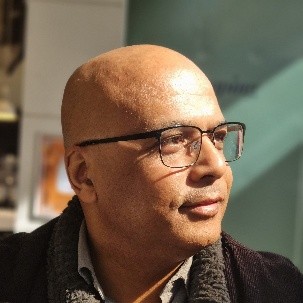
- Dr. Rajjan Chitrakar (rajjanchitrakar@melbournepolytechnic.edu.au)
Affiliation: Melbourne Polytechnic, Melbourne, Australia
Profile: https://www.melbournepolytechnic.edu.au/about-us/our-staff/rajjan-chitrakar/
Rajjan Chitrakar is a highly motivated and passionate educator and researcher with a strong background and track record in architecture and urbanism. With more than two decades of academic and industry experience across Australia, the Philippines and Nepal, he is currently a Lecturer in Architecture and Urbanism at Melbourne Polytechnic, Australia. Rajjan holds a PhD in Urban Planning and Design from QUT. Rajjan has published extensively in the areas of architecture and urbanism, including book chapters and peer-reviewed papers in top-ranked international journals. He is the editor of "Revisiting Kathmandu Valley’s public realm: Some insights into understanding and managing its urban spaces" (Nova, 2020). He is currently working on an edited volume titled "Urban Transformation in the Global South: Lessons from Unsettling Urbanism in the Kathmandu Valley" to be published by Routledge in 2027. He is a member of the Editorial Board of the international journal Urban Planning (2025 - 2028) and Urban and Building Science (2026-2029). Rajjan is a Full Member of the Planning Institute of Australia and an Associate Fellow of the Higher Education Academy, UK, since 2019.
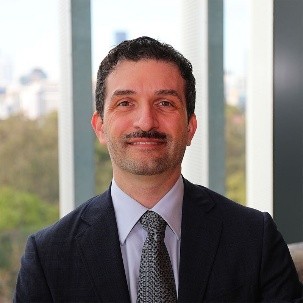
- Assoc. Prof. Mirko Guaralda (m.guaralda@qut.edu.au)
Affiliation: Queensland University of Technology, Brisbane, Australia
Profile: https://www.qut.edu.au/about/our-people/academic-profiles/m.guaralda
Mirko Guaralda (Ph.D., MHEd, DArch) is an Associate Professor in Architecture at the School of Architecture and the Built Environment at Queensland University of Technology, Brisbane, Australia. He is internationally recognised for his research in architecture and urban design, grounded philosophically in the people-centered approach promoted by the United Nations Sustainable Development Goals and the UN-Habitat New Urban Agenda. Dr Guaralda enquires into the complex issues of urban morphology, place quality, and community involvement, investigating the creation of adaptive, positive, and responsible urban environments through a distinctive coaching approach. He is a passionate HDR supervisor and has so far supervised to completion more than 20 HDR candidates, most of whom are currently employed in leading research institutions.
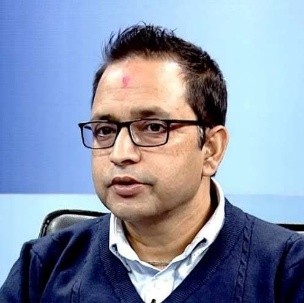
- Prof. Sanjaya Uprety (suprety@ioe.edu.np)
Affiliation: Institute of Engineering, Tribhuvan University, Nepal
Profile: https://www.researchgate.net/profile/Sanjaya_Uprety2
Sanjaya Uprety (Ph.D.) is a Professor of Architecture at Pulchowk Campus, Institute of Engineering, Tribhuvan University, Nepal. With over two decades of academic experience in Nepal and professional experience in both Nepal and Bhutan, his work focuses on resilient and sustainable urban development, particularly risk-sensitive land use planning, urban ecological planning, multi-level urban governance and policy, and energy-efficient buildings. He has authored more than 20 publications, including six in top-ranked journals, and has led a number of urban research and consultancy projects. He has also contributed to key policy documents, including two chapters of the Nepal National Report for Habitat III. He served as Editor-in-Chief of the Journal of the Institute of Engineering in 2025.
Important Dates
- Submission opens: 20 July 2026
- Submission deadline: 30 June 2027
- Expected publication: before 31 August 2027
All accepted papers will be published in the earliest available issue.
Submission Guideline
To submit your manuscript, please visit the Urban and Building Science journal website:
https://sciflux.org/authors/submissions/add-submissions?journalCode=1909189238240141313
When submitting your manuscript, please ensure that you select the Research Topic:
“From Green Transit-Oriented Development to Regenerative Urbanism: Rethinking Public Space as Green Infrastructure for Sustainable Urban Communities”
Author submission guidelines can be found at:
https://www.sciltp.com/journals/ubs/instructionForAuthors
There is No Article Processing Charge (APC) for all submissions and accepted papers.
All manuscripts will undergo peer review in accordance with the journal’s established policies and procedures. Final acceptance will be based on the peer-review reports and the evaluation of the Academic Editors and the Editor-in-Chief. Decisions will be made by the Editor-in-Chief or Academic Editors who have no conflicts of interest with any of the authors.

 Suite 4002 Level 4, 447 Collins Street, Melbourne, Victoria 3000, Australia
 General Inquiries: info@sciltp.com